Storia
Four generations in Montefalco
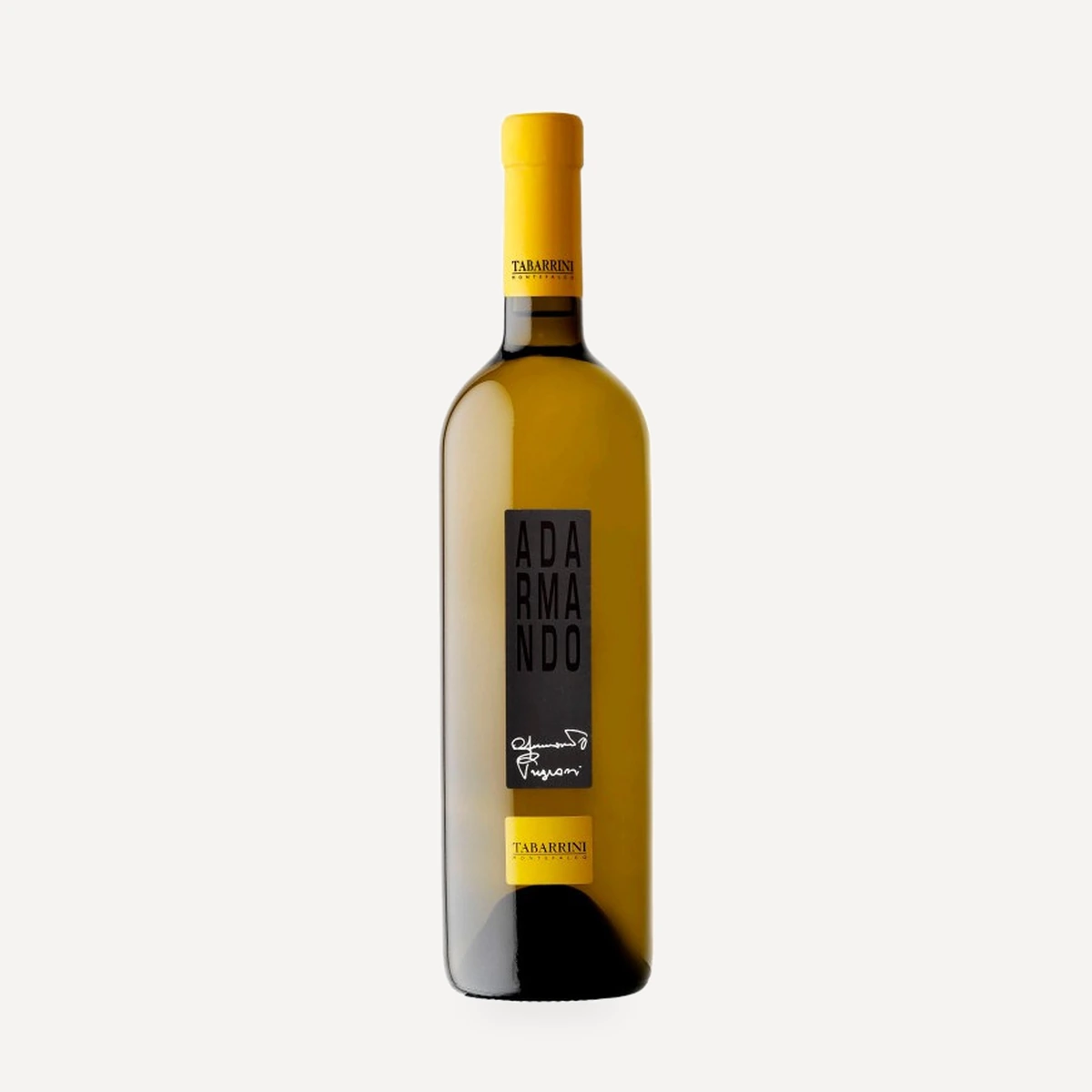
The Tabarrini family has farmed in the hills and vineyards of Montefalco for more than four generations. The family’s land, local traditions and knowledge transmitted between generations form the foundation of the present estate. Giampaolo Tabarrini’s paternal grandfather Giovanni passed on practical advice and experience that later inspired Il Padrone delle Vigne Rosso. His maternal grandfather Armando—remembered as kind, generous and determined—inspired Adarmando and its connection between an inherited white-grape tradition and the future.
The vineyard base takes shape
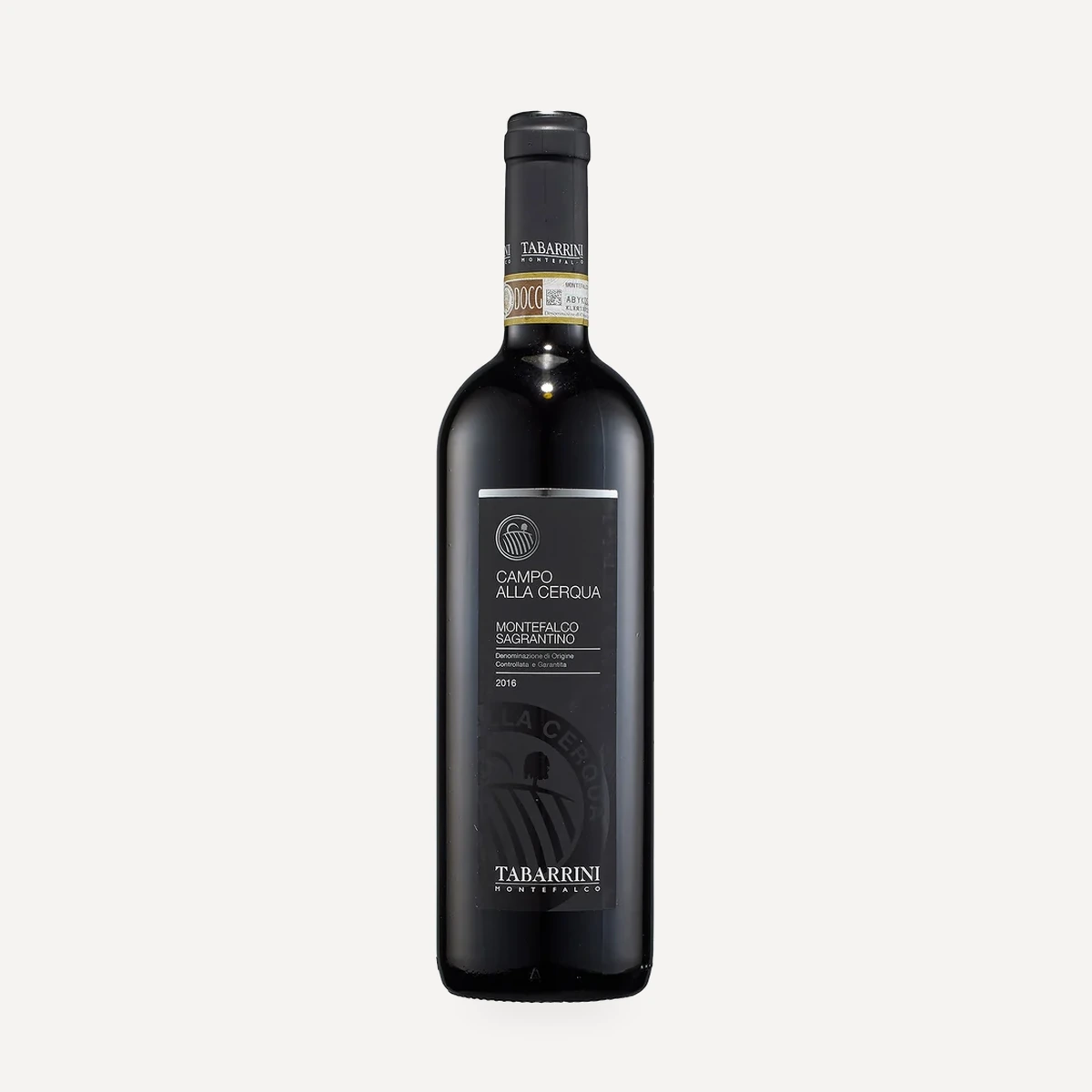
Several vineyards underlying the contemporary estate were planted during the 1990s. The Boccatone vineyard was planted in 1992. A Sagrantino parcel used for Bocca di Rosa followed in 1995, the vineyard associated with Il Padrone delle Vigne Rosso in 1996, Colle alle Macchie and Campo alla Cerqua in 1997, and Colle Grimaldesco in 1998. These sites occupy distinct positions between approximately 360 and 420 metres above sea level and established the estate’s parcel-based approach to Montefalco.
Giampaolo takes responsibility
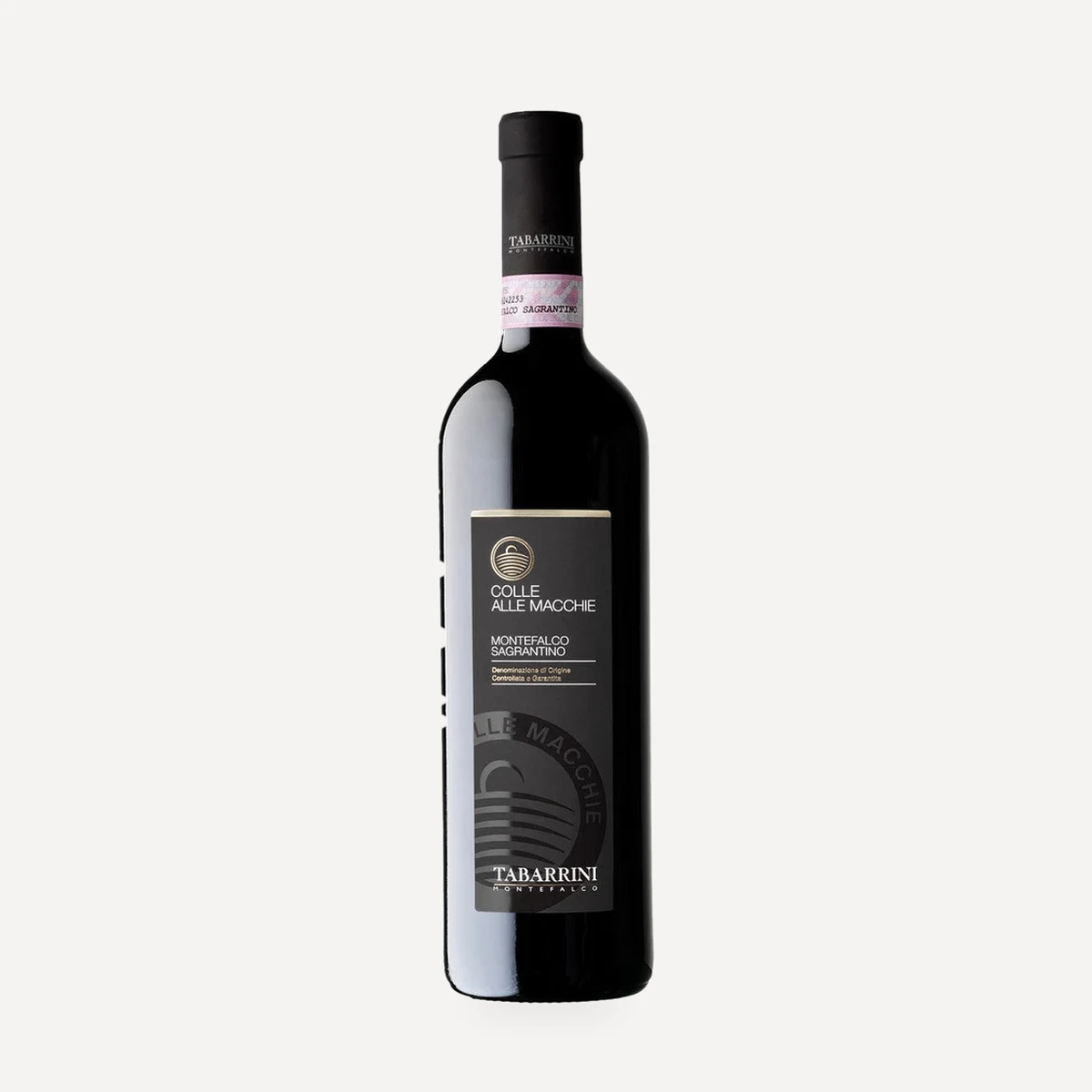
Giampaolo, the fourth generation, took over his parents’ farm in the late 1990s. He progressively reshaped it into the business bearing his name while retaining the family’s agricultural roots, local traditions and inherited values. After developing a detailed understanding of the individual vineyards, he initiated a Sagrantino cru project based on separate harvesting and vinification. Colle Grimaldesco, Campo alla Cerqua and Colle alle Macchie became three distinct expressions of Sagrantino, united by variety and place but differentiated by their soils and exposures.
Colle Grimaldesco supplied Tabarrini’s first Sagrantino. The estate subsequently expanded beyond Sagrantino and Sangiovese through research into local and nearly forgotten varieties. Its work with Trebbiano Spoletino included extensive clonal selection and the pioneering establishment of new estate vineyards. The resulting selection is identified as Trebbiano Tabarrini. A Trebbiano vineyard was planted in 2006. Research and curiosity also led to the recovery of Grero, an old Umbrian black grape that had almost disappeared.
Cellar development
The original modern cellar was built in 2003. It was enlarged and transformed as production and the estate’s needs evolved. A later, multi-level cellar was constructed among the family vineyards and integrated with the 2003 structure. Giampaolo personally participated in its design, creating linear, spacious and orderly working areas for vinification, maturation and storage. The complex also incorporates a barrel room, vaults, reception spaces, panoramic glazing and a terrace overlooking the vineyards and Umbrian valley.
The family estate today
The estate now covers 22 hectares, of which 15 hectares are planted to vines. Giampaolo and Federica direct the property with a family and technical team that includes resident winemaker Alessandro Meniconi and oenologist Emiliano Falsini. Giampaolo’s parents, Franca and Nello, remain involved as sources of support and experience, while his son Filippo represents the family’s emerging next generation. The estate continues to develop through parcel-specific cultivation, late harvesting, spontaneous fermentation, long maceration, gravity handling and maturation in large oak vessels.
Terroir
Setting
The vineyards and cellar lie in and around Turrita, within the commune and denomination territory of Montefalco in Umbria. The estate occupies a hilly landscape interspersed with vineyards, olive groves, valleys and old villages. Its parcels are distributed across different parts of Montefalco rather than treated as a uniform block.
Elevation and exposure
Documented vineyards extend from approximately 350 to 420 metres above sea level. Most face south-east, while the estate also works east- to south-east-facing Colle Grimaldesco, the easterly-influenced Campo alla Cerqua and the fully south-facing Colle alle Macchie. These changes of position and aspect underpin the separate interpretation of the Sagrantino crus.
Soils
The vineyard mosaic includes compact silty clay, looser silty-clay soils, deep clay and sites rich in river stones. Colle alle Macchie is distinguished by deep clay. Colle Grimaldesco combines silt and clay in a loose soil and includes river stones. Campo alla Cerqua is lighter, looser and more stony than Colle Grimaldesco and Colle alle Macchie, with abundant river stones. Piantagrero has a loose calcareous-clay soil with river stones. The Passito source is described as sandy and silty, with clay and river stones. Trebbiano sites have silty-clay soils.
The combination of soil, exposure and altitude is treated as parcel-specific: each cru receives a different cultivation regime, and the three principal Sagrantino vineyards are harvested and vinified separately to preserve their individual identities.
Vinificazione
The vineyard is placed before the cellar in the estate’s working hierarchy. Fifteen of the property’s 22 hectares are under vine, distributed among heterogeneous parcels across Montefalco. Cultivation is described as sustainable and tailored to each vineyard: individual crus are worked differently in response to their soils, exposures and other terroir characteristics, while receiving close attention throughout the year.
Guyot is the documented training system across the technically described vineyards. Planting densities range from 3,500 to 4,800 vines per hectare, while documented yields range from 35 to 70 quintals per hectare. The lowest cited yields, 35 quintals per hectare, apply to Colle alle Macchie and Campo alla Cerqua.
The family seeks slow, complete grape maturity and harvests decidedly later than the local average. Its work with Trebbiano Spoletino involved extensive clonal selection followed by pioneering plantings of new estate-owned vineyards using the proprietary Trebbiano Tabarrini selection. Grero was likewise brought back into cultivation as part of the estate’s research into a nearly vanished Umbrian grape.
Harvesting is organised by parcel for the Sagrantino cru project. Colle Grimaldesco, Campo alla Cerqua and Colle alle Macchie are picked separately and remain separate through vinification so their contrasting terroirs can be retained.
Cellar and handling
The winery is arranged over multiple levels and combines the original 2003 cellar with a later structure built among the family vineyards. Its production areas are linear, spacious, orderly and designed for both creation and long-term storage. Wine is transferred by gravity without pumps to avoid unnecessary physical stress.
Fermentation and maceration
The overarching approach is minimal intervention without shortcuts. Fermentations start spontaneously and selected commercial yeasts are not used. Red-wine macerations are long in keeping with the estate’s interpretation of tradition; the documented reds remain in contact with their skins for more than one month. The three Sagrantino crus are harvested and vinified separately rather than blended at reception.
White and rosé examples are made by white-wine vinification. Steel is used for their maturation: the documented Trebbiano wines remain in steel for six to at least 12 months, while the rosé spends three months in steel on fine lees.
For Montefalco Sagrantino Passito, harvested grapes are naturally dried on racks. The narrative description gives at least three months of rack drying, while its technical specification records a minimum natural drying period of 60 days before one month of skin maceration.
Maturation
Large French-oak vessels are central to red-wine maturation. Documented regimes range from at least 12 months for Il Padrone delle Vigne Rosso and at least 24 months for Boccatone to at least 36 months for the three dry Sagrantino crus. Bottle ageing completes the process: documented periods range from three months for the more immediate wines to 12 months for Boccatone and the Sagrantino crus. Colle Grimaldesco is released no earlier than four years after harvest. The Passito specification records extended maturation in French-oak barriques followed by 12 months in bottle.
Filosofia
The estate’s declared hierarchy begins with the vineyard: wine should express the land, climate and human work embodied in each parcel. Quality is pursued through close, year-round attention, sustainable cultivation and a different treatment for every cru rather than a uniform estate recipe.
Giampaolo’s project is built around simultaneous continuity and change. The family’s own land, Montefalco traditions and values transmitted across generations provide its base, while research into Trebbiano Spoletino, recovery of Grero, separate Sagrantino crus and continuing cellar development express its forward-looking side.
In the cellar, the objective is to enhance the grapes through minimal intervention, meticulous execution and no shortcuts. Spontaneous fermentation, lengthy traditional maceration, pump-free gravity transfers, large oak and bottle ageing are intended to preserve rather than obscure the character developed in the vineyard.
The estate also emphasises collective participation. Family members and collaborators contribute across conventional role boundaries, from early vineyard work through bottling and presentation. Its understanding of quality is therefore both site-specific and communal: individual vineyards retain their identities while the family and technical team share responsibility for the finished result.
Vini
Adarmando
Campo alla Cerqua