Storia
Modernization under the PSR Umbria 2014–2020 programme
An investment project carried out by Soc. Agr. Livon S.s. at its Umbrian operation modernized the agricultural machinery fleet. The programme financed mounted and trailed radial sprayers, a vine trimmer, an inter-row cultivator, a pre-pruner, a trailer, two tractors and a rotary hoe. The completed investments were intended to improve competitiveness, reduce mechanization costs and provide better working and living conditions for employees through newer equipment. The project received €30,049.16 in public support against €150,245.80 of eligible expenditure.
2017 restoration and hospitality development
In 2017, work at Fattoria Colsanto was completed with the restoration of the historic farmhouse, dated to the nineteenth century. The project created a new tasting room, a direct-sales point and a room dedicated to relaxation and hospitality. Six guest rooms form part of the agriturismo, overlooking the landscape and the towns of Spello and Assisi.
Terroir
Fattoria Colsanto’s vineyards are in the municipality of Bevagna, with several cuvées specifically tied to Montarone. The soils share a strong clay component but vary within the estate. Some vineyard material is described as alluvial clay; other sectors combine clay and silt, while the ground associated with the white and rosé production is clayey-silty and rich in coarse mineral fragments. The vineyard specifications consistently give a planting density of 7,300 vines per hectare.
Vinificazione
The vineyard specifications consistently record 7,300 vines per hectare and cordon-based training. Bilateral spurred cordon is used for the red-wine vineyards, while the white-wine material is trained to double spurred cordon.
Harvest timing is adapted to each variety. Lots for the principal red blends are picked separately according to ripeness, generally from mid-September to mid-October; Ruris is normally harvested around the end of September. Sagrantino is picked once phenolic maturity is achieved, generally at the end of October. The Sagrantino and white-wine harvests are carried out by hand into crates, and the Montarone Sagrantino selection is produced only in the best vintages.
The estate’s machinery modernization introduced mounted and trailed radial sprayers, a vine trimmer, an inter-row cultivator, a pre-pruner, a rotary hoe, two tractors and a trailer. These investments reduced mechanization costs and improved working conditions.
Grapes for the principal blends are harvested and vinified separately by both variety and parcel. Red-wine fermentations generally remain on the skins for about three weeks at a controlled 23°C. Malolactic fermentation follows, after which lots may be transferred to wooden barrels, barriques or stainless-steel tanks. Final blending precedes bottling, and bottle maturation completes the process.
For Sagrantino, hand-picked grapes arrive in crates and undergo gentle destemming. Fermentation lasts three to four weeks on the skins at 23°C, with seeds progressively removed during this phase. After malolactic fermentation, the wine moves to new barriques and larger wooden barrels. Wood maturation lasts at least 36 months at a constant 16°C, followed by further bottle ageing. The separate Montarone selection follows this approach only in the best vintages and remains in wood for more than 36 months.
White-wine processing begins with hand harvesting in crates. Part of the fruit undergoes cold maceration in a horizontal press, followed by cold settling to clarify the must. Fermentation takes place at 14–16°C in new Allier barriques and 25 hL wooden vats. Maturation continues for approximately eight months on the lees with regular bâtonnage, after which the lots are blended, bottled and given further bottle ageing.
The rosé programme uses 3.5 hL terracotta amphorae for both fermentation and subsequent maturation. Its component varieties are harvested and vinified separately according to their respective ripening requirements.
Filosofia
The production approach centers on preserving distinctions among varieties, parcels and harvest dates. Grapes are separated through harvest and vinification, with blending delayed until after the individual lots have completed their principal maturation. Temperature control, gentle handling and vessel choice are adjusted to the material: extended skin contact and long wood ageing for Sagrantino, lees contact and bâtonnage for the white programme, and terracotta amphorae for rosé.
Investment in vineyard machinery reflects a parallel emphasis on efficient agricultural work and improved conditions for employees. Hospitality extends the estate’s agricultural identity through vineyard and cellar visits, tastings and pairings with local products.
Vini
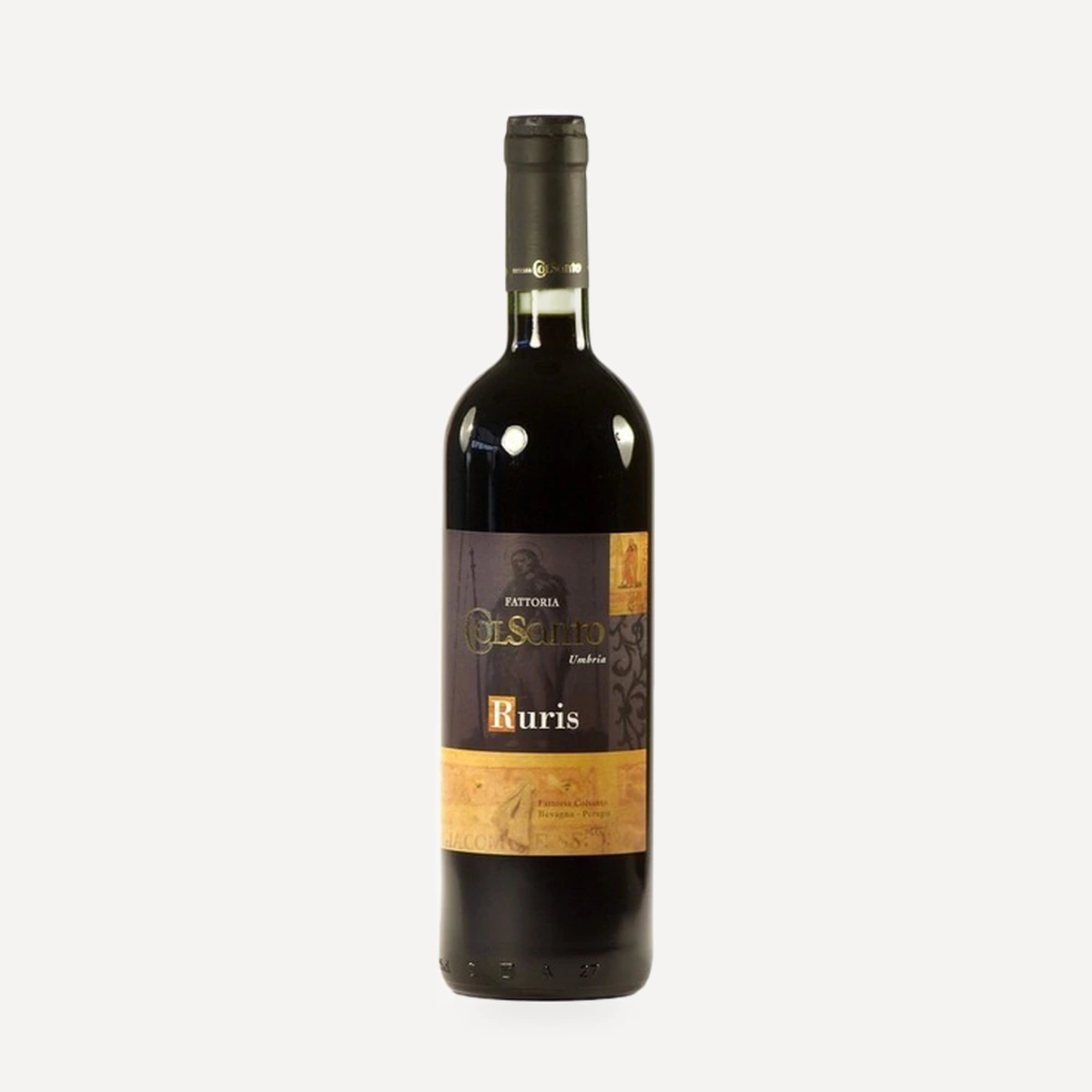
Ruris
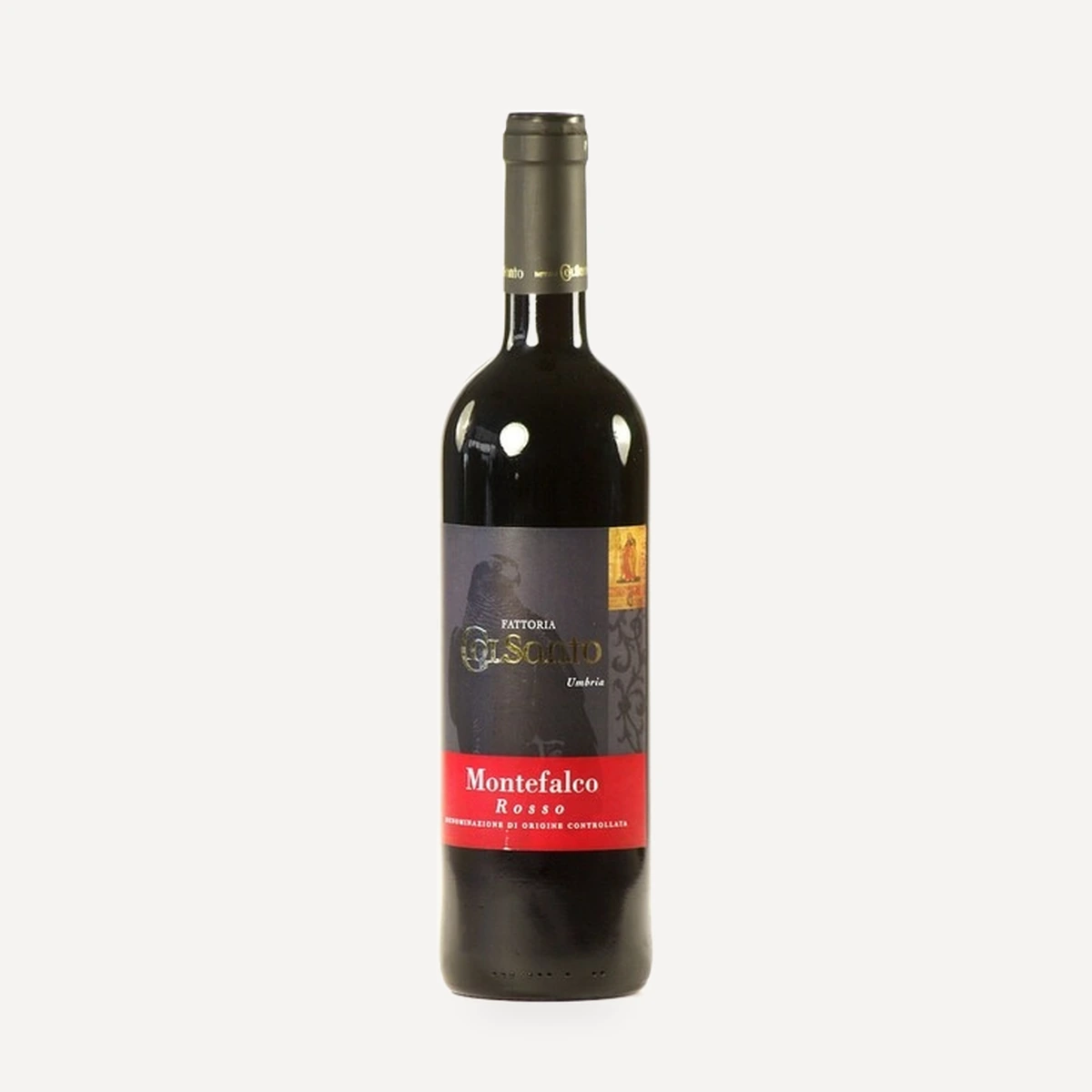
Montefalco – Rosso DOC