Storia
Family origins
The estate’s land has belonged to the Bosco family for three generations. Founder Pietro Bosco was born in 1898 in Borgata Boiolo, La Morra, to Bosco Costanzo and Margherita.
1948: renewal after phylloxera
In 1948 Pietro began renewing vineyards damaged by phylloxera. His plantings were considered innovative for their time, and some of those vineyards remained part of the estate many decades later.
1968: Costanzo’s succession
Pietro’s son Costanzo succeeded him in 1968. Costanzo progressively acquired adjoining land, expanding the vineyard holding to approximately 3 hectares.
1994: the third generation
Pierangelo succeeded his father in 1994. He restored the old farmstead, planted new vineyards and enlarged the estate. Over the following ten years, its vineyards grew to approximately 8 hectares.
Pierangelo also began vinifying a small proportion of the estate’s Nebbiolo, selecting grapes from the best-exposed vines.
2004: Barolo Boiolo
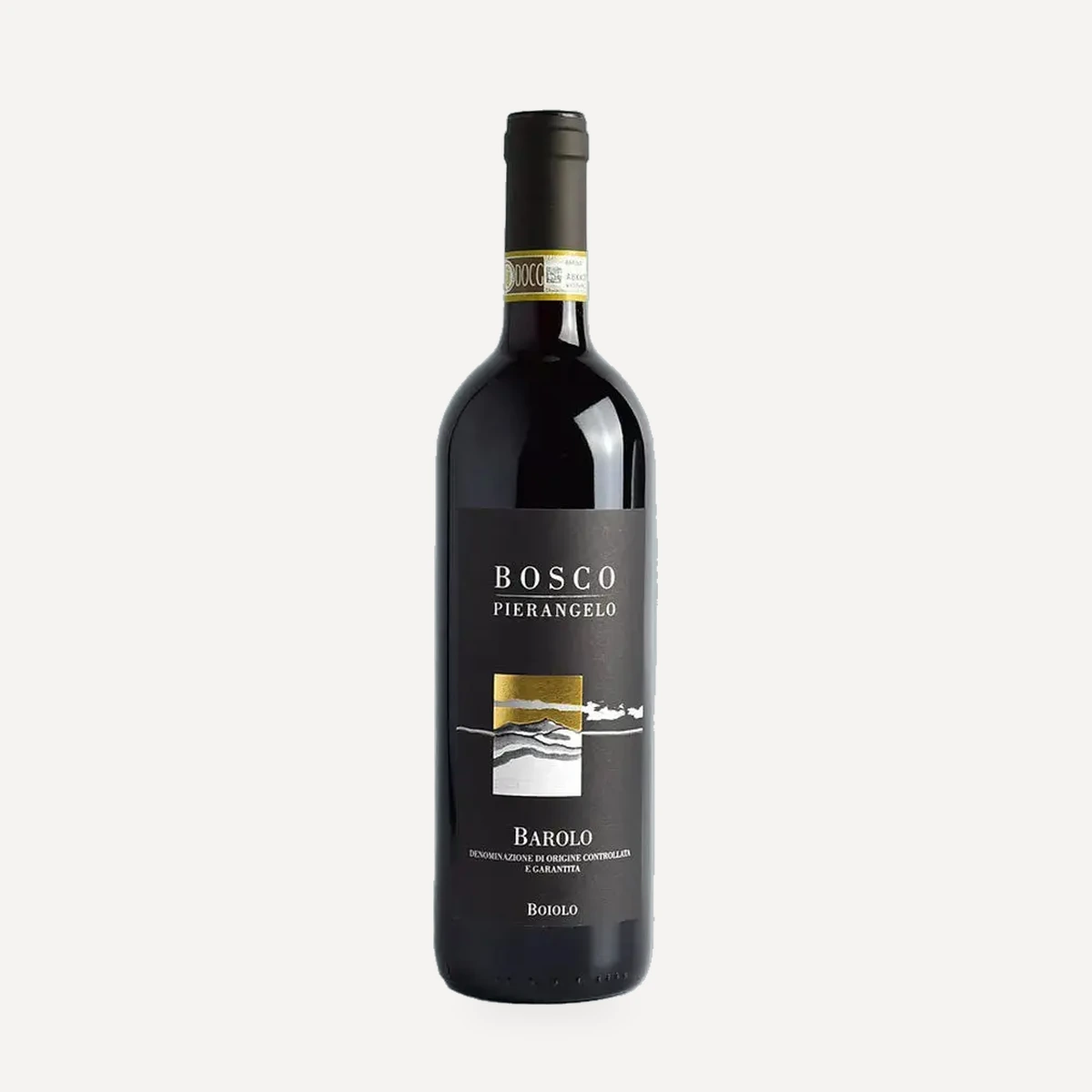
By 2004, Pierangelo considered that the required quality level had been achieved and decided to produce approximately 2,500 bottles of Barolo Boiolo.
Terroir
The estate vineyards form a single contiguous plot in Borgata Boiolo, within the municipality of La Morra. The vines occupy southeast-facing slopes in the Bassa Langa. This Langhe landscape became part of the UNESCO World Heritage area in 2014.
Vinificazione
Only organic fertilization is used throughout the vineyards. Vineyard operations are performed manually, with particular attention to pruning, shoot thinning (scacchiatura), bunch thinning and harvest. This work is framed by an explicit commitment to respecting nature and the territory.
Fermentation throughout the estate’s production is natural and does not employ selected yeasts. Pierangelo began estate vinification with a small quantity of Nebbiolo chosen from the best-exposed vines; by 2004, he considered that this work had reached the quality required to begin producing Barolo Boiolo.
Filosofia
Respect for the territory is presented as the foundation of the family’s passion for wine. In the vineyards, this principle is expressed through exclusive use of organic fertilization and manual work focused on careful pruning, shoot thinning, crop thinning and harvesting. The family also connects its work with respect for nature and for the processes of growth.
Vini
Barbera d'Alba