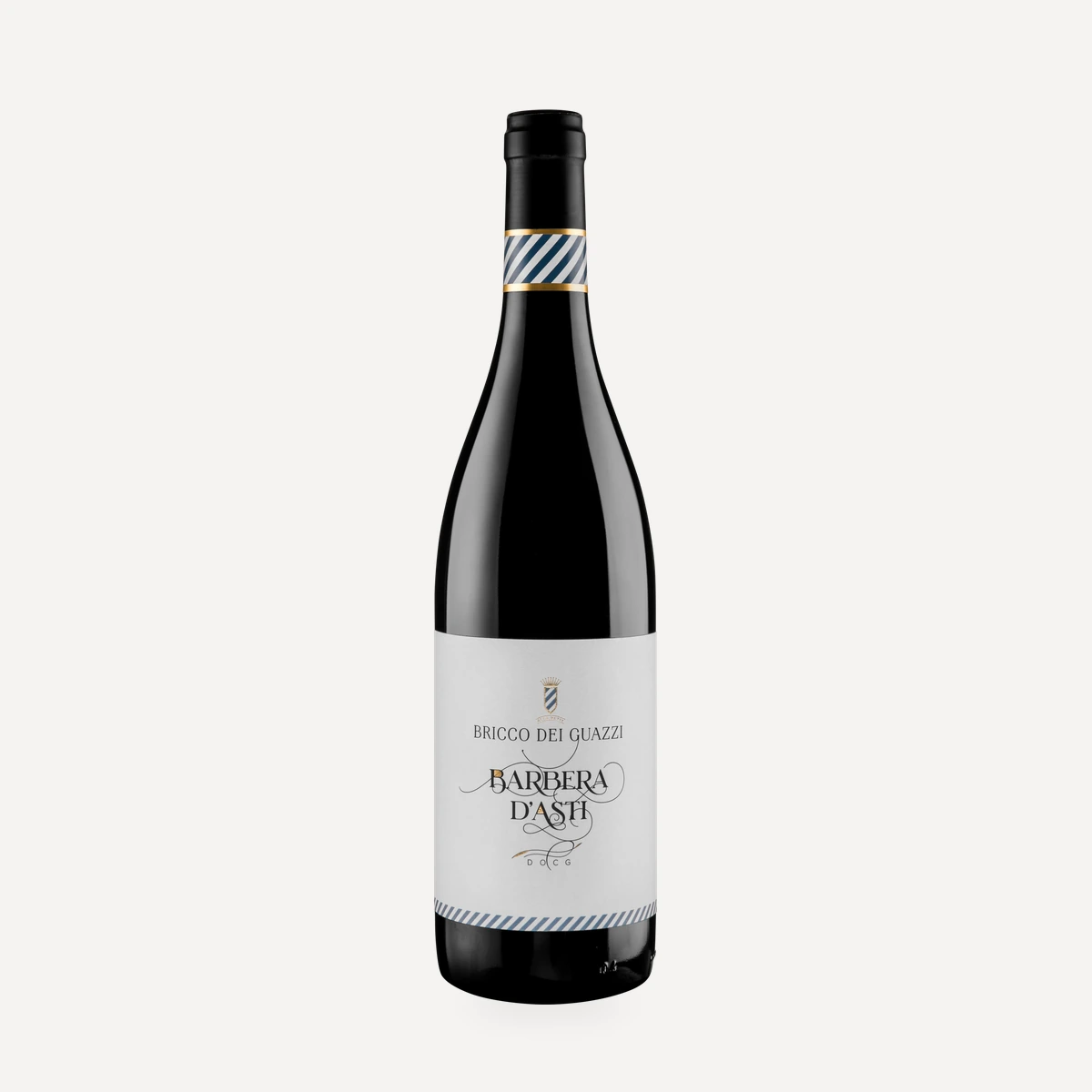
Questo vino
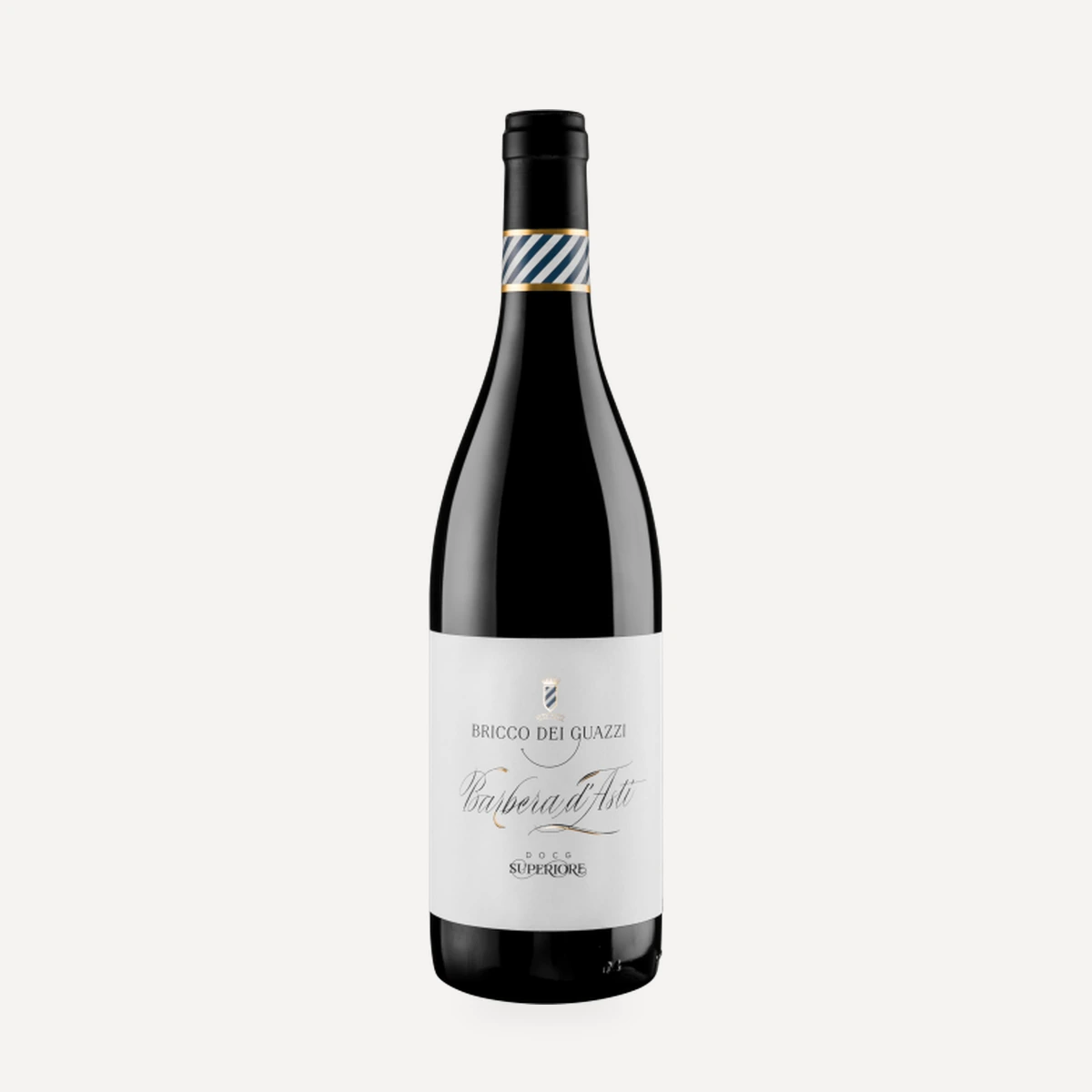
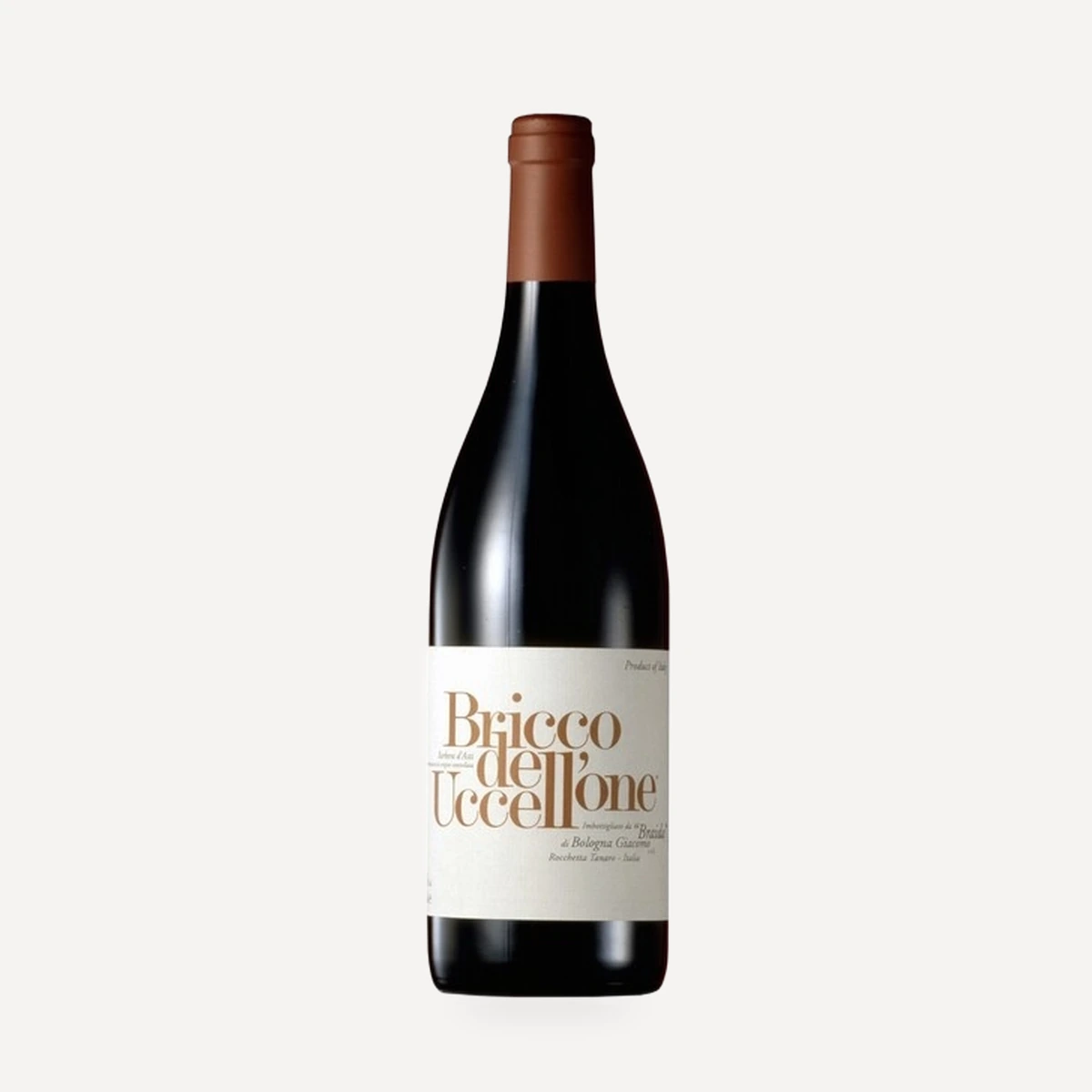
Barbera d'Asti DOCG from the 2023 vintage, intended to show the variety with breadth, balance and a rounded, approachable profile. The first vintage was 2005.
Vineyard and terroir
The grapes come from Monferrato alessandrino around Olivola, at 150–250 m a.s.l. Southwest-facing sites include Torre Vineyard, where calcareous marl alternates with clay- and iron-rich soils. The vines are trained to simple Guyot at 5,000 vines per hectare, with a yield of approximately 70–80 q/ha. Vine age is given as 15 years in the page specifications and 15–20 years in the 2023 technical sheet.
Grapes
Barbera.
Vinification
The grapes are crushed and destemmed. The skins remain with the must for approximately one week in large stainless-steel tanks at 25–28 °C. Frequent pump-overs promote colour extraction and body. Malolactic fermentation is completed before maturation.
Ageing
Approximately 12 months in 15–20 hl barrels, followed by at least four months in bottle.
Technical data
The 2023 technical sheet gives 14% alcohol and total acidity of 6 g/L. The wine page instead gives 15% alcohol and total acidity of 5.6 g/L. Ageing potential is 7–8 years.
Tasting profile
Intense ruby in colour. The bouquet is powerful, enveloping and complex, balancing its alcoholic warmth with ripe cherry, plum, violet and spice. The palate is vibrant, with elegant, silky tannins and pronounced varietal acidity; the aromatic impressions carry through in a full, balanced structure.
Serving and pairing
Serve at 16–18 °C. Suitable throughout a meal, particularly with traditional Monferrato cooking such as agnolotti with three roasts and San Damiano d’Asti capon. It also accompanies cheese and typical cured meats, including Black Velvet of the Queen and Baciato di Ponzone fillet.