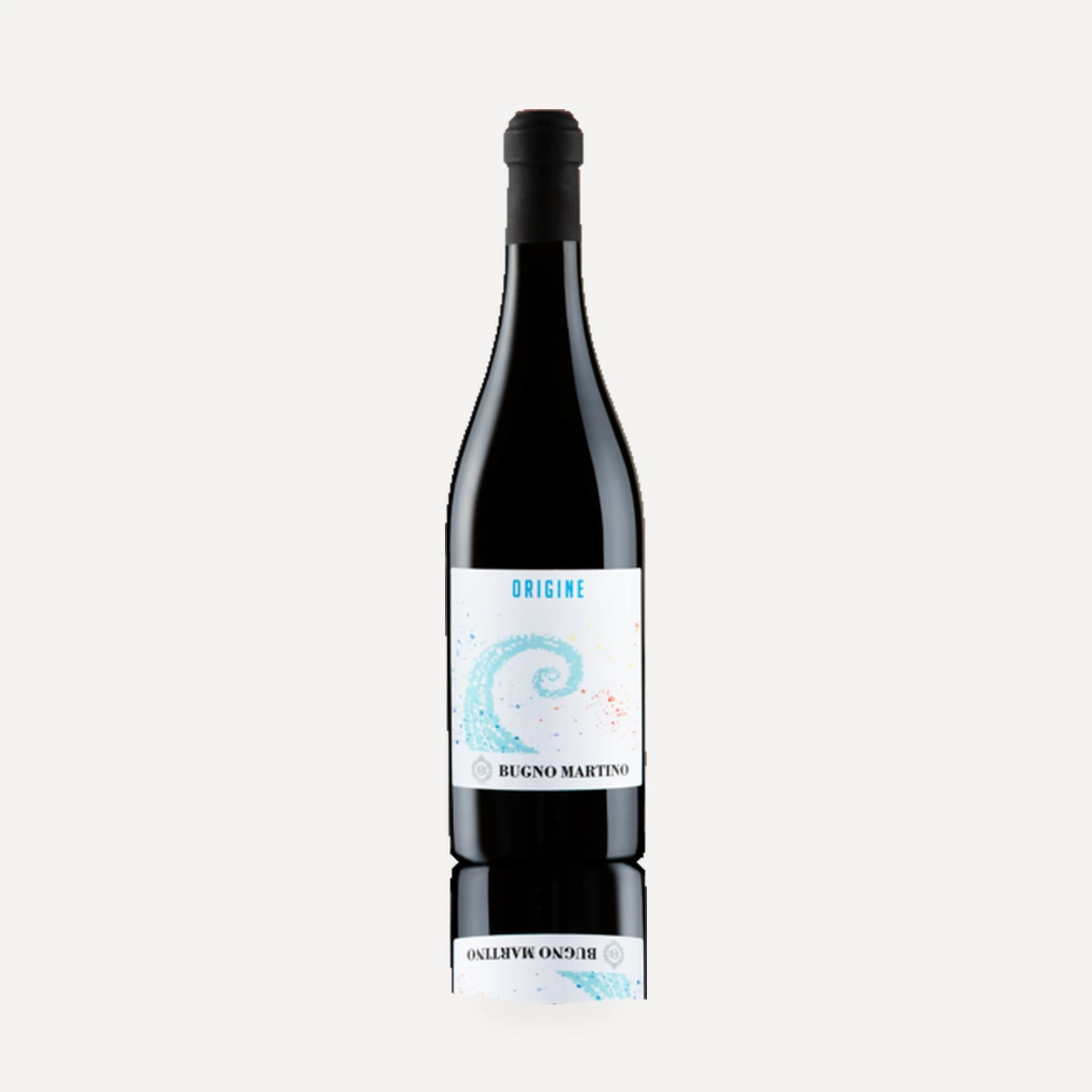
Storia
The inspiration
Giuseppe and Raffaella did not inherit a winemaking tradition: they describe themselves as winegrowers by choice. Around 2006, while they were still engaged, a three-day trip to the Langhe became the catalyst for their project. In Barbaresco they met a grower who took them into his vineyard during pre-harvest sampling. His detailed knowledge of individual vines, difficult vintages, humidity, hail, plant disease and replacement, followed by a candlelit cellar tasting, showed them how closely a wine could embody its grower and place.
From cereals to vines
The opportunity to act on that experience arose when Giuseppe’s father retired from the family farm, which had previously produced cereals. Giuseppe proposed planting vines and began studying viticulture despite initial skepticism about producing Lambrusco and about practicing organic agriculture in the area’s humid conditions.
Soil analyses identified a mixture of silt, clay and sand suitable for vines. Giuseppe and Raffaella then divided the farm into parcels and planted its vineyards themselves, beginning one row at a time. Clay-dominant ground was selected for Lambrusco. The initial varietal foundation comprised Lambrusco Salamino, Ancellotta and Grappello Ruberti; a small Chardonnay vineyard followed several years later.
Building an independent winery
The first wines were initially vinified elsewhere. Giuseppe subsequently decided to establish the estate’s own winery, despite advice to continue using another cellar. Rosso Matilde became Bugno Martino’s first Lambrusco and was named for Matilde di Canossa, whose history is closely connected with San Benedetto Po.
By 2021 the vineyard program included a change in the Ancellotta training system from spur-pruned cordon to Guyot. Salamino was pruned to two buds per spur, with a target yield of approximately 80–90 quintals per hectare. The estate was already using Simonit & Sirch pruning principles, organic cultivation, hand canopy work and extended Charmat fermentation.
Development of production methods
The range evolved beyond the first Charmat Lambrusco to include natural refermentation in bottle, ancestral-method wines, a skin-macerated Chardonnay matured in amphora and Maso, a rosé traditional-method sparkling wine made from Lambrusco Salamino. Maso was named for Giuseppe and Raffaella’s son Tommaso. By 2026 it was presented in three disgorgements: 24 months on the lees from the 2023 vintage, 48 months from 2021 and 60 months from 2020.
Recent vintages
The 2020 wines were being monitored, tasted and racked in early 2021; Rosso Matilde entered autoclave for a fermentation lasting at least four months.
The 2025 harvest was judged the estate’s strongest since 2018. Phenolic and sugar ripeness coincided unusually well, producing grapes with substantial color, aromatic richness and high acidity. Fermentations were slow and steady; after devatting, the wines rested in maturation tanks.
In June 2026, unusually hot and dry weather caused no significant vineyard damage. Deep alluvial soils retained moisture, and the season had remained free of hail and downy mildew at the beginning of July. Manual canopy management and preventive treatments continued as the estate prepared for the decisive ripening period in July and August.
Terroir
Bugno Martino lies at San Benedetto Po in the Oltrepò Mantovano, in the southern part of Lombardy and close to both the Po and Secchia rivers. Water movement and deposition have shaped the surrounding landscape over centuries, creating deep alluvial soils capable of retaining moisture. This reserve helps the vines withstand limited rainfall and periods of heat and water stress.
The vineyard soils are mixed, with silt, sand and clay. They are described more specifically as medium-textured, highly fertile soils with a predominance of clay. Vineyard management must therefore moderate the plants’ natural energy and vigor.
The humid local conditions increase fungal pressure and make organic cultivation demanding. During the hot, dry June of 2026, however, the soils retained sufficient moisture to prevent significant heat damage. Canopy work concentrates on balancing shade and ventilation: north-side leaf removal improves airflow around the bunches while avoiding excessive exposure to the strongest sunlight.
Lambrusco has a long local association with the Oltrepò Mantovano. Benedictine monks at the Abbey of Polirone in San Benedetto Po selected early clones from the wild Vitis lambrusca that grew beside drainage ditches and refined its cultivation and vinification. Grappello Ruberti is presented as the Oltrepò Mantovano’s native cultivar.
Vinificazione
Organic and biodiversity program
Organic production encompasses all 70 ha of the agricultural estate. Chemical and synthetic products have been eliminated. Copper and sulfur are used preventively against vine diseases, alongside extracts based on citrus or orange essential oil, algae and horsetail. The intention is to prevent disease, apply treatments only when conditions require them and reduce copper and sulfur use as far as possible.
Humidity-monitoring technology helps determine when treatment is necessary. A recovery system captures unused treatment products to prevent contamination of groundwater. The estate also follows selected biodynamic practices rather than presenting the entire program as exclusively biodynamic.
Soil care and biodiversity
Green-manure mixtures are sown in autumn in both vineyards and arable fields. They are cut before summer so that organic matter and minerals return gradually to the soil. Vineyard vegetation includes mustard and spontaneous flowers, and grass remains deliberately high to conserve ground moisture.
Vertical soil cultivation, crop rotation and the reuse of organic residues from harvest and devatting form part of a wider effort to restore life to soils affected by earlier intensive use. Two areas are maintained as flower fields with beehives. The wider 70 ha property includes a lake and a managed wildlife reserve inhabited by pheasants, hares and ducks.
Pruning and yield control
Simonit & Sirch pruning principles are used to preserve sap flow and vine longevity. Guyot retains one productive cane and one renewal spur, permitting greater individual control than more mechanized systems, encouraging uniform ripening and avoiding repeated cuts at the same point. Winter pruning lasts approximately two months and establishes the balance between yield and quality for the following season.
The Ancellotta vineyard was converted from spur-pruned cordon to Guyot by 2021. Salamino was pruned to two buds per spur. Yield targets range from about 70 to 90 q/ha, commonly around 80 q/ha, to ensure adequate concentration, sugar, color and potential alcohol.
Manual canopy work and harvest
Suckering, leaf removal, green pruning and harvest are performed by hand. Leaf removal is adjusted to wind, exposure, temperature and vine condition: foliage is removed to dry and ventilate the bunches without exposing them to sunburn. In June 2026, work focused on the north-facing side, which receives less direct sunlight. Excess young shoots are removed so that they do not divert energy, make the canopy too dense or trap humidity.
Harvest timing is decided parcel by parcel through tasting berries and assessing aromatic, sugar and phenolic maturity. Grapes are collected manually into crates and transferred directly to the winery without delay. Before the main harvest, healthy, optimally ripe bunches are selected by hand to prepare indigenous-yeast pied de cuve starters.
Cellar approach
Intervention is limited to operations considered necessary to preserve the vintage, personality and structure developed in the vineyard. Grapes travel only a short distance from hand harvest to the winery. Indigenous microorganisms are central to the fermentation program.
Before harvest, selected healthy and ripe bunches are used to make small quantities of must that ferment spontaneously. These indigenous-yeast pied de cuve starters initiate the principal fermentations. Fermentations are allowed to proceed slowly and steadily rather than being accelerated.
After fermentation, the wines receive only a small number of carefully timed rackings. Racking separates them from the coarser lees and is decided through tasting and observation rather than applied automatically. The wines clarify naturally without aggressive filtration or unnecessary correction.
Sparkling-wine methods
Production centers on natural refermentation in bottle, extended Charmat and the traditional method. For Charmat wines, fermentation in autoclave is deliberately prolonged for 4–18 months, depending on the wine, to retain fresh fruit aromas while developing a fine, persistent mousse. Rosso Matilde has been made with a 12-day first fermentation on the skins using indigenous yeasts, followed by four months in autoclave and prise de mousse initiated with must.
Bottle-refermented Lambrusco continues the area’s traditional method. Grappello Ruberti may undergo approximately 20 days of skin contact before refermentation in bottle. An ancestral-method rosé is also fermented with indigenous yeasts.
For the traditional-method rosé, Lambrusco Salamino is softly pressed to emphasize finesse rather than deep color. After the first fermentation, the base wine is bottled with yeast and sugar for a second fermentation in bottle. The bottles then remain on their lees, allowing the mousse to integrate and the wine to develop structure, creaminess, aromatic complexity and depth. The Maso program includes 24-, 48- and 60-month lees-aging periods.
The cellar also works with skin-macerated Chardonnay matured in amphora. Following devatting and completion of fermentation, wines rest in maturation tanks according to their individual development.
Filosofia
Bugno Martino places farming before cellar technique and treats nature as the governing force. The farmer’s role is understood as one of care, guidance and stewardship: rebuilding soil vitality, allowing natural cycles to proceed and creating a healthy ecosystem in which plants can produce better fruit.
Organic certification is treated as a starting point rather than an endpoint. Biodiversity, crop rotation, green manure, flower fields, beehives, reuse of organic residues and technology that reduces treatment use are combined within a broader effort to move beyond minimum organic protocols.
The estate identifies itself with artisan winegrowing. Wine is intended to reflect the grower’s hand, sensitivity and interpretation of each vintage. Vintage differences—including problems, experiments and successes—are retained rather than standardized away. The desired result is not merely a technically correct product but a wine coherent with its place, history and individual growing season.
The same principle governs cellar work: observe, wait and intervene only when useful. Slow fermentation, indigenous microorganisms, extended maturation and limited racking are preferred to forcing the process. For Giuseppe and Raffaella, becoming winegrowers meant beginning with the land and the first planted vine, accepting agricultural risk and waiting years before harvesting and vinifying.
Vini
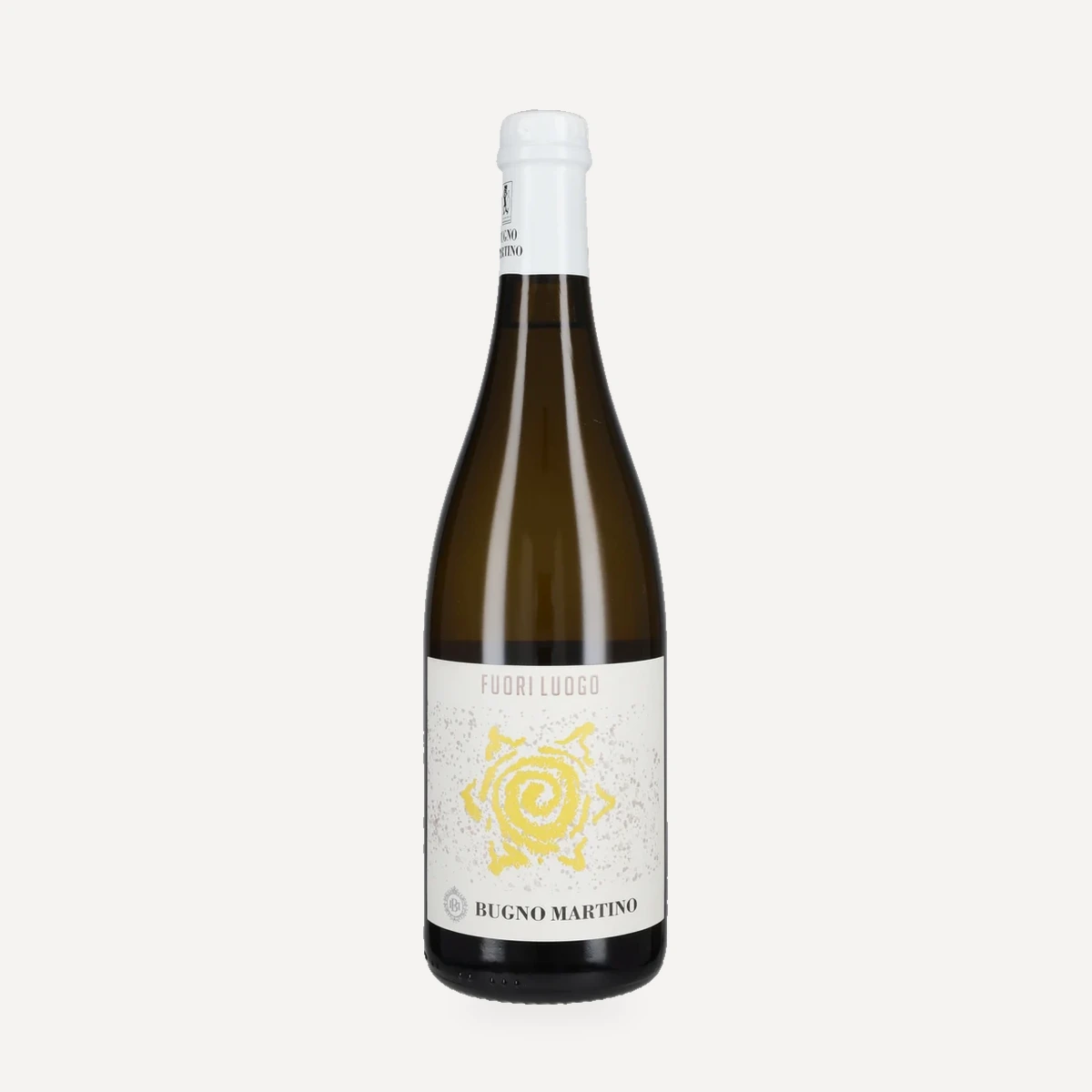
Fuori Luogo