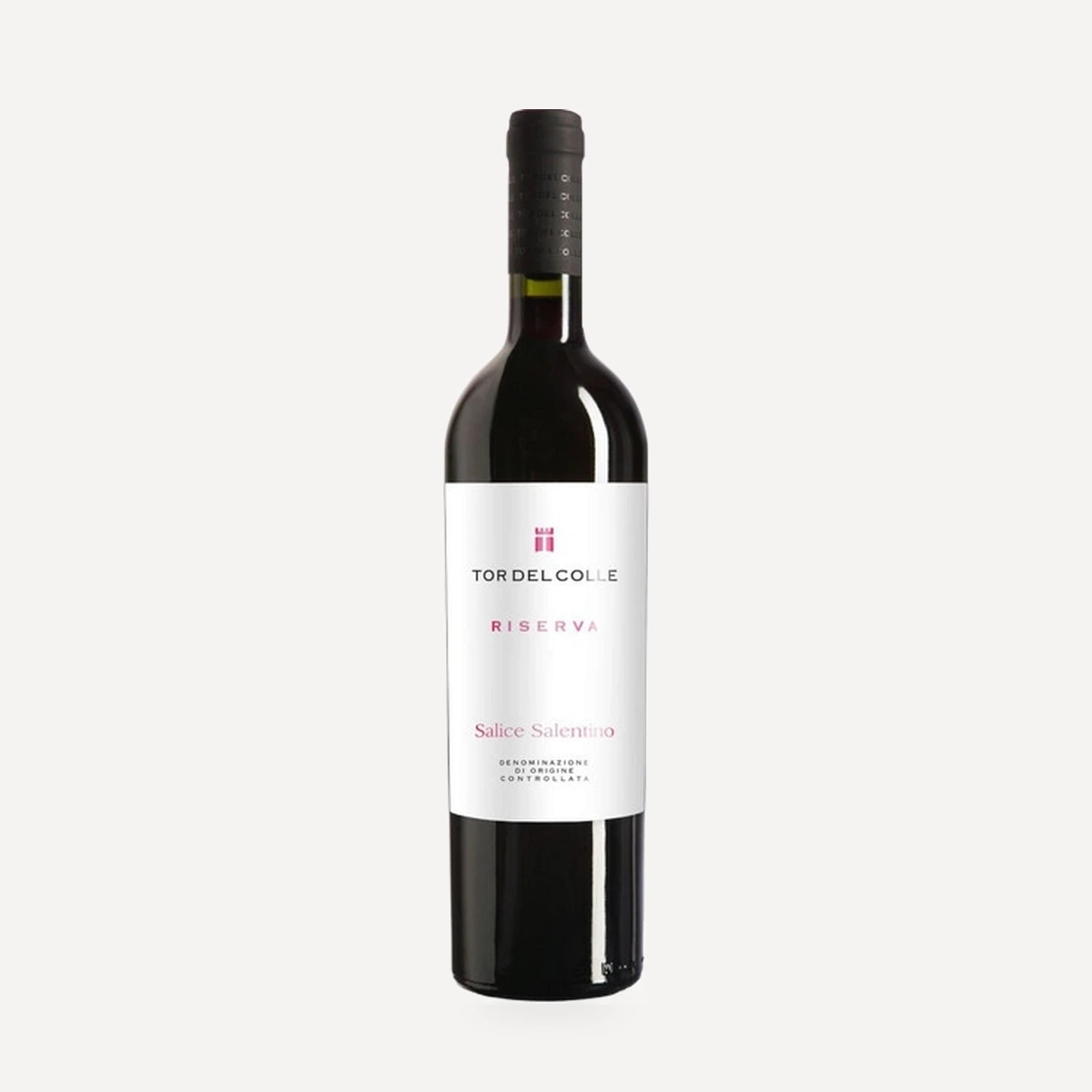
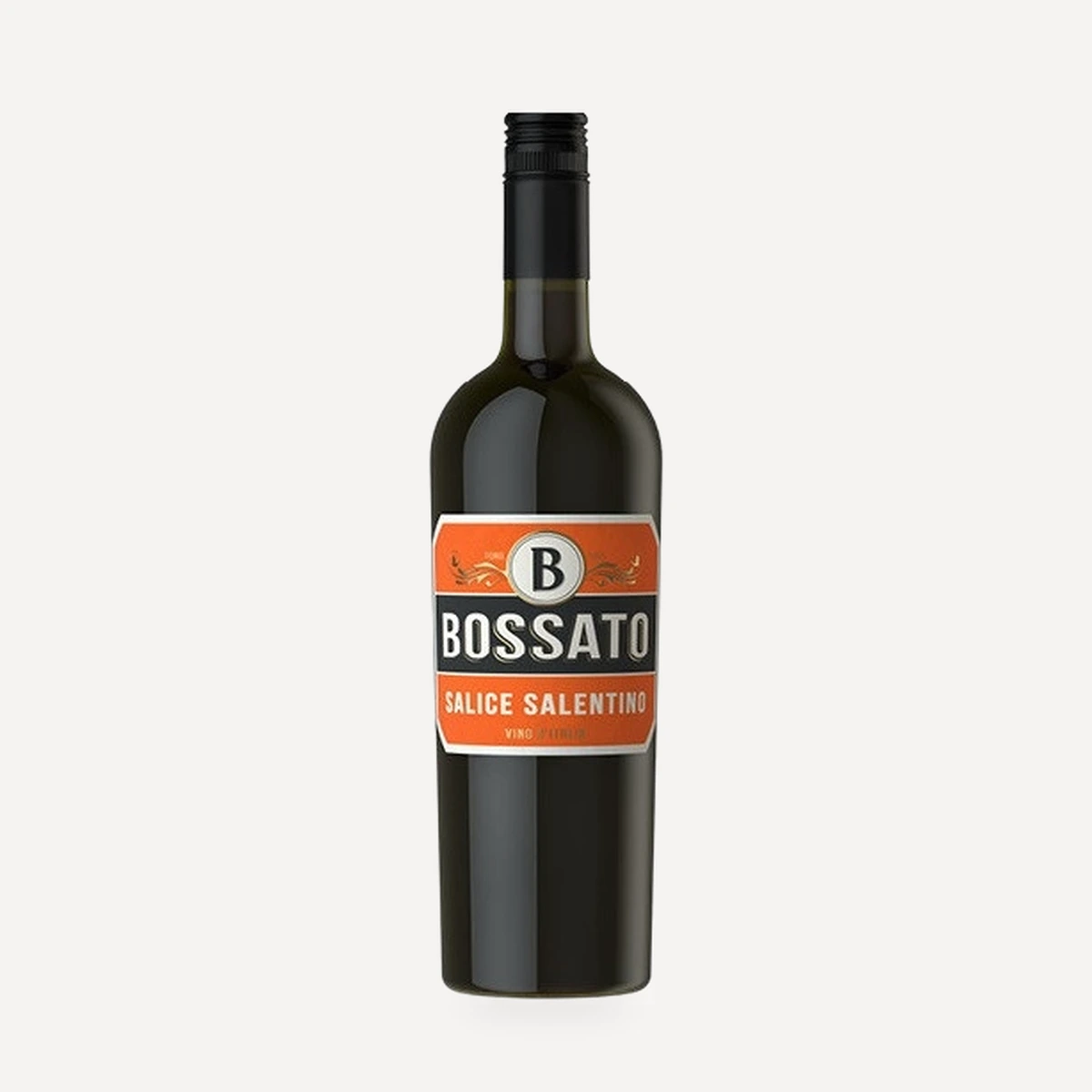
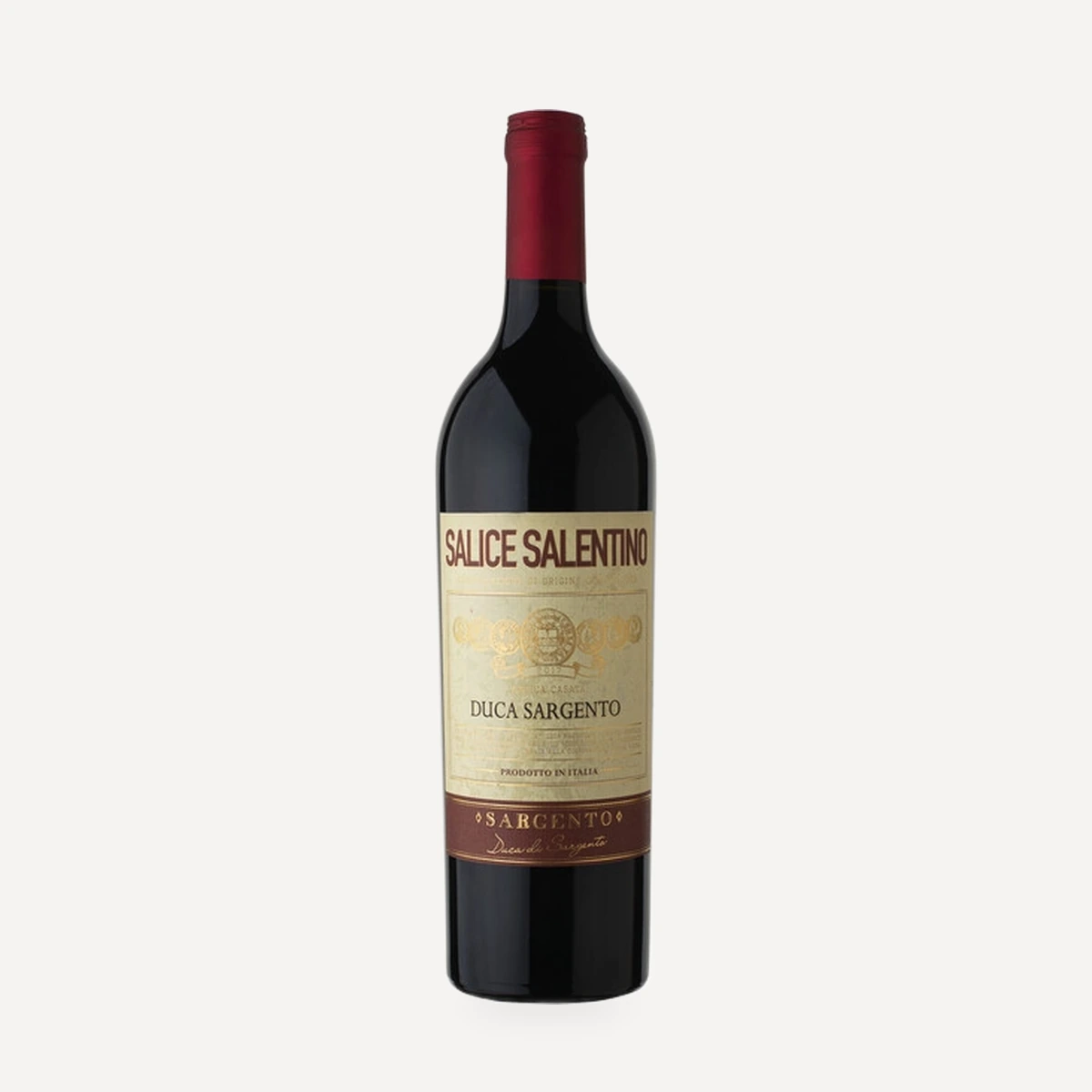
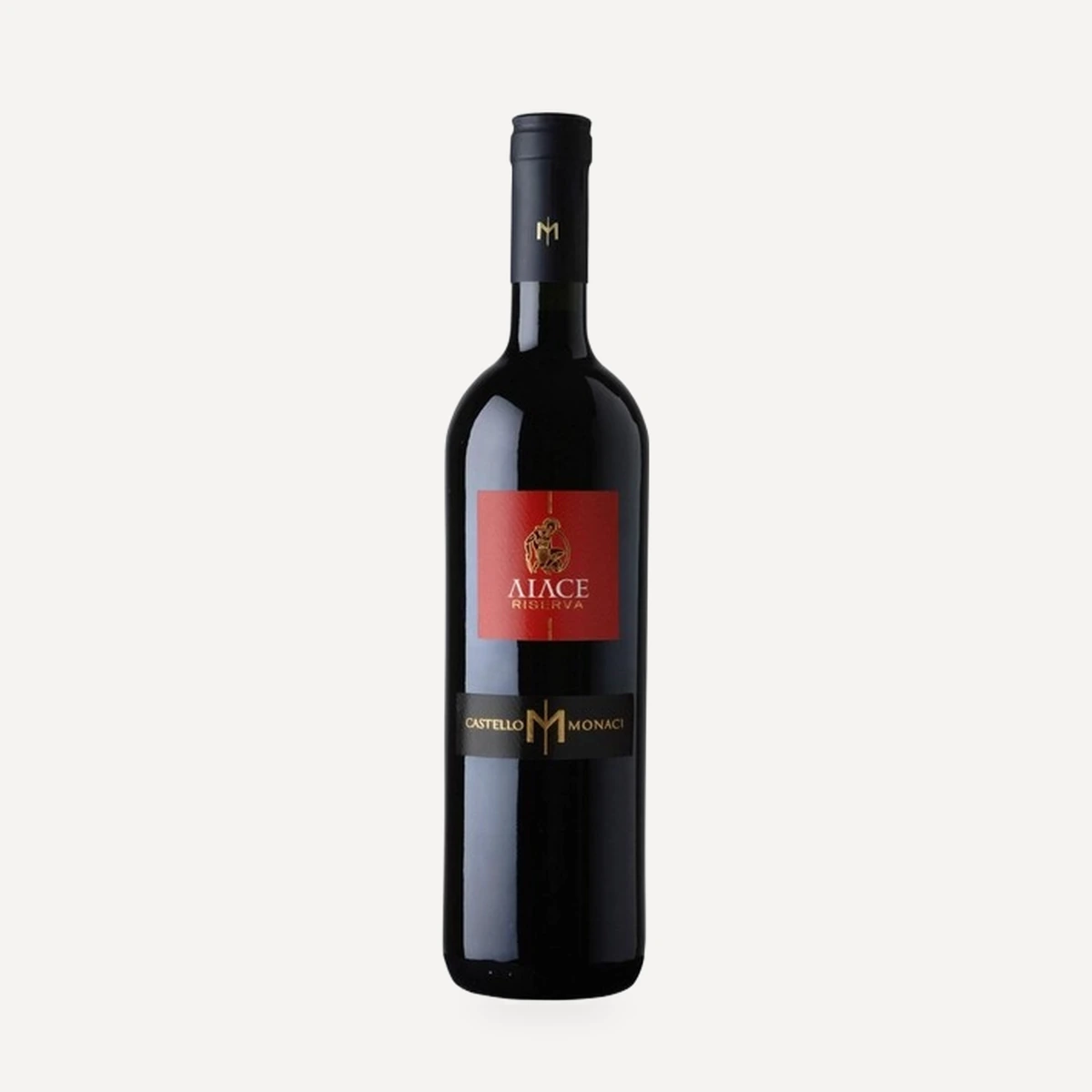
Questo vino
Vineyard and terroir
Salice Salentino is rooted in the wine history of Puglia and the vineyards of Salento, where vines grow under abundant sun in red soils evocative of sea and stone. The vines are trained on espalier with spur-pruned cordons.
Grapes
Negroamaro.
Vinification
Harvest starts in mid-September. The grapes are destemmed and crushed, then macerated on the skins for approximately 5–8 days. Fermentation takes place at 25–26°C, followed by malolactic fermentation in stainless steel.
Ageing
The current interpretation uses restrained oak: approximately 20% of the wine matures in barrique, while the remainder retains its immediate fruit and freshness. During the pre-bottling blend, a component aged for at least six months in French oak is added.
Tasting profile
Deep, bright, compact ruby red with violet highlights. Black cherry, blackberry, and dried violet form the aromatic core, enriched by black pepper, Mediterranean scrub, and a discreet toasted nuance. The attack is soft, with good freshness and integrated, gentle tannins. Agile yet complex on the palate, it returns to fruit and spice before a clean, persistent finish.
Serving and pairing
Serve at 18°C. Pair with light roasts, pasta with meat sauces, mushroom risotto, stuffed vegetables, veal stew, cured meats, or semi-aged cheeses. Traditional Salento matches include orecchiette with meat sauce, pitta di patate with onions and olives, carne al fornello, tripe with tomato and pecorino, and sagne ncannulate with ragù.
Ageing potential
Ready to drink, with the capacity to evolve over 3–4 years.
History
One of the denominations that helped introduce Negroamaro beyond Puglia, Salice Salentino became a symbol of the region’s revival during the 1980s and 1990s. The present style gives greater prominence to fruit through a younger release and more restrained maturation.