Storia
Ancient roots and the first written record
Viticulture and olive growing at Capezzana are traced to Etruscan times. The earliest precise documentary evidence is a parchment dated 804 AD, preserved in the State Archives of Florence, recording the cultivation of vines and olive trees and the production of wine and oil at Capezzana. During the Middle Ages, monks cultivated the land; in later centuries Florentine noble families used Capezzana as a country residence.
The Renaissance villa stands on still older foundations and bears carvings dated 1574. The surrounding Carmignano area received an official delimitation for wine production from Grand Duke Cosimo III in 1716.
Successive owners before the Contini Bonacossi family
Between the eighteenth century and the early twentieth century, Capezzana passed through several owners. The succession included the Cantucci, Bourbon del Monte and Adimari Morelli families, followed by Franchetti Rothschild ownership.
The Contini Bonacossi acquisition and creation of the modern estate
Count Alessandro Contini Bonacossi and his wife Vittoria acquired Capezzana during the 1920s. The family history fixes the acquisition in 1926, while a later historical article gives 1920. The property was subsequently enlarged by incorporating three neighbouring farms: Trefiano, Cerretino and Poggetto. This consolidation created Tenuta di Capezzana in its modern form.
Wine production under the family was already represented in 1925 by Villa di Capezzana and Vin Santo di Carmignano. Alessandro approached the estate as both an agricultural entrepreneur and an art collector. He invested in wine and extra-virgin olive-oil production, pursued modern techniques and sought to raise quality while retaining a connection with Carmignano’s traditions and terroir.
Modernisation, the 1938 cellar and Ugo’s arrival
Augusto Alessandro Contini Bonacossi introduced modern estate management with advice from leading agronomists and oenologists of the period. In 1938, he built a technologically advanced tinaia, or vinification cellar.
In 1947, Augusto Alessandro was joined by his eldest son, Ugo Contini Bonacossi, who had returned from the war with a degree in agriculture. Ugo progressively transformed Capezzana from a sharecropping property into a modern agricultural estate. By the end of the 1960s he had assumed leadership of the business, guiding it through the end of the sharecropping system and continuing its agricultural and organisational modernisation.
Art, inheritance and the 1969 donation
Alessandro and Vittoria had assembled a major collection of paintings, sculptures, ceramics, furniture and other works. Alessandro decided after the Second World War that it should pass to the Italian State. Following his death in 1955, his heirs honoured that intention. A donation of 144 works was formalised in 1969 by a decree signed by President Giuseppe Saragat, after which the group became part of the Uffizi Gallery. Since 2018, the Donazione Contini Bonacossi has been accessible within the Uffizi in Florence.
Fourth-generation projects
Ugo welcomed his children into the family enterprise. Vittorio joined first, followed by Beatrice, Filippo and Benedetta. Their responsibilities developed along distinct lines: Benedetta assumed a central role in wine production, Beatrice led the agricultural estate, and Filippo contributed an entrepreneurial and commercial perspective.
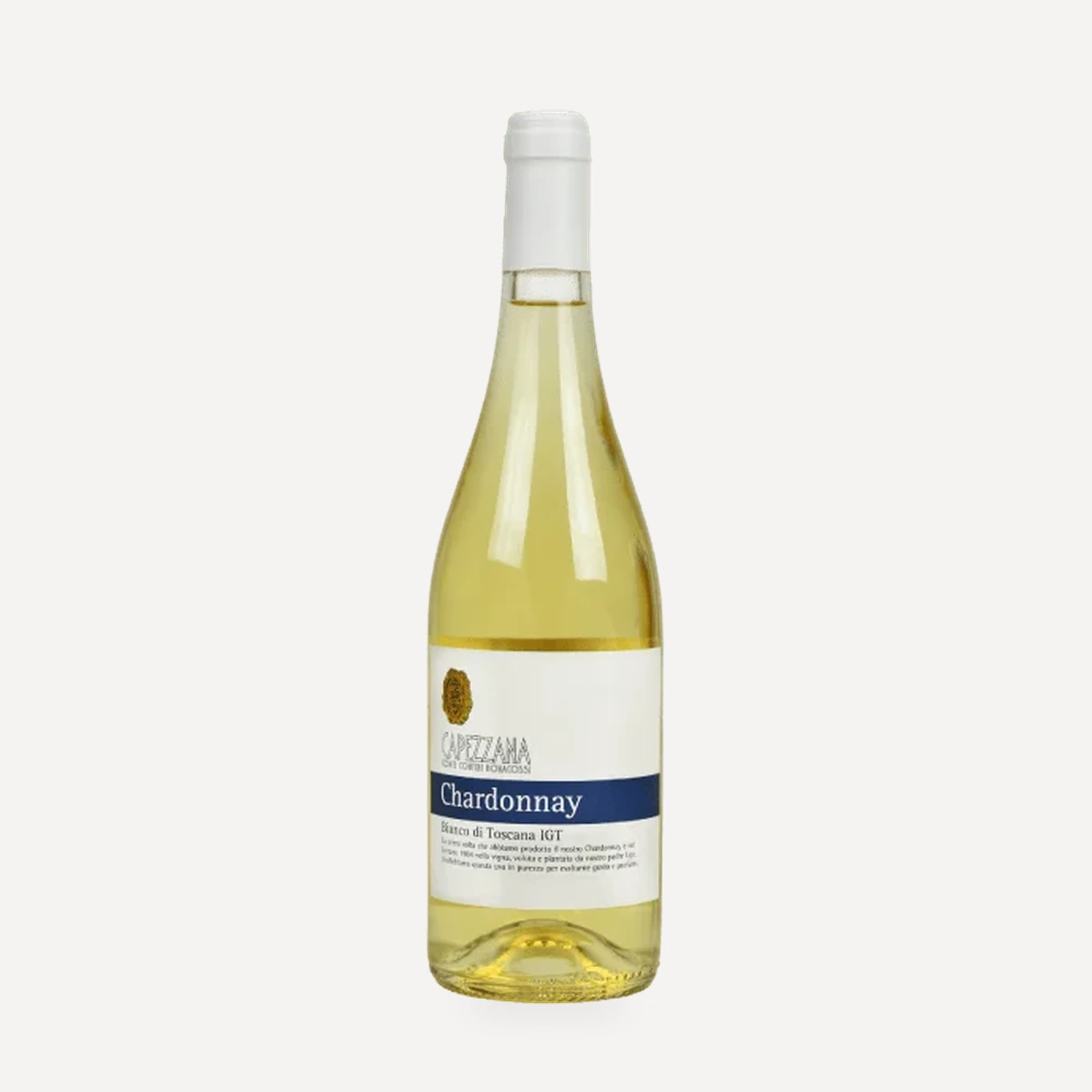
Several projects mark this period. Trefiano Riserva Carmignano DOCG originated from Vittorio’s idea in 1979, using fruit selected from two old vineyards near Villa di Trefiano. Ghiaie della Furba also began in 1979 from the shared vision of Ugo and Vittorio. Capezzana introduced its Chardonnay and Barco Reale wines in 1984. Countess Lisa Contini Bonacossi founded the estate’s Tuscan cooking classes at the end of the 1980s. The Trebbiano project began in 2000, based on an estate mass selection, and Vittorio promoted organic cultivation from the 2000s onward.
Organic transition and recent generations
A formal move toward more respectful agriculture began in 2009. The estate returned to practices such as green manure, reduced reliance on chemical inputs and ultimately obtained organic certification from Bioagricert. The UCB Ugo Contini Bonacossi project debuted in 2013, using Sangiovese from the Viticciana vineyard designed and established by Ugo. Vittoria Brut Rosé followed in 2019, dedicated to Vittoria Contini Bonacossi.
During the global pandemic, Capezzana expanded digital communication through online seminars, virtual tastings and virtual estate tours. It also continued work on water conservation, carbon-footprint reduction and more environmentally responsible production.
Management is now shared by the fourth generation—Beatrice, Filippo and Benedetta—and the fifth generation, represented by Ettore, Gaddo and Serena. The transition maintains the family’s combination of agriculture, wine, olive oil, hospitality, art and continuing technical innovation.
Terroir
Tenuta di Capezzana lies in the hills of Carmignano, in Tuscany near Prato and between Florence, Prato and Pistoia. Its landscape comprises hillsides planted with vines and olive trees, together with woods and cypresses. The vineyards occupy sunny slopes exposed to light breezes.
The soils vary across the estate. Descriptions include clay shale, limestone, galestro, alberese, silt and clay, as well as geologically complex or “chaotic” formations. This variation supports distinct vineyard expressions. The Viticciana vineyard stands at approximately 150 m, faces south and has clay-schist and limestone soils. The two old vineyards beside Villa di Trefiano stand at approximately 200 m, face south to south-west and are rooted in clay shale, with limestone also recorded in technical material. Young Trebbiano vines occupy an east-facing hillside.
The hillsides require active erosion management. At Viticciana, two counter-slope contour roads interrupt the rows, channel rainwater and protect the soil from erosion. Across the vineyards, green manure, added organic matter and light tractors are used to preserve porosity, water retention, oxygen and microbial life.
Vinificazione
Capezzana began a formal transition toward more respectful agriculture in 2009 and is certified organic by Bioagricert. Organic cultivation had already been advanced by Vittorio Contini Bonacossi from the 2000s.
Green manure and cover cropping are established practices. Legumes are sown between vineyard rows to fix atmospheric nitrogen naturally and add organic matter. Light tractors reduce compaction, helping the soil retain water and oxygen while encouraging beneficial microorganisms.
The estate calls its relationship with the environment “integrated respect”: the objective is to work with natural systems, accept a tolerable level of damage and use natural pest regulation wherever possible. Biodiversity and long-term soil fertility are treated as resources to be passed to future generations.
Water conservation, carbon-footprint reduction and the broader environmental impact of estate operations have also been assessed within the sustainability programme. Harvesting is manual where specifically described for Viticciana and for grapes selected for Vin Santo; the latter are picked in the first days of September before natural drying.
Capezzana combines a historic cellar tradition with contemporary equipment and techniques. Augusto Alessandro built an advanced tinaia in 1938, and the estate’s historic cellars now preserve old vintages as a record of the evolution of its wines. The working cellar contains steel vessels, barrels, tonneaux, barriques and amphorae, while the attic vinsantaia is used for the traditional drying and maturation of Vin Santo.
Grapes are selected carefully, and the estate’s general production philosophy combines organic farming, traditional methods and technical innovation. Indigenous yeasts are used to retain the identity and biological diversity of each harvest. Steel is employed for fermentation across several parts of the range, while maturation may take place in large oak casks, French oak tonneaux, barriques or, for Vin Santo, small caratelli made from chestnut, cherry and oak.
Vin Santo production illustrates the estate’s most traditional process. Ripe Trebbiano and San Colombano bunches are selected by hand, dried naturally on mats until the beginning of the new year or as late as February, then pressed at a yield of only one quarter to one fifth of their original grape weight. The must enters small wooden caratelli for at least five years; current descriptions also record seven-year maturation for a recent release. The finished wine has no stated upper limit to its bottle-ageing potential.
The winery maintains an archive of valuable old vintages. It also reserves 3,000 bottles of Villa di Capezzana each year for release after ten years in the historic cellar, a project intended to demonstrate Carmignano’s capacity for long ageing.
Filosofia
Capezzana frames tradition as a moving course rather than a fixed monument. Its declared aim is to connect inherited practices with continuing innovation while allowing wine and olive oil to express the land of Carmignano.
The family presents itself as a custodian rather than simply an owner. Agriculture is expected to respect the natural cycle of the ecosystem, maintain biodiversity and leave fertile land to later generations. This principle underpins organic cultivation, green manure, reduced compaction, natural pest regulation, water conservation and efforts to reduce the estate’s carbon footprint.
Balance, elegance and tradition are recurring quality ideals. Technical development is accepted where it supports these aims: modern cellar equipment, careful selection and digital tools coexist with indigenous yeasts, historic cellars, traditional drying rooms and long maturation in wood. Each generation is expected to preserve the family inheritance while adapting it to new agricultural, environmental and commercial conditions.
Vini
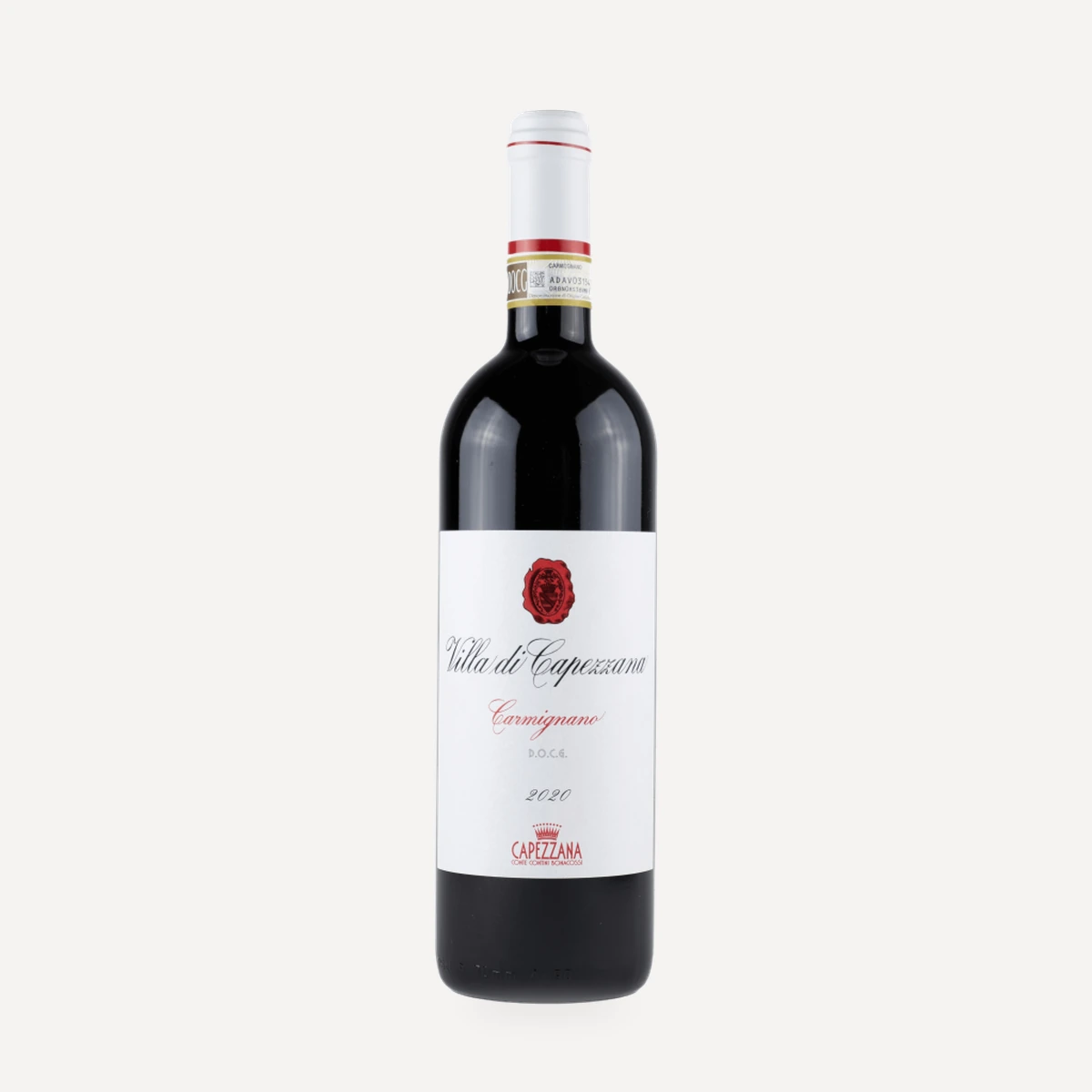
Villa di Capezzana di Carmignano DOCG
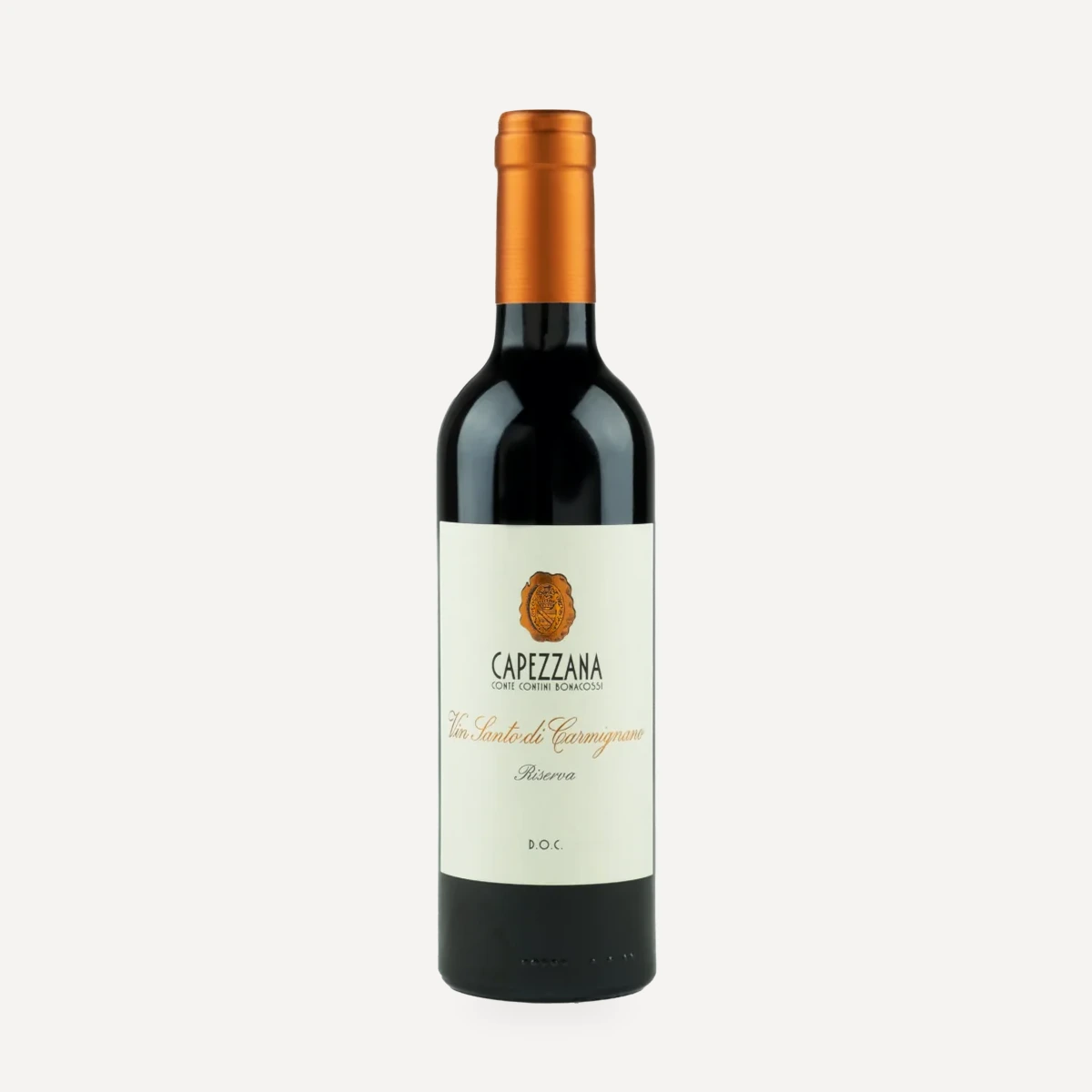
Vin Santo di Carmignano Riserva DOC
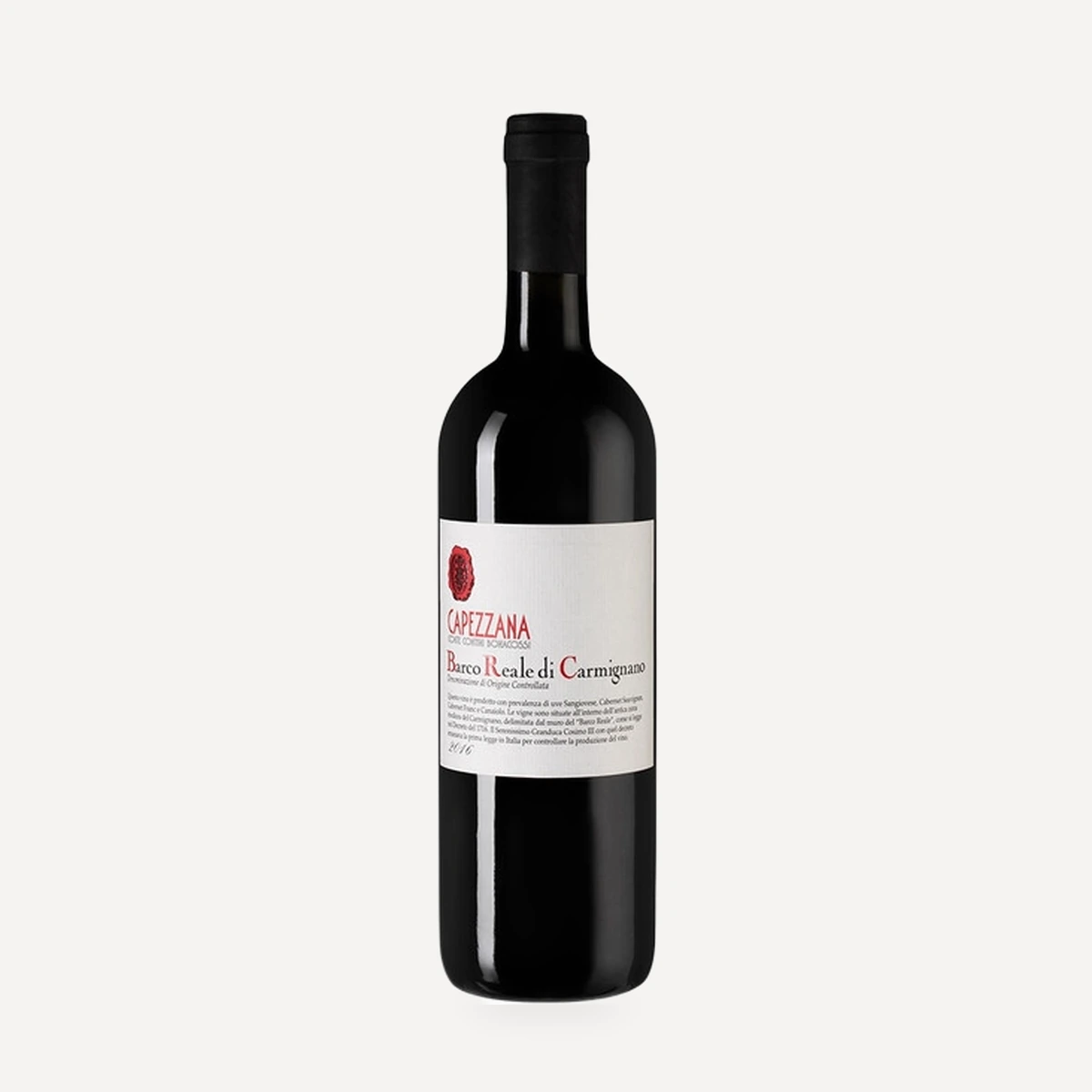
Barco Reale di Carmignano Bio DOC
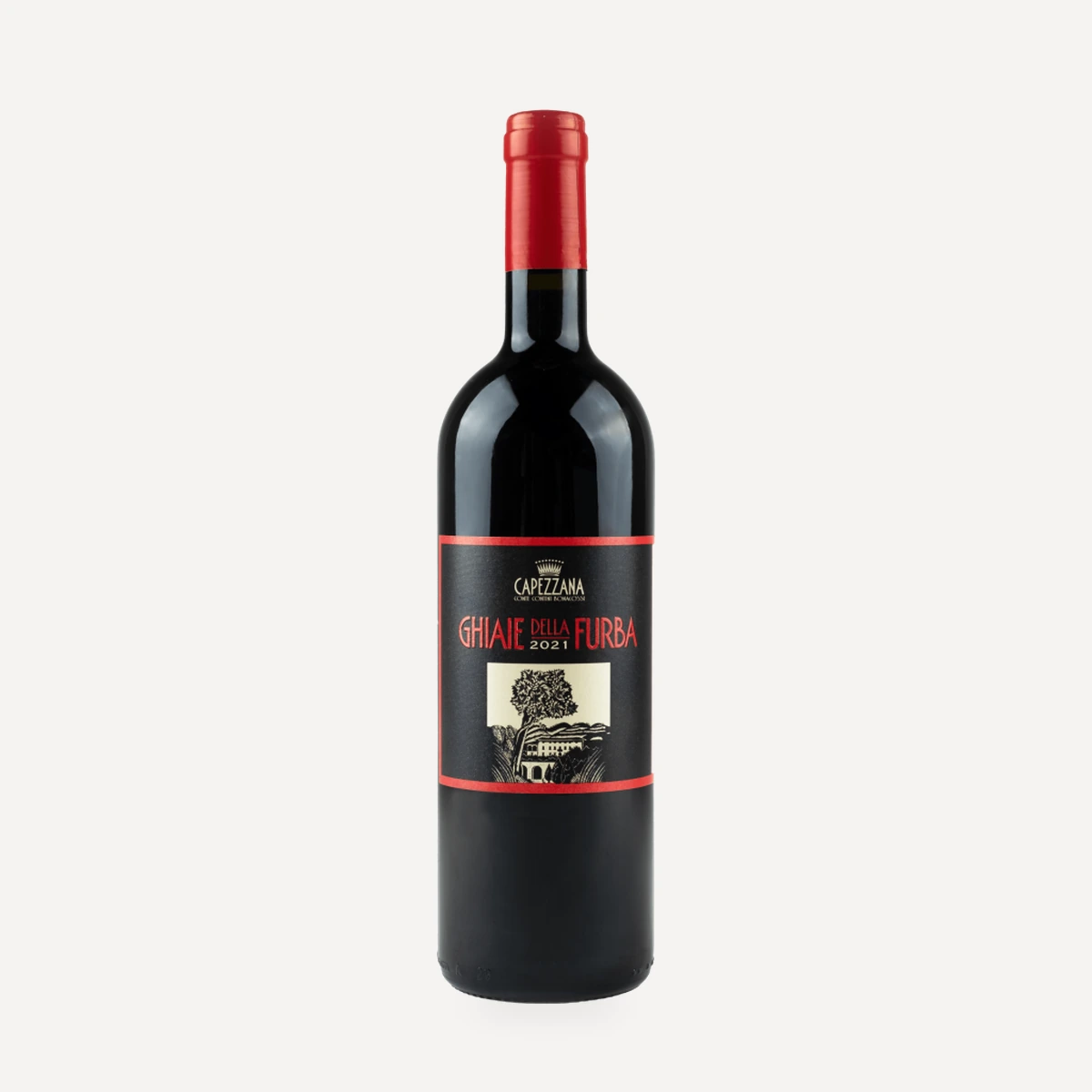
Ghiaie della Furba Bio IGT
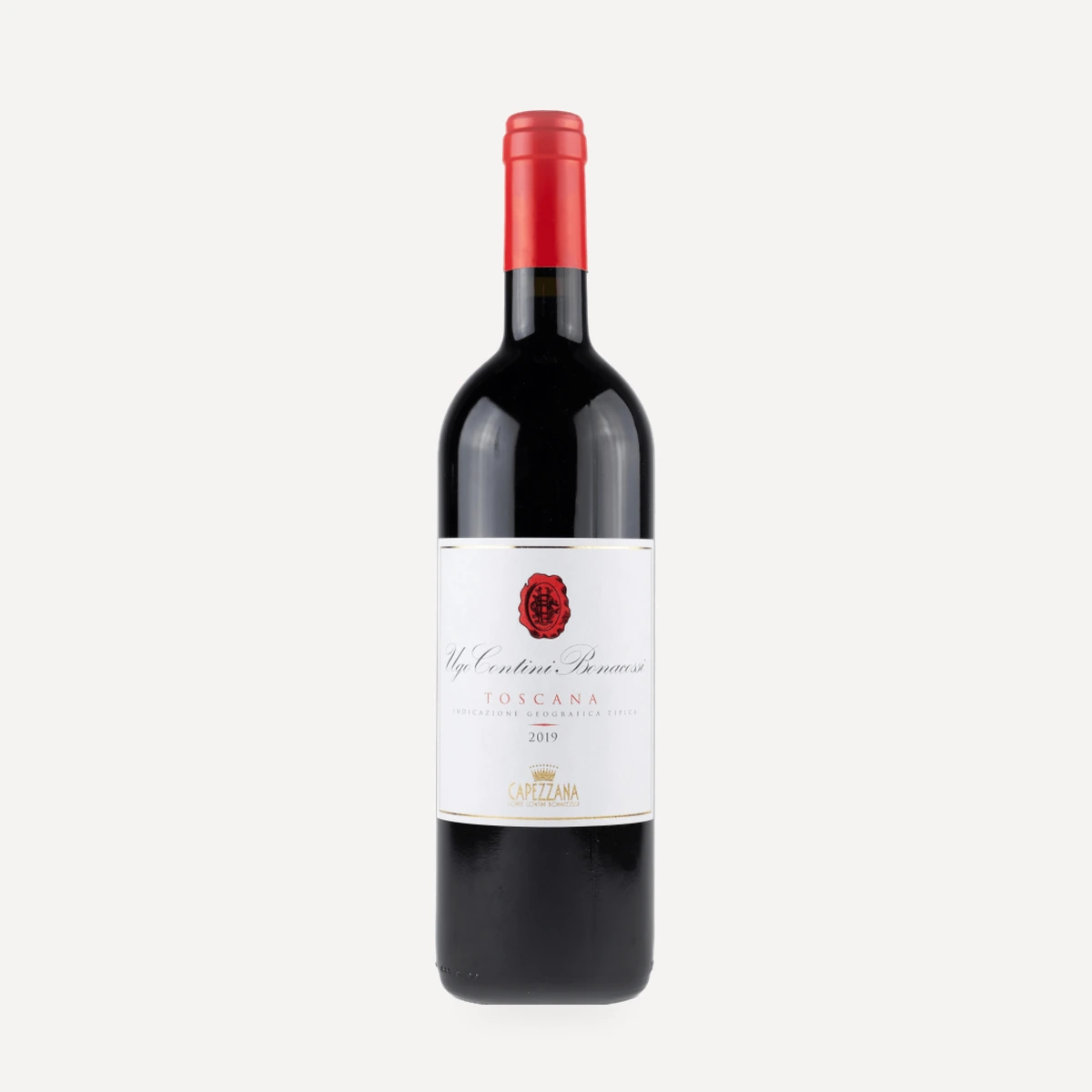
Ugo Contini Bonacossi IGT
Trefiano Carmignano Riserva DOCG
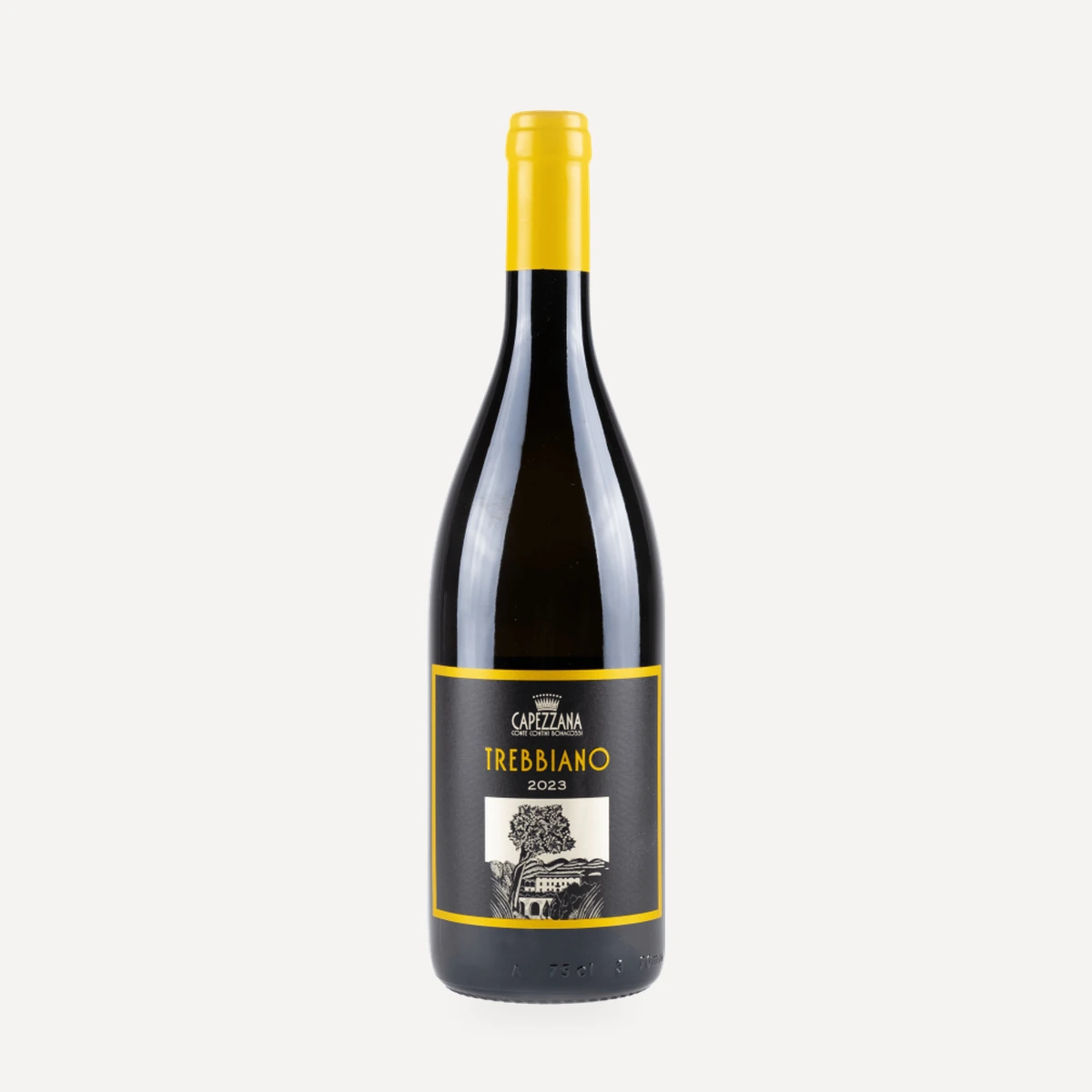
Trebbiano di Capezzana IGT
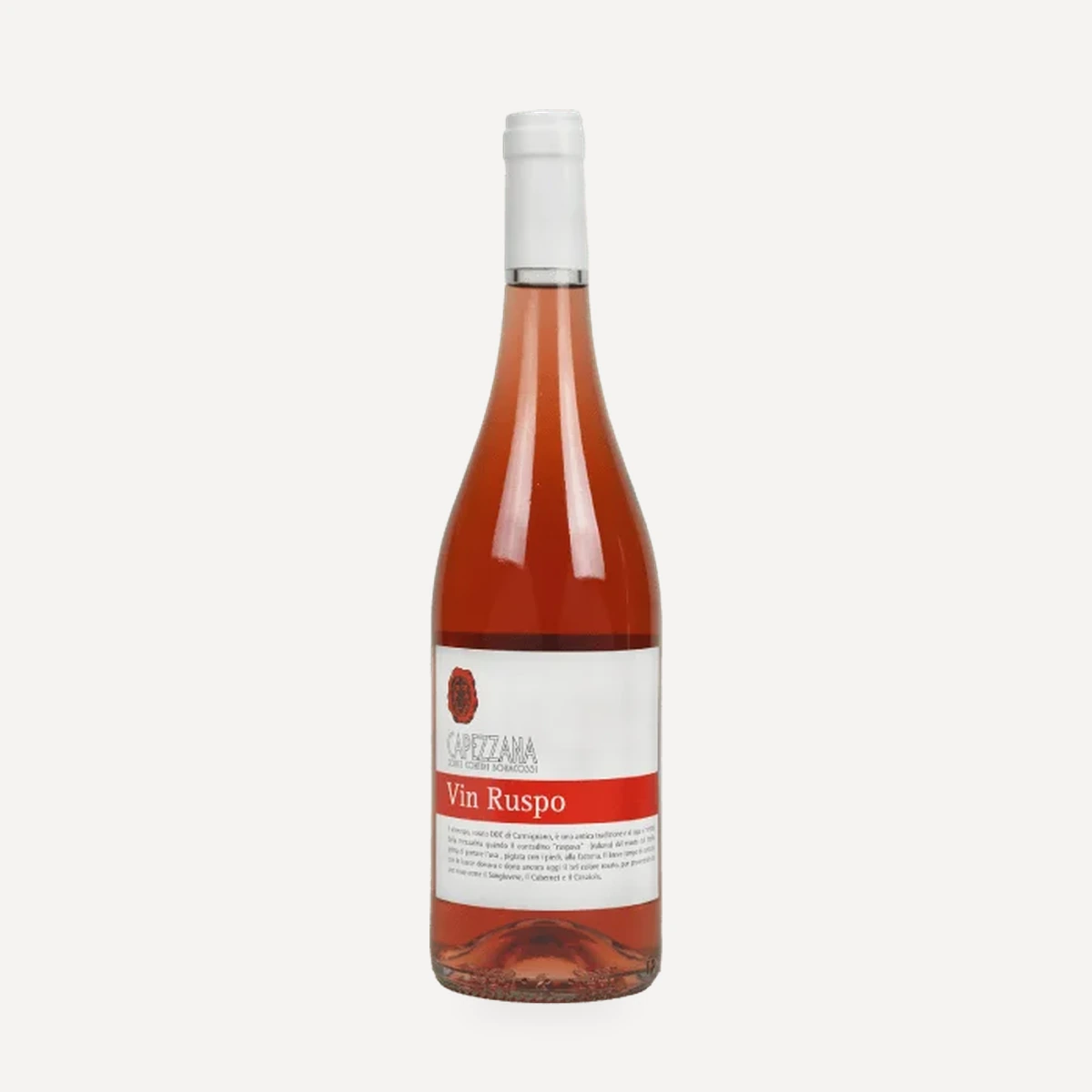
Vin Ruspo di Carmignano DOC