Storia
Ancient origins of the site
In the Roman period, the Campovecchio area contained the villa of the Giuni Siciliani, a residence decorated with frescoes and mosaics and traditionally attributed to Iunius Silanus, the son-in-law of Emperor Augustus. The villa was abandoned during the decline of the Roman Empire, although inscriptions found locally also attest to the presence of early Christian communities. A paved branch road crossed the land now occupied by the vineyards, linking the Via Castrimense with the Via Latina; the route remained in use into the twentieth century.
The medieval Castel de Paolis was built over the remains of an imperial-period villa in a strategic position overlooking the ancient road between Rome and Castromoenium. The hill was once identified with Castromoenium itself, although later studies placed the Roman colony at present-day Marino. The fortress is first documented in 955. It was one of the strongholds established by the Conti di Tuscolo to defend their lands during the baronial struggles that affected papal authority and the appointment of bishops and emperors.
A very old church dedicated to Santa Maria stood within the walls. In 1033, a bull of Pope Benedict IX confirmed the transfer of the church from the Conti di Tuscolo to the monks of Grottaferrata. For almost three centuries, baronial militias and mercenary companies fought in the surrounding countryside, while the Frangipane, Orsini and Colonna families contested the castle through warfare, purchase and litigation.
Decline of the castle and the Campovecchio estate
From the late fifteenth century, the consolidation of papal power reduced the fortress's strategic importance and its defences were abandoned. By 1575 it was described as ruined. The surviving keep and arched doorway later became the entrance to a vineyard, while the ground plan and pavement of the former church could still be recognized.
The name Campovecchio is associated with the Vecchi family, who owned land here in the fourteenth century. Cardinal Bessarion subsequently recorded Campovecchio among the possessions of the Abbey of Grottaferrata. In the sixteenth century the property passed to the Gavotti, Genoese bankers established at the papal court, who built an elegant villa. In the mid-seventeenth century its façade was embellished with an important collection of Roman statues and reliefs. The residence had gardens, fountains and a terrace overlooking the Gavotti waterfall in the valley below. Behind it remained an ancient vineyard, with cellars incorporated into Roman structures.
The estate was sold in the eighteenth century to cover gambling debts. A century later it entered the holdings of the Abbey of Grottaferrata, from which it was expropriated following the Italian occupation of 1870. During the First World War, vineyard cultivation was entrusted to a group of Austro-Hungarian prisoners.
The Santarelli family and the experimental project
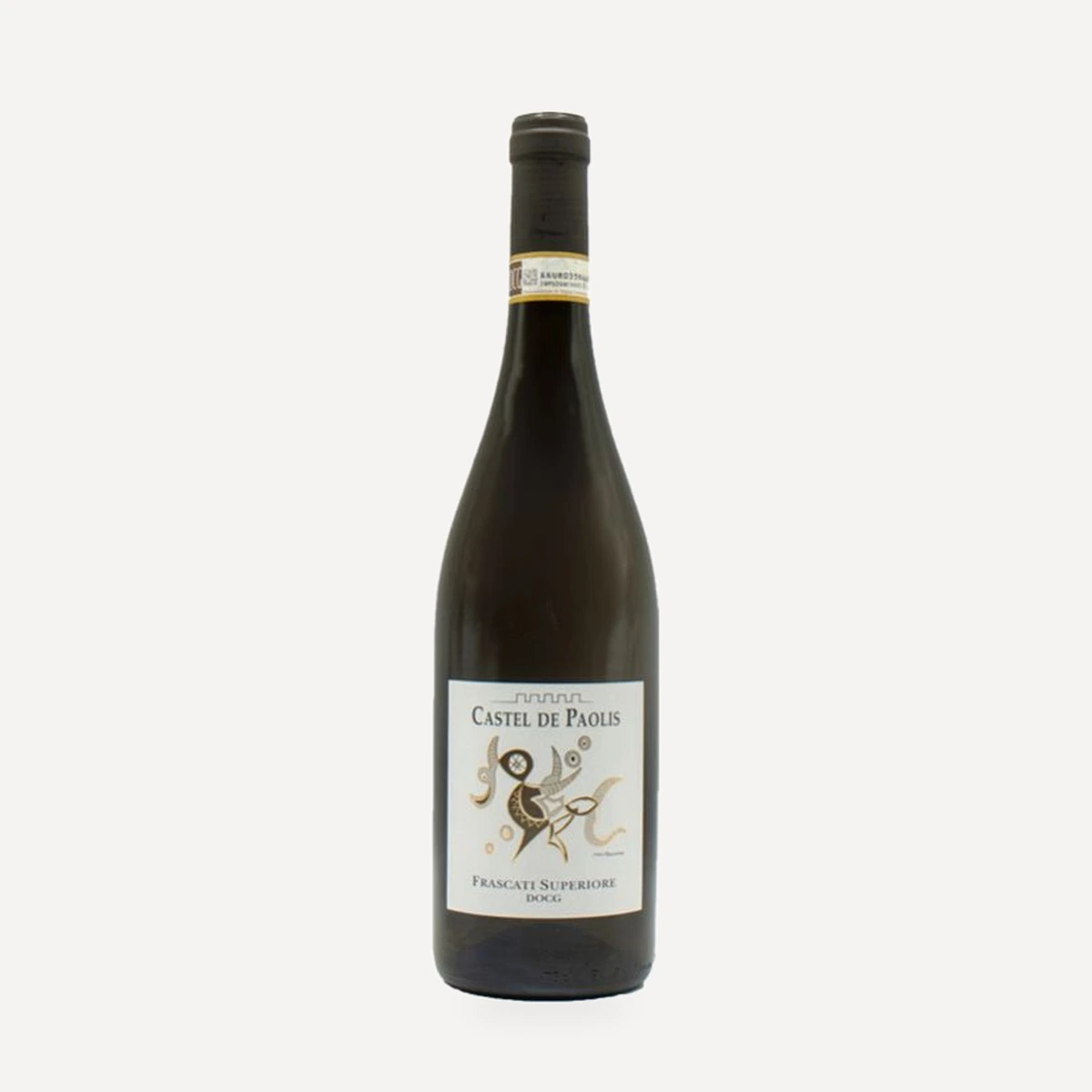
Giulio Santarelli acquired the family's first approximately 2 ha in 1974, motivated by his interest in the countryside and vine growing. He began acquiring neighbouring plots in 1977. These early holdings were already largely planted with vines, but until 1985 their grapes were delivered to local cooperative wineries, including for the production of Frascati Superiore DOC.
In 1985 Santarelli, then an Italian undersecretary of state for agriculture and forestry, began a research and redevelopment project with Professor Attilio Scienza. Its objectives included recovering valuable local varieties that had been neglected after phylloxera, evaluating varieties from other Italian regions and France, and moving from overhead-trained vineyards to higher-density rows with lower production per vine and better bunch exposure.
Half of the estate's then 8 ha was uprooted for an extensive trial involving local, Italian and international white and red grapes. The varieties considered included Malvasia del Lazio or Malvasia Puntinata, Bonvino, Grechetto, Bellone or Cacchione, Pecorino, Romanesca, Trebbiano Giallo, Vermentino, Passerina, Incrocio Manzoni, Moscato Giallo, Cesanese del Piglio and Cesanese d'Affile, Montepulciano d'Abruzzo, Sangiovese, Viognier, Sémillon, Chardonnay, Sauvignon Blanc, Roussanne, Syrah, Cabernet Sauvignon, Petit Verdot, Merlot, Grenache, Tempranillo and Alicante/Alicante Bouschet.
Moscato Rosa was included at Scienza's suggestion. He considered the pedoclimatic conditions of the Castelli Romani comparable to those of the ancient variety's presumed Caucasian area of origin in Georgia and Armenia.
The first experimental harvest took place in 1988 and allowed the results of the trials to be tasted and assessed. On that basis, the varieties for the permanent vineyards were selected. The estate had expanded to 14 ha, and its entire surface was progressively uprooted and replanted between 1989 and 1993.
First wines and construction of the winery
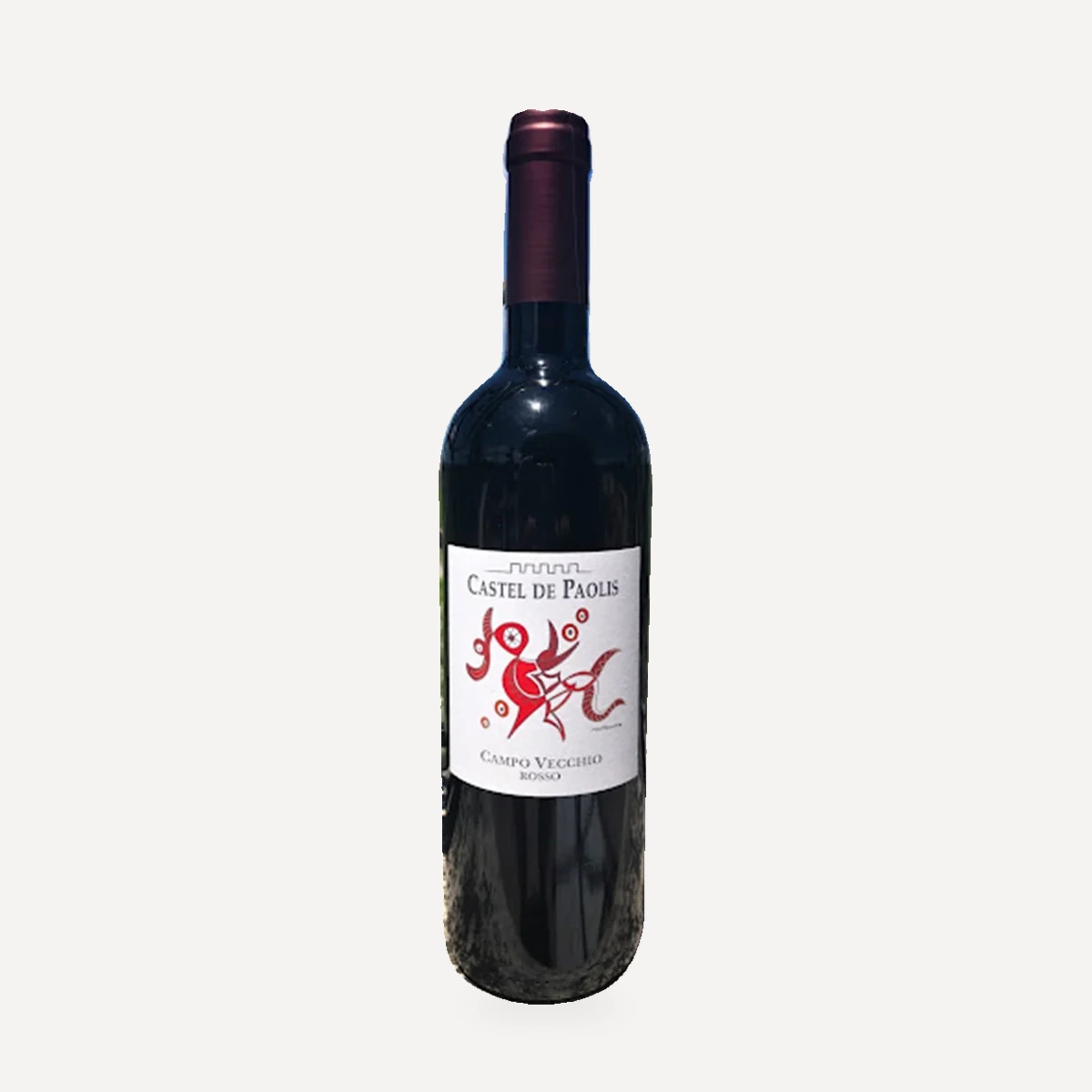
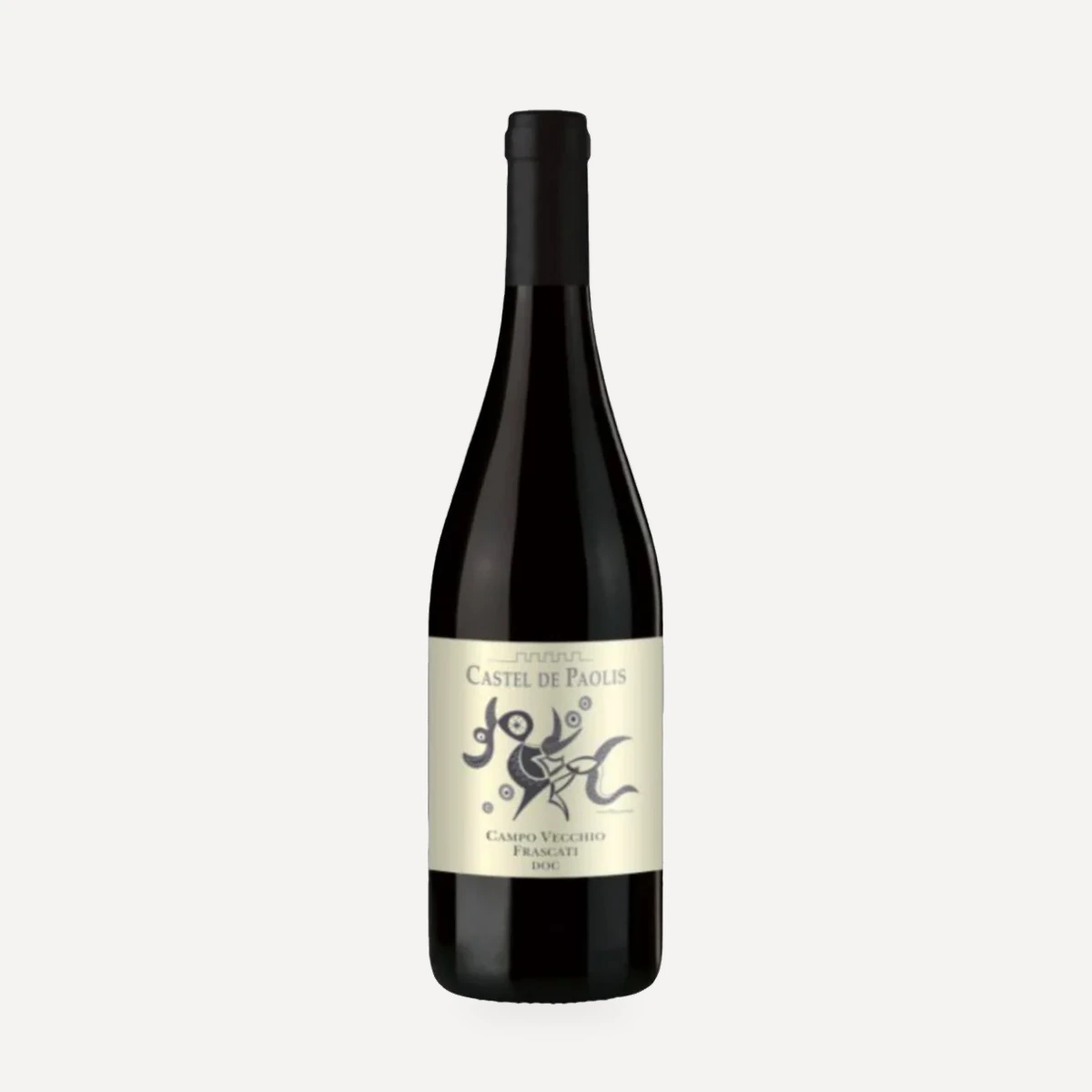
The first commercial Castel de Paolis vintage was released in 1993, at the conclusion of eight years of research and development. The initial range comprised eight wines: the whites Frascati DOC Campovecchio, Frascati DOC Superiore—subsequently Frascati Superiore DOCG—and Donna Adriana; the reds Campovecchio Rosso and I Quattro Mori; and the sweet wines Muffa Nobile, Rosathea and Frascati DOC Cannellino.
A purpose-built winery designed by Enoconsult was completed for this new phase. It incorporated temperature-controlled refrigerated stainless-steel tanks and gentle presses. During work in the cellar, ancient Roman water cisterns were discovered beneath part of the floor. The historic cistern now provides the ageing space for barriques containing the estate's ageworthy red wines.
Renovation and the second generation
In 2005, approximately €2 million was invested in a substantial renovation and enlargement of the vinification and ageing facilities. New refrigeration equipment was installed for fermentation-temperature control, together with a warehouse for bottled wine, two dining rooms, and a professional kitchen intended for restaurant and catering activities. One dining room overlooks Rome. Rural buildings and a swimming-pool area occupy the upper part of the property, above the vineyards.
The Santarelli family continues to supervise production, bottling, commercial activity and promotion. Giulio Santarelli's son Fabrizio is responsible for administration, marketing and promotion in Italy and international markets. The wines have been distributed in countries including China, Japan, the United States and Brazil, as well as several European markets.
Terroir
The estate lies in Grottaferrata in the Castelli Romani, south of Rome. Its general elevation is given as 270 m above sea level, while the vineyard specifications use a hilly elevation of approximately 250 m. Grottaferrata, together with Monte Porzio Catone and Frascati, forms the territory of the Frascati DOC.
The vineyards occupy volcanic ground composed of granular tuffs and pozzolana. The soil is also characterized as rich in potassium and mineral salts. The combination of hillside position, volcanic material and mineral content is considered important to the strength, richness and mineral expression sought in the wines.
The position is described as being at an advantageous distance from the Tyrrhenian coast and enjoying a particularly mild climate. From the panoramic cellar terrace, the view extends over the vineyards and Rome to the Lazio coast.
Vinificazione
The vineyard redevelopment replaced the area's traditional overhead systems with rows planted at a density of 5,500 vines/ha. Greater density was chosen to reduce production per vine and improve the solar exposure of the bunches. The normal training system is spur-pruned cordon, with Guyot or archetto used for Moscato Rosa.
Castel de Paolis introduced green harvesting for red grapes locally. Approximately 25% of the bunches are removed about two months before harvest so that the remaining fruit can achieve greater ripeness and aromatic concentration. Production is capped at approximately 1–1.5 kg of grapes per vine.
The viticultural programme eliminated all forms of fertilization and incorporated biological-conversion measures under EEC Regulation 2078/92. Grape selection forms part of the family's supervision of production.
The Enoconsult-designed winery was created for the first commercial Castel de Paolis harvest. Grapes are handled with gentle presses, while refrigerated stainless-steel tanks permit fermentation at controlled temperatures. The Santarelli family supervises grape selection, fermentation-temperature control and bottling.
White wines are generally fermented in stainless steel at about 18°C for 8–12 days. Donna Adriana demonstrates the estate's mixed-vessel approach, with 85% fermented in temperature-controlled steel and 15% in barrique. Red wines are fermented in steel at 25–28°C for approximately 10–18 days. Depending on the intended style, maturation can combine barrique and steel or take place entirely in barriques made from Tronçais and Allier oak. Moscato Rosa is fermented in steel at 18–20°C for 10–12 days. The botrytized Muffa Nobile is fermented in new barriques for 15–18 days and aged entirely in Tronçais and Allier barriques.
Ancient Roman water cisterns discovered beneath the cellar provide an ageing environment for barriques of red wine. The 2005 expansion created additional vinification and maturation space, upgraded the refrigeration plant used for fermentation control and added a dedicated warehouse for bottled wines.
Filosofia
Castel de Paolis was conceived as a programme of research and renewal for the viticulture of the Castelli Romani. Its approach combines the recovery of valuable local grapes with the careful evaluation of varieties from elsewhere, using experimentation rather than convention to determine which vines best suit the property.
Quality is pursued through dense vineyard planting, low production per vine, green harvesting for red grapes, the elimination of fertilization, selective handling of fruit and controlled cellar technology. The declared aim is to unite the area's historic wine culture with modern viticultural and winemaking solutions while preserving the character supplied by the grapes and volcanic land.
The family presents continuous research and improvement as central principles. Fabrizio Bono's winemaking direction is framed as an innovative continuation of earlier work, attentive to the character of the land and the fruit rather than a break with the estate's established path.
Vini
Frascati Superiore
Campo Vecchio IGT Lazio Bianco