Storia
Agricultural beginnings in the 1930s
The Morelli family’s agricultural activity dates to the 1930s. The mixed farm cultivated vegetables, grew fruit and produced wine. Knowledge of farming and winemaking was transmitted within the family from father to son, together with an attachment to the surrounding environment.
Specialization in viticulture in the 1950s
During the 1950s, the family discontinued fruit and vegetable production and directed its human and financial resources exclusively toward viticulture. The new focus included the recovery and cultivation of local varieties, with particular attention to Bianchello. This grape became the emblem of the family’s work and remains central to Claudio Morelli, the family’s third-generation winegrower.
Development across the Metauro hills
The estate developed six distinct vineyards on hills overlooking the Metauro river valley. Its work included identifying sites with different soils, elevations, exposures and maritime influences, allowing the same varieties—especially Bianchello and Sangiovese—to be cultivated under contrasting conditions. The vineyard holding now covers approximately 18 hectares, accompanied by about 400 olive trees.
Production was divided between two facilities: a vinification cellar at Sant’Andrea di Suasa in the commune of Mondavio and an ageing and bottling cellar in Fano, which also houses the offices and tasting room.
Technical modernization
Modern cellar equipment introduced soft pressing, controlled fermentation temperatures and static settling of musts. A reductive system was subsequently adopted for Bianchello: grapes are protected from oxygen with carbon dioxide in the form of dry ice, followed by low-temperature skin contact before fermentation. This approach complemented the family’s established red-wine methods, in which fermentation temperature, maceration and maturation in steel or barriques are adjusted to the intended style.
By November 2017, the reductive Bianchello process had become part of the estate’s documented production practice. In 2018, the winery described separate post-fermentation regimes for white and red wines, including weekly closed-loop circulation of fine lees for whites and variable post-fermentation maceration for reds.
Classic-method sparkling wine
In March 2019, Claudio Morelli presented the 2012 vintage of Mòrell, a classic-method sparkling wine made entirely from Bianchello del Metauro DOC and matured on its lees for 72 months. The estate also documented its manual remuage system, carried out on wooden pupitres before disgorgement.
Terroir
The vineyards occupy the hills of northern Marche around Fano, Cartoceto, Fratterosa and Sant’Andrea in Villis, overlooking or extending inland from the Metauro river valley. The six sites encompass proximity to the Adriatic Sea as well as inland elevations approaching the Apennines.
Estate soils include sandy tuff, combinations of tuff and sand, and medium-textured soils containing tuff, silt and clay. The broader Colli Pesaresi setting is described as a mosaic of sand, tuff and clay, with vineyards interspersed among cultivated fields and woodland.
The maritime sites are exposed to a humid, ventilated and saline Adriatic climate. Bora, maestrale and tramontana bring cool maritime influence; the warm, dry libeccio, locally called garbino, assists ripening, while scirocco contributes warm, humid conditions. At the terraced Roncosambaccio site, the maritime winds are described as carrying sea salt into the vineyard.
Elevation and exposure vary substantially. Bianchello sites used together for San Cesareo range from approximately 80 to 250 metres above sea level, on hills extending from the Adriatic toward the Apennines. Their diverse sunlight and exposure to scirocco, libeccio, maestrale and tramontana create contrasting ripening conditions. Le Terrazze at Roncosambaccio lies at approximately 100 metres with a south-east exposure. The Sant’Andrea in Villis vineyard also faces south-east; its long sunlight exposure is combined with protection from severe northern weather by the hill rising above it.
Sangiovese is grown on hills facing the sea, where the ventilated, humid and saline conditions of the Adriatic basin influence the grapes. Montepulciano ripens relatively late under local conditions, generally in October, and is associated with ventilated sites and calcareous soils.
Vinificazione
Vineyard work is organized around both winter and spring–summer pruning, with the common objective of obtaining mature, healthy fruit balanced in acidity and sugar. Winter pruning normally takes place between January and March. It renews the plant, defines its form and regulates crop load so that the bunches can ripen correctly.
Two principal training and pruning systems are used. Guyot—described in its simple or double forms—is applied to white grapes and particularly to Bianchello. The first bud of Bianchello is considered unfruitful, making spurred-cordon pruning unsuitable. During Guyot pruning, second-year canes are removed and one or two canes are retained, each carrying six to eight buds. The selected cane is tied manually to the vineyard wire in an arch, encouraging the productive central buds. Each retained bud subsequently produces a new shoot and fruit. This work is performed by hand and is not suited to the mechanical pre-pruning possible with spurred cordon.
Spurred cordon is associated with the estate’s red varieties, particularly Sangiovese and Montepulciano. At Le Terrazze, Sangiovese is instead trained to double Guyot; the mixed vineyards used for other reds employ both spurred cordon and simple Guyot.
After winter pruning, spring brings vigorous vegetative growth and a new sequence of vineyard operations. The work is adjusted to the intended wine style and seeks to balance vegetative development with fruit production. The estate’s site selection also forms part of its viticultural approach: vineyards with different elevations, soil structures, exposures and maritime influences are cultivated separately or combined to obtain complementary characteristics.
The estate grows two forms of Aleatico, locally known as Vernaccia Rossa: an older, less productive type with small berries and few bunches per vine, and a more productive modern type. Montepulciano generally reaches maturity relatively late, in October.
Cellar organization
Vinification takes place at the cellar in Sant’Andrea di Suasa, Mondavio. Ageing and bottling are carried out at the Fano cellar, which also contains the estate offices and tasting room. Annual output is approximately 110,000 bottles.
Modern equipment is used for soft pressing, control of fermentation temperatures and static settling of musts.
Bianchello and reductive processing
Bianchello can be processed under reduction to limit contact between freshly obtained must and air. Grapes are treated with liquid carbon dioxide in the form of dry ice, creating an oxygen-protected environment. The skins then remain in contact with the juice at low temperature for approximately 5–12 hours. After this cryomaceration, the juice is transferred to fermentation tanks.
Longer low-temperature skin cryomacerations and cool fermentations are employed for individual Bianchello expressions, while maturation takes place in steel tanks. Site-specific protocols include cool fermentation periods of 15–20 or 25–30 days.
White-wine work after fermentation
Once vigorous fermentation is complete, the newly fermented white wine is racked to remove gross lees. Fine lees remain suspended and are subsequently settled through cold temperatures. To retain the contribution of the fine lees, the cellar performs weekly closed-loop circulation, lifting material that has settled at the bottom of the tank back into suspension.
Red-wine work
Red grapes ferment in contact with their skins. Once vigorous fermentation is complete, the duration of post-fermentation maceration is chosen according to the intended style: shorter periods for youthful wines and longer periods for wines intended to mature. The skins are then pressed. Lees generated during pressing are removed by racking after approximately 10–15 days.
Across the red-wine range, fermentation temperatures, skin-contact periods and maturation in steel or barriques vary by style. Documented protocols include skin macerations of approximately 8–10, 10–12, 10–15 or 15–20 days, followed by either steel maturation or 12–15 months in barriques; some wines receive a further 6–8 months in bottle.
Classic-method remuage
For Mòrell, bottles are riddled manually on wooden pupitres holding up to 120 bottles. They are first agitated vigorously and placed almost horizontally at an angle of roughly 10 degrees. After seven or eight days, each bottle is shaken and turned by one quarter. This is repeated daily for four days, completing a full rotation. On the fifth day, the direction is reversed so that the bottle returns to its starting position by the eighth day.
The bottle is then placed at a steeper angle, with four days of rotation in one direction followed by four days in the other. By day 16 it has again returned to its starting position. The angle is increased once more toward vertical and the cycle is repeated. During the final four days, each quarter-turn is accompanied by a sharp tap to help suspended solids move toward the closure. The deposit collects in the bidule and is removed during disgorgement.
Filosofia
Claudio Morelli presents winegrowing as more than technical competence in the vineyard and cellar. Within the family, the craft transmitted from one generation to the next also carries an attachment to the surrounding environment.
The estate’s approach combines continuity with experimentation. Local varieties—above all Bianchello—remain central, while site selection, reductive processing, cryomaceration, temperature control and other modern cellar tools are used to express grapes from contrasting soils and microclimates. Passion, research and technology are treated as complementary rather than opposing principles.
Bianchello occupies a special place in this outlook. Claudio Morelli describes it as the symbolic grape of his family of winegrowers and the focus of a lifetime’s work. The estate seeks both to preserve its local identity and to broaden recognition of the variety beyond the Metauro valley.
Environmental respect and preservation of the land are presented as guiding concerns throughout cultivation and vinification. The broader objective is to maintain the connection between each wine, the diversity of the Marche landscape and the work of the Morelli family.
Vini
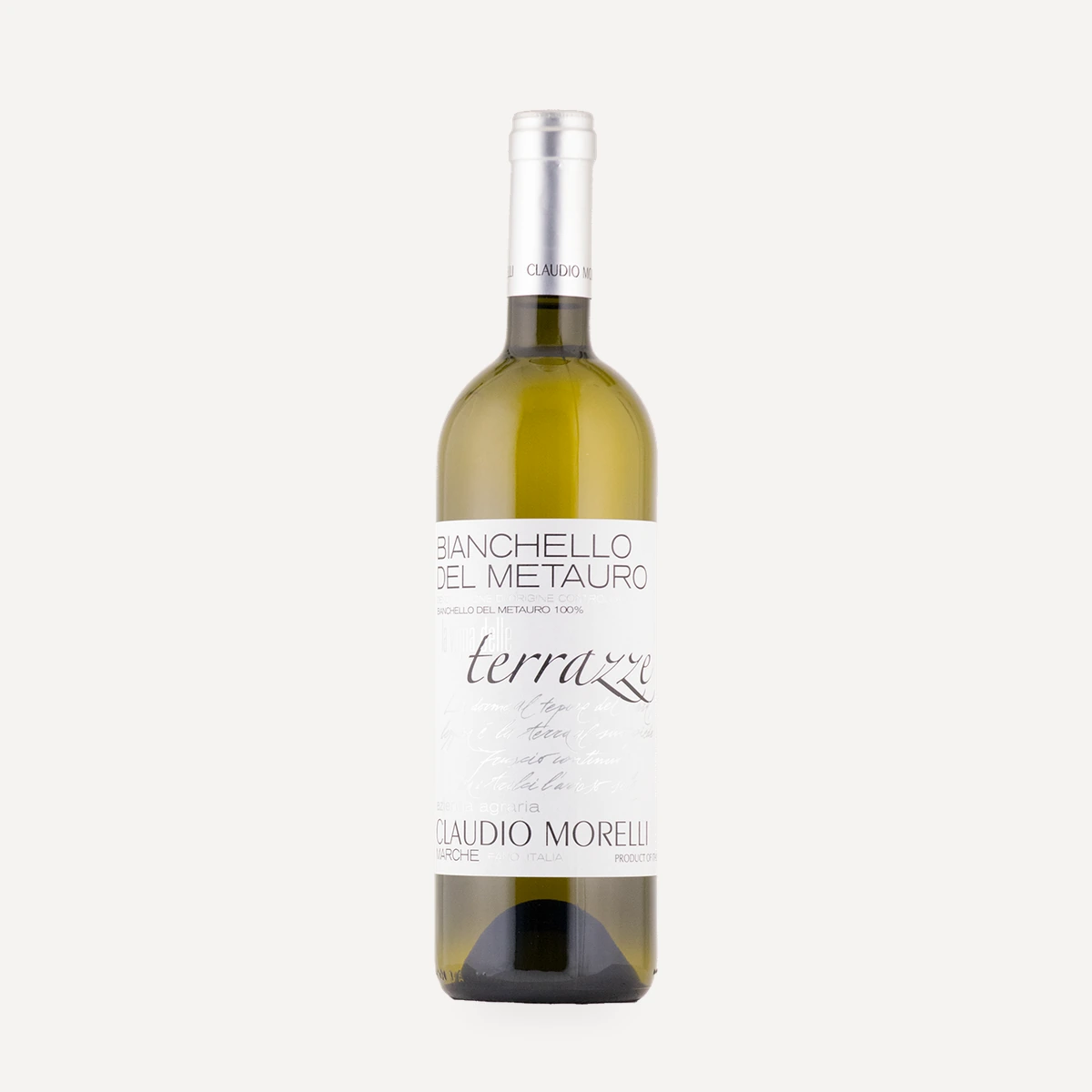
La Vigna delle Terrazze Bianchello del Metauro
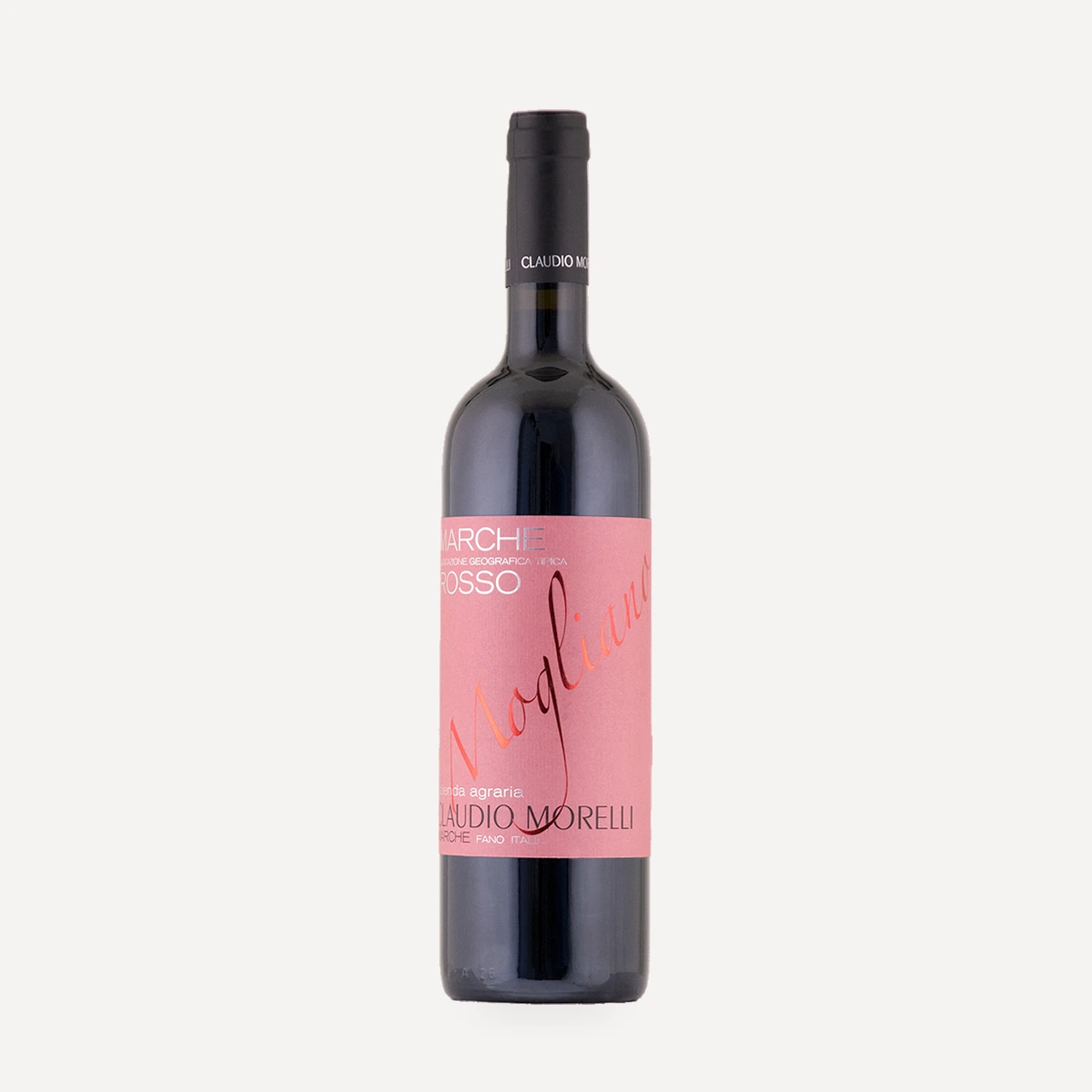
Mogliano Marche IGT Rosso
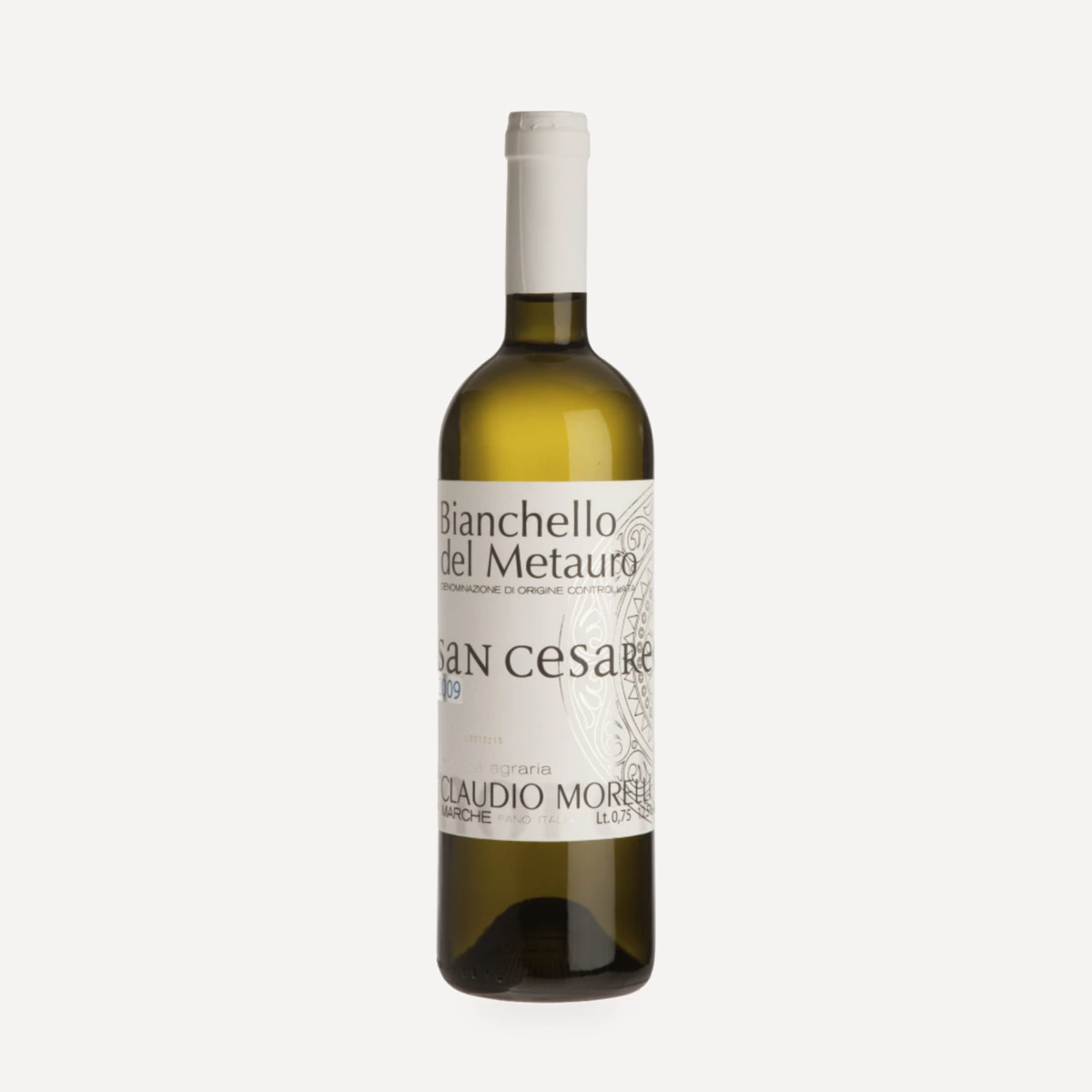
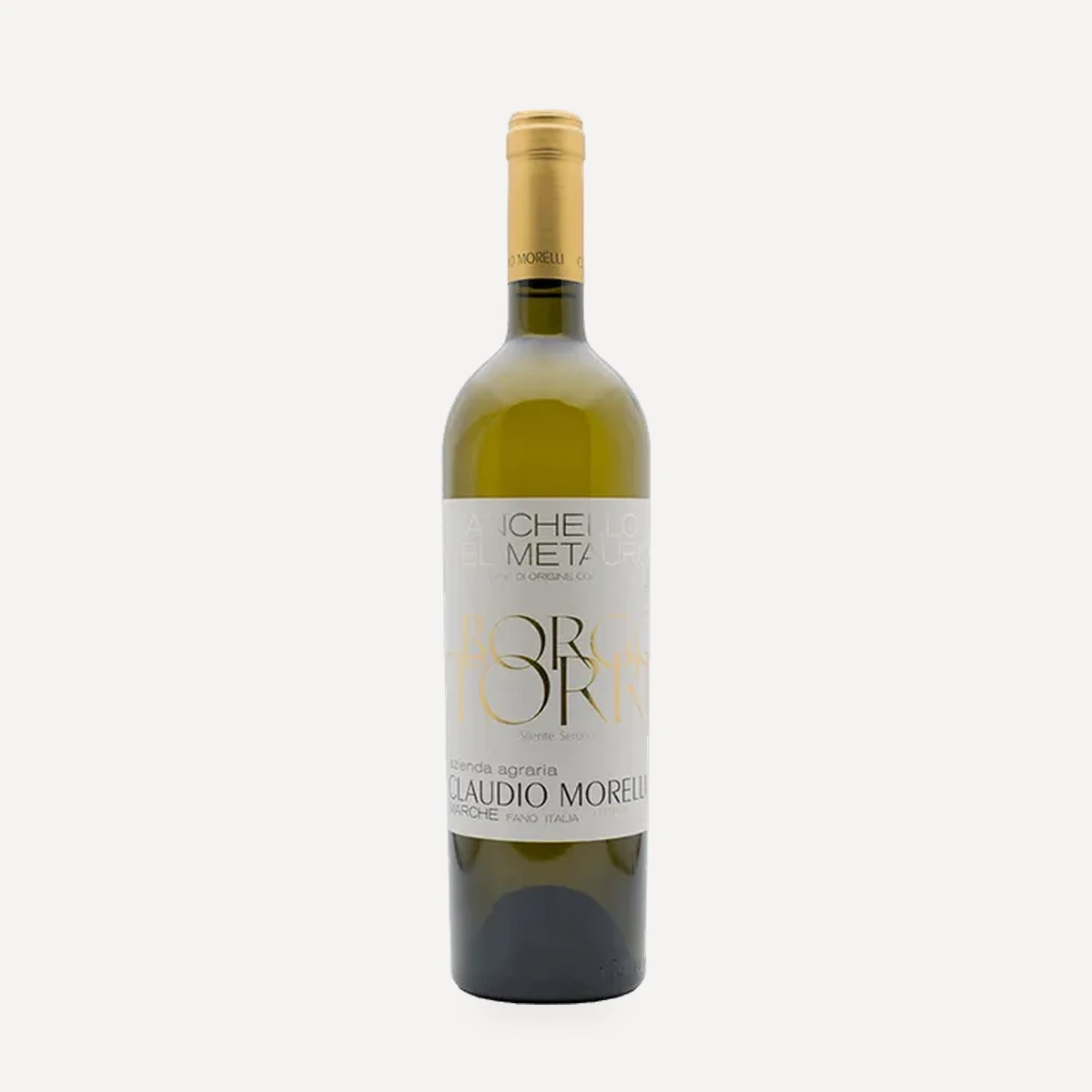
San Cesareo Bianchello del Metauro
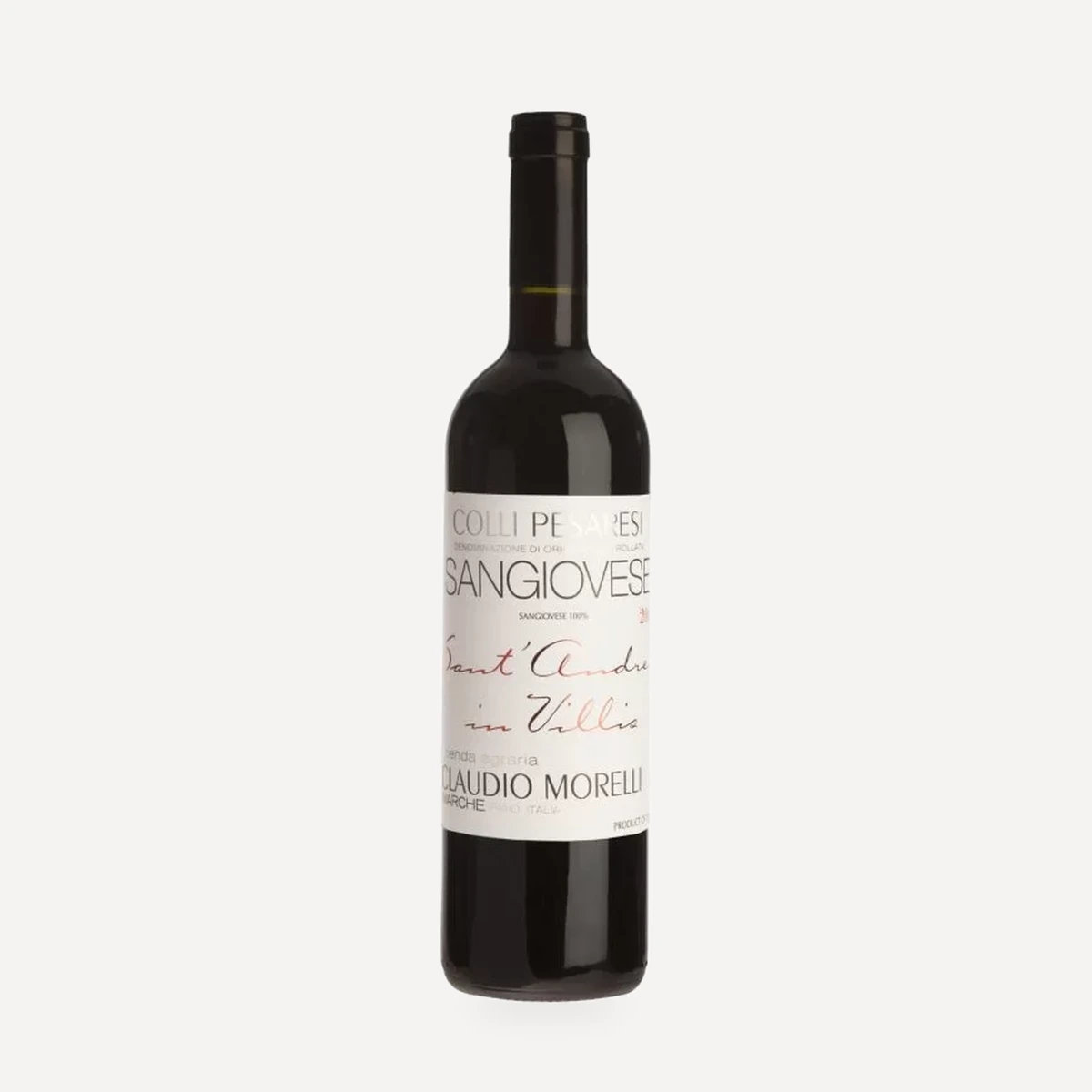
Sant’Andrea in Villis Colli Pesaresi Sangiovese Riserva
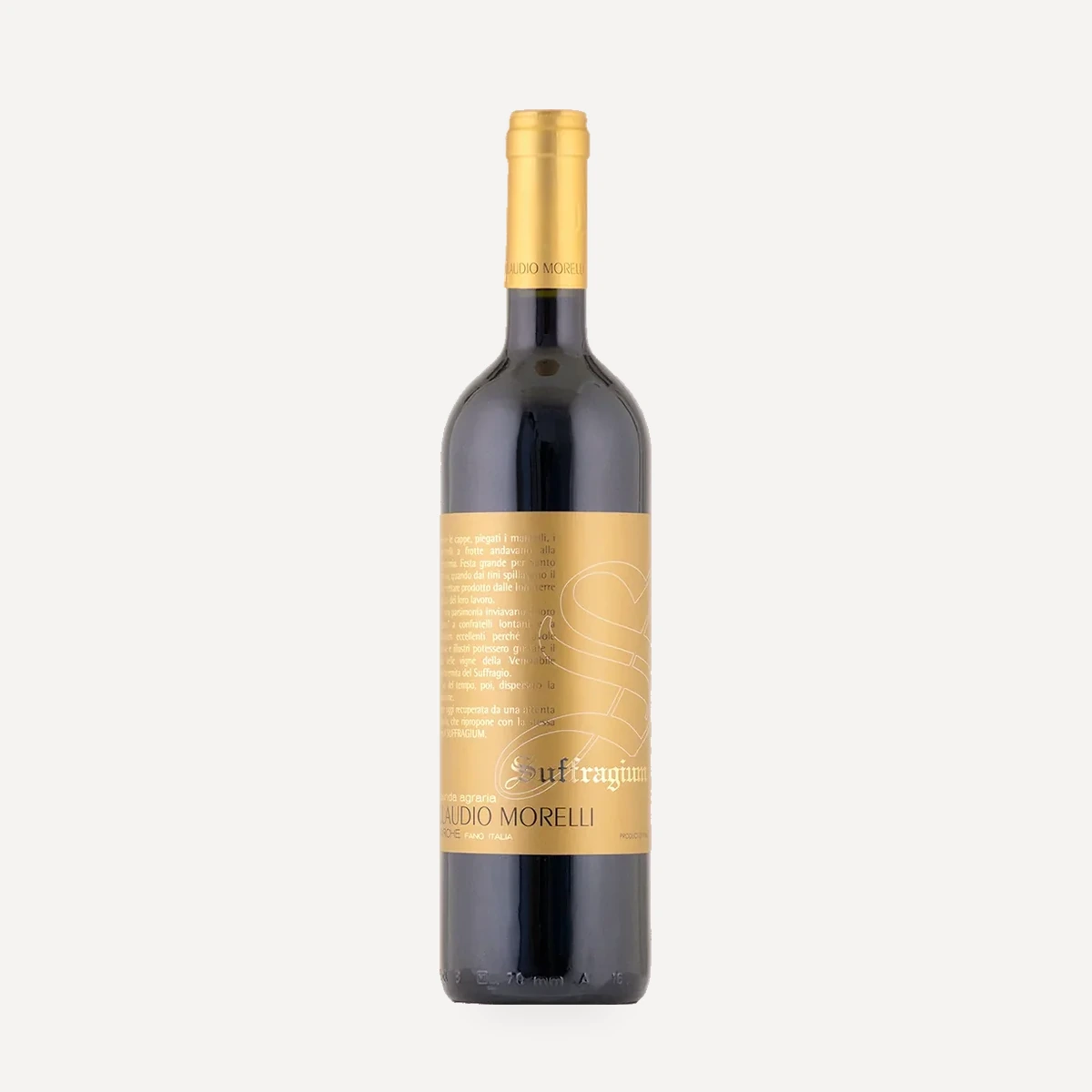
Suffragium Marche IGT Rosso