Storia
Ancient family roots
Conte Leopardi Dittajuti developed from the centuries-old agricultural inheritance of the Counts Leopardi Dittajuti. The family traces its origins to an ancient lineage that arrived in Italy in the 4th century AD and subsequently became closely associated with the Marche. Over successive generations, this heritage evolved into direct agricultural stewardship in the Conero area, joining the family's noble memory to the practical cultivation of its land.
Modernization in the 1980s
During the 1980s, Count Piervittorio Leopardi Dittajuti and his wife, Lidia, undertook a substantial modernization of both the vineyards and the cellar. Their program placed a stronger emphasis on quality while retaining the local winegrowing traditions inherited by the family. This period established the balance between historical continuity and technical renewal that continues to define the winery's identity.
New management from 2024
In 2024, management of Cantina Conte Leopardi was entrusted to the Biagioli family. Catherine Biagioli, with more than 15 years of experience in the wine sector and extensive knowledge of the area, assumed the leading role. Her son Andrea joined her, contributing a younger perspective, plans for renewal and a focus on the winery's future development.
The new management expanded the area under vine by incorporating new Verdicchio plantings in the Castelli di Jesi zone. It also reinforced certified organic agriculture as a foundational principle. The resulting activity now connects the historic Conero vineyards around Numana and Sirolo with vineyards in the classic Verdicchio-producing hills around Castelbellino.
Terroir
Conte Leopardi's vineyards occupy two principal settings in the Marche: the Adriatic-facing Conero area around Numana and Sirolo, and the inland hills of Castelbellino in the classic Verdicchio dei Castelli di Jesi zone.
Conero and Numana
The Conero promontory descends toward the Adriatic between Numana and Sirolo. Its calcareous-clay terrain is accompanied by a Mediterranean climate moderated by persistent Adriatic breezes. Saline humidity and temperature variations contribute to slower ripening and help preserve the natural acidity of Montepulciano.
The winery's largest vineyard holding comprises 15 ha near the boundary of the protected Conero park at Numana. Here, red earth and marine air meet close to the Adriatic. These vineyards are associated particularly with Montepulciano and the estate's Rosso Conero production.
Vigneto del Coppo
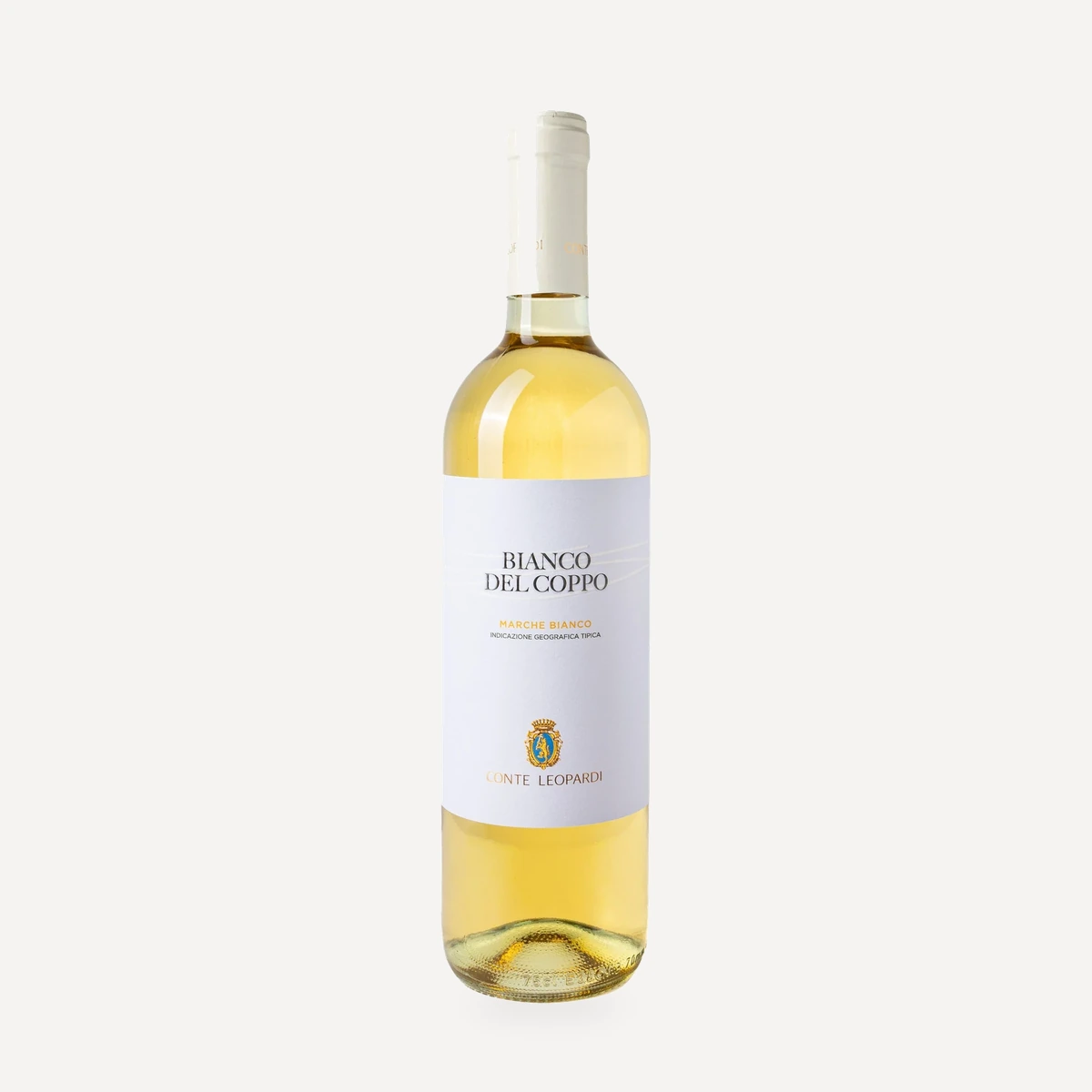
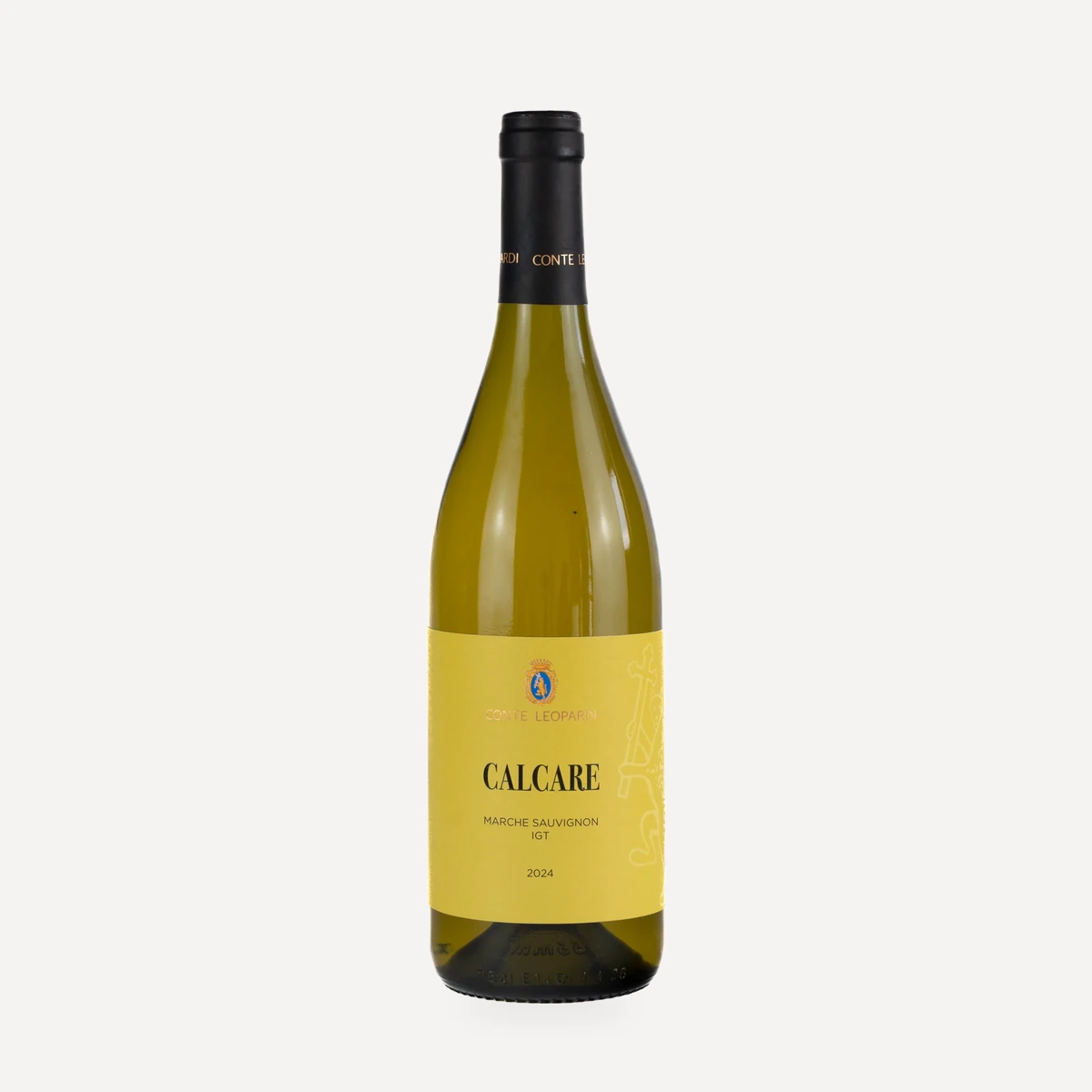
The historic Vigneto del Coppo lies at Sirolo, only a short distance from the Conero's white cliffs and the sea. Its calcareous-marly soil has a high concentration of active limestone, while constant marine breezes influence the vines. Sauvignon Blanc and Montepulciano are both associated with this site.
Castelbellino
Verdicchio vineyards occupy the hills of Castelbellino in the classic Verdicchio dei Castelli di Jesi production zone. The Adriatic remains visible from these inland vineyards. Verdicchio and Sauvignon Blanc are grown here for certified-organic white wines, including a pure Verdicchio and a blended expression.
Vinificazione
Certified organic agriculture is applied to the Montepulciano, Verdicchio and Sauvignon Blanc vineyards. Organic farming became an even more prominent foundational policy after the Biagioli family assumed management in 2024.
Harvest timing is adapted to grape variety, site and intended expression. Sauvignon Blanc at Vigneto del Coppo is picked in the first week of September, with bunches selected at full or appropriate maturity. Montepulciano for the rosé is harvested during the same period. Verdicchio at Castelbellino is collected at night in mid-September; the lower nocturnal temperatures are used to retain the fruit's aromatic fragrance and freshness. Verdicchio and Sauvignon Blanc for the blended white are picked at full maturity toward the end of September. Montepulciano for the youthful red is harvested in early October, while selected structured reds employ later picking or fruit with particularly high sugar concentration.
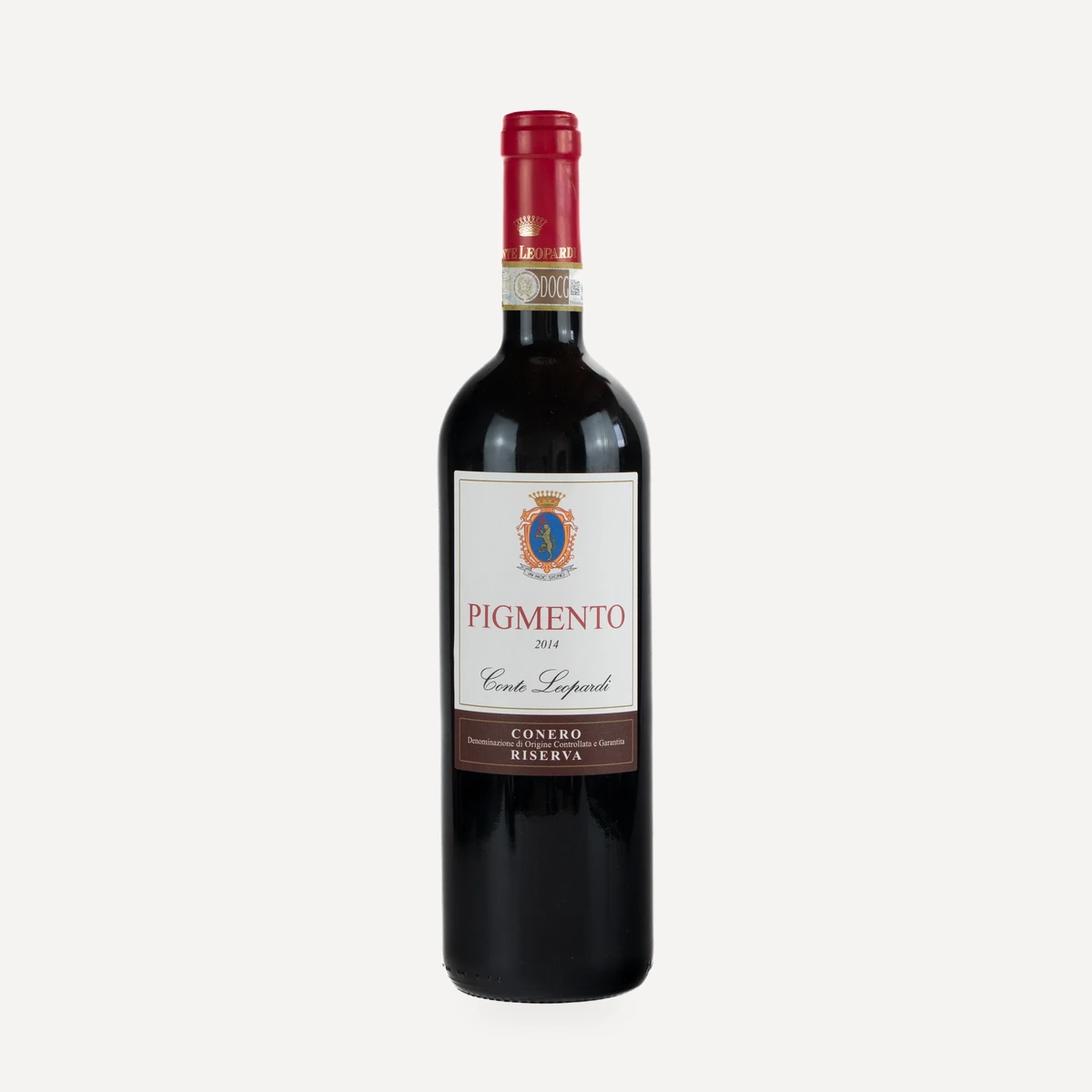
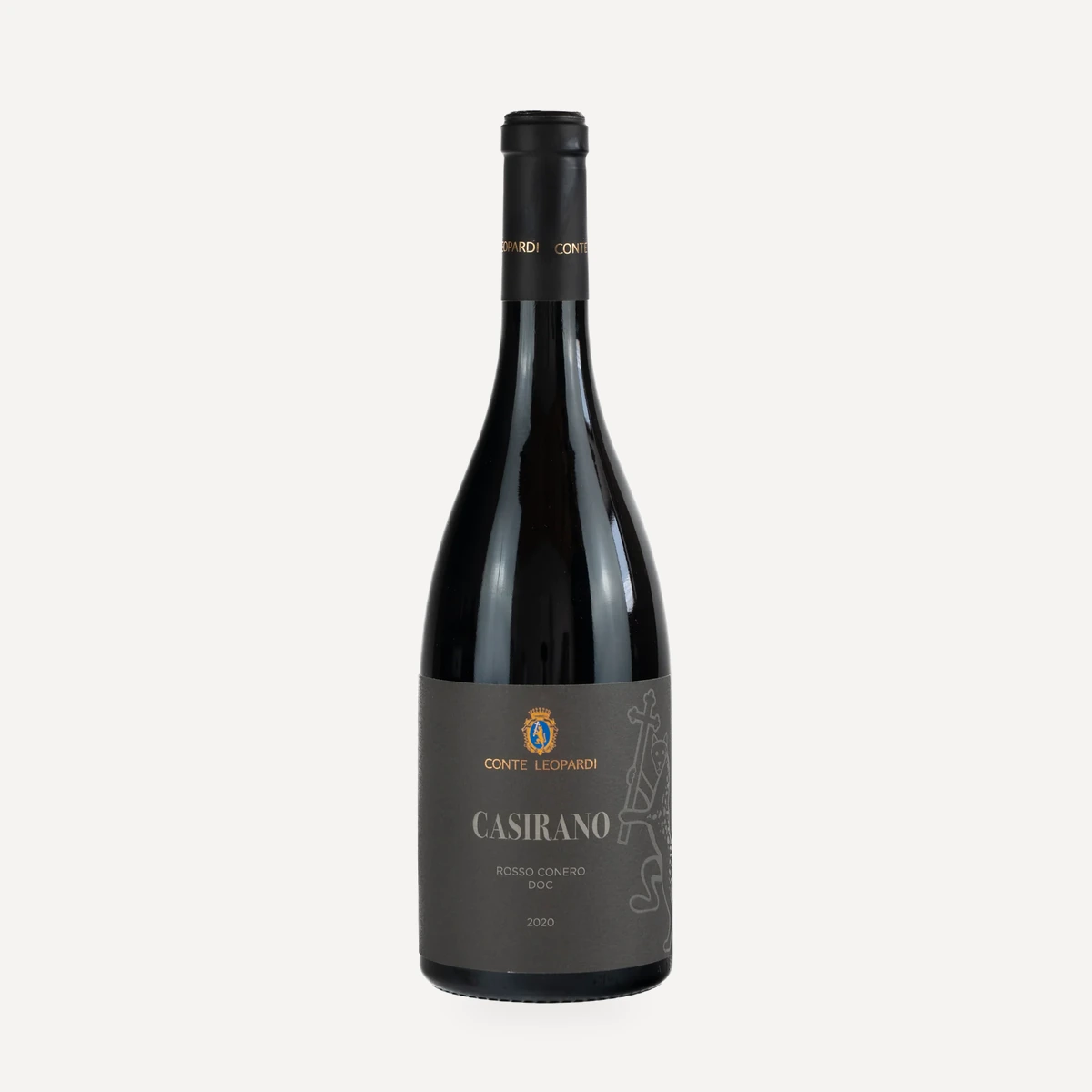
Selection intensity also varies according to the intended wine. Sauvignon Blanc is selected at maturity. Casirano is produced only in the best vintages from late-harvested Montepulciano subjected to rigorous manual bunch selection. Pigmento is made from fully mature, highly concentrated fruit, with the best bunches selected individually.
Vinification and bottling take place at the cellar in Numana. Production methods vary according to wine type and the intended balance between freshness, fruit and structure.
White-wine production
Sauvignon Blanc for Calcare is gently pressed immediately after harvest. The free-run must ferments for approximately 10 days at controlled temperature with selected yeasts. The wine then matures in stainless steel and undergoes cold stabilization before bottling.
Bianco del Coppo is also gently pressed and fermented at controlled temperature with selected yeasts. It matures exclusively in stainless steel to retain freshness and aromatic fragrance.
Verdicchio for Castelverde is destemmed and gently crushed. Its free-run must ferments for approximately 10 days at controlled temperature with selected yeasts, followed by stainless-steel maturation and cold stabilization before bottling.
Oltremare combines 80% Verdicchio and 20% Sauvignon Blanc. The fully mature grapes are destemmed and gently crushed. The free-run must ferments for approximately 10 days at controlled temperature, after which the wine matures in stainless steel and is cold-stabilized to preserve aromatic complexity.
Rosé production
Montepulciano for Rose del Coppo is destemmed and gently crushed. The must remains in contact with the skins only very briefly—long enough to extract its coral color without acquiring the full structure of a red wine. The wine then matures in bottle for approximately two months before release.
Red-wine production
For Fructus, Montepulciano is destemmed and gently crushed before temperature-controlled fermentation with selected yeasts. Skin maceration lasts 12–15 days. After malolactic fermentation, the wine matures in stainless steel for approximately six months before bottling, retaining a fresh, fruit-led character.
Casirano is produced only in the best vintages from late-harvested, manually selected Montepulciano. Maceration on the skins lasts approximately 20 days, followed by malolactic fermentation and prolonged maturation in barriques. A further eight months of bottle maturation precedes release. Production is limited.
Pigmento uses individually selected Montepulciano bunches harvested at full maturity with very high sugar concentration. Skin maceration lasts 20–22 days. Following malolactic fermentation, the wine matures for an extended period in French barriques and then spends another 12 months in bottle. Production is limited.
Sparkling-wine production
Villa Marina Brut is produced by the Martinotti, or Charmat, method. Secondary fermentation takes place in an autoclave to retain the original aromatic character and freshness of the fruit.
Filosofia
Conte Leopardi frames its identity as a meeting of noble family memory and practical agricultural work: past and present, tradition and renewal, and inherited land stewardship and contemporary wine production.
The modernization begun in the 1980s pursued higher quality without abandoning local winegrowing traditions. The management phase started in 2024 continues that balance through new plantings, expansion into the Castelli di Jesi zone and a stronger commitment to certified organic agriculture.
The Biagioli family defines its goal as producing authentic, transparent wines capable of expressing both the land and the people who cultivate it. Production decisions are adjusted to vineyard, variety and intended style. Night harvesting, controlled fermentation and stainless steel are used where freshness and aromatic clarity are priorities; late harvesting, intensive bunch selection, longer maceration, malolactic fermentation, barriques and extended bottle maturation are reserved for more structured Montepulciano expressions.
Quality and transparency also extend to the agricultural estate's olive oil. Chemical and sensory measurements are treated as concrete evidence of the condition of the harvested fruit and the care taken during milling.
Vini
Bianco del Coppo - Marche Bianco IGT
CALCARE – Marche Sauvignon Blanc IGT
CASIRANO – Rosso Conero DOC
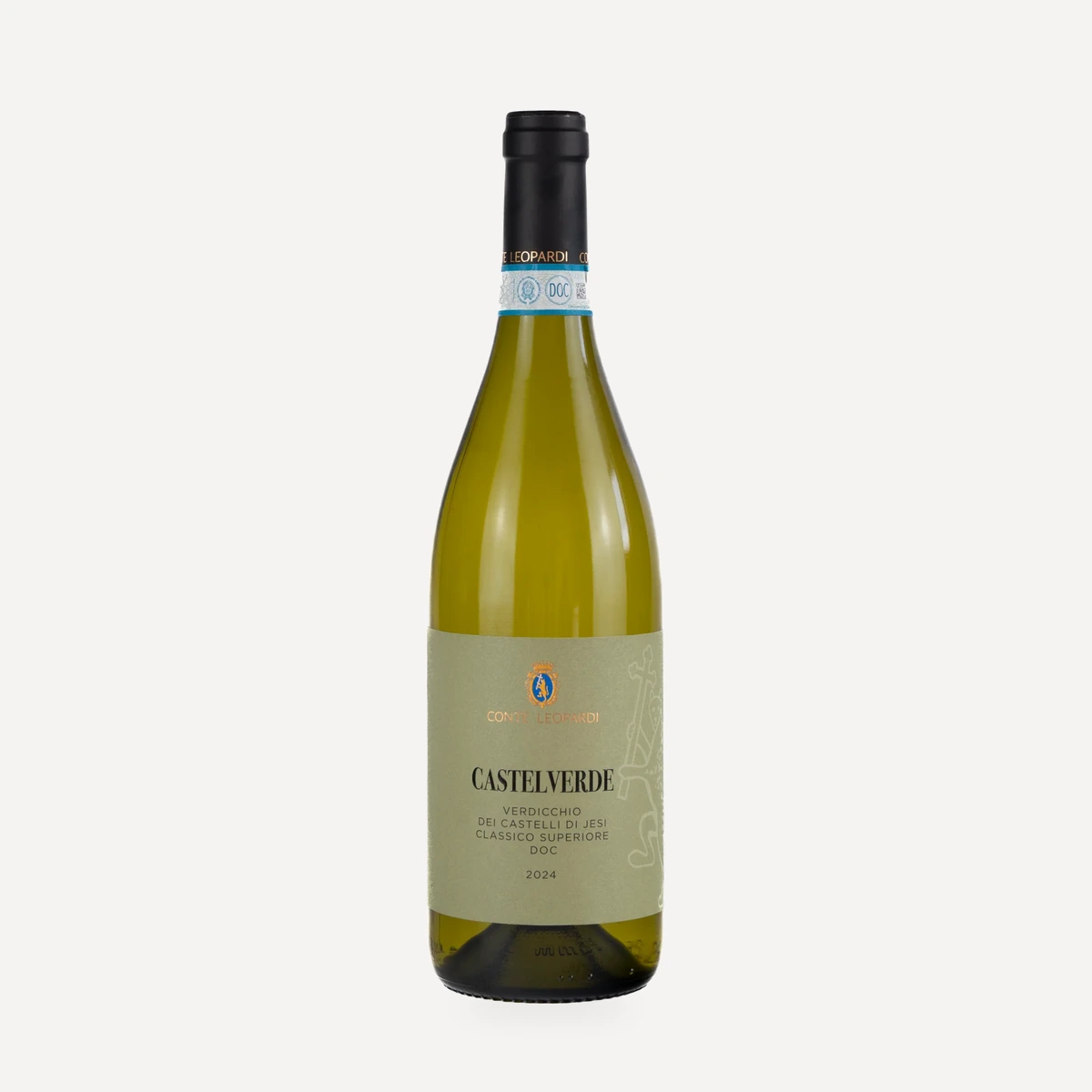
CASTELVERDE – Verdicchio dei Castelli di Jesi Classico Superiore DOC
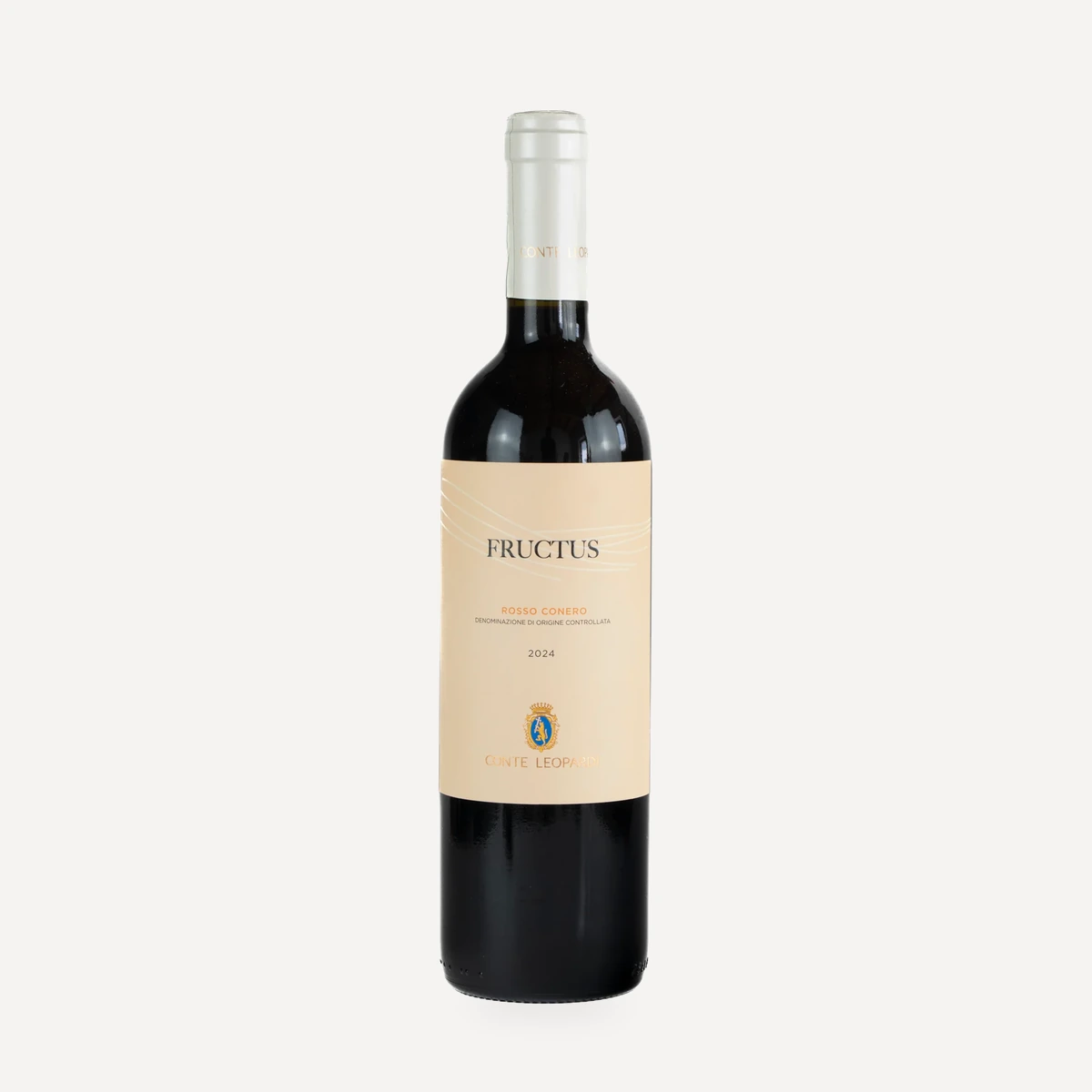
FRUCTUS – Rosso Conero DOC
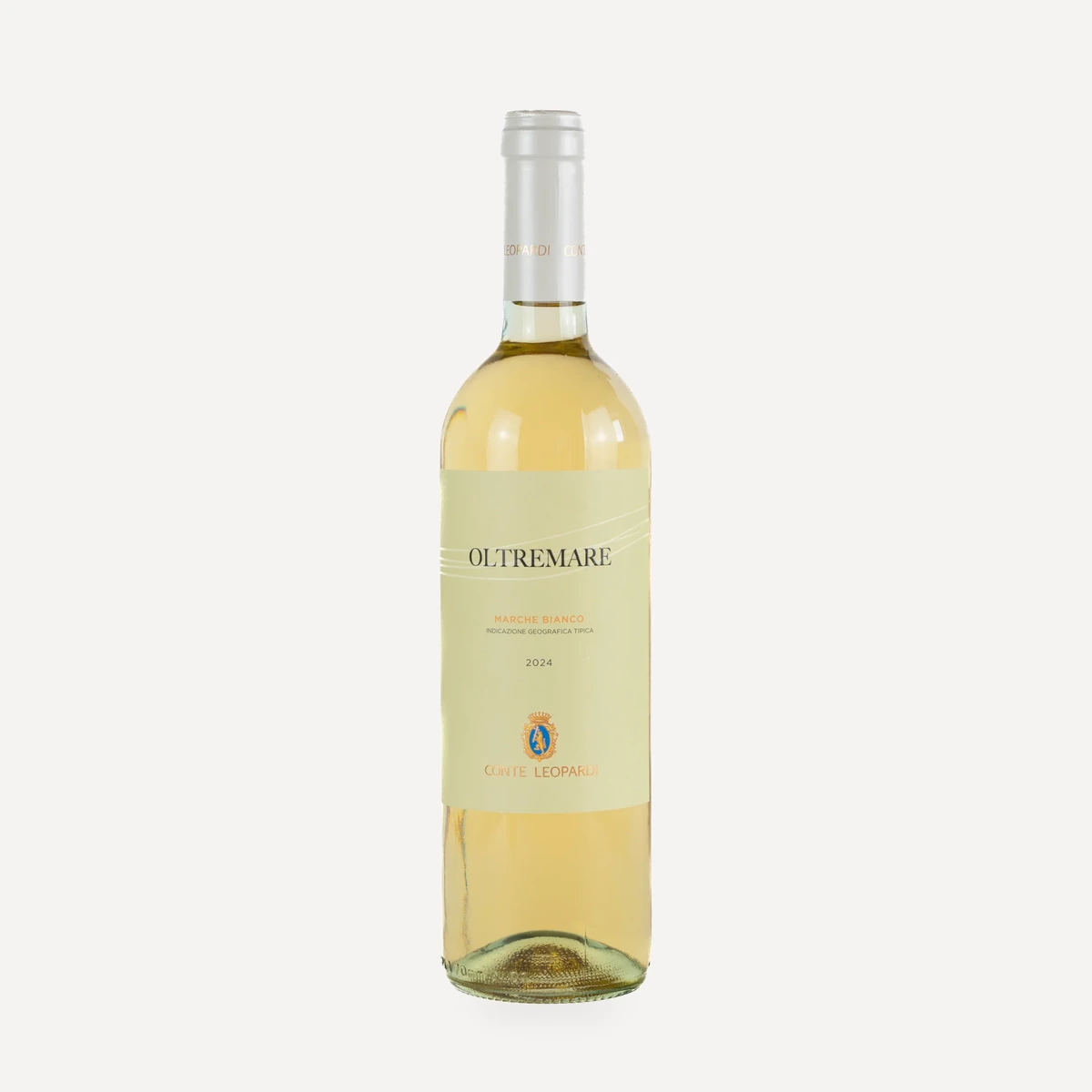
OLTREMARE – Marche Bianco IGT
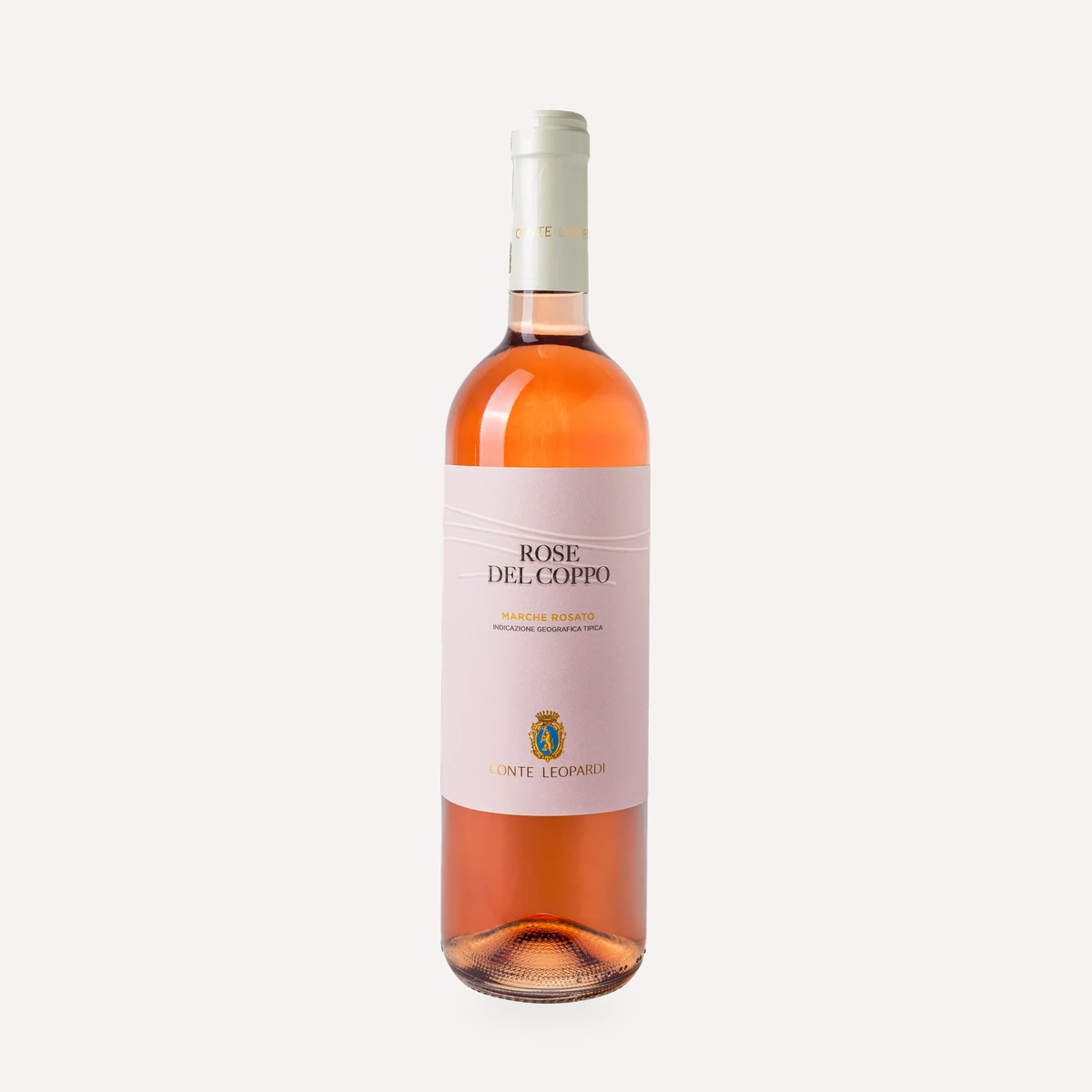
Rose del Coppo – Marche Rosato IGT
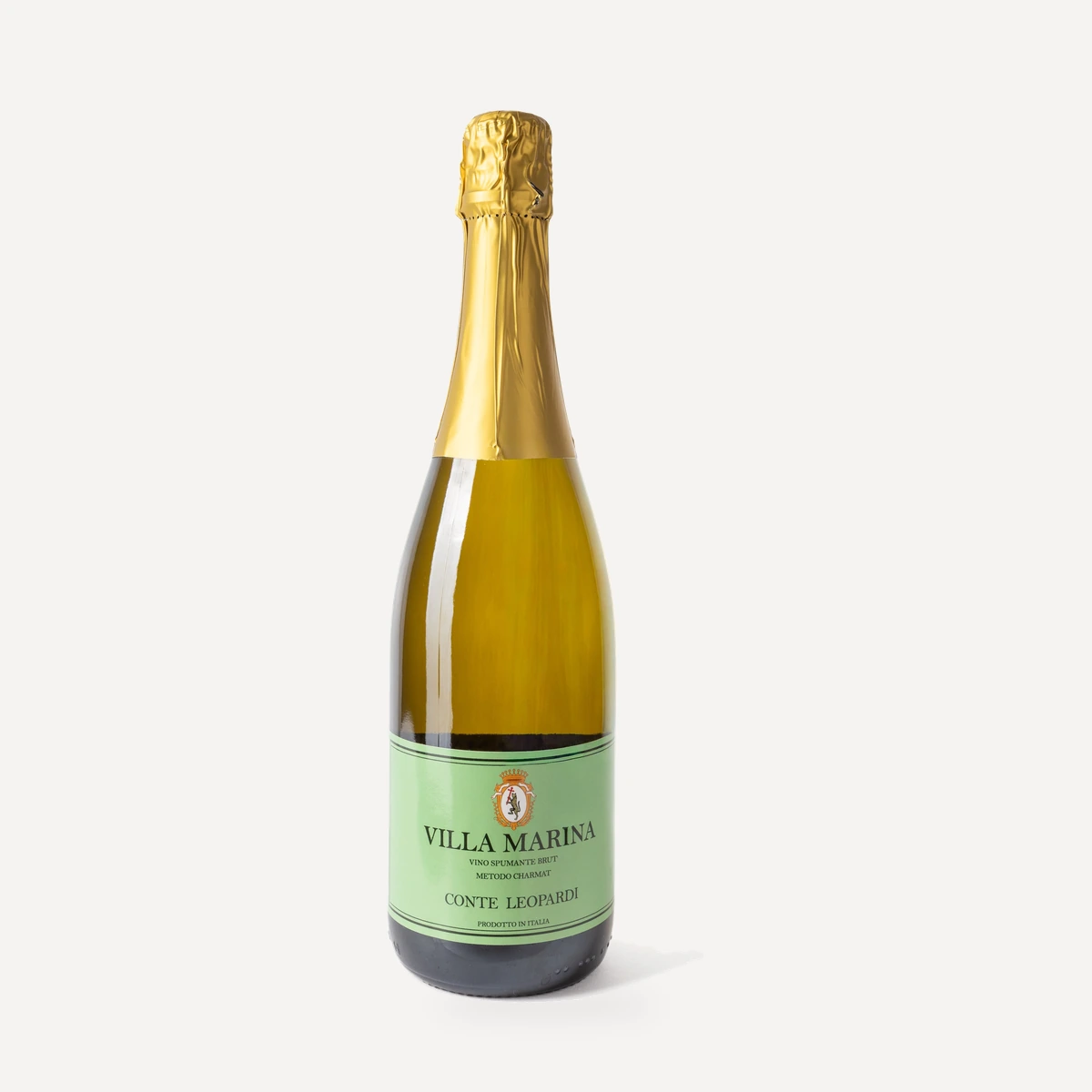
Villa Marina Brut – Spumante Metodo Charmat