Storia
From the 15th century to Villa Fornace
The Giorgi di Vistarino family has owned a large agricultural estate in Rocca de’ Giorgi since the middle of the 15th century and has lived in the area for more than 500 years. The property eventually came to cover most of the municipality, combining farmland, vineyards and extensive woodland.
Villa Fornace was built in 1700 on the foundations of an old kiln, or fornace, from which the residence takes its name. Its French-influenced architecture, richly preserved interiors and surrounding park became the historic centre of the estate. The park was designed by Achille Majnoni, architect to King Umberto I of Italy.
1850: Pinot Noir arrives at Rocca de’ Giorgi
In 1850, after travelling in Burgundy, Count Augusto Giorgi di Vistarino concluded that the climate of his Lombard estate could provide a suitable habitat for Pinot Noir. He imported planting material directly from France and became the first person to establish the variety in the Oltrepò. This initiative helped begin the area's subsequent sparkling-wine tradition and established Pinot Noir as the central variety of the family enterprise.
Augusto’s son, Count Giorgi di Vistarino, continued the work and played an important role in spreading Pinot Noir through the Oltrepò. From the end of the 19th century onward, the variety became increasingly identified with the area and particularly with Rocca de’ Giorgi in the Scuropasso Valley.
1865: an Italian traditional-method milestone
In 1865, Conte Vistarino became the first producer in Italy to vinify sparkling wine by the traditional method. Pinot Noir has subsequently been interpreted both as a sparkling-wine base and as a still red wine, while the range expanded to include white, rosé, Charmat-method and sweet wines.
The early 20th century and the estate residence
At the beginning of the 20th century, Countess Anna Giorgi Vimercati di Vistarino commissioned the Orangerie overlooking the park so that citrus trees could be protected during winter. Villa Fornace’s internal winter garden later served as a theatre during the war and subsequently as a games room. Its decorative latticework, architectural motifs and false-perspective designs have been retained.
Development of the crus
The Pernice vineyard, long associated with partridge hunting, was replanted in 1995 and became the source of the estate’s longest-established cru wine. Tavernetto and Bertone were planted in 2001 with selected Burgundian Pinot Noir clones. Their compact bunches, restrained yields and distinct exposures supported the estate’s development of separate site expressions. The historic San Silvestro property was planted with a 2.31-hectare Pinot Noir vineyard in 2015; it later became the Ottavia cru, conceived as a contemporary expression of the generation now directing the estate.
Environmental monitoring and vineyard research
Weather stations were installed among the rows in 2013. They measure air and soil temperature, humidity, rainfall, leaf wetness, solar radiation, and wind speed and direction. The resulting data supports earlier detection of vine-disease risks and reduces the need for phytosanitary intervention.
2016–2017: transformation of the winery
A major winery project began in 2016 and was completed in 2017. Rather than erecting an entirely separate building, the project enhanced and adapted an existing agricultural structure. The resulting 3,300 m² winery extends over four levels and moves grapes and wine exclusively by gravity. Its design was intended to improve precision and flexibility, translate the estate’s different micro-terroirs more faithfully and make fuller use of vineyard research. The renovated winery stands opposite Villa Fornace, placing the historic residence and contemporary production facility in direct architectural dialogue.
The current generation
Ottavia Giorgi di Vistarino now represents the family dynasty and directs the estate. Her approach combines respect for the inherited tradition with a distinct contemporary identity and a focus on the future. She works with a professional team involved throughout the production process and also personally selects the local foods served with tastings at the wine shop.
2025 developments
In March 2025, a two-socket electric-vehicle charging point was installed in the wine-shop car park following an agreement with T-Carica. In April, Conte Vistarino was again selected for OperaWine, the invitation-only event organized by Veronafiere with Wine Spectator. During the same year the estate served as wine partner for the ATP Challenger Atkinsons Monza Open and for Harper’s Bazaar’s Legendary Covers 1940–2025 roadshow.
Terroir
Rocca de’ Giorgi and the Scuropasso Valley
The estate lies in the hilly commune of Rocca de’ Giorgi in the Oltrepò Pavese’s Scuropasso Valley. It covers 826 hectares and almost surrounds the municipality. The broader area is positioned where Lombardy approaches Piedmont, Liguria and Emilia-Romagna; the corporate presentation describes it as lying on the 48th parallel north.
The landscape alternates vineyards, arable land and approximately 300 hectares of natural woodland. Much of the estate’s general terrain is around 250–300 metres above sea level, while individual Pinot Noir sites rise to approximately 400 metres. The woodland creates a highly varied landscape and supports populations of roe deer, wild boar, fallow deer, wolves, pheasants and hares.
Climate
The climate is continental, with hot summers, pronounced day–night temperature ranges and cold winters. The estate also emphasizes its generally dry conditions. Site-level differences are significant: Tavernetto and Bertone are isolated by surrounding woodland and can receive 30–40% less rainfall than the estate average. This lowers vegetative vigour and slightly advances ripening. The Riesling vineyard is notably well ventilated.
Soils and exposures
Clay-limestone soils recur across the Rocca de’ Giorgi vineyards, but individual sites show distinct proportions of silt, sand and clay. Pernice faces south to south-east at about 350 metres. Tavernetto faces south-east at approximately 300 metres. Bertone faces south to south-west at approximately 400 metres and has a clay-limestone soil with appreciable sand and silt. San Silvestro, source of the Ottavia cru, lies at 400 metres with a north-west exposure and predominantly silty soil containing loam and clay. The Pietra de’ Giorgi source of Costiolo has a composition recorded as 6% stones, 25% sand, 43% silt and 32% clay.
Pinot Noir reaches full phenolic maturity in this setting, with the balance of alcohol and structure associated with a strong territorial identity.
Vinificazione
Extensive farming and biodiversity
The estate follows extensive rather than intensive agriculture. Vineyards, arable fields and roughly 300 hectares of maintained natural woodland alternate across the property. This mosaic supports a substantial wildlife population and avoids excessive exploitation of the land. Chemical-fertilizer use is described as practically zero, while soil cultivation is kept to a minimum.
Conte Vistarino participates in Measure 10, supporting measures for the sustainable management of agricultural land, reduced pressure on natural resources and positive environmental effects.
Soil and water management
Cultivation and grass cover are alternated according to the season to optimize water resources and prevent erosion or soil compaction. In spring, the soil beneath the vines is opened through scalzatura. This improves rainfall absorption and controls unwanted vegetation without herbicides. Mowing reduces competition for water and encourages vine roots to explore deeper layers for moisture and nutrients, strengthening resistance to drought and climate change.
Monitoring and vine protection
Since 2013, vineyard weather stations have measured air and soil temperature, humidity, rainfall, leaf wetness, solar radiation, and wind direction and speed. These observations allow disease risks to be anticipated or treated promptly, substantially reducing the need for phytosanitary intervention.
Insect populations are monitored with mating-disruption traps. This biological approach is used against the grapevine moth while limiting environmental impact.
Harvest and selection
Harvesting is performed by hand, commonly into 20 kg boxes. Depending on the fruit and intended production, grapes may be chilled to 10°C before processing. Manual selection and optical berry sorting are both used within the range.
The gravity-flow winery
The winery beside Villa Fornace was radically renovated in 2017 following a project begun in 2016. It occupies 3,300 m² across four levels. Grapes and wine move by gravity at every stage, without pumping, for red and white vinification and for sparkling-wine bases. The facility was designed to increase precision and flexibility and to translate the estate’s different micro-terroirs more clearly.
An existing agricultural structure was adapted instead of being replaced by a completely new building. The winery has no air-conditioning system. Rainwater is collected through an intelligent gutter circuit, stored in a large tank and reused for irrigation and for cleaning floors and exterior winery areas.
Reception and vinification
Hand-picked grapes can be held overnight in a cold room at 10°C. Depending on the intended style, bunches are destemmed and the berries selected manually or with optical sorting before gentle crushing or soft pressing. Crushed red grapes can be transferred by gravity into steel fermenters. Red-wine techniques represented across the range include cold maceration, short pump-overs, regular punch-downs, controlled-temperature maceration and alcoholic fermentation in truncated-conical wooden vats. Malolactic fermentation can take place in French oak barriques during the following spring.
White and sparkling-wine grapes are softly pressed. Free-run must yields of 45% are used for traditional-method bases, while fermentation takes place principally in temperature-controlled steel; selected Chardonnay must can ferment and remain for four months in barrel. Base wines remain on fine fermentation lees until tirage in the spring after harvest. The estate uses extended bottle ageing on lees for its traditional-method wines, followed by post-disgorgement maturation.
Other wines are fermented or matured in steel, French oak or a combination of steel and used barriques. The sweet sparkling production uses cold maceration in steel, separation of must from skins and fermentation in autoclave, with chilling used to stop fermentation at the desired pressure and sweetness.
French oak barriques are sourced from specialist French producers. The principal cru Pinot Noir practice includes one year in selected French barriques of different origins followed by at least one year in bottle.
Filosofia
Conte Vistarino presents stewardship as both an inheritance and a responsibility to future generations. The family’s central objective is to interpret Pinot Noir at the highest possible level while respecting the character and vocation of Rocca de’ Giorgi.
Tradition is treated as a foundation for continued development rather than a reason to remain static. Ottavia Giorgi di Vistarino’s direction combines respect for the family’s historical identity with research, technological precision and a contemporary personal vision. Individual crus are understood as complementary voices, each rooted in its own site and history.
Environmental protection forms part of this approach. The estate seeks a balance between the economic use of land and the preservation of landscape, flora, fauna and biodiversity. Extensive farming, woodland management, reduced inputs, weather-based plant protection, biological insect control, rainwater recovery and gravity-flow production translate that principle into vineyard and cellar practice.
The winery’s design embodies the same balance: an existing agricultural building was reworked into a technologically advanced facility, while Villa Fornace and the new cellar stand opposite one another as architectural expressions of past and future.
Vini
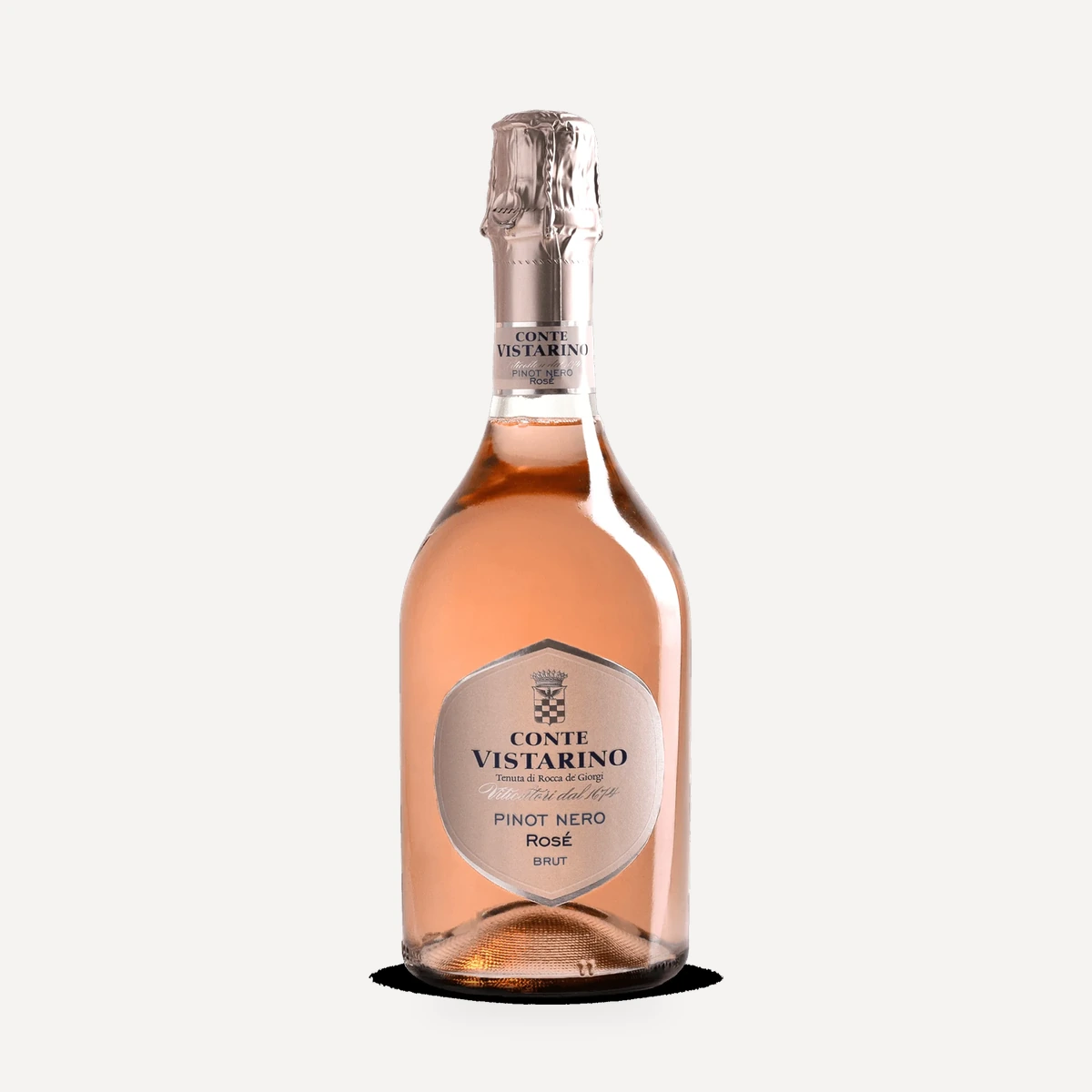
Brut Rosé Vino Spumante Brut Pinot Nero Rosé Metodo Charmat
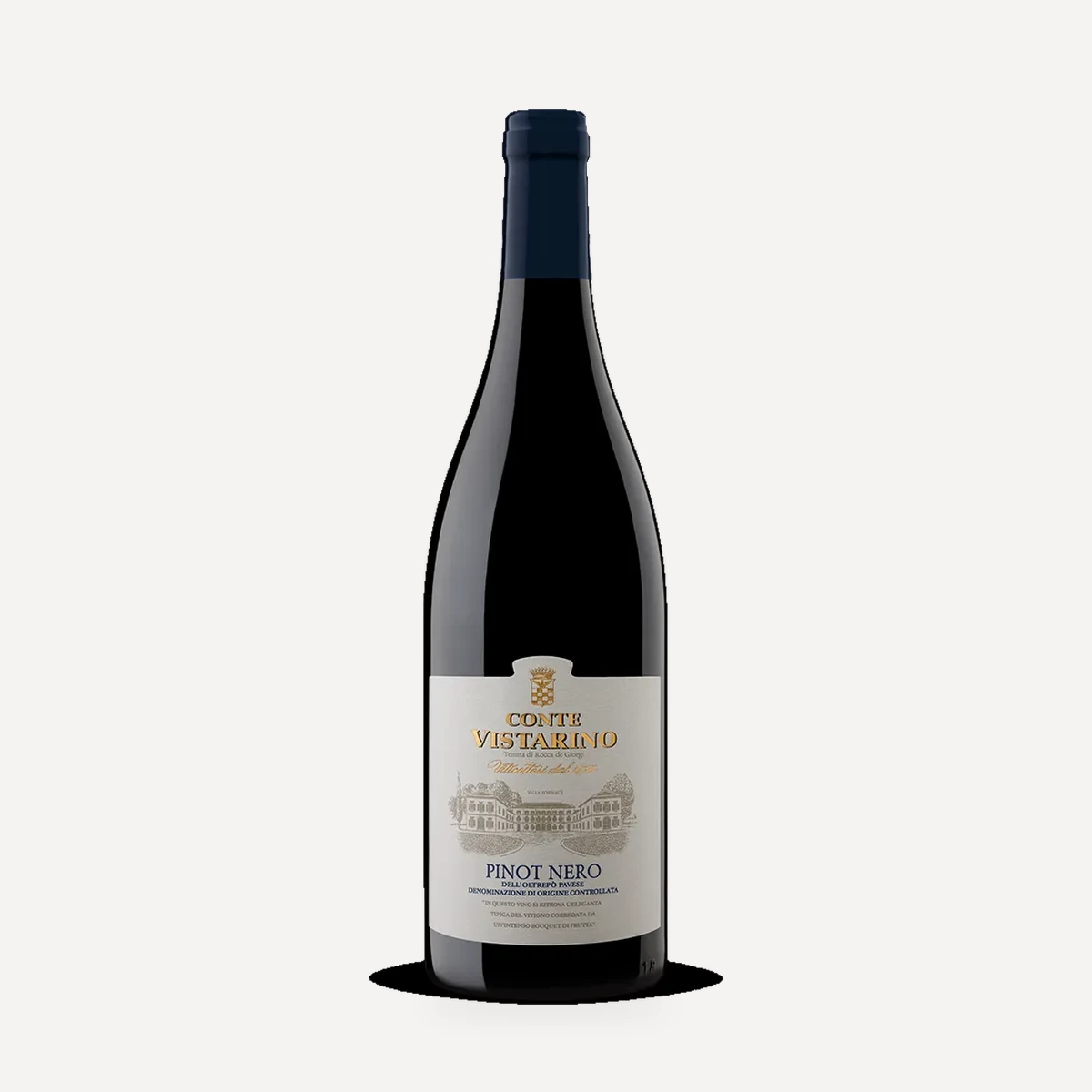
Conte Vistarino Pinot Nero dell'Oltrepò Pavese DOC
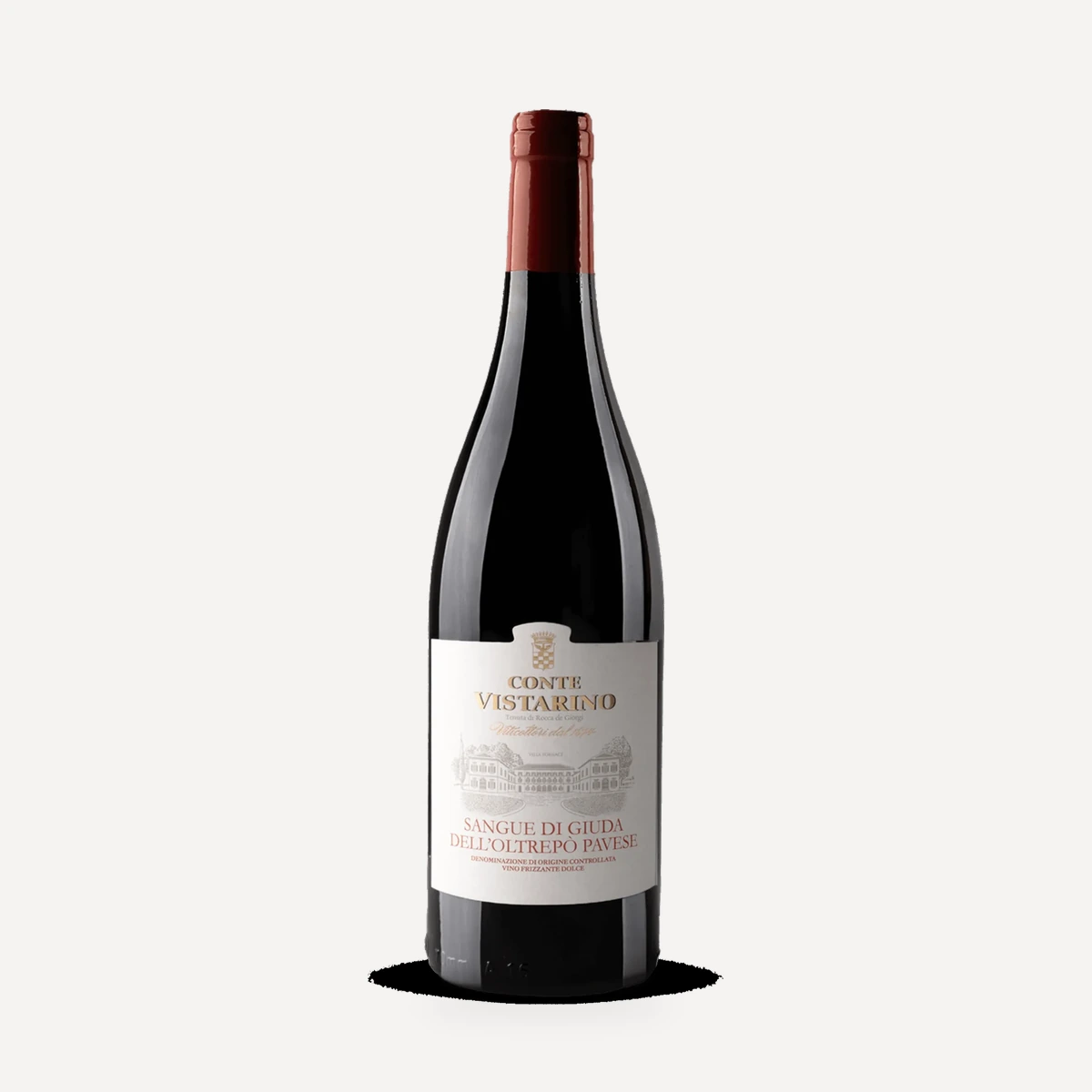
Costiolo Sangue di Giuda dell'Oltrepò Pavese Frizzante DOC