Storia
Family origins and arrival in Mezzocorona
The documented family line begins with Stefano de Vescovi in 1348. A genealogical reconstruction continues through Pietro in 1394, Giovanni Battista in 1437, Vigilio in 1471, Gian Pietro in 1583 and Giovanni Battista in 1653.
During the first half of the 16th century, the de Vescovi moved from Vione in Valcamonica to the upper Val di Sole, first to Fraviano di Vermiglio and subsequently to Peio and Celentino. A branch settled in Mezzocorona during the first half of the 17th century, a move associated with Don Vigilio de Vescovi.
On 2 January 1583, the physician Stefano de Vescovi and his brother Giovanni Pietro were granted nobility by Ferdinand, Archduke of Austria and Count of Tyrol. On 14 April 1664, Leopoldo I confirmed the nobility of Stefano and Lodovico and granted an improvement to the family coat of arms. Lodovico and his descendants were entered in the Tyrolean noble register on 2 April 1691.
Vigilio de Vescovi and the 17th-century family
Vigilio de Vescovi was born at Fraviano around 1610. A priest and doctor of theology, he served as parish priest of Mezzocorona from 1640 until 1679 and as treasurer to Carlo Emanuele Madruzzo, Prince-Bishop of Trento. Madruzzo, in his capacity as Count of Challant, also appointed Vigilio procurator and administrator of his properties in Valle d’Aosta. Vigilio twice engraved his signature in the Castle of Issogne. He was an apostolic protonotary, dean forane for the Tratto Atesino and the author of manuscript and printed works.
In 1653, Eusebio Francesco Chini moved with his family to Maso Mayrlhof in Mezzocorona, the building that later became the De Vescovi Ulzbach winery.
Vigilio renovated the Mezzocorona rectory and Palazzo de Vescovi-Martini in 1663. His patronage also included chalices presented to the churches of Santo Stefano protomartire in Fraviano di Vermiglio and Santa Caterina d’Alessandria in Roveré della Luna. The nearby Toresèla bears a late-17th-century heraldic composition combining the de Vescovi and Calvi arms. Vigilio’s brother Ludovico donated the former high altar and an altarpiece of the Immaculate Virgin, marked with the family arms, to the Franciscan convent church in Mezzolombardo.
The two sons Stefano and Ludovico established separate family branches. The continuing line descended from Stefano, while Lodovico’s descendants included the barons von Ulzbach. Members of the family also served the Firmian family as captains within the jurisdiction of Mezzocorona; those named in this connection are Giovanni Maria, Ludovico, Giovanni, Vigilio Antonio and Liborio.
The von Ulzbach title and early viticulture
In 1708, another Vigilio de Vescovi obtained a baronial title, the predicate “von Ulzbach” and a further improvement to the coat of arms from Emperor Joseph I. Members of this branch sometimes used the title and predicate in place of the surname, including the form “Baron of Ultzpach” recorded in parish registers.
The oldest viticultural records in the family archive date from the beginning of the 18th century and refer particularly to the cultivation of Teroldego.
Expansion under Giulio de Vescovi
Between 1862 and 1918, Giulio de Vescovi strengthened the family’s winegrowing activity. The opening of the Brenner railway in stages associated with 1859 and 1867 improved access to Central European markets. The foundation of the Agricultural Institute of San Michele all’Adige in 1874 also marked the beginning of more rational agricultural practices in Trentino.
The First World War and the subsequent establishment of the border at the Brenner Pass interrupted longstanding commercial and cultural connections with territories north of the Alps, requiring the family wine business to be reorganized.
Giulio died in 1918 while his children were still minors. Against this difficult background, his widow, Fosca de Eccher ab Echo von Marienberg, and later descendants Luigi and Remo chose to deliver the family’s grapes to the Cantina Sociale di Mezzocorona, founded in 1904. The family nevertheless continued cultivating its own land, with particular emphasis on Teroldego.
Revival of independent production
From 1990 to 2002, Giulio de Vescovi—great-grandson and namesake of the earlier Giulio—prepared the revival of the family winery. He studied Viticulture and Oenology at the Agricultural Institute of San Michele all’Adige and subsequently attended university in Florence. His academic training was followed by work experience at wineries in Italy and abroad.
The estate resumed independent production in 2003. In 2004 it made its first land purchases in Val di Non, intended for mountain white wines. De Vescovi Ulzbach took definitive shape in 2006, when its first two new products, both centred on Teroldego Rotaliano, entered the market.
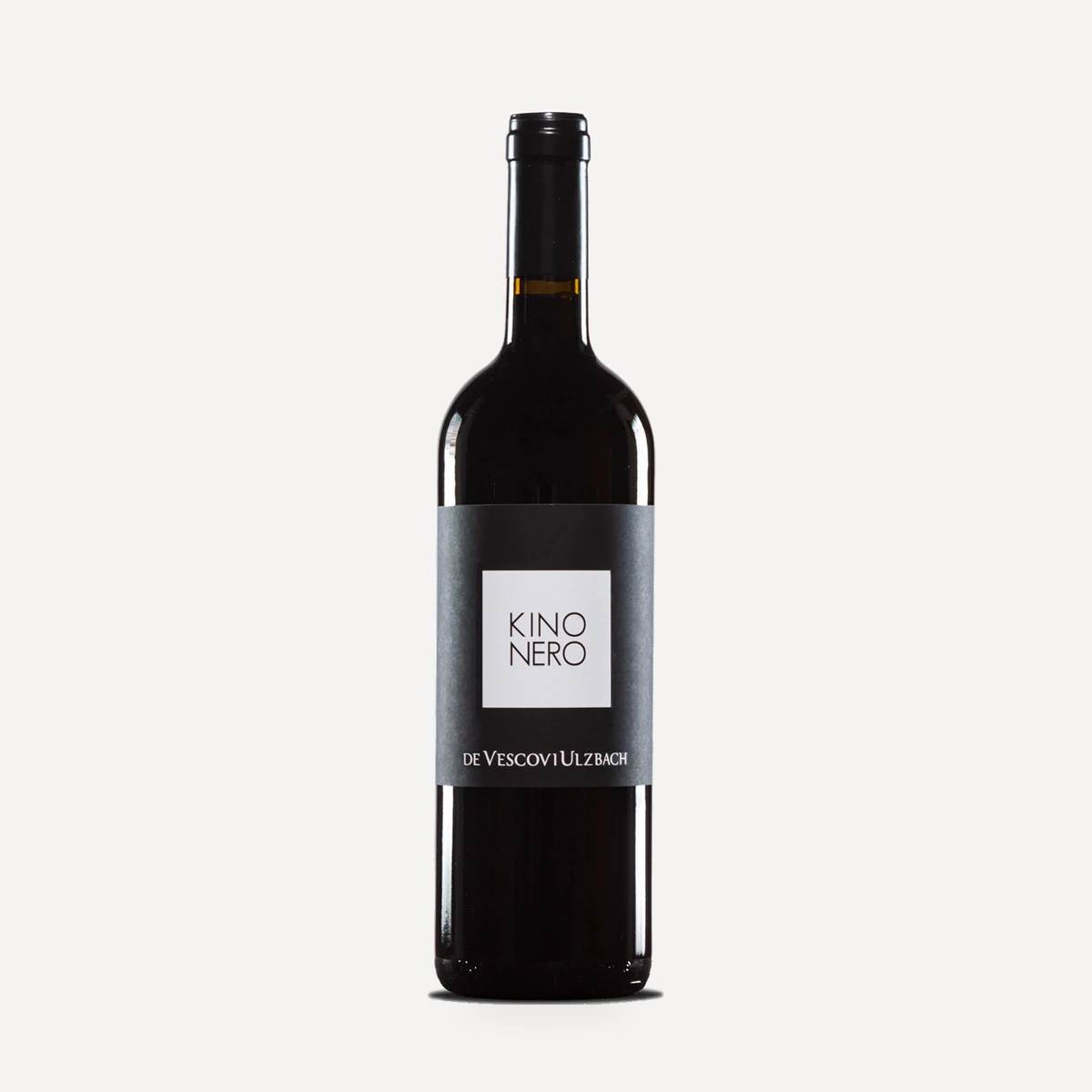
A Metodo Classico project began in 2008 with Andrea Moser, Denis Zeni and Nadia Viola. In 2009, the Empeirìa project was launched with Andrea Moser. Its Sauvignon Bianco entered production in 2013, followed by the first rosé expression of Teroldego Rotaliano. The Kino Nero project followed in 2017, honouring Eusebio Francesco Chini and his association with the building now occupied by the winery.
Terroir
Piana Rotaliana
De Vescovi Ulzbach is based in Mezzocorona, at the heart of the Piana Rotaliana. The plain is the largest in Trentino and forms a triangle whose base follows the Adige River and whose apex lies at Passo della Rocchetta. Monte Fausior, reaching 1,550 m, defines its southern side, while the 1,857 m Monte Monticello stands to the north. The Noce stream and the Adige River are central to the landscape; one proposed interpretation of “Rotaliano” is “plain of water,” recalling the rivers, former wetlands and bodies of water.
Alluvial soils
Repeated alluvial deposits from the Noce formed the Piana Rotaliana. Before its course was straightened in 1852, the stream entered the Adige near San Michele all’Adige. The cultivable soil is shallow, ranging from 30 to 90 cm. Layers of siliceous sand known locally as lèa and silt alternate with strata containing calcareous, volcanic and other pebbles. Smoothed river stones provide rapid drainage after rainfall and limit standing water.
Mountain-influenced microclimate
The mountains surrounding the plain shelter it from cold northerly winds. Their rock faces absorb solar radiation during the day and release heat at night, establishing a protected microclimate suited to Teroldego.
Vinificazione
The family’s documented association with viticulture reaches back to the beginning of the 18th century, when its archive first records vine growing and, specifically, Teroldego. Cultivation on the family land continued throughout the 20th century even during the period when grapes were delivered to the Cantina Sociale di Mezzocorona.
Teroldego is described as a vigorous, fairly early-budding vine requiring long pruning. Its medium, compact, pyramidal bunches carry round, dark-blue, aromatic berries with thick, tannin-rich skins; the bunches can remain on the vine relatively late without rotting.
Historically, local Teroldego vines were trained against living supports called tirelle, particularly mulberry trees, giving rise to the image of the vine “married” to the mulberry. The double Trentino pergola was introduced later. Its canopy intercepts sunlight while the bunches hang below the leaves, separated from them and shielded from direct sun. This arrangement improves air circulation against humidity and facilitates picking.
Filosofia
De Vescovi Ulzbach presents winegrowing as a family commitment grounded in almost four centuries of attachment to the land. Its stated outlook joins inherited values to a future-facing approach: the family sees itself as the custodian of a past that must remain relevant to the next generation. Vineyard work is framed as careful, humble stewardship, treating the vines with the attention given to a home garden.
Terroir is understood broadly, as the accumulated interaction of human, historical, physical and chemical factors that gives a wine a recognizable identity. For Teroldego, that identity is inseparable from the Piana Rotaliana and its combination of land, water, light and family history.
Vini
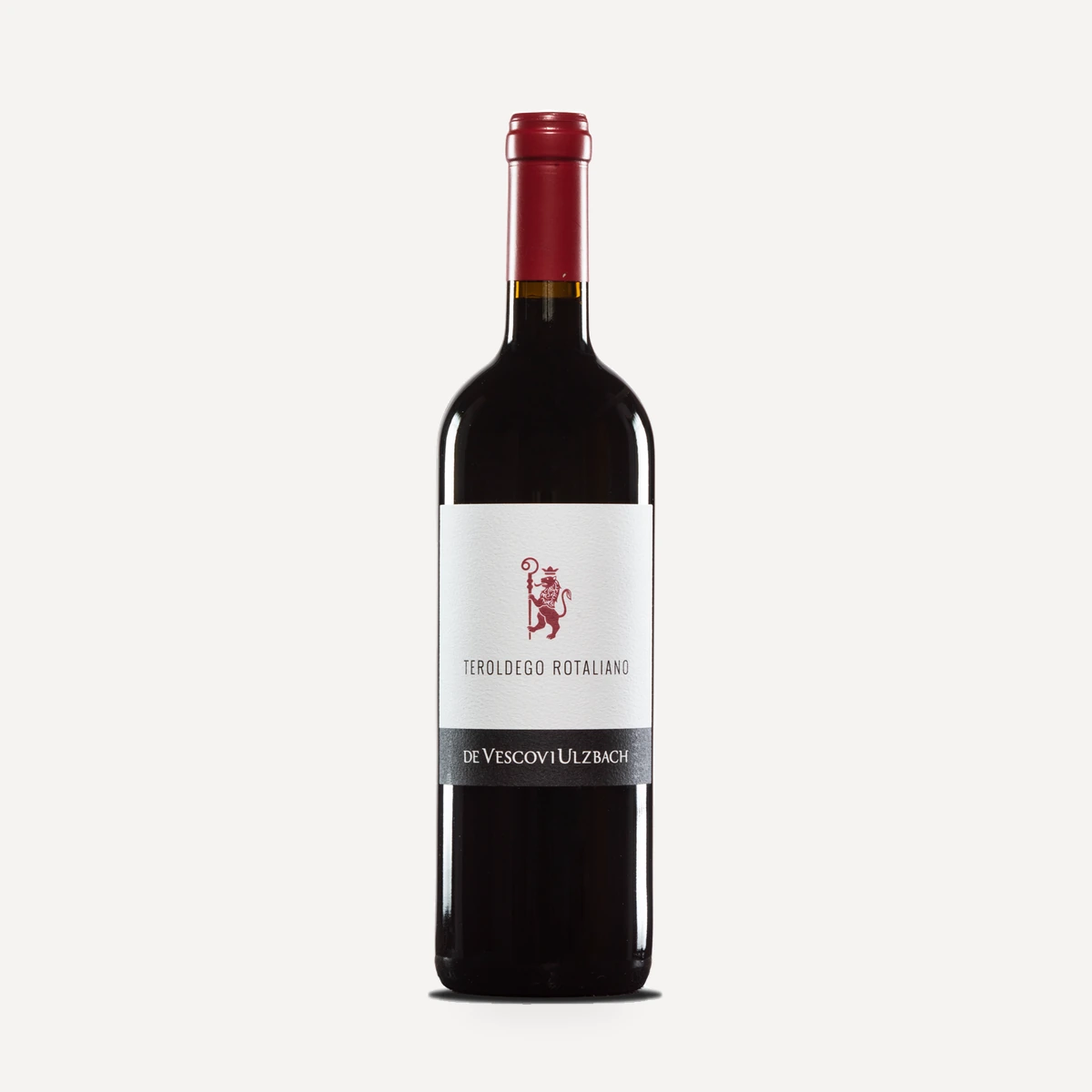
Teroldego Rotaliano Classico
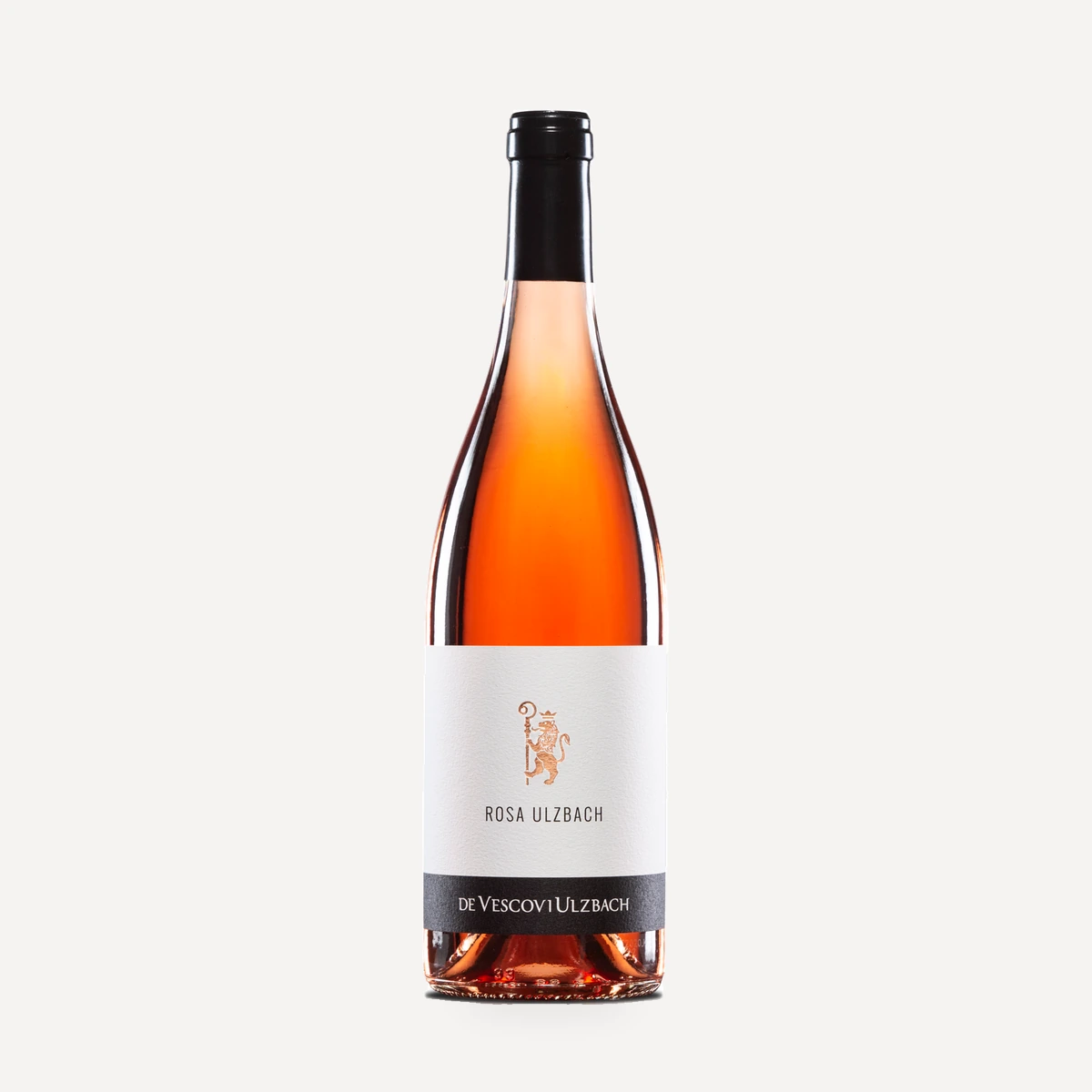
Rosa Ulzbach IGT Dolomiti