Storia
Agricultural origins
Fontorfio takes its name from an old spring below the vineyards and farmhouse. The property was historically a mixed farm: its occupants cultivated vines, olives and cereals, made wine and raised livestock. The present stewards chose the site as their home and continued the work of the farmers who preceded them, retaining predominantly manual methods and rejecting chemical inputs.
The farmhouse
The farmhouse occupies the highest point of the property and stands partly over an old kiln once used to fire bricks. Sections of the building are several centuries old. It was repeatedly altered as its use changed and accommodated numerous families over the centuries, including several sharecropping families living there at the same time. Renovation exposed blocked doors and windows as well as the positions of former fireplaces. When the present occupants arrived, the ground floor was divided between a cellar and a stable; the stable could also be reached through a trapdoor from the rooms above.
Vineyard development
In 2007 a north-east-facing Pecorino vineyard was planted on a steep, layered site. A south-facing Cordisco vineyard followed in 2008, planted with two selections of Cordisco. The estate also retained a small Cordisco parcel at the summit of the Fontorfio hill, planted with the historic R7 clone.
Development of the range
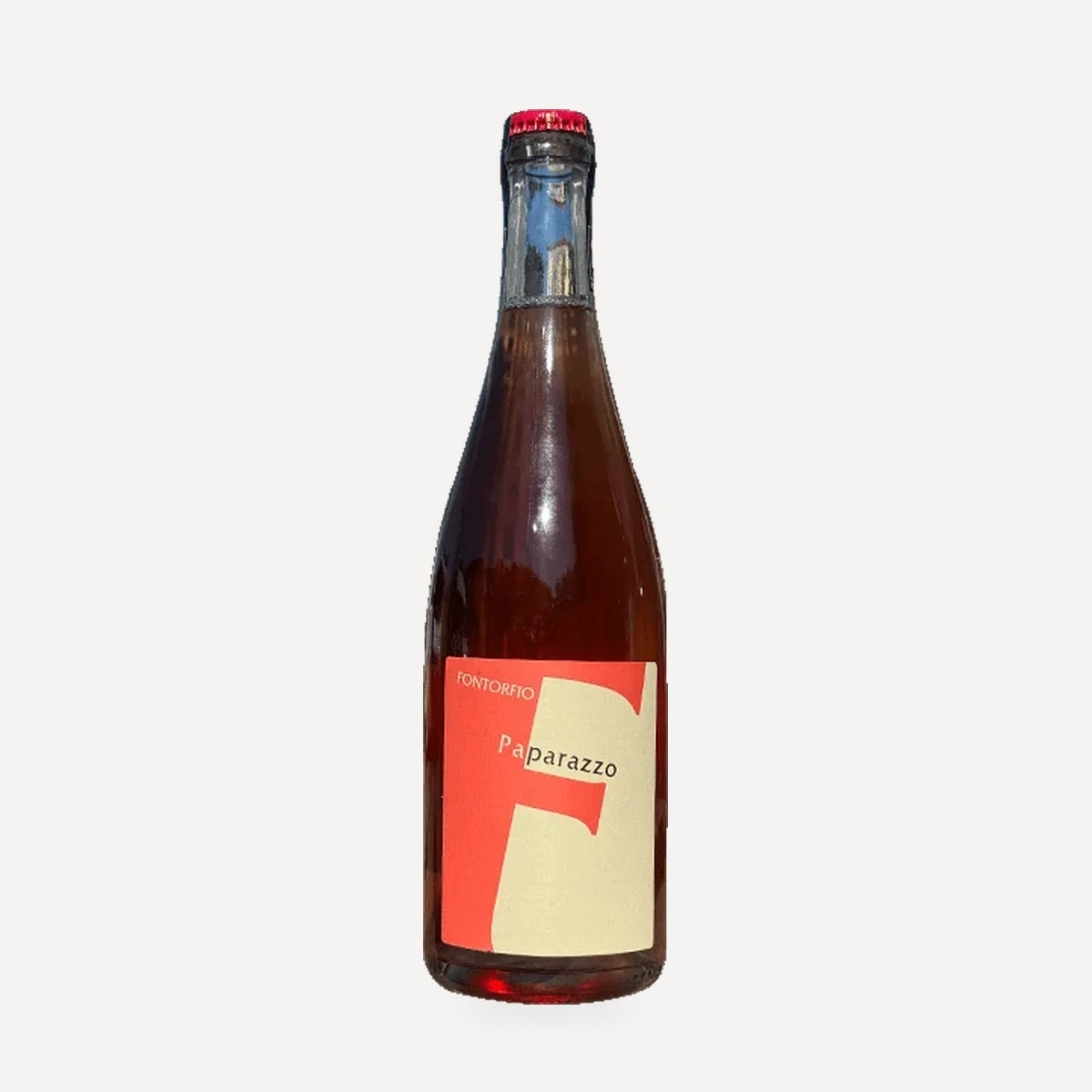
Cuprense 22 was produced for the first time from the 2013 vintage. It introduced the estate’s bottle-refermented, lees-retained sparkling style, using fermenting must from the following harvest rather than added sugar or commercial yeast. Ortensia subsequently extended this interest in sparkling wine to the traditional method. Its original Sangiovese component was later replaced by Passerina for greater freshness, while Cordisco continued to be vinified as a white-wine component.
Terroir
Fontorfio lies at Cossignano, a small medieval settlement in the inland Marche, approximately midway between the Monti Sibillini and the Adriatic Sea. The vineyards described individually sit at about 350 metres above sea level. Most of the estate’s terrain is steep, with exposures ranging from south and east to north-east.
The soils combine sand, clay and silt, but their proportions and vertical arrangement change between parcels. The north-east-facing Pecorino site has a layered profile formed through movement and sedimentation over millions of years: the upper section is silty, the middle is markedly clay-rich and the lower section is sandy. Its technical profile is 40% sand, 30% clay and 30% silt. The estate associates the silty upper ground with greater vine vigour and larger fruit, the clay-rich middle with structure, and the sandy lower ground with more aromatic grapes.
The south-facing Cordisco sites are described as 55% sand, 30% clay and 15% silt. The small hilltop Cordisco parcel combines sand and clay. Other mixed parcels contain the same three components in varying proportions, with sand prevailing throughout the sites used for the multi-variety production.
Vinificazione
Vineyard work continues the practices associated with Fontorfio’s earlier farmers: operations are predominantly manual, modern mechanical equipment is avoided, and no chemicals are used. Preservation of the surrounding land is the central objective of this approach.
The technical profiles consistently describe Guyot-trained vines, a planting figure of 4,000 vines and yields of 40 quintals per hectare, equivalent to 4 tonnes per hectare. Grapes are harvested by hand into small crates. Picking dates are adapted to variety and wine style. Pecorino can be gathered from late August into September; its comparatively high sugar accumulation encourages earlier picking so that acidity is retained. Cordisco for the principal red production is normally harvested between mid-September and mid-October, while Passerina for Cuprense 22 is generally collected from late August to early September.
Fontorfio follows a low-intervention cellar approach. Selected commercial yeasts and sophisticated corrective techniques are avoided, fermentations are spontaneous, and sulphur dioxide is kept to the minimum considered necessary; in some cases none is used. Clarifying agents are not employed. Most wines are bottled without filtration, although coarse filtration is recorded for certain cuvées.
Fruit is harvested manually into small crates and softly pressed. Skin contact varies with the intended style, from a few hours or two days to the full duration of fermentation, approximately 20 days for the orange style and about 30 days for the reds. Stainless steel is the principal fermentation and maturation vessel. Several wines remain on their fine lees for extended periods, sometimes with frequent bâtonnage, and clarification may occur solely through racking.
The maturation programme also includes second-use oak barriques and barrels made from acacia and ash. Bottle ageing is integral to several releases and can range from a year to several years depending on vintage and style.
For the naturally sparkling, lees-retained wines, a second fermentation is initiated during the year after the original harvest by adding fresh fermenting must from the subsequent vintage. This avoids the addition of commercial yeast and sugar. Disgorgement may be omitted or performed only partially, leaving the drinker the option of serving the wine clear or gently mixing the sediment into suspension. The traditional-method Ortensia remains on its lees for at least 18 months; staggered disgorgement can extend this period beyond two years.
Filosofia
Fontorfio’s philosophy centres on continuity with the agricultural work of earlier generations at the property. The estate presents manual labour, the avoidance of chemicals and modern mechanical methods, and protection of the surrounding land as connected responsibilities rather than isolated production choices.
The cellar follows the same restrained approach: spontaneous fermentation replaces selected yeast, manipulative oenological practices are avoided, clarification is generally achieved through time and racking, filtration is usually omitted, and sulphur additions are minimised or sometimes eliminated. Extended lees and bottle ageing take precedence over rapid release.
The estate’s self-description is framed by themes of land, work, duty, home and roots, reinforced through references to Pablo Neruda and Francesco Guccini. The old spring, farmhouse, traces of the sharecropping period and inherited agricultural uses are treated as parts of a living place rather than as detached historical features.
Vini
Castello di Marte
Cossineo
Gaio Mario
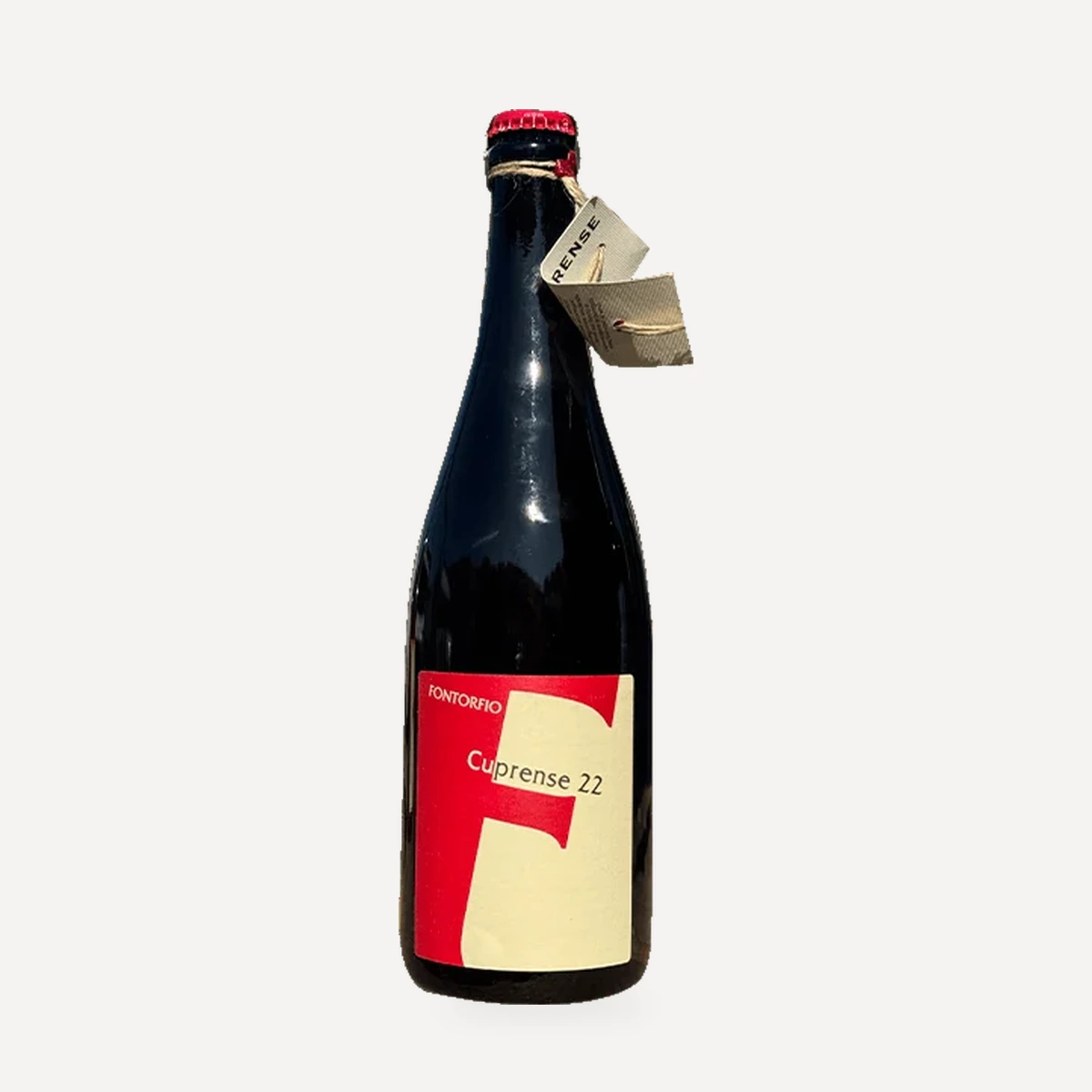
Cuprense 22