Questo vino
Vineyard and terroir
The grapes come from hillside vineyards at 300–450 metres, facing south-west and south-east. The vineyards represented in the 2008 technical sheet were planted between 1969 and 2001. Training is simple Guyot on low trunks of approximately 70–80 cm, with a fruiting cane carrying around 8–10 buds. Yield is approximately 1.5 kg per vine.
Grapes
The 2008 blend comprises 85% Corvina, Corvinone Veronese and Rondinella, with 15% other grapes.
Vinification
The entirely manual harvest begins in mid-September and continues for approximately 35–40 days. Picking takes place in several passes according to ripeness, with careful selection of the best bunches. The grapes are placed in small wooden crates of approximately 4–5 kg and dried in the fruttaio for 90–100 days. Following destemming and crushing, the must ferments in stainless-steel tanks at controlled temperature.
Ageing
Maturation lasts 36 months in new wooden barrels, followed by at least one year in bottle.
Technical data
The 2008 Riserva has 15.50% alcohol, total acidity of 6.52 g/L and net dry extract of 40.80 g/L. Production amounted to 8,000 bottles of 750 ml.
Tasting profile
Intense garnet-ruby red. Aromas encompass plum, sour-cherry preserve and almond, joined by balsamic nuances, fresh mint, vanilla, coffee and chocolate. The palate is full-bodied, powerful and enveloping, with softness, roundness, dryness and savoury character. Its persistent flavour is supported by acidity that supplies freshness.
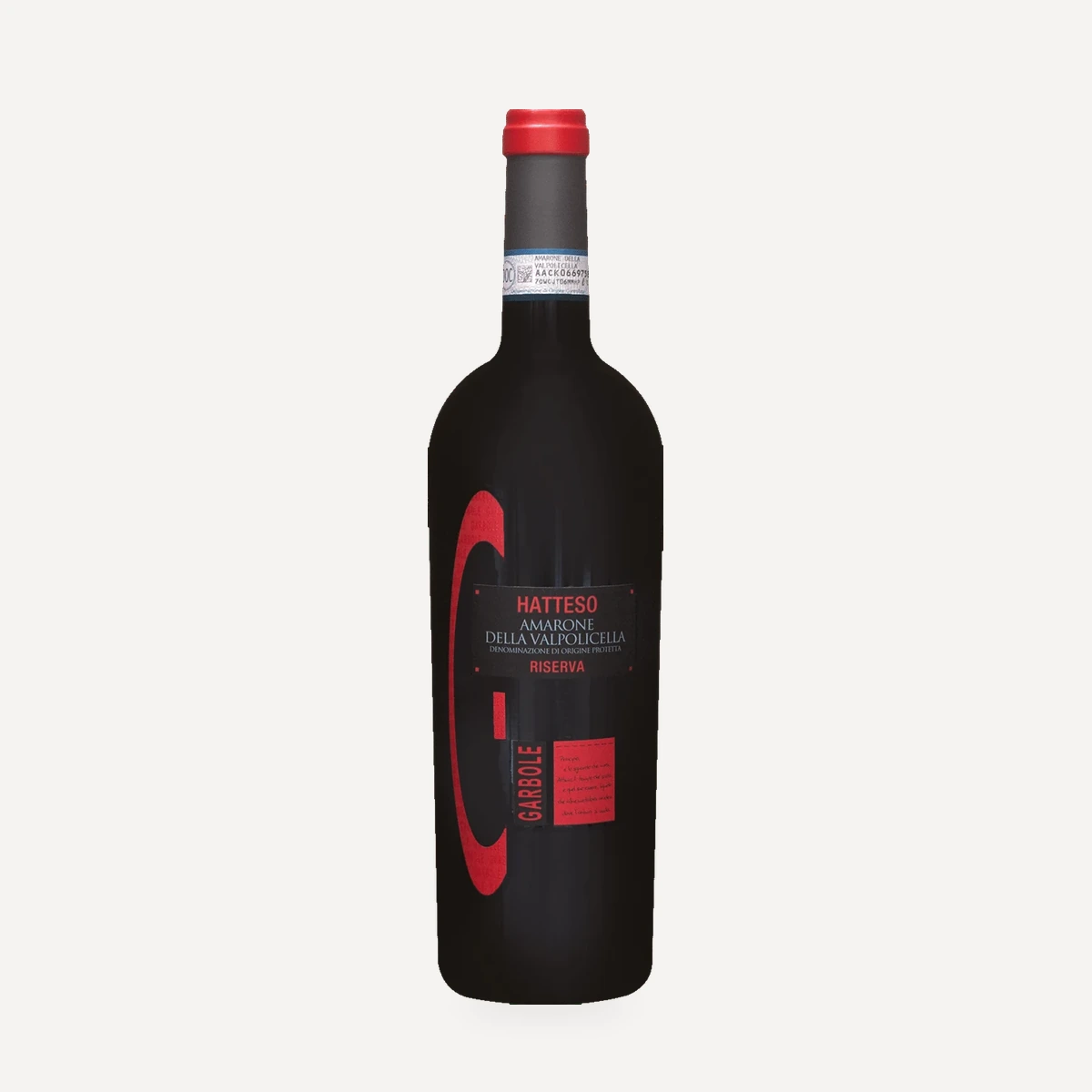
Hatteso is presented as a balance of force, structure, concentration and mellowness, with sensorial complexity and an ability to develop over time.