Storia
From medieval farmhouse to family home
The building originated as a farmhouse in the 14th century. Villa di Geggiano became the home of the Bianchi Bandinelli family in 1527 and has remained associated with the family—now also bearing the Boscu name—for approximately five centuries.
The beginnings of documented wine production
The earliest documents attesting to the family's winemaking activity date from 1725. Niccolò Bandinelli produced wine in the Villa's cellars and began exporting it to Great Britain. His commercial activity helped reposition Chianti wine from a largely domestic agricultural commodity to a refined product intended for European high society and capable of competing with established French drinks.
The transformation of the Villa
In 1768, the marriage of Anton Domenico Bianchi Bandinelli and Cecilia Chigi Zondadari prompted the conversion of the old farmhouse into a villa with a private chapel and formal garden. The couple made the property their marital home. The Italian-style garden and its principal architectural composition also date from 1768.
A further comprehensive renovation took place around 1780. In 1790, Anton Domenico and Cecilia commissioned the Austrian painter Ignazio Moder to decorate the entrance gallery with a fresco cycle representing the twelve months of the year. Rooms retaining 18th-century Veneziano Rustico furniture, historic French wallpaper and period textiles survive from this phase.
Literary and artistic life
During the 18th century, dramatist and poet Vittorio Alfieri repeatedly stayed with the family. He wrote plays at Geggiano and rehearsed them in the garden theatre, the Teatro di Verzura.
In the first decades of the 20th century, Ranuccio Bianchi Bandinelli received a circle of artists and intellectuals at Geggiano. His guests included Eugenio Montale, Sibilla Aleramo, Sandro Penna and Renato Guttuso, continuing the property's association with artistic and intellectual life.
Land redistribution and the interruption of commercial production
In 1959, archaeologist and art historian Ranuccio Bianchi Bandinelli, whose thinking had become closely aligned with Marxist ideas of land redistribution, established a cooperative and donated most of his land to the farmers who worked it. This decision ended the first major period of professional wine production at Villa di Geggiano. The family retained only a few hectares, which were used to make wine for domestic consumption.
Restoration of the estate and winery
In 1995, brothers Andrea and Alessandro Boscu Bianchi Bandinelli took over management of the estate. Working with their partner Malcolm Caplan, they gradually bought back land, planted vines and renovated the vinification cellar, reviving production for commercial distribution. From the beginning of this new phase, the project followed organic agricultural principles and concentrated on a deliberately small, quality-focused output.
The present generation
The estate is managed by Andrea and Alessandro together with Andrea's children, Gregorio and Bianca. Gregorio oversees the business and the winemaking process, while both members of the youngest generation participate actively in wine production. Their work continues the emphasis on organic farming, close attention to the vineyards and terroir, limited cellar intervention and small-scale production.
Terroir
Villa di Geggiano lies approximately 6 km north-east of Siena, at the southernmost end of the Chianti Classico area. The vineyards are in the municipality of Castelnuovo Berardenga at approximately 320 m above sea level.
The vineyard exposure is south to south-east. Soils combine sand, silt and clay with a stony skeleton. The estate treats the preservation of local biodiversity as integral to expressing the character of Geggiano and the local Sangiovese grown there.
Vinificazione
The vineyards have been farmed according to organic principles since commercial production was restored in 1995. Organic practice is treated as a broader approach to the management of the winery, company and customer relationships, with an ongoing search for methods that are sustainable, ecologically balanced and compatible with traditional production.
Work in the vineyards continues throughout the year, and all principal operations on the vines are performed by hand by experienced staff. The estate focuses on preserving the biodiversity of its territory. Grapes are harvested by hand into racks, and the annual production comes entirely from estate-owned vineyards.
The vines are Guyot-trained at a density of 5,000 plants per hectare and have an average age of 15 years. Recorded yields vary between 30 and 38.5 hl/ha. No organic certification body or certification date is identified.
Villa di Geggiano works on a deliberately small, artisanal scale and produces its wines exclusively from estate-grown organic grapes. The cellar approach combines traditional winemaking with modern analytical controls and seeks to minimize intervention while maintaining close attention at every stage.
Grapes are harvested by hand into racks. Documented cellar practice includes destemming and gentle pressing, followed for suitable lots by pre-fermentation maceration at 5°C. Fermentation takes place in stainless steel at 28°C, with manual pumping over and cap work. Natural yeasts are used in the best vintages, and malolactic fermentation follows alcoholic fermentation.
The general production cycle comprises 28 days of fermentation and maceration. Wines intended for maturation are aged in old French-oak casks for at least 24 months. The technical configurations represented in the range also include 500-litre French-oak tonneaux and 2,000-litre French-oak casks, followed where applicable by maturation in bottle.
Filosofia
Villa di Geggiano defines its wine project through tradition, organic agriculture and purity. Its stated objective is to make wines that retain an authentic Chianti Classico character and express Geggiano's terroir, local Sangiovese and the contributions of the people involved in their production.
The estate rejects an industrial model in favour of patient, small-scale agricultural production. It seeks healthy, characterful wines, accepting that each should have its own personality and history. Work in the cellar is intended to remain simple but attentive, supported by meticulous year-round vineyard care.
Organic farming is understood as more than a set of agricultural techniques. It informs the management of the winery and business, ecological balance, relationships with consumers and the continuing search for sustainable methods compatible with traditional production.
The wider family philosophy combines respect for inherited traditions with innovation and progress. Beauty, art and nature are treated as means of elevating the spirit and encouraging reflection, while balance with the body, mind and natural world is presented as the ultimate goal. The mission is to preserve the family's historic home through renewal, share its land and way of life with a wider community, and create opportunities for both personal and collective growth.
Vini
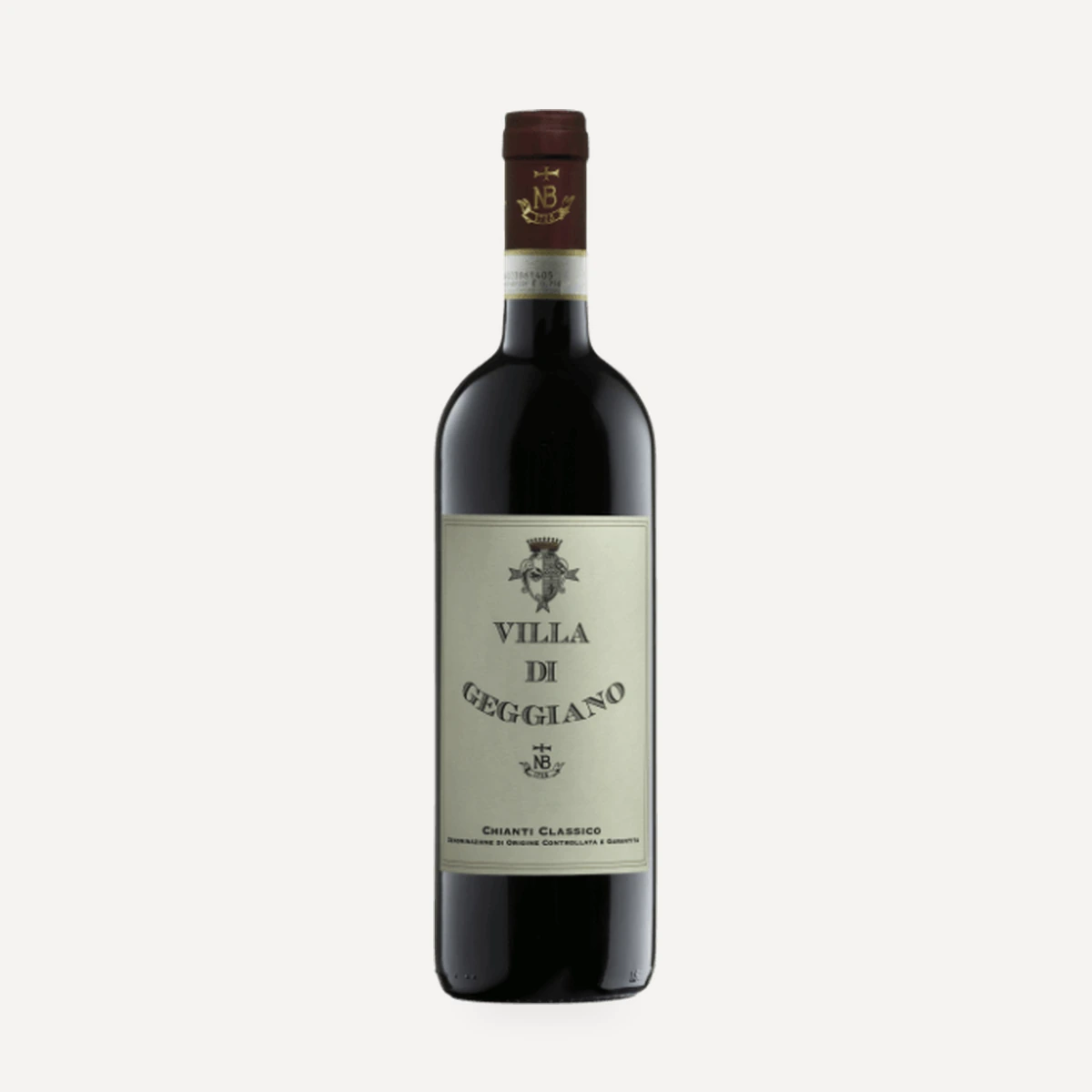
Chianti Classico
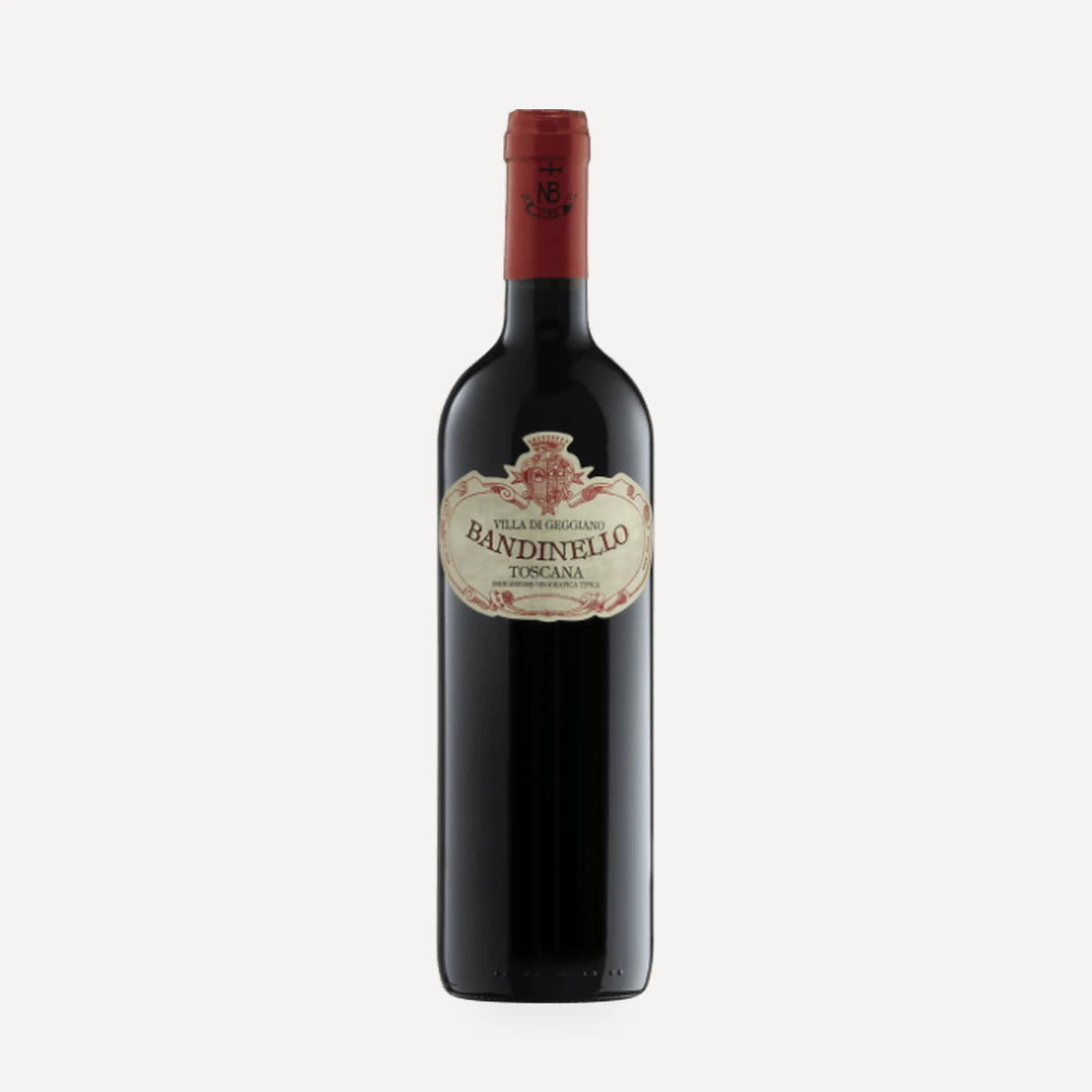
Bandinello IGT