Storia
Seventeenth-century origins and the Gazzone legacy
La Cà Nova stands at Cella Monte, in the hills of Monferrato. Its origins reach back to the seventeenth century. The name is derived from Càneva, meaning an underground room, and is closely associated with the estate’s historic subterranean spaces.
From 1700, the land on which the vines continue to grow belonged to the noble Gazzone family, Counts of Valmacca and Rosignano. La Cà Nova inherited their coat of arms: three towers beneath the upper portion of a shield, with two magpies facing forward above them.
The nineteenth-century farmhouse and Infernot
During the second half of the nineteenth century, Marco Bellero’s great-grandparents excavated the local Pietra da Cantoni while building their farmhouse at Cella Monte. This resistant yellowish, marl-calcareous sandstone is also the material from which the estate’s underground chambers were cut.
The circular Infernot was completed in 1881. Like other Infernot, it was carved entirely by hand and designed for storing wine and food. Its lack of external light and ventilation, together with stable humidity and a cool, nearly constant temperature, created the conditions of a natural cellar.
Adolfo Zai, Marco Bellero’s maternal great-grandfather, was born in 1888. He played an important part in establishing the family home and worked the family vineyards. Nebbiolo is still harvested from a vineyard that he planted.
The Bellero family
The property has belonged to the Bellero family since the beginning of the twentieth century. Luigina Zai, born in 1925 and later the grandmother of Marco Bellero, spent much of her life working as a farmer in Monferrato. She subsequently recorded rural customs and memories in several books, including Piemonte nel cuore e nella memoria.
Her account of the traditional harvest describes vineyard soils kept clean and loosened by hand, treatments against downy mildew made with copper sulphate, late shoots cut with a sickle and leaves removed around the bunches during wet Septembers to improve sunlight and airflow. Harvest normally began in early October and lasted two or three weeks. Grapes were transported in wooden tubs by ox- or horse-drawn carts, trodden by foot and carried to wooden—and later concrete—vats.
A Barbera planting dating from 1955 was still being harvested in 2013. The estate’s oldest vineyard heritage also includes the Nebbiolo planted by Adolfo Zai.
From mixed farming to the first official vintage
In the early 2000s, the farm combined wine production with livestock raising. The rooms now used by the agriturismo were then the old family dwelling and its associated stable. Tastings initially took place informally in the cellar among friends and acquaintances.
La Cà Nova’s first official harvest took place in 2003. Bottles from that vintage are displayed in the niches of the circular Infernot.
Agriturismo and cellar development
Marco Bellero built on the family’s older agricultural and cellar traditions while adopting modern production and storage methods. Beside the oldest part of the underground cellar, the family created a large production room equipped with stainless-steel tanks. The historic section became a small museum of early farming and winemaking equipment.
Demand for a dedicated hospitality space led to the renovation of the former house and stable. The agriturismo opened in 2013 with two dining rooms and a sheltered outdoor area. The property offers cellar visits, tastings, lunches and dinners, but no overnight accommodation.
Recorded vintages and production milestones
The 2013 harvest began on 27 September with Cortese, followed by Arneis, Freisa, Grignolino, Barbera and finally Nebbiolo. Fermentations took place at relatively low temperatures; the resulting wines were expected to have lower alcohol than the previous year but more pronounced aromas. Following fermentation, the estate separated the free-run wine from the pomace during racking.
The 2014 harvest began on 22 September after a particularly adverse summer. Freisa was picked first in temperatures approaching 30°C. The grapes were destemmed and pumped into stainless-steel tanks for fermentation. Almost 100 quintals of Grignolino were gathered in about eight hours on 23 September. July rain, downy mildew and flavescence dorée sharply reduced the Barbera crop; the estate reported approximately 120 quintals of Barbera from the harvest as a whole. Rosé must was separated from its Grignolino skins so that fermentation could continue without skin contact. The final eight rows of Nebbiolo were harvested on 26 September.
In 2015, approximately 300 quintals of must were produced. The quality of the fruit was considered better than in 2014, aided by favourable seasonal conditions.
The 2016 harvest yielded almost 500 quintals of grapes: 35 quintals of Arneis, 20 of Freisa, 18 of Bonarda, 90 of Grignolino, 250 of Barbera and 35 of Nebbiolo. In November of that year, La Cà Nova introduced Symposium, then a Grignolino-based brut rosé made by the Martinotti method.
The 2017 harvest comprised 18 quintals of Arneis, 15 of Cortese, 105 of Grignolino, 70 of Freisa, 20 of Bonarda, 270 of Barbera and 40 of Nebbiolo.
Educational farm and recent developments
In 2024, La Cà Nova officially became a Fattoria Didattica. This expanded its activities beyond conventional visits and tastings to structured educational experiences devoted to vineyard work, rural culture, the Infernot and the extraction and working of Pietra da Cantoni.
The 2025 harvest concluded with the traditional Curmà, the communal end-of-harvest dinner. For the 2025 vintage of Symposium, released in 2026, the estate changed the blend to 100% Freisa while retaining the Martinotti method.
Terroir
La Cà Nova is based at Cella Monte in the Province of Alessandria, within the hills of Monferrato. Its approximately 8 hectares of vineyards extend across Cella Monte, Frazione Coppi and Berroni, a hamlet of Rosignano Monferrato.
The estate’s defining geological material is Pietra da Cantoni, a marl-calcareous sandstone formed and deposited beneath the surrounding hills millions of years ago. The historic cellar contains fossil shells, evidence of the marine environment that once occupied the area.
The vineyards include Grignolino and Nebbiolo near Berroni, where the Nebbiolo site associated with Barone di San Pietro lies close to a small church dedicated to San Pietro. The estate also cultivates its San Pastore wheat near these vineyards.
Vinificazione
The estate cultivates approximately 8 hectares across Cella Monte, Frazione Coppi and Berroni. Its documented varieties are Arneis, Barbera, Bonarda, Chardonnay, Cortese, Freisa, Grignolino and Nebbiolo. Chardonnay is the most recently planted and vinified variety.
Harvest timing is determined by the intended wine and the ripening cycle of each variety. Factors monitored in the berry include softening of the pulp, sugar accumulation, declining acidity and aroma development. In 2013, for example, Cortese was picked first, followed by Arneis and the red varieties, with Nebbiolo among the last grapes brought in.
Seasonal conditions can materially affect the crop. The wet summer of 2014 exposed Barbera to downy mildew and flavescence dorée and sharply reduced its yield. The 2015 season produced fruit considered better than the previous year. La Cà Nova marks the completion of harvest with the traditional Curmà communal meal.
Luigina Zai’s record of earlier family farming describes hand-hoeing and digging beneath the vines, manual weed removal, copper-sulphate treatments against downy mildew, cutting late shoots with a sickle and removing leaves around bunches after wet September weather to improve airflow and sunlight. These practices form part of the estate’s preserved agricultural history rather than a specification of its present farming regime.
Wine is produced and matured in the underground cellar at Cella Monte. The historic section includes the circular Infernot completed in 1881, while a large adjoining underground room houses modern stainless-steel tanks.
During the documented 2014 harvest, freshly gathered grapes were destemmed to prevent excessive extraction of stem tannins. The fruit was then transferred by pump into stainless-steel tanks, where it remained through fermentation. Following alcoholic fermentation, the estate racks the wine away from the pomace, separating the free-run wine for subsequent maturation, filtration and other cellar work.
Red-wine macerations vary according to the intended cuvée, from approximately 7 days to a minimum of 20 days. Stainless-steel maturation ranges from approximately 6 to 10 months. Some wines remain entirely in steel, while others continue their élevage in French oak. The documented cellar vessels include 500-litre tonneaux from Cher and Allier and 225-litre Allier barriques. Oak periods range from just over 12 months to 36 months; the estate uses both medium- and strong-toast Allier tonneaux for one of its longer-aged Barbera expressions.
Rosé production begins with crushing and destemming followed by gentle pressing. Fermentation then proceeds without skin contact. A documented rosé fermentation lasts 5–6 days. The white wines follow the same crushing, destemming and gentle-pressing sequence and ferment without skins until residual sugar is close to zero.
The Symposium brut rosé undergoes its second fermentation by the Martinotti method in an autoclave. The 2025 vintage is made entirely from Freisa.
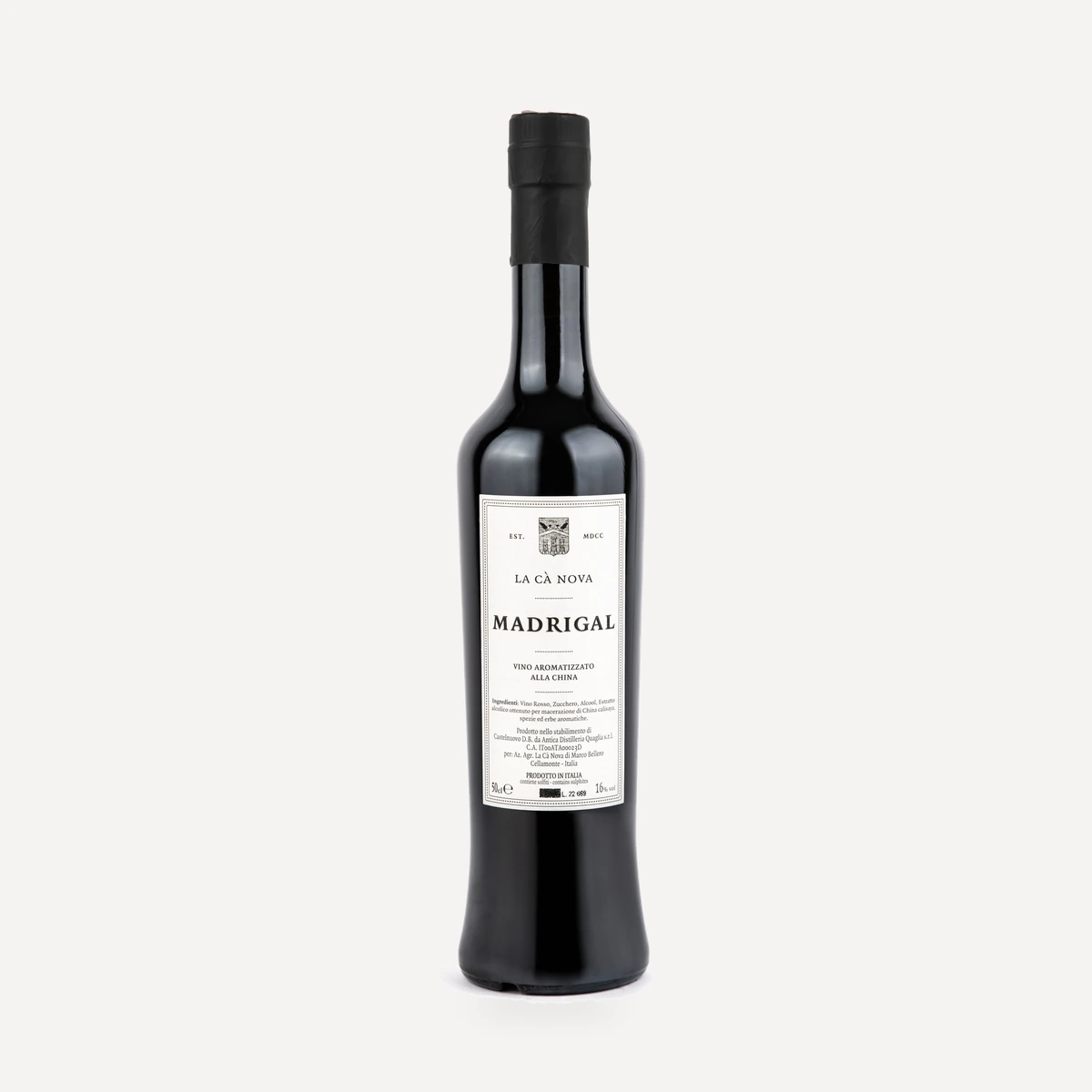
For the aromatised Nebbiolo wine, the base wine is infused with Calisaya cinchona root and more than 20 herbs and spices for approximately 5–6 months, then filtered and bottled.
Filosofia
La Cà Nova presents continuity between family memory, Monferrato farming traditions and contemporary cellar practice as the foundation of its work. Historic vineyard tools, early bottles and written family recollections are preserved alongside modern stainless-steel tanks and French-oak maturation vessels.
Harvest occupies a central place in the estate’s identity. Each vintage is treated as different, and that variability is described as one of the most valued aspects of winegrowing. The Curmà meal at the end of picking reinforces the communal dimension of the agricultural year.
Hospitality and education extend the same outlook beyond the cellar. Food is based on seasonal agricultural products grown on the farm or obtained directly from other nearby farms, while the Fattoria Didattica programmes connect wine with vineyard work, rural history, local stone-working traditions and the lives of earlier generations.
Vini
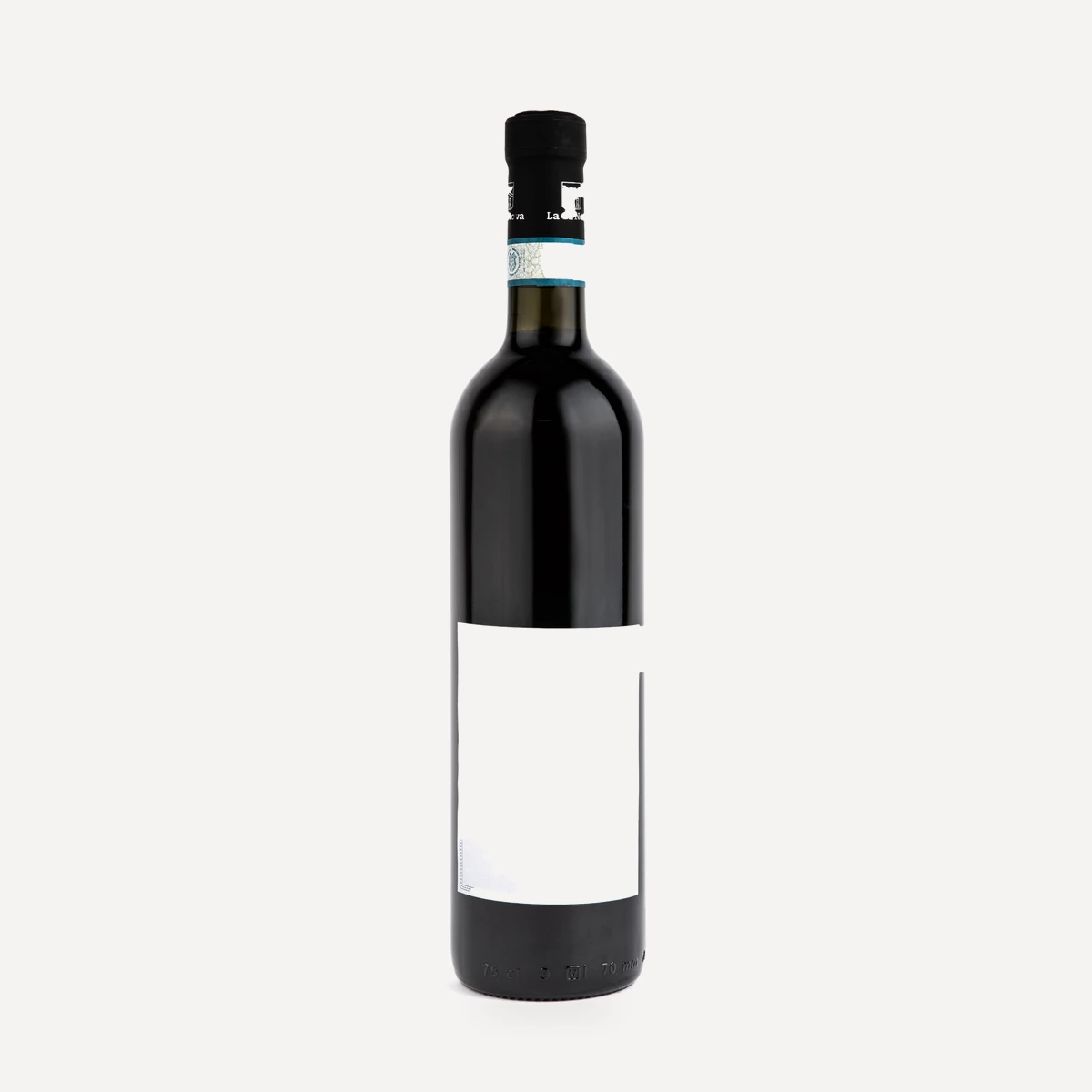
Barone di San Pietro, Monferrato Nebbiolo DOC
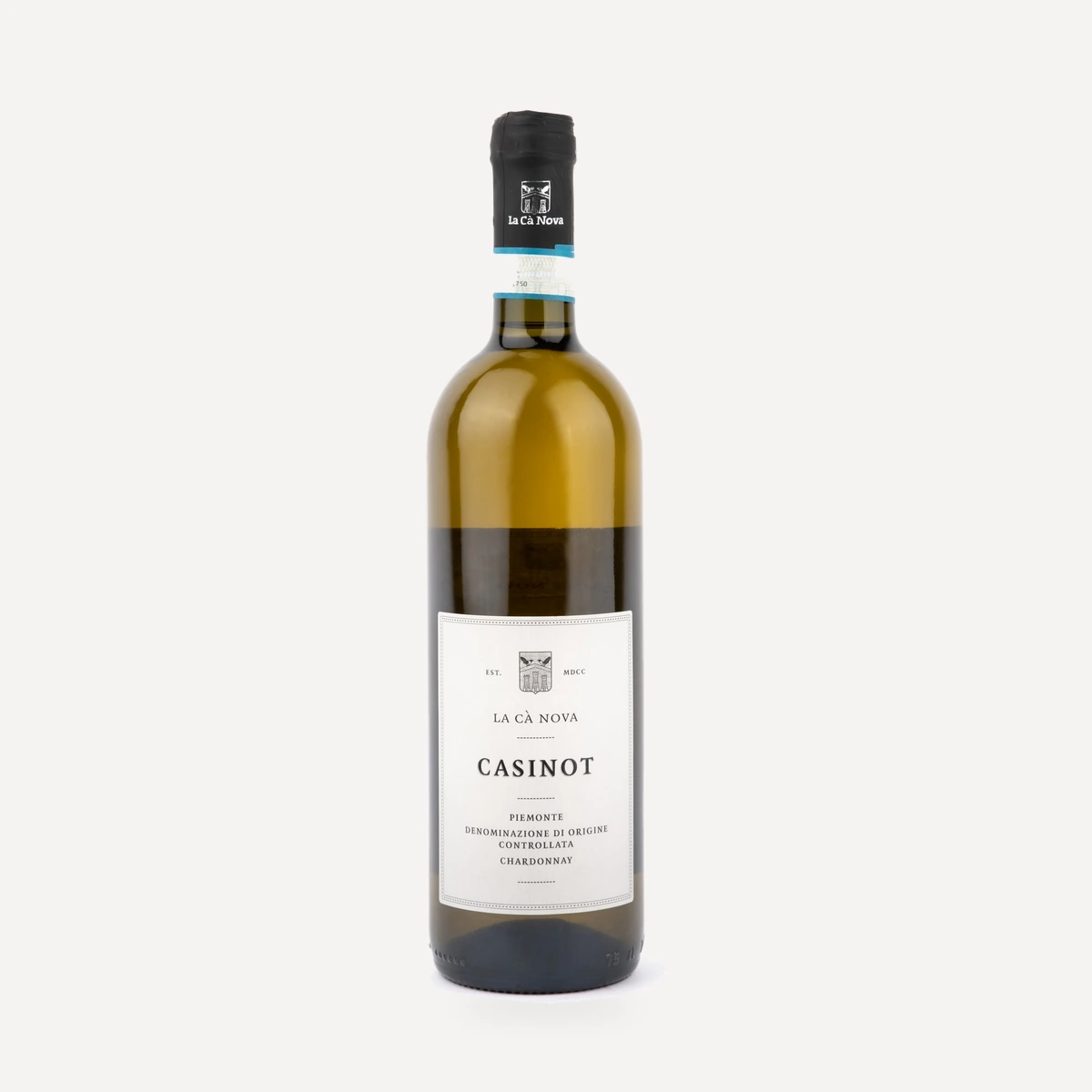
Casinot, Piemonte Chardonnay DOC