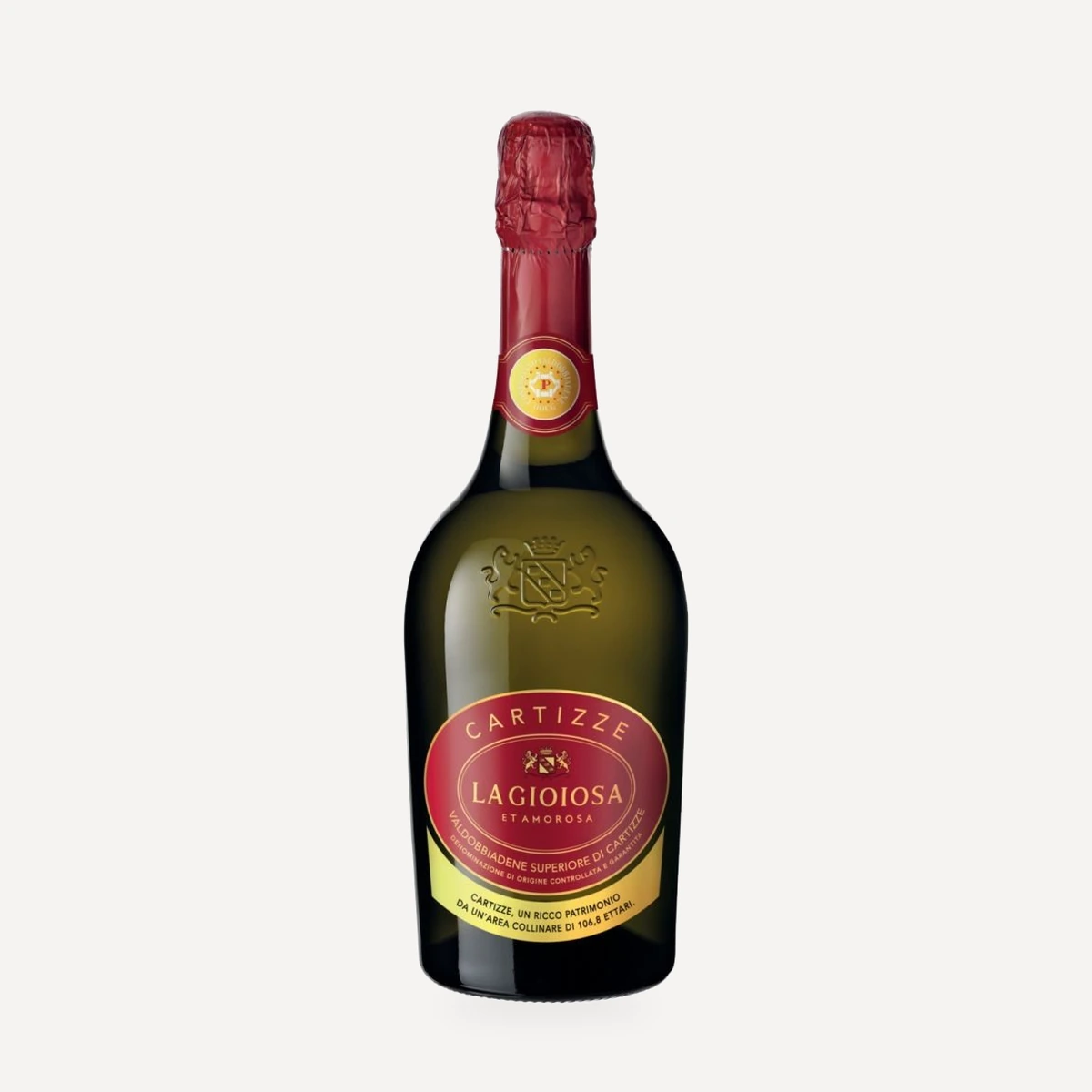
Storia
Beginnings in the 1920s
La Gioiosa traces its beginnings to the 1920s, when the grandfather of current president Giancarlo Moretti Polegato bought vineyards among the hills of Treviso, at the meeting point of the area’s principal wine routes. Crocetta del Montello became the point of origin and remains the company’s headquarters and principal centre of production.
Generational development and international expansion
Successive family generations opened new paths for development during the twentieth century. The company took Prosecco beyond Italy and participated in the category’s growth on international markets. Vineyards and estates were progressively added as worldwide demand increased, while distribution expanded first through Europe and then farther afield.
The estate network now includes Crocetta del Montello, Valdobbiadene, Nervesa della Battaglia and Spilimbergo. A further winery, vineyard and retail site operates at Noventa di Piave. Crocetta del Montello remains the main operational base; Valdobbiadene anchors production in the UNESCO-listed Conegliano–Valdobbiadene hills; Nervesa della Battaglia initiated the company’s Biodiversity Friend programme; and Spilimbergo extended its vineyard presence to the eastern edge of the Prosecco DOC area in Friuli Venezia Giulia.
Sustainability and research
An in-house hydroelectric plant has long formed part of the winery’s energy system. In 2012, La Gioiosa added a large rooftop photovoltaic installation. Water from the Brentella used to generate electricity is subsequently employed for vineyard irrigation and for external cooling of tanks and autoclaves.
The Nervesa della Battaglia estate became the first La Gioiosa property to receive Biodiversity Friend certification. The sustainability programme that began there was subsequently extended across the company’s vineyards. La Gioiosa also entered research collaborations with the Istituto Sperimentale di Viticoltura di Conegliano at the University of Padua and joined the Wine Research Team, whose work is directed towards a quality-focused, sustainable production protocol extending from vineyard to bottle.
La Gioiosa today
La Gioiosa describes itself as one of Italy’s principal wine companies, with a strong international orientation. Sixty per cent of production is exported to more than 110 countries. Prosecco remains the origin and central identity of the business, within a broader range encompassing sparkling wines, still and semi-sparkling wines, aperitifs, an after-dinner spirit and a non-alcoholic sparkling drink.
Terroir
A territory spanning Veneto and Friuli Venezia Giulia
La Gioiosa works across the Prosecco landscape of north-eastern Italy. The wider Prosecco DOC zone extends through nine provinces: Gorizia, Pordenone, Trieste and Udine in Friuli Venezia Giulia, and Belluno, Padua, Treviso, Venice and Vicenza in Veneto. The company’s estates occupy contrasting settings at Crocetta del Montello, Valdobbiadene, Nervesa della Battaglia and Spilimbergo.
Valdobbiadene and the UNESCO hills
The Valdobbiadene estate lies in the belt of hills connecting Valdobbiadene, Conegliano and the area towards Vittorio Veneto. The Conegliano–Valdobbiadene hills are recognised by UNESCO as a cultural landscape shaped by the relationship between human work and nature. On the hillsides around Valdobbiadene, Glera tends to develop predominantly floral and fruity notes. In the lower hills south of Vittorio Veneto, citrus and green-apple characters become more prominent.
Asolo
The Asolo Prosecco area occupies high hills in the province of Treviso, close to the Dolomites. Its steep slopes impose very limited yields and require demanding manual work. Glera grows alongside Bianchetta Trevigiana, Verdiso, Perera and Glera Lunga, varieties maintained through inherited farming traditions.
Cartizze
Cartizze is a 106.8-hectare natural area within the Conegliano Valdobbiadene Prosecco Superiore DOCG zone, centred on the steep hills of San Pietro di Barbozza, Santo Stefano and Saccol in the municipality of Valdobbiadene. Its distinguishing conditions include a high concentration of soil minerals, southern exposure, constant breezes, marked temperature variation and low yields per hectare.
Plains and Spilimbergo
On the plains, loose, stony soils give Glera fresh floral and fruity expressions. The Spilimbergo estate stands at the eastern limit of the Prosecco DOC area in Friuli Venezia Giulia, in a landscape where agricultural land and historic settlements coexist. Its conditions promote higher grape sugar levels and more pronounced aromatic expression, supporting fresh wines with mineral notes and clearly defined aromas.
Montello and the Piave
The Nervesa della Battaglia estate is reached along the Piave and occupies a natural haven at the foot of Montello. At Crocetta del Montello, the Brentella waterway passes through the headquarters property and supports both renewable-energy generation and irrigation of the surrounding vineyards.
Vinificazione
Viticulture is organised around the wellbeing of the land, biodiversity and continuous monitoring of grape development. The Biodiversity Friend programme evaluates soil-fertility restoration, pest and weed control, nectar-producing plant species, water management, hedges and woodland, preservation of agricultural biodiversity, the biological quality of the environment and renewable-energy use. The Nervesa della Battaglia estate was the first company property to obtain the certification, after which the programme was extended to the other vineyards.
La Gioiosa collaborates with the Istituto Sperimentale di Viticoltura di Conegliano at the University of Padua to monitor every stage of grape growth. Its participation in the Wine Research Team supports the development of a quality-oriented, sustainable protocol covering the full cycle from vineyard to bottle.
Harvest normally begins in late August and continues through late September or early October. The exact starting point is selected by the oenologist and agronomist after tasting the berries and evaluating climatic and geographical conditions. In the steep Asolo hills, grapes are harvested exclusively by hand and the best fruit is selected. The organically farmed vineyards supplying Prosecco DOC Biologico occupy medium-textured to alluvial soils within the denomination.
Water management at Crocetta del Montello links energy efficiency with farming. Water from the Brentella first powers the hydroelectric plant and is then available to irrigate the surrounding vineyards. The broader biodiversity approach includes the management of soil fertility, pests, weeds, nectar-bearing plants, hedges, wooded areas and water resources.
The harvest concludes grape ripening and begins the production cycle. Grapes are pressed to obtain must; the cellar’s modern technology has replaced the historic practice of foot-treading in large vats. For the company’s sparkling-wine process, whole grapes are placed in pneumatic presses for gentle pressing. After an initial racking, the must is held in temperature-controlled tanks until required for sparkling-wine production.
Fermentation transforms the must into wine. Raboso is specifically vinified with the must kept in contact with the skins. Sparkling-wine production follows fermentation and storage at a controlled temperature of 0°C, when the base is transformed into sparkling wine. Tanks and autoclaves at Crocetta del Montello can be cooled externally with water already used by the estate’s hydroelectric plant.
Research conducted through the Wine Research Team addresses the entire production cycle from vineyard to bottle. One reported outcome is that La Gioiosa’s wines contain no added sulphites.
Filosofia
La Gioiosa defines Prosecco as its origin, land and identity, while associating wine with celebration, friendship, family and time shared with others. Its name derives from “La Gioiosa et Amorosa,” an expression used by poets and writers for the Marca Trevigiana and intended to convey the pleasure of living each moment fully.
The company presents the harvest as both a complex working process and a ritual joining experience, intuition, physical effort and celebration. Its central agricultural principle is that worthwhile results follow when people work in harmony with nature. In fragile hillside environments such as Valdobbiadene, this translates into the conviction that grape quality depends on maintaining the health of the surrounding ecosystem.
Its sustainability programme combines environmental and social responsibilities. Renewable energy, biodiversity protection, research, efficient water use, lighter and reusable materials, and circular-economy partnerships are paired with initiatives intended to improve community life. Tradition and technology are treated as complementary: inherited hillside practices and preserved local varieties coexist with scientific monitoring, modern pressing, temperature control and research into a sustainable production cycle.
Vini
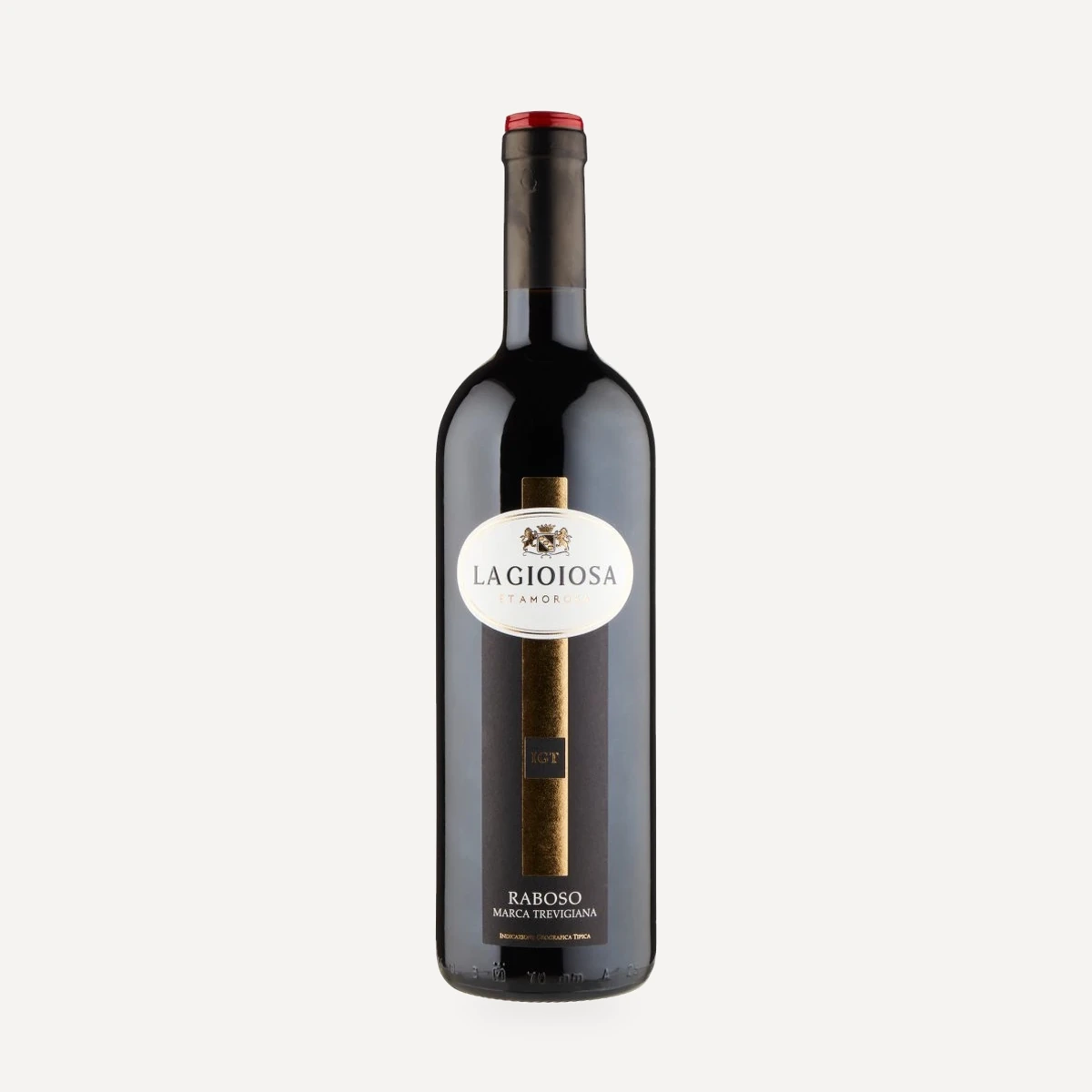
Raboso IGT Marca Trevigiana
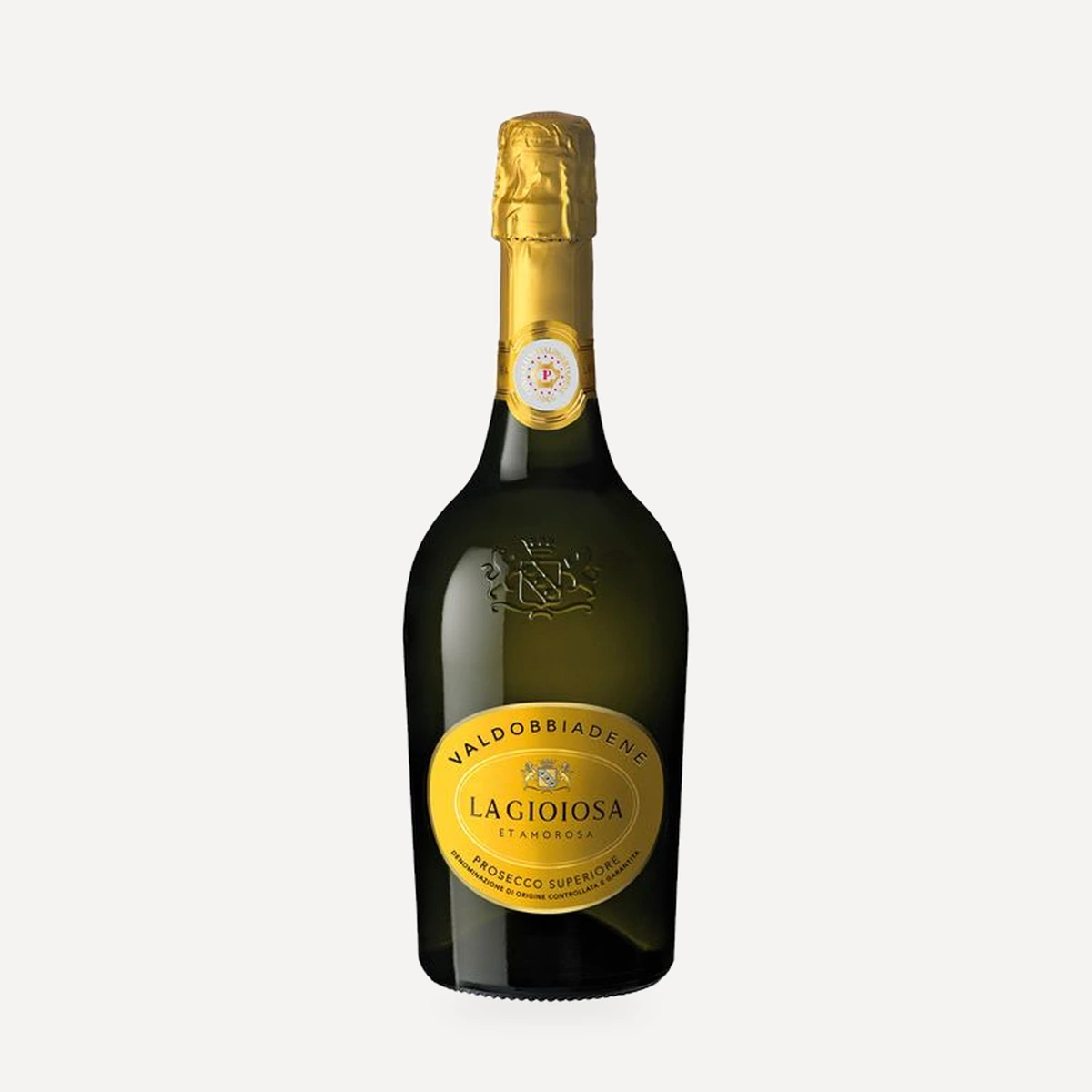
Valdobbiadene Prosecco Superiore DOCG Extra Dry