Storia
Acquisition and agricultural conversion
The Rossi Cairo family acquired La Raia in 2002 with the purpose of restoring the original ecosystem of the property through a comprehensive biodynamic project. Land and vineyards were immediately converted from conventional to organic cultivation, with biodynamics subsequently becoming the organizing principle for the whole farm. Crop rotation was restarted, ancient cereals including einkorn and emmer were recovered, and pasture-based cattle raising was reintroduced with Fassone cows.
The project treated La Raia as more than a wine estate. Vineyards, arable fields, pastures, woods, gardens, lakes, farm animals, buildings and the people who live and work there were intended to function as a balanced agricultural organism. Organic farming began in 2002, and La Raia obtained Demeter biodynamic certification in 2007.
The new cellar
In 2003 the winery building was renovated and a new cellar was created with natural materials. Its defining architectural feature is a pisé, or rammed-earth, wall developed with Austrian artist and architect Martin Rauch. Soil removed from the hillside during excavation, together with earth gathered around the estate, was sorted and mixed by grain, colour and consistency to construct a stratified façade that appears to merge with the cut of the hill. Architect Ivana Porfiri designed the winery, while its barrique cellar was designed by Studiodeamicis.
The structure combines the rammed-earth wall with glass, steel and laminated wood. A large glazed façade reveals the stainless-steel tanks, while the underground and rammed-earth elements support thermal exchange and stable conditions for processing and ageing. The cellar covers more than 2,500 m², and Rauch’s wall is identified as his only rammed-earth wall in Italy.
Development of the wines
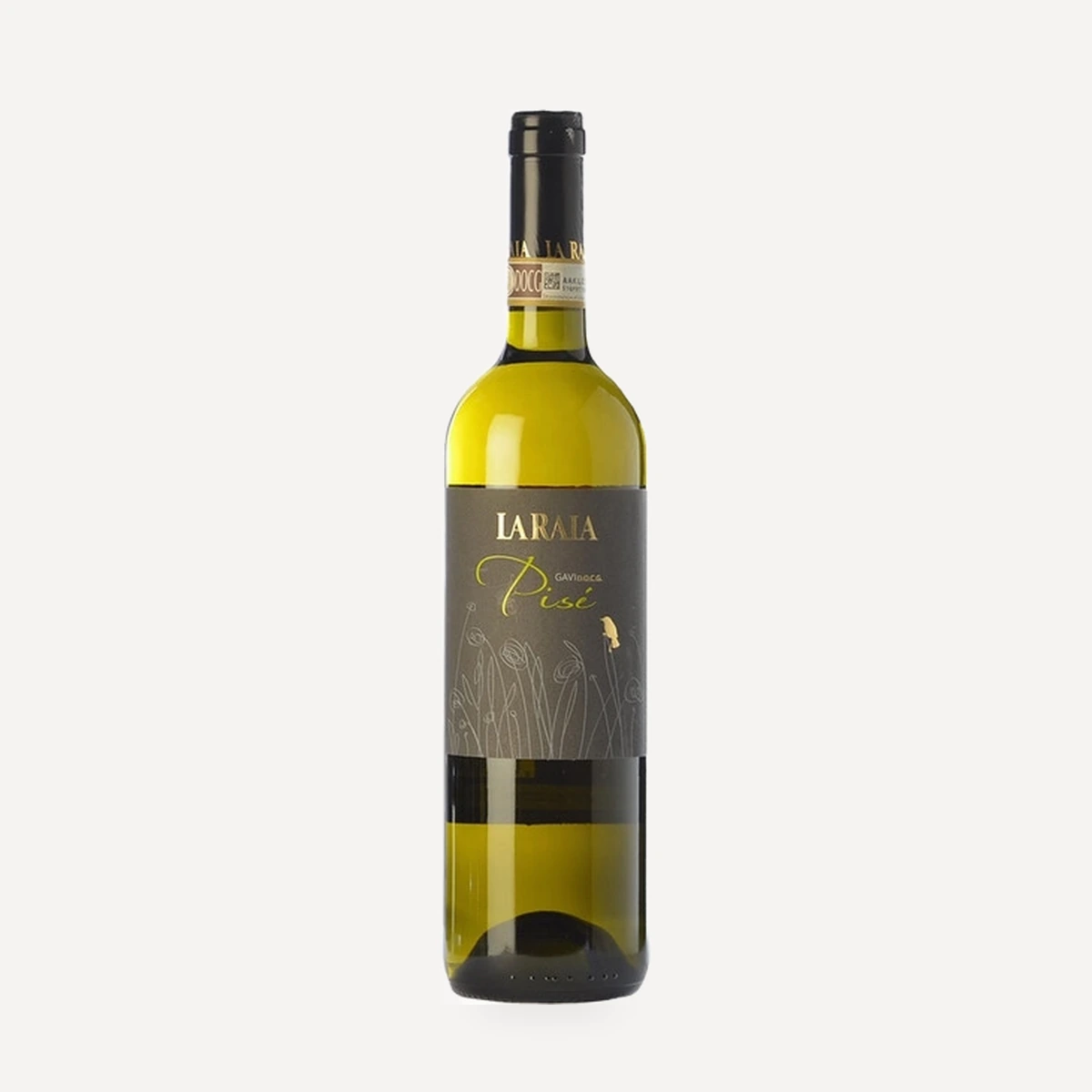
Gavi Pisé has been produced since 2005 and only in selected vintages. It became a focus for experimentation with the Cortese variety: ageing on indigenous lees was progressively extended from 12 months to two years. Beginning with the 2018 vintage, fermentation and initial ageing in 25 hl Stockinger oak vessels added a wood component to the established sur-lies method.
Since the 2021 vintage, La Raia has also made small quantities of Piemonte DOC Pinot Nero and a Cortese-based Piemonte DOC Bianco Passito. The Passito revived an old drying method using racks brought from Veneto. The fruit is dried for about one month in a cool, ventilated cellar area, and the full production cycle lasts more than a year.
The wider La Raia project
Fondazione La Raia – arte cultura territorio was established on 21 June 2013 on the initiative of the Rossi Cairo family. It was founded by Giorgio Rossi Cairo and art dealer Irene Crocco to encourage critical reflection on landscape through art, philosophy, architecture, education and research. Its first project, Nel Paesaggio, led to three permanent works by Remo Salvadori.
The family progressively restored nineteenth-century farmhouses across the property. Il Borgo, a rural complex at the northern edge of the estate, was returned to use for accommodation, cultural programs and events. Locanda La Raia opened in April 2017 in a former post station and travellers’ resting place; it developed into a 12-room relais with a restaurant and spa.
Energy and sustainability investments
In March 2021, photovoltaic panels were installed on two winery roofs. Subsequent expansion brought the roof-mounted system to approximately 256 kWp, supported by batteries that contribute to the cellar’s energy use. The estate also collects rainwater for gardens, treats winery wastewater in phytoremediation basins and uses thermal solar panels for hot water.
Environmental measures extend to the social life of the estate. Agricultural employees are housed in farmhouses on the property. Caterina Rossi Cairo established a kindergarten and Waldorf-Steiner school at La Raia, managed by the non-profit Cascina del Melo association and attended by approximately 30 children.
Terroir
La Raia lies in the hills of Gavi, across the municipalities of Novi Ligure and Gavi in the province of Alessandria. Its vineyards form part of a broader landscape of arable fields, pastures, gardens, orchards, small streams, two lakes and chestnut, acacia and elder woods.
The estate’s Cortese and Barbera vineyards are principally planted on calcareous, clay-rich and marly soils. Some vines are more than 70 years old. The marl-limestone matrix is associated with the mineral character sought in Cortese, while individual vineyards display marked differences in colour, texture, drainage, altitude and exposure.
The oldest Pisé site lies at approximately 300 m on a south to south-west-facing hill. Its red, sandy and well-drained soil naturally restricts canopy vigour and yield. La Madonnina has limestone-, clay- and marl-rich soil, naturally ventilated conditions and a favourable microclimate. Barbera grows at approximately 380 m on limestone and marl, with south to south-west exposure and efficient drainage. The Pinot Noir parcel faces north and has the light-coloured soil considered characteristic of the property.
Woodlands, hedges, meadows and waterways moderate the agricultural landscape while providing connected habitats for insects, birds and small mammals. Hedges are retained as shelter, local plant species are periodically established along streams, and flower-rich gardens support bees and other pollinators.
Vinificazione
Organic and biodynamic management
Organic cultivation began in 2002, and La Raia has been Demeter certified since 2007. The method seeks equilibrium among soil, vines, animals, other crops and the wider landscape. Synthetic fertilizers, herbicides and pesticides are excluded, while the work is intended to strengthen each plant’s roots, vitality and capacity to react to changing environmental conditions.
The rows remain grassed. Wild plants and autumn cover crops alternate between rows, including broad beans, field beans, peas, vetch, oats and barley; other mixtures incorporate grasses, crucifers and legumes. Nitrogen fixation and root action improve soil structure, while spontaneous grasses encourage below-ground biodiversity and stable humus. Cover crops are mown or incorporated into the soil as green manure.
Horn manure and horn silica are the principal biodynamic preparations. Each is mixed in water for one hour immediately before spraying. This dynamization creates a whirl that oxygenates the water and activates microbial life. Farm-produced stable manure also contributes organic matter and fertility.
Seasonal vineyard work
Pruning begins as days lengthen and follows the descending phase of the moon, a timing intended to reinforce the vine and reduce sap loss. Guyot-trained vines retain an average of six buds, with the fruiting cane tied horizontally for even leaf and bunch exposure. In spring, unwanted shoots are removed to direct energy toward the retained growth and keep the canopy open to light and air.
The vines are allowed to extend naturally, with shoots tied to the trellis instead of repeatedly cut by heavy machinery. Balanced growth and the absence of artificial fertilizers reduce the need for late-season trimming. Sheep graze vineyard vegetation, and light machinery is used between rows to limit damage to soil organisms.
Disease prevention depends on small, weather-adjusted doses of cave or mine sulphur and copper. Roses planted at the beginning of rows serve as sensitive indicators for downy and powdery mildew pressure. Systemic fungicides, anti-rot chemicals and insecticides are excluded.
Harvest
Ripeness analyses help determine picking dates for each site, with exposure and vine age considered in the decision. Grapes are selected in the vineyard, harvested by hand into baskets or crates and taken immediately to the winery. Cortese receives a second selection on the cellar sorting table. The rapid transfer to pressing is intended to prevent unwanted fermentation before processing.
Biodiversity and water
The vineyards are embedded among woods, pasture, cereal fields, hedges, gardens, orchards, lakes and streams. Fassone cattle graze freely, sheep manage vineyard grass and flower-rich habitats support bees and other pollinators. Local plant species are periodically established along waterways. Rainwater is collected in reservoirs for garden irrigation, and winery wastewater passes through phytoremediation basins.
Cellar and fruit reception
The cellar combines a glazed façade and stainless-steel tanks with a substantial pisé wall made from estate earth. Its barrique room contains historic bottles, large vessels used for Gavi Pisé and barriques used for Piemonte Barbera Largé.
Harvested Cortese is sorted twice: first by hand in the vineyard and then on a cellar sorting table. Selected bunches are destemmed and loaded into pneumatic presses for gentle extraction. This approach produces clear must while limiting extraction of brown, bitter compounds from the skins. Must is settled at low temperature and transferred to stainless steel with limited oxygen exposure.
Fermentation and sulphites
Fermentations use indigenous yeasts. La Raia multiplies these cultures with Grape — Gruppo Ricerche Avanzate per l’Enologia, a spin-off from the University of Turin’s Faculty of Oenology. Low-temperature handling is intended to retain varietal identity and permits sulphite levels below Demeter limits.
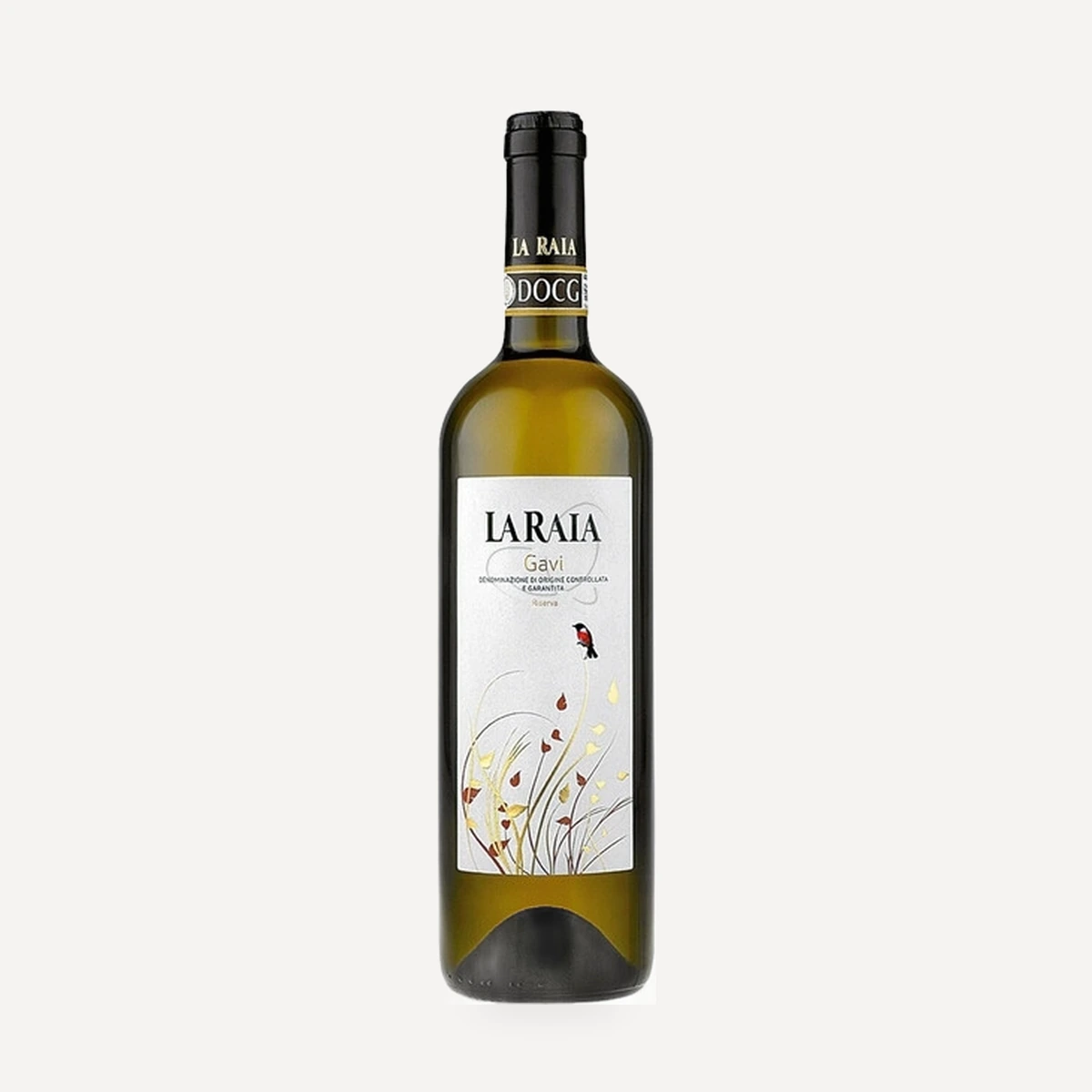
Cortese normally ferments in temperature-controlled stainless steel. For the traditional Gavi process, alcoholic fermentation lasts approximately 15–20 days at 18°C. The Riserva undergoes a roughly 25-day fermentation in small stainless-steel tanks without added oenological processing aids after low-temperature settling.
Gavi Pisé follows a separate regime. After gentle pressing and cold static settling, alcoholic fermentation takes place in 25 hl Stockinger oak vessels. The wine remains there on fine indigenous lees for about 12 months, then moves to stainless steel for approximately another 12 months of temperature-controlled sur-lies maturation. The oak component was introduced with the 2018 vintage. Bottle ageing precedes release.
Lees ageing for Cortese
Sur-lies periods vary by wine: approximately four to six months for Gavi DOCG, about one year for Gavi DOCG Riserva Vigna Madonnina and as long as two years for Gavi Pisé. The Riserva spends six months in stainless steel after fermentation and at least a further six months refining in bottle.
Red-wine production
Barbera undergoes classic red vinification. Fermenting must remains with the skins for about ten days in the general process, with pumpovers used to wet the cap and extract colour and tannin. In suitable vintages, post-fermentation skin contact continues for several additional days. The wine is then racked, separating free-run wine from spent marc.
Malolactic fermentation follows and moderates Barbera’s acidity. After the rackings required for clarity, the standard Barbera remains in temperature-controlled stainless steel until bottling. Barbera Largé is produced only in suitable vintages; following racking, it matures in second-use barriques for a period adjusted to the vintage. Its detailed regimen is approximately 18 months in barrique followed by six months in bottle.
Pinot Noir is softly crushed and fermented with skins and indigenous yeast. Daily pumpovers extract colour and tannin, while alcoholic fermentation in stainless steel proceeds for about one week. After racking, the wine remains at 20°C until malolactic fermentation is complete, undergoes several clarifying rackings, matures approximately five months in stainless steel and spends six months in bottle.
Passito
Cortese intended for Passito first undergoes green harvesting. Selected bunches are picked by hand into small baskets and laid intact on racks in a cool, ventilated cellar area for about one month. Whole bunches are then crushed, fermented in stainless steel and aged successively in French oak and bottle. The complete cycle takes more than one year and is undertaken only in suitable vintages.
Filosofia
La Raia presents the estate as a single agricultural organism in which land, plants, animals and human activity remain in balance. Monoculture is considered incompatible with this objective; vineyards therefore coexist with woods, cereal fields, pasture, gardens, orchards, waterways and livestock.
The Rossi Cairo family’s stated aim is to recover the original character of the Gavi landscape rather than standardize the fruit through soluble fertilizers and intensive intervention. Biodynamic cultivation is intended to strengthen the whole plant from its roots, allowing it to retain an active relationship with its soil and respond to the conditions of each season.
Wine is approached as an expression of this ecosystem. Indigenous yeasts, low-temperature handling, restrained sulphite use, vintage-sensitive ageing and repeated grape selection serve a meticulous but limited-intervention approach. Production steps remain consistent in principle while their duration and application respond to the year.
The project extends the same values beyond wine. Restoration favors local and natural materials; hospitality is conceived around the rhythms of the landscape; contemporary art is used to prompt reflection on agriculture and place; biodiversity and energy investments are framed as obligations to future generations.
Vini
Gavi Riserva Vigna Madonnina DOCG