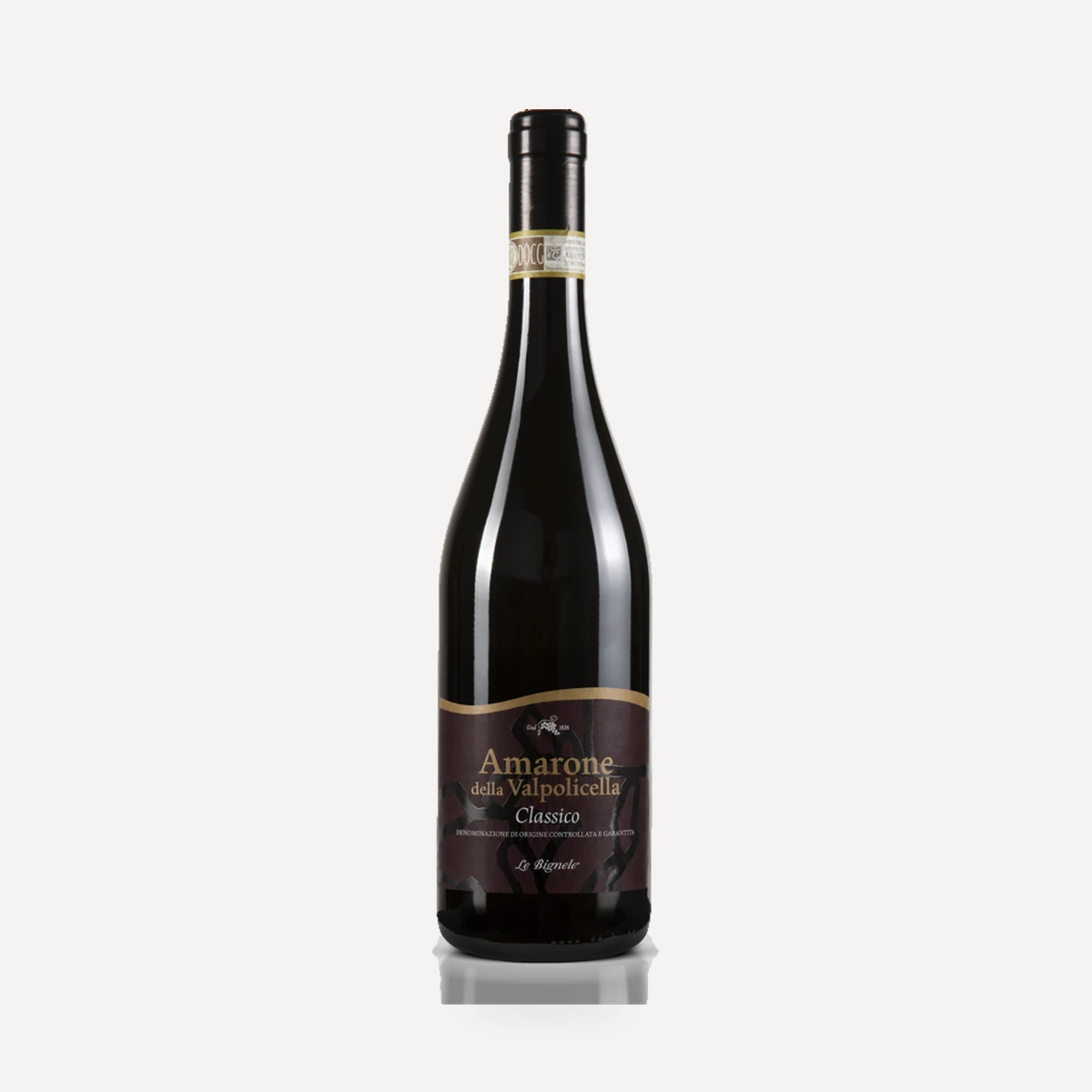
Questo vino
Vineyard and terroir
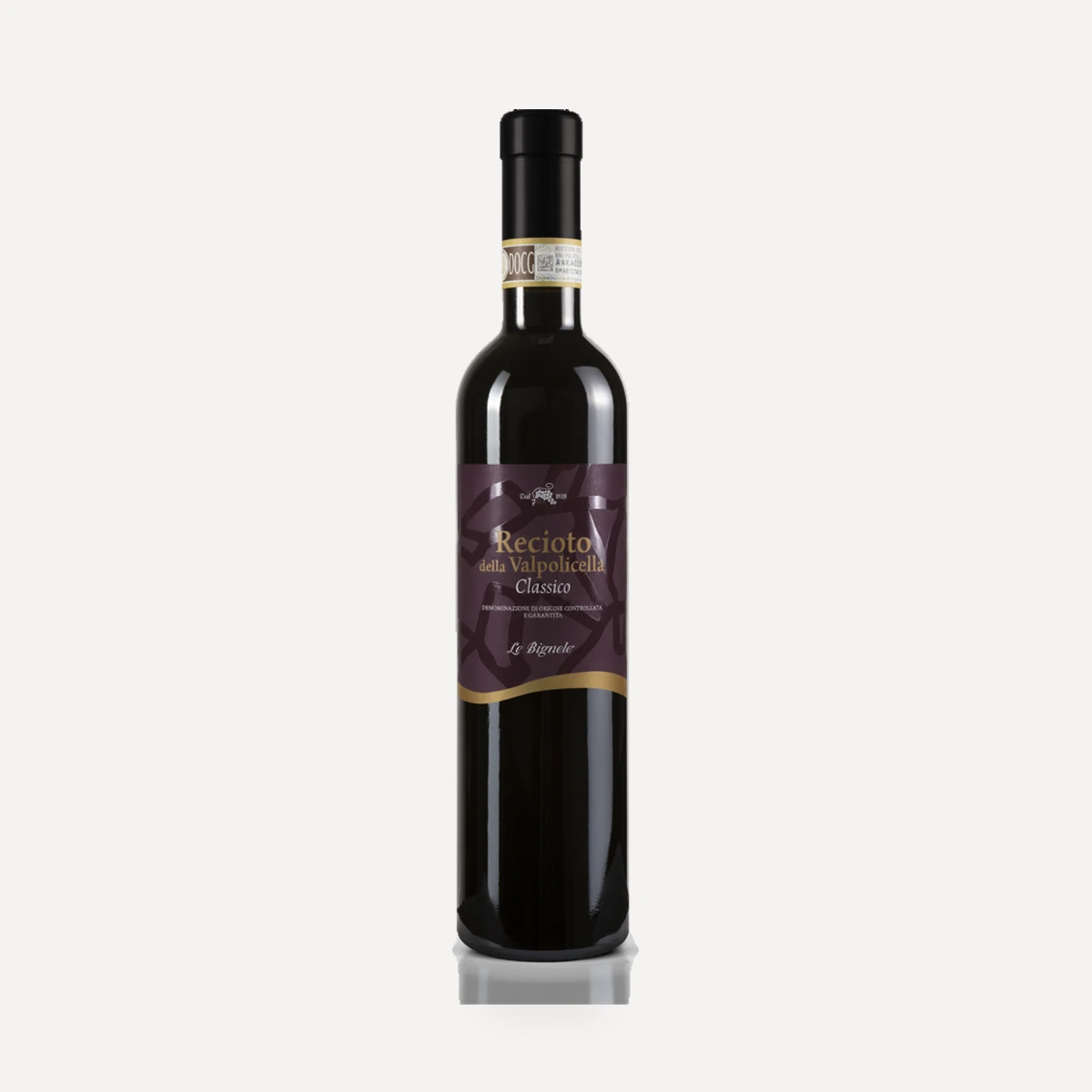
The grapes come from hillside vineyards in Marano di Valpolicella at 300 metres above sea level. The clay-and-limestone soils support 35–40-year-old vines trained on the Pergola Veronese system. Total yield is 100 q/ha, with 45 q/ha selected for this wine.
Grapes
Corvina, Corvinone, Rondinella and Molinara.
Vinification
The best bunches are selected during an exclusively manual harvest from mid- to late September and placed in wooden crates. The grapes dry for at least 90 days before being crushed between December and January. Temperature-controlled fermentation takes place in stainless-steel tanks with pump-overs.
Ageing
The wine matures for at least three years in 25–38 hl oak casks, followed by at least six months in bottle.
Technical data
Dry red wine. Presented in a 750 ml Burgundy bottle.
Tasting profile
An intensely concentrated, almost impenetrable ruby red. The ethereal, fragrant and complex bouquet unfolds gradually, moving from spirit-soaked sour cherry to nutmeg, liquorice, tobacco and cocoa bean. Full-bodied and firmly structured, the palate is soft and velvety, combining persistence and power with a silky, enveloping character.
Serving and pairing
Serve at 14–16°C in large glasses. Pair with game, grilled meat, roasts, braised dishes and mature cheeses. Dark chocolate is another suggested match, and the wine may also be enjoyed on its own as a meditation wine. Store the bottle horizontally, away from light, at 10–15°C.
Label / history
Presented as a wine shaped by patience and the slow passage of time: careful bunch selection is followed by grape drying, long maturation in cask and, finally, tasting. Its character is intended to express the richness, passion and elegance of its place of origin.