Storia
1979: Cascina La Pertica
The estate’s history began in 1979 at Polpenazze del Garda, in the heart of Valtènesi. Giovanni Battista Brunori acquired and carefully restored a rural building that became the agricultural enterprise’s headquarters under the name Cascina La Pertica. His son Ruggero Brunori joined him, sharing the ambition to produce wines capable of expressing the territory.
The 1980s: a new direction
During the 1980s, Ruggero Brunori sought a new identity for the wines of Valtènesi. His encounter with Giorgio Grai helped define the estate’s oenological direction. A new cellar was built entirely underground so that production could expand without compromising the appearance of the historic rural building or the surrounding landscape. Within a few years, the wines entered gourmet restaurant channels and specialist wine guides.
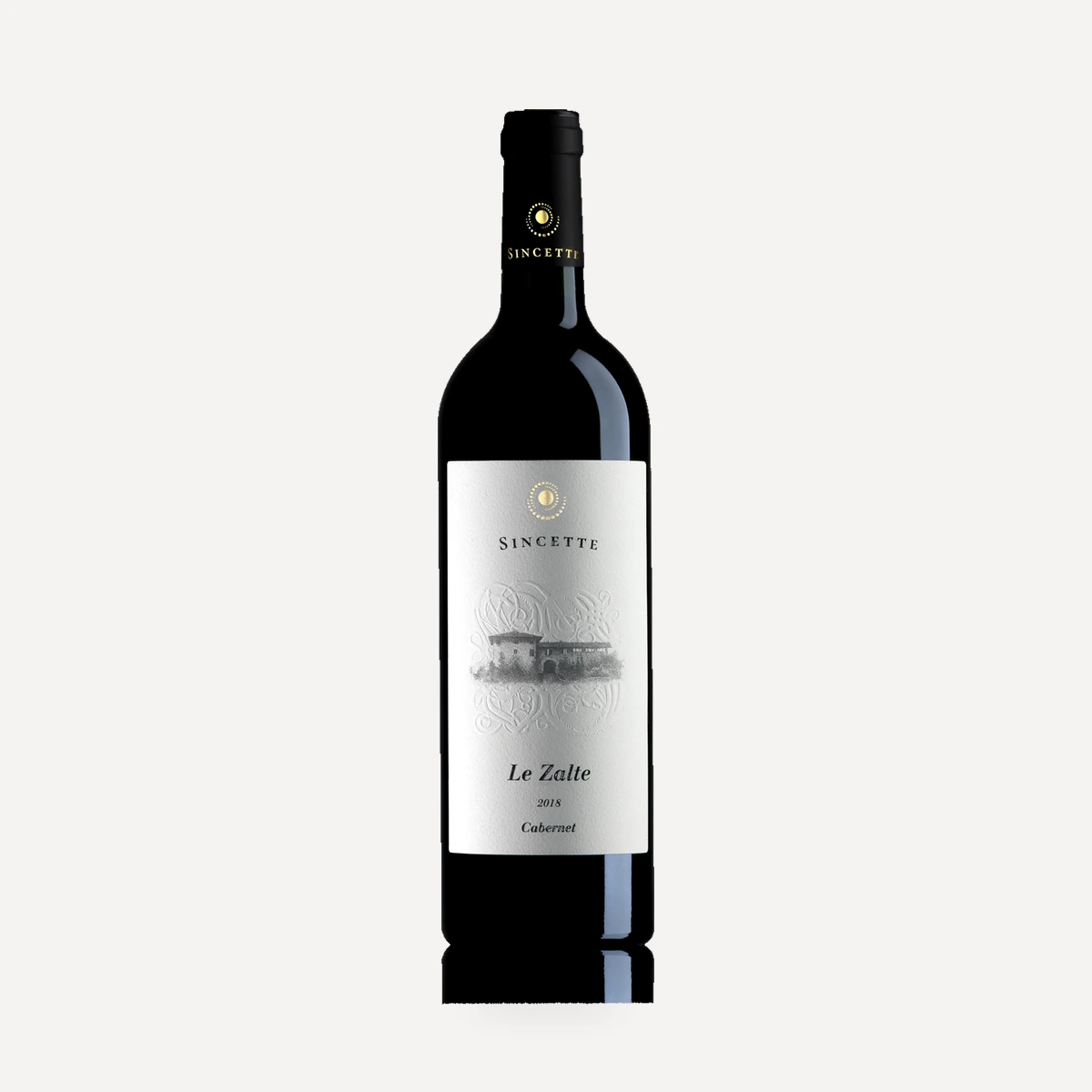
In 1985 the estate planted the Cabernet Sauvignon, Cabernet Franc and Merlot associated with Le Zalte, conceived as a Lake Garda interpretation of a Bordeaux-style blend.
1992: Andrea Salvetti and the restructuring of the estate
Andrea Salvetti, already connected to the Brunori family, joined the business in 1992. Inspired by viticultural methods used north of the Alps, he initiated a restructuring programme centred on natural conditions and respect for the landscape. Oenologist Franco Bernabei reorganised the production cycles, while agronomist Stefano Chioccoli rearranged the vineyards with the aim of raising grape quality.
1997–2012: the biodynamic transition
The decisive move towards biodynamics began in 1997 through the advice of Jacques Mell, founder of Bio-Dynamie Conseil and secretary of Demeter France. Chemical fertilisers and synthetic plant-protection products were eliminated, and the estate began developing a farming system based on soil vitality, biodynamic preparations, green manure and the relationship between terrestrial and cosmic forces.
The estate obtained organic-farming certification from IMC in 2009. In 2011 it completed its biodynamic project and became the first winery in Lombardy to receive Demeter certification. The work with Mell concluded in 2012 because of his age. Ruggero Brunori and Andrea Salvetti emerged from the process as winegrowers and advocates of biodynamic practice.
2012: the Sincette name
In 2012 the estate officially adopted the name Le Sincette, later shortened to Sincette. The name honours the small votive wayside shrines found in some of the estate’s plots. Such shrines are known as sincette in the Brescian dialect and were traditionally erected in the countryside to invoke protection for farmers and their crops.
2014 onward: Luca D’Attoma
The collaboration with oenologist Luca D’Attoma began in 2014 and has continued as part of an oenological programme extending beyond Italy.
2019: new markets and cellar vessels
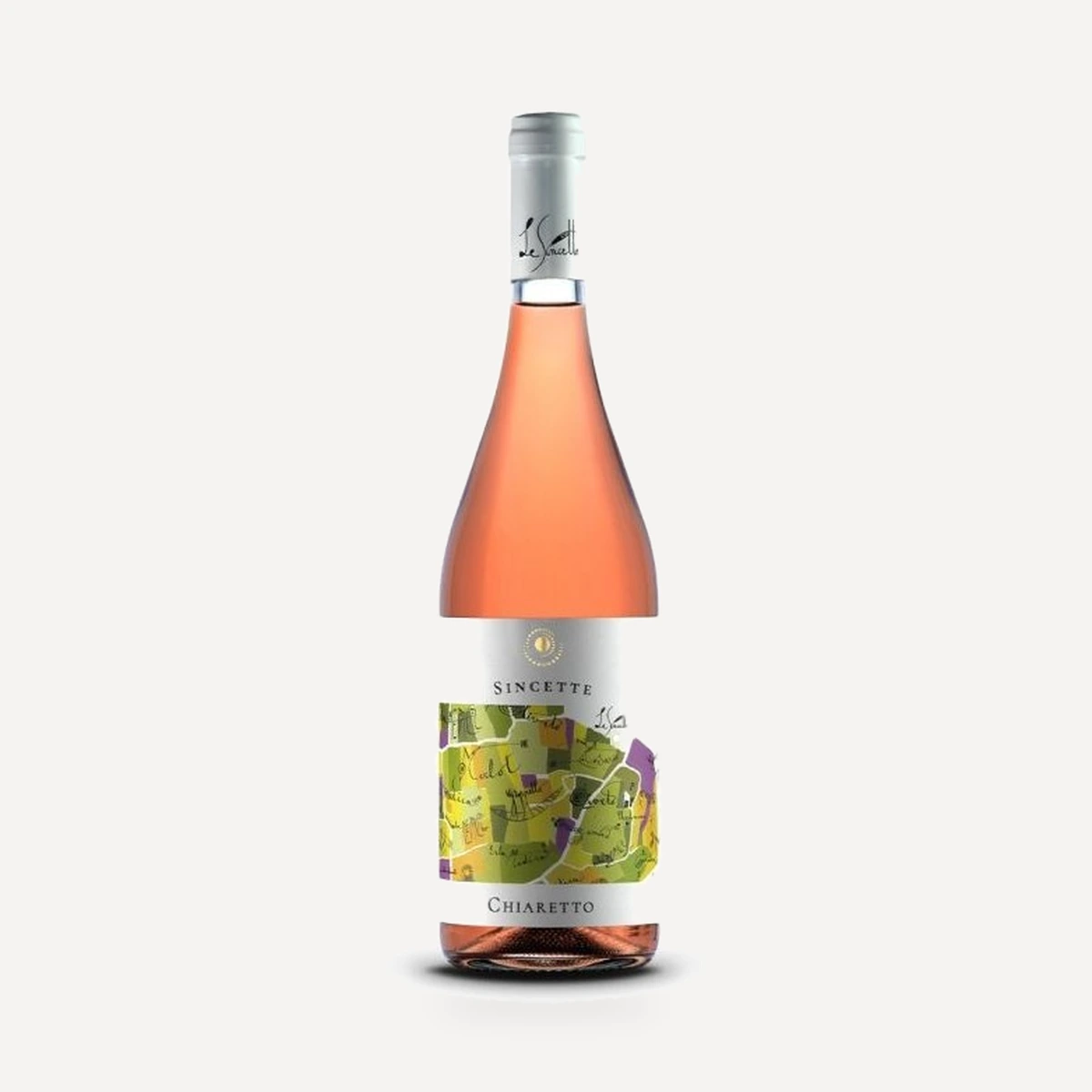
In 2019 the wines reached the United States and subsequently Québec, Canada. During the same year, the estate began using terracotta amphorae and introduced barriques for the fermentation and maturation of Chiaretto.
2020: Dinamico
Dinamico was created in 2020 as the estate’s first wine deliberately made outside the established production regulations, with the purpose of exploring the potential of biodynamic agriculture in Valtènesi without the limits of a consortium specification.
The estate today
The entire agricultural property—including arable fields, vineyards and olive groves—is managed under certified organic and biodynamic systems. Ruggero Brunori remains at the centre of the estate; Andrea Salvetti coordinates production and commercial activity; and Ruggero’s son Carloalberto Brunori is responsible for communication.
Terroir
Valtènesi and Lake Garda
The estate lies at Picedo in the commune of Polpenazze del Garda, among the hills of Valtènesi on the western, Brescian side of Lake Garda. Valtènesi encompasses both lakeside settlements and communities in the rolling hinterland. Its historic communes are Padenghe sul Garda, Moniga del Garda, Manerba del Garda, San Felice del Benaco, Puegnago del Garda, Polpenazze del Garda and Soiano del Lago.
Lake Garda moderates the local climate and gives the area an almost Mediterranean character despite its northern Italian position. Winters are relatively mild and summers remain cool, creating conditions favourable to vines and olive trees. The vineyards have favourable exposure and good ventilation.
Glacial landscape and soils
The gently rolling landscape was formed by morainic deposits left as the great glacier occupying the present Lake Garda basin retreated. The vineyard soils are morainic in origin and predominantly sandy and calcareous.
The name Valtènesi
The origin of Valtènesi remains disputed. Proposed derivations include Vallis Atheniensis, connected to the legend of an Athenian colony and a temple of Athena at Manerba; the Manerba parish church called Tenense, from which the surrounding Valle Tenense may have taken its name; and the medieval Valle delle Tese, referring to places where birds were trapped with nets.
Vinificazione
The whole agricultural estate is managed organically and biodynamically, encompassing arable land, vineyards and olive groves. The organic certification was obtained from IMC in 2009, followed by Demeter certification in 2011; this made the property the first Demeter-certified winery in Lombardy.
Biodynamic work began in 1997 with Jacques Mell. Chemical fertilisers and synthetic plant-protection products were eliminated. The system seeks to sustain living soil so that vines receive their nourishment naturally. Dynamised spray and inoculation preparations are used to support plant growth, while green manure is sown in the vineyards to increase biodiversity, strengthen plant resistance and provide natural nutrition. The intended result is a balance between terrestrial and cosmic forces within the plant.
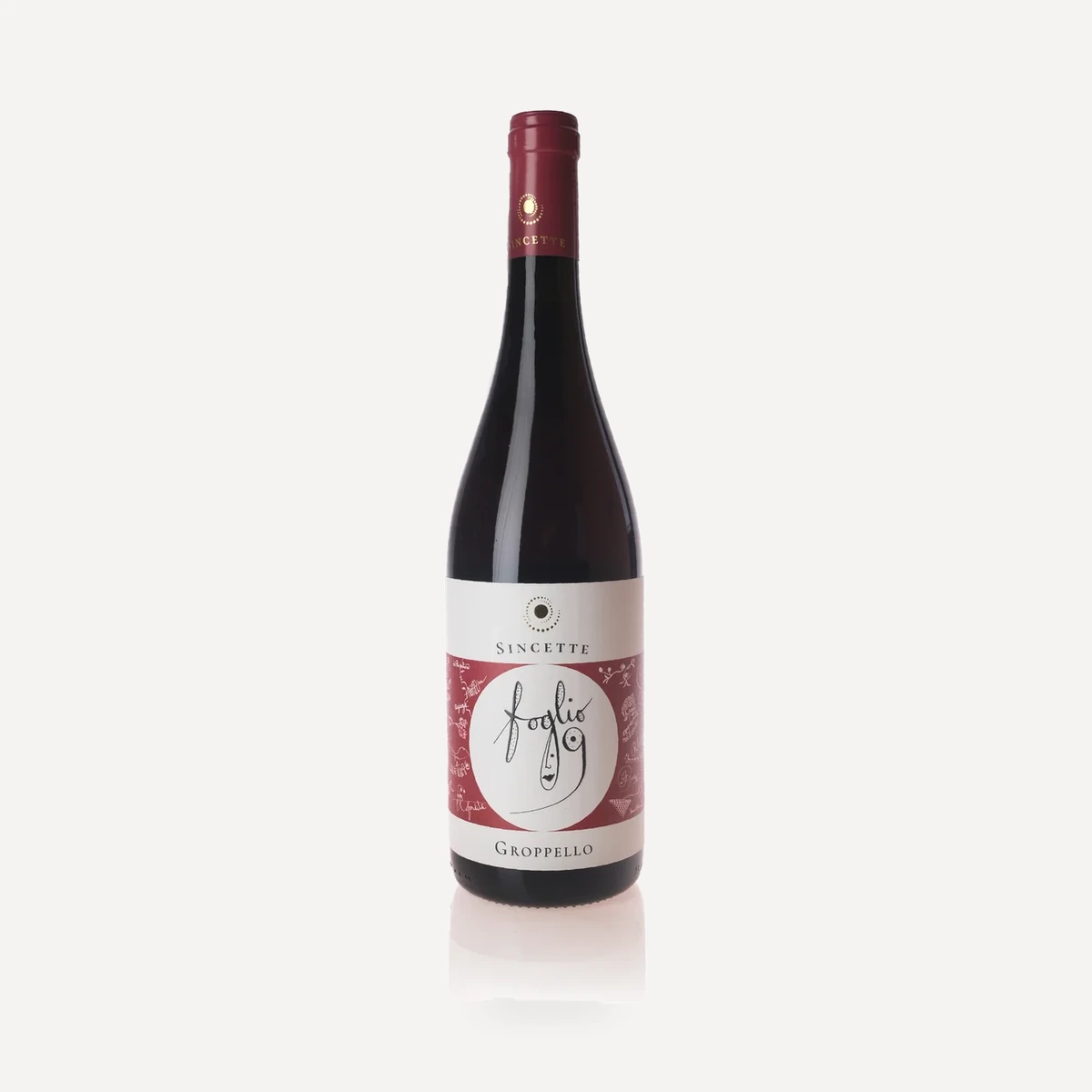
Vineyard work is treated as the central element of the winegrowing process. Vines are trained to single Guyot, exposures are favourable and sites are ventilated. Yields are kept at levels intended not to stress the vines, with documented parcel limits between 50 and 70 quintals per hectare. Grapes are harvested by hand, with crate collection specified for the old-vine Groppello material.
Of the estate’s 35 ha, 12.5 ha are vineyards and 5.5 ha are olive groves. The remaining land is arable and rotated among alfalfa, wheat and barley, integrating the vineyards into a diversified agricultural property.
The production cellar was constructed entirely underground, preserving the visual character of the rural estate and reducing its impact on the surrounding landscape. It accommodates fermentation, maturation and bottling.
Cellar work is conceived as an accompaniment to the grapes’ natural transformation rather than an attempt to impose an artificial style. Alcoholic and malolactic fermentations proceed spontaneously. Selected commercial yeasts are not used in the documented processes.
The cellar employs terracotta amphorae, truncated-cone vats, barriques, larger wooden casks and, to a limited extent, concrete tanks; stainless-steel fermenters and tonneaux also appear within the estate’s production. Terracotta amphorae entered use in 2019, the same year that barriques were introduced for the fermentation and maturation of Chiaretto. Depending on the material and intended expression, fruit may be softly crushed or destemmed and softly crushed, while rosé production also involves gentle pressing. Documented macerations range from approximately 8–10 days through 14 or 20 days to an extended five-month amphora maceration. Wines may complete fermentation or maturation in amphora, concrete, truncated-cone vats, tonneaux or barriques before bottling.
Filosofia
Sincette defines biodynamics through the ideas of the “power of life” and the “possibility of life,” derived from the Greek bíos and dýnamis. Its declared aim is to listen to nature, observe its laws and cultivate without causing harm.
The estate seeks to interpret the territory through its wines and the wines through their place of origin. Its mission combines respect for natural rhythms with quality of life, simplicity and balance. Soil vitality and vineyard work are therefore given priority, while the cellar is assigned the narrower role of accompanying the transformation of grapes into wine.
Biodynamic practice is understood as a complete agricultural system rather than a cellar technique. Living soil, properly dynamised preparations and green manure are intended to improve natural nutrition, biodiversity and plant resilience while establishing equilibrium between the forces of earth and cosmos. Native and selected international varieties are both cultivated as expressions of Valtènesi.
Vini
Chiaretto
Foglio 9