Storia
The agricultural landscape before the estate
Until the 1970s, Sostegno retained a strongly agricultural identity within the textile-producing Biellese. Its cultivated landscape encompassed meadows, terraces, embankments, dry-stone walls, paths, orchards, vineyards and chestnut groves, with wine and fruit—especially apples—among its products.
During the following decades, the abandonment of farming allowed scrub and woodland to overtake much of this constructed landscape. Roe deer, deer, badgers and particularly wild boar spread through the area. The resulting pressure affected the remaining meadows and cultivated plots as well as a wider habitat once occupied by ground-nesting fauna, small reptiles, salamanders, green lizards, larvae, mice, fungi, cyclamens and lilies of the valley. Climate change subsequently added another layer of difficulty to the maintenance of the land, particularly under organic cultivation.
2014: foundation and vineyard recovery
Lorenzo Rovero established the farm at Sostegno in 2014, using a combination of family-owned and rented land. He entered agriculture without an inherited family tradition of farming, identifying himself with a younger European generation that returned to the land amid economic uncertainty and growing concern over ecological transition.
The project began by recovering vineyards left by the area's last elderly farmers. New vineyards were then established on land reclaimed from encroaching woodland and prepared through careful soil management. This work gradually produced an organically managed vineyard holding of almost 3 hectares.
Vineyard reconstruction and territorial expansion
Twelve old vineyards more than 50 years old were recovered and reconstructed across Sostegno, the hamlet of Casa del Bosco and Curino. The farm now works land in all three locations, while its headquarters remain in Sostegno. The broader agricultural holding extends to approximately 8 hectares, of which about 3 hectares are under vine.
2018: organic certification
The vineyards obtained organic certification from ICEA in 2018. Organic management became the formal expression of an approach already centred on permanent grass cover, avoidance of synthetic fertilisers, very low doses of copper and sulphur, and non-chemical responses to insect pressure.
Rural-development investment
Under the Piedmont Rural Development Programme 2014–2020, Measure 4.1.1, and its 2020 call for interventions following the COVID-19 emergency, the farm prepared a project to improve product transformation and maturation. The programme envisaged adapting an existing building to create pressing and vinification rooms, purchasing processing and maturation equipment, acquiring one acacia barrique and one Stockinger cask, developing the farm's website and redesigning its labels. The planned expenditure was €44,600, including €17,840 from the European Agricultural Fund for Rural Development.
2021: recognition for landscape recovery
In 2021, the project Nasce una vigna received first prize in the environmental section of the Più Bellezza in Valle competition, promoted by Rotary Club Vallemosso with Fondazione BIellezza. The recognition connected the farm's vineyard work with the reconstruction of Sostegno's disappearing agricultural landscape.
Terroir
The vineyards lie in the territories of Sostegno, Casa del Bosco and Curino in the Biellese of North Piedmont. They occupy elevations between 400 and 500 metres, with predominantly south-east-facing exposures.
The soils are dry, acidic and volcanic. They derive from the collapse of the Valsesia Supervolcano caldera and are also described as porphyritic. This geology is associated with the mineral character sought in the estate's wines.
The surrounding environment is a formerly cultivated Alpine and pre-Alpine landscape shaped over centuries through terraces, embankments, dry-stone walls, paths, orchards, vineyards, meadows and chestnut groves. Much of it has been overtaken by scrub since the decline of local agriculture. Roe deer, deer, badgers and especially wild boar now exert considerable pressure on the remaining fields and vineyards. Climate change further complicates the ecological balance and the maintenance of organically farmed land.
Vinificazione
The vineyard area has been certified organic by ICEA since 2018. All vineyards maintain grass cover, while hoeing is confined to the immediate area around each vine. Fertilisation is minimal, and synthetic fertilisers are excluded so that the vines can follow their natural cycles.
Plant protection relies on organic treatments. Sulphur and copper salts are applied at very low doses, supplemented by products selected for greater biological compatibility, including potassium bicarbonate and citrus essential oils. Atomised spraying techniques reduce application rates and keep them well below the limits governing organic production.
New insect threats, including Popillia japonica, are addressed mechanically and pneumatically, without chemical insecticides. Chestnut and acacia vineyard posts help restore the appearance and material character of the older agricultural landscape.
The work also involves continuing recovery of plots overtaken by woodland and managing pressure from roe deer, deer, badgers and particularly wild boar. Climate change has made maintenance and organic cultivation more difficult by disturbing the area's ecological balance.
Crushed grapes and musts ferment in small, sealed stainless-steel vessels under temperature control. Fermentation proceeds with native or wild yeasts, without selected yeast additions, bisulphites, sulphur dioxide or other chemical oenological aids.
The winery equipment is arranged over three levels, enabling gravity-fed transfers and rackings. This layout is intended to minimise lees production and retain aromatic character. Temperature control during fermentation, subsequent clarification and transfer stages serves as a physical means of protecting the wine. Filtration and physicochemical clarification are avoided.
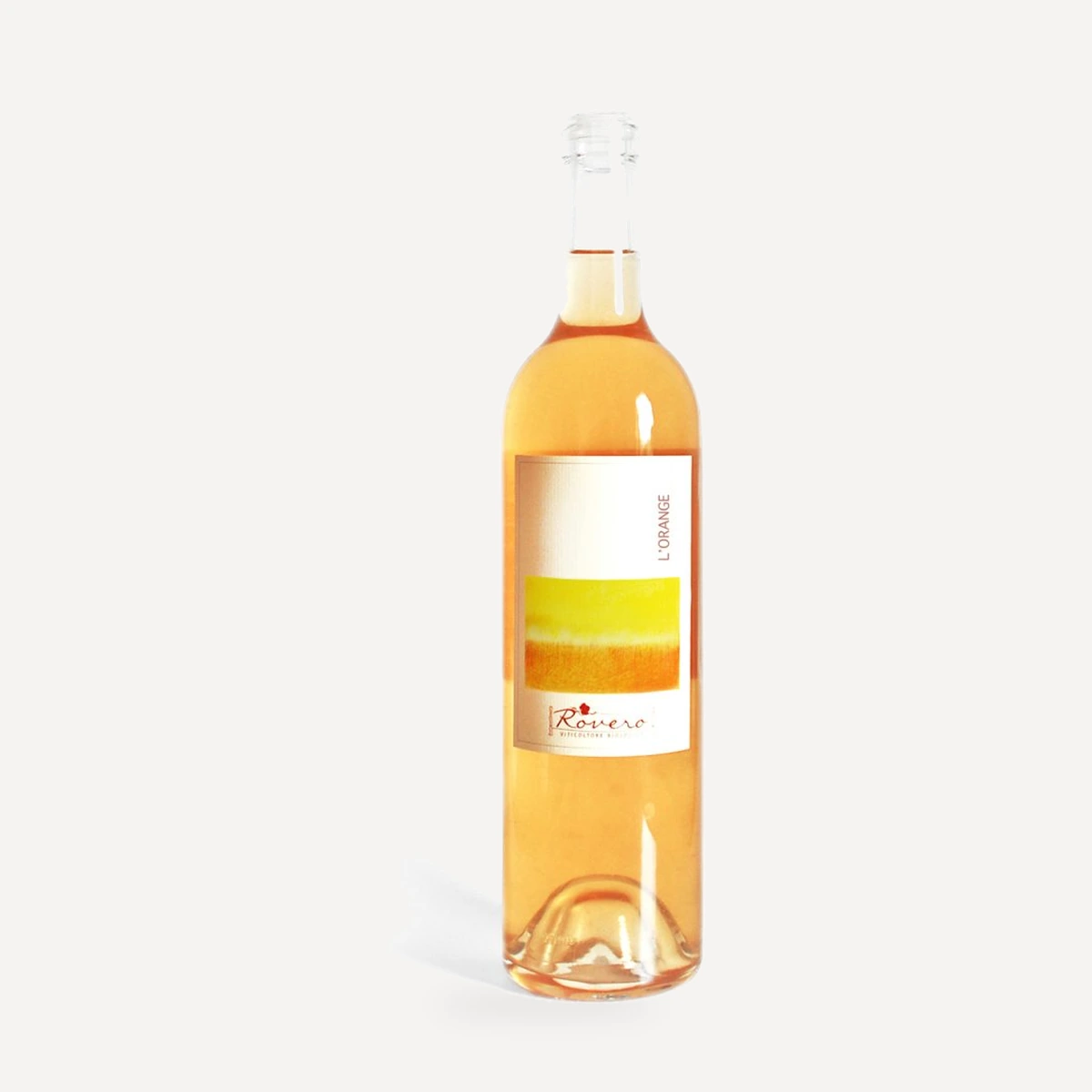
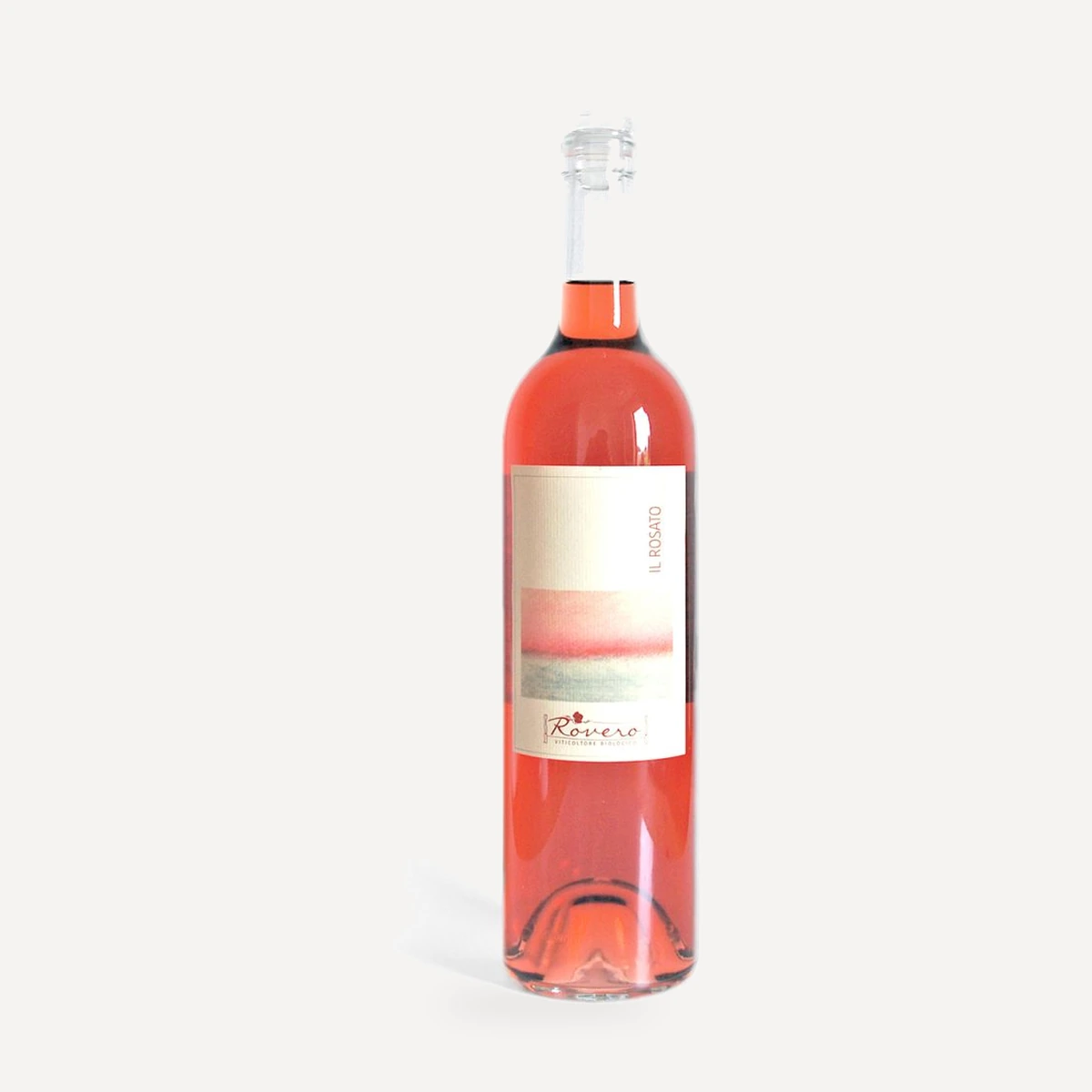
Bramaterra DOC and the other red wines mature for three to four years in barriques, tonneaux and oak casks; Bramaterra receives no less than 36 months in oak followed by bottle refinement. Rosé, white and orange wines remain for several months in stainless steel, acacia barrels or terracotta amphorae before bottling. Skin maceration continues through fermentation for the orange wine, followed by maturation in acacia.
Inert gas is used during handling where protection from oxygen is required. Bottling may also take place under a slight vacuum. These measures protect the wines without added sulphites.
Filosofia
Lorenzo Rovero identifies with a younger European generation that returned to agriculture without an inherited farming tradition. Economic pressures played a part in that choice, but the central motivation is ecological transition and responsibility toward the environment and future generations.
The farm's guiding idea is expressed as “cultivating and caring for the land.” It combines traditional agricultural forms with appropriate technology and frames sustainability and regeneration as practical responses to contemporary ecological pressures. Recovering abandoned vineyards, reclaiming new sites from encroaching woodland and restoring chestnut and acacia posts are parts of the same effort to reconstruct a cultivated landscape that had developed over centuries.
Small-to-medium scale is regarded as a means of giving greater attention both to product quality and environmental care. In the vineyard, the objective is to respect the vine and its natural cycles through grass cover, exclusion of synthetic fertilisers, organic treatments and mechanical insect control. In the cellar, the corresponding aim is to retain the wine's vitality through native fermentation, gravity movement, temperature control, the absence of added sulphites and additives, and the avoidance of filtration and physicochemical clarification.
Vini
Il Rosato