Storia
Farming inheritance
Maciot is a young agricultural enterprise rooted in the farming experience of the Macchia family. The owners’ grandparents worked primarily as farmers, and the estate’s wine grapes still come partly from old vineyards associated with grandfathers Ernesto and Luigi. Some land in Montiglio Monferrato was inherited through the paternal side of the family, while the rest of the holdings are concentrated mainly in Cocconato and Piovà Massaia.
The family retained practices learned from the grandparents while adapting older cultivation methods to contemporary needs. This continuity later made formal organic and biodynamic farming a relatively natural development rather than a complete break with earlier work.
Organic and biodynamic development
The farm brought its crops under the organic framework of EEC Regulation 834/2007, with ICEA as certifying body. Its approach emphasizes biodiversity, natural materials and processes, and the exclusion of synthetic chemical fertilizers and crop-protection products.
In spring 2010, Maciot began a formal transition toward biodynamic agriculture. The program introduced spray preparations, green manure, compost treated with biodynamic preparations and closer attention to natural rhythms. Demeter certification followed in 2013. The system applies not only to vines but also to the farm’s hazelnuts, fruit trees and vegetables.
Vineyard renewal and broader varietal range
Alongside the old vineyards of Ernesto and Luigi, the family established new, relatively high-density plantings. The newer vineyards receive composted-manure fertilization on a three-year cycle and are grassed with green-manure species between the rows. Their yields do not exceed 70 quintals per hectare, equivalent to 7,000 kg/ha, while the old vineyards produce still less.
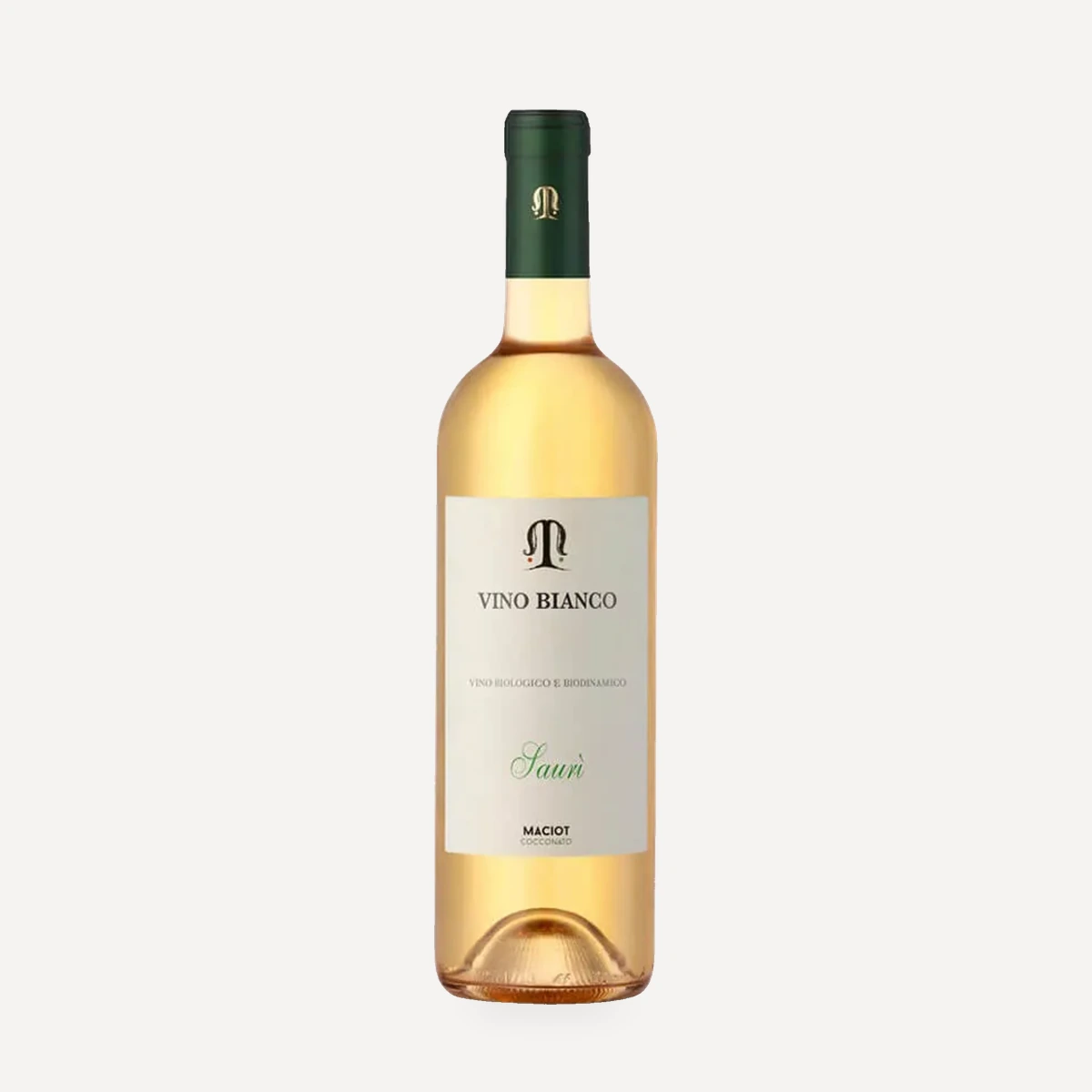
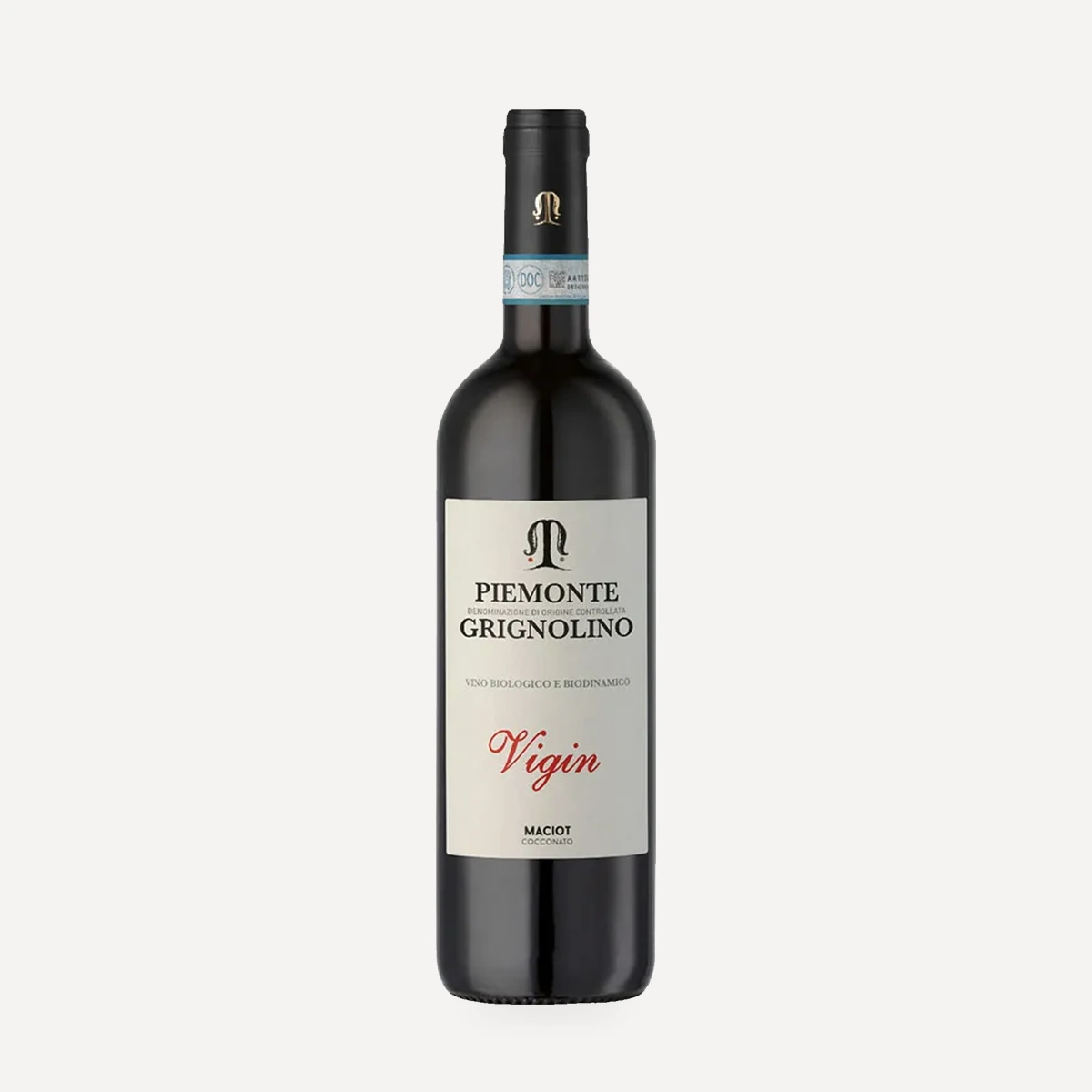
Wine production was originally centered on Barbera d’Asti, accompanied by small quantities of Merlot and Cabernet Sauvignon. More recent plantings, including the vineyard at Roasino, expanded the range to Nebbiolo, Grignolino and Sauvignon Blanc. Each vineyard is vinified separately, allowing Maciot to retain the identity of individual sites in distinct bottlings.
2016 sensitive-crystallization study
In 2016, white- and red-wine samples identified under the Maciot name underwent copper-chloride sensitive-crystallization analysis for an assessment of organoleptic expression and the biodynamic concept of vital forces. The white sample received a quality index of 93/100 and the red sample 96/100.
Terroir
Maciot’s land lies mainly in the municipalities of Cocconato and Piovà Massaia, with additional paternal inherited properties in Montiglio Monferrato. The vineyards occupy the hills around Cocconato, whose elevation contributes to cool summers and mild winters. Together with deliberately low yields, this climate supports consistent ripening and helps preserve production quality even in difficult vintages.
The most precisely identified site is Bricco Montecapra in Cocconato, at 465 m above sea level, with south and south-east exposure. Other documented vineyard locations include Miglietti-Roasino in Cocconato, facing south; Minot in Piovà Massaia, also facing south; and a south- to south-east-facing Barbera site recorded under cadastral parcels 93–94 in Cocconato.
Vinificazione
Organic and biodynamic framework
All farm crops—including vines, hazelnuts, fruit trees and vegetables—are managed under the organic framework of EEC Regulation 834/2007, with certification by ICEA. The system is intended to respect biodiversity and relies on natural substances and processes rather than synthetic chemical fertilizers or crop-protection products.
The biodynamic program began in spring 2010 and has held Demeter certification since 2013. It follows principles associated with Rudolf Steiner: soil fertility and vitality are treated as primary goals, and work is coordinated with natural, cosmic and lunar cycles. Maciot uses biodynamic spray preparations, animal-manure compost treated with biodynamic preparations, plant material as fertilizer, crop rotations, mechanical pest control and crop-protection materials based on mineral and plant substances.
Soil fertility and vineyard floor
New vineyards are planted at relatively high density and receive composted-manure fertilization on a three-year cycle. Green-manure vegetation grows between the rows. Species named for this purpose include mustard, rapeseed, field bean and phacelia. The cover is mown and incorporated into the soil so that it becomes humus. Fertilization and soil care are directed toward maintaining biological activity and a balanced soil ecosystem capable of nourishing and strengthening the plants.
Yield and harvest handling
New plantings are kept at or below 70 quintals per hectare, equivalent to 7,000 kg/ha; the old vineyards crop naturally below that level. Harvested grapes travel to the cellar in crates to prevent premature crushing and release of must.
Grapes are transported to the cellar in crates to prevent berries from being crushed and releasing must before processing. They are then immediately crushed and destemmed.
Fermentation proceeds spontaneously without inoculation of selected yeasts, relying on the yeasts naturally present on the grape skins. Each vineyard is vinified separately, preserving the distinction between sites and enabling individual cru-style bottlings.
Depending on the intended wine, maturation takes place in stainless steel, large casks identified as 30-quintal vessels, or 225-litre barriques. Bottle maturation is also used for documented estate bottlings.
Filosofia
Maciot frames agriculture as a relationship among nature, soil and people, drawing on biodynamic principles associated with Rudolf Steiner. Fertility and vitality are pursued through compost, plant material, crop rotation, mechanical controls and biodynamic preparations rather than synthetic mineral fertilizers and chemical aids. Natural, cosmic and lunar rhythms guide soil management.
The family sees this approach as a continuation of its grandparents’ farming habits rather than an abrupt change. Its stated priorities are attentive observation of nature, respect for biodiversity, maintenance of an active soil ecosystem, low vineyard yields and preservation of individual vineyard identity through separate vinification.
The farm also uses sensitive crystallization as a morphological test intended to evaluate organoleptic qualities and what biodynamic practice describes as vital forces. In this method, the pattern formed after evaporation of a copper-chloride solution containing the sample is compared with a reference form, with structure and texture assessed separately.
Vini
Grignolino Piemonte “Vigin”