Storia
Family background and establishment
Mancinelli describes itself as a relatively young estate, although the family’s connection with viticulture, winemaking and the construction of cellar equipment reaches further back. The business now operates as Azienda Agricola Mancinelli Stefano and has served its customers for more than 40 years.
The family’s material heritage is preserved in the Museo Mancinelli, a collection of inherited memories, agricultural implements and everyday utensils. Together, these objects illustrate both the family’s working past and the more physically demanding rural life experienced by earlier generations.
Genetic traceability since 2003
In 2003, Stefano Mancinelli engaged Bioaesis, a Jesi-based analytical laboratory specializing in DNA research, to verify technically that the estate’s Lacrima production was made exclusively from Lacrima grapes. The project applied DNA as an invisible identifying marker to samples of the estate’s Lacrima di Morro d’Alba D.O.C.
Beginning with the 2003 vintage, analysis found that the genetic profile recovered from the wine matched the characteristic profile of the Lacrima cultivar. The work established a genetic-traceability system connecting the finished wine with its grape variety and supporting the identity of the estate’s monovarietal Lacrima production.
The present estate
The agricultural holding now covers approximately 60 hectares on the hills of Morro d’Alba. Twenty-five hectares are specialized vineyards for D.O.C. production, while olive groves and an estate mill support the olive-oil side of the business. The property also operates a distillation plant identified as the first established in the Marche region, processing fresh pomace from its own cellar into Lacrima and Verdicchio grappas.
Wine, distillates, extra-virgin olive oil and condiments are all produced by directly transforming crops grown on the estate. The current approach combines traditional foundations with updated equipment and processing technology.
Terroir
Mancinelli’s vineyards and olive groves lie on the gentle hills of Morro d’Alba in the Province of Ancona, within the inland Marche region and approximately 10 km from the sea. The estate’s recorded position is 43°35'57.8"N, 13°12'43.6"E.
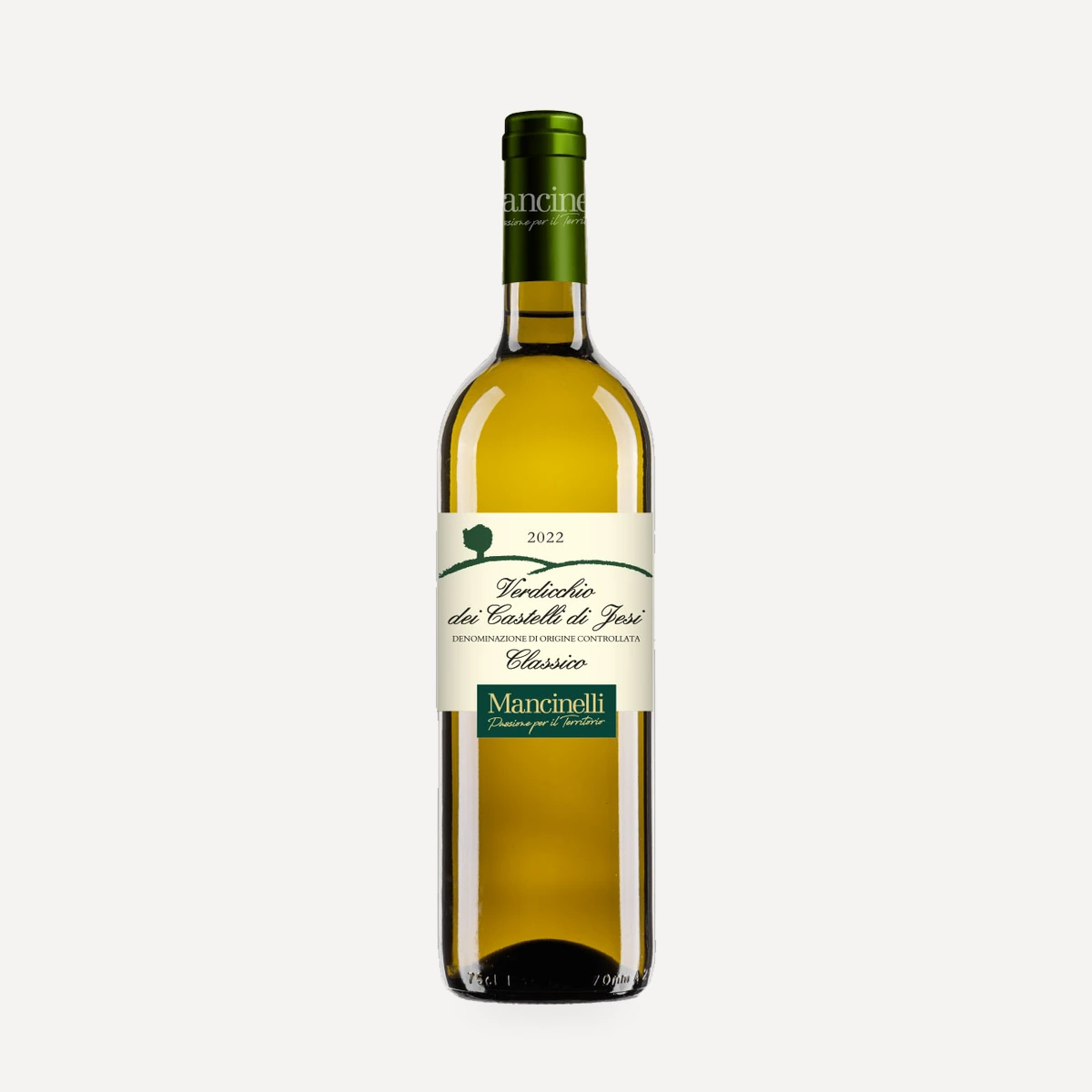
The property covers about 60 hectares, including 25 hectares of specialized vineyards devoted to the local D.O.C. wines Lacrima di Morro d’Alba and Verdicchio dei Castelli di Jesi Classico.
Vinificazione
Grape quantity is controlled at two stages of the growing cycle: first during dormant pruning and again through fruit thinning at veraison. Harvesting is conducted in multiple passes rather than as a single operation.
The estate restricts processing to agricultural products grown on its own land. Field care and crop selection form part of its quality strategy, with particular attention to preserving the recognizable character of Lacrima and Verdicchio.
Mancinelli processes only agricultural material grown on its own estate. Its general production model is founded on traditional methods supported by modern equipment, with transformation techniques updated in pursuit of quality and varietal identity.
The cellar works with Lacrima and Verdicchio from 25 hectares of specialized vineyards. The authenticity program introduced in 2003 adds a traceability component to production: residual grape DNA recovered from Lacrima wine is used as an identifying marker and compared with the genetic profile of the Lacrima cultivar. Testing from the 2003 vintage established a matching profile for the estate’s Lacrima di Morro d’Alba D.O.C.
Filosofia
Mancinelli’s declared objective is to pursue quality while emphasizing the typical character of its products. This approach begins with crop care, selection in the field and deliberate limitation of grape quantity, then continues through the ongoing modernization of transformation techniques.
The estate presents territorial identity as the common thread connecting its cellar, olive mill and distillery. Its working philosophy combines traditional foundations with technological innovation and confines production to raw materials cultivated within the agricultural holding. For wine, this commitment to identity also includes genetic verification designed to connect monovarietal Lacrima conclusively with its source cultivar.
Vini
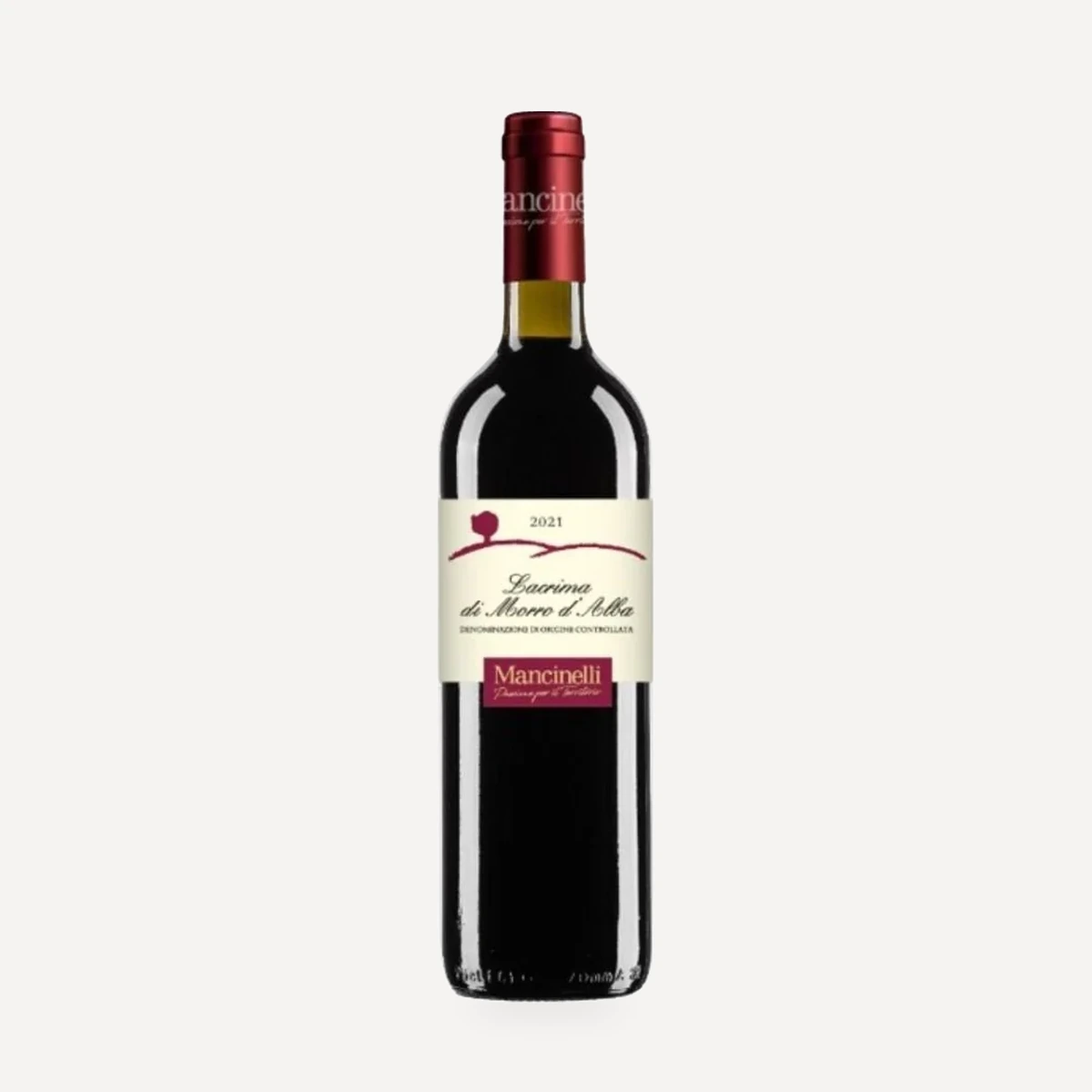
Lacrima di Morro d’Alba D.O.C.