Storia
1999: foundation
Erasmo Castelli, Maria Pia Castelli’s father, founded the estate in 1999. His practical experience and passion shaped a deliberately quality-led project: artisanal wines made from selected grapes, combining traditional methods with modern equipment. From the outset, the stated objective was to produce wines of high quality rather than pursue volume.
Family management
Management subsequently passed to Maria Pia Castelli and her husband, Enrico Bartoletti. Within a few years, they developed the estate’s standing in the Italian and international markets, with the company identifying itself particularly with the Piceno wine landscape.
2002: the first Erasmo Castelli and Stella Flora vintages
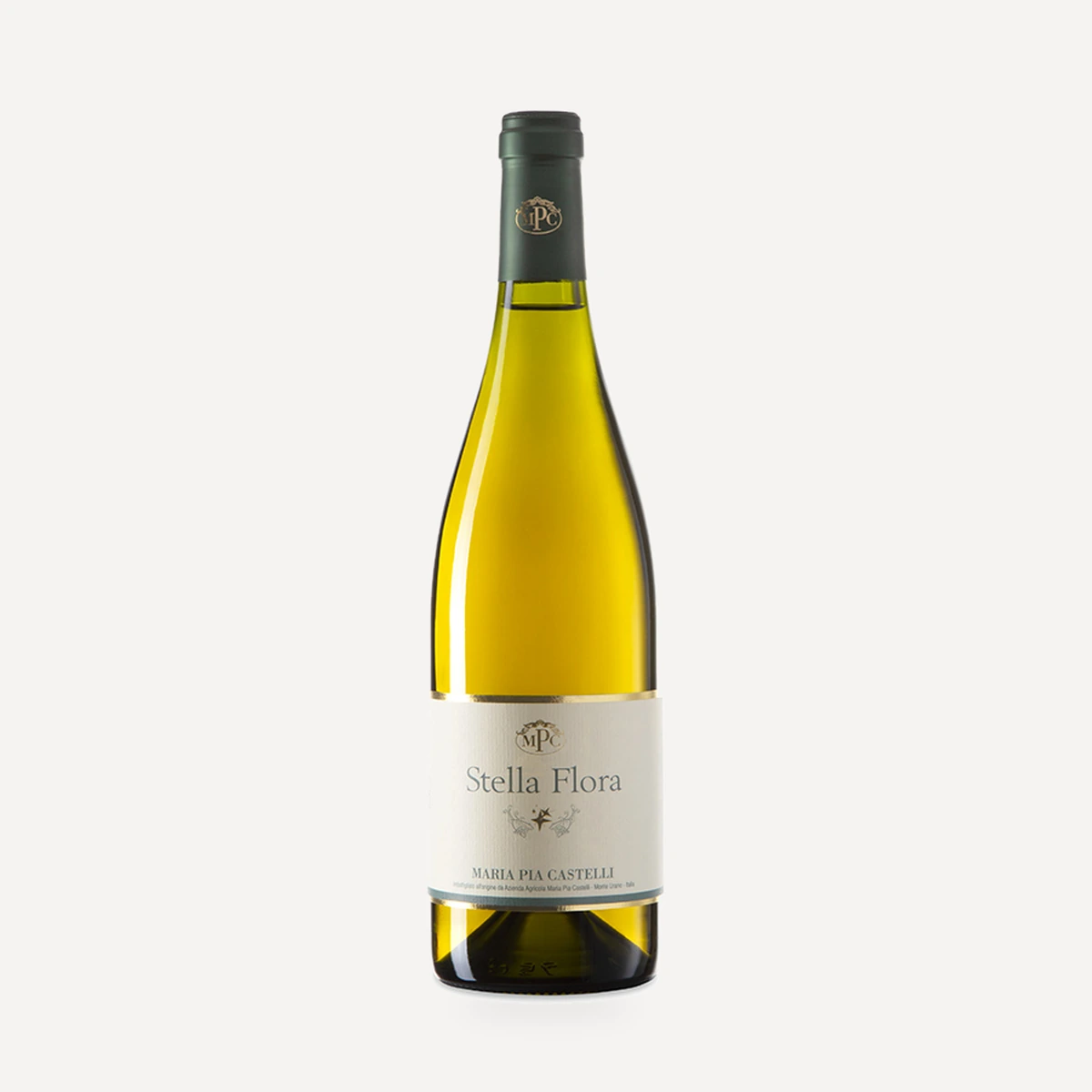
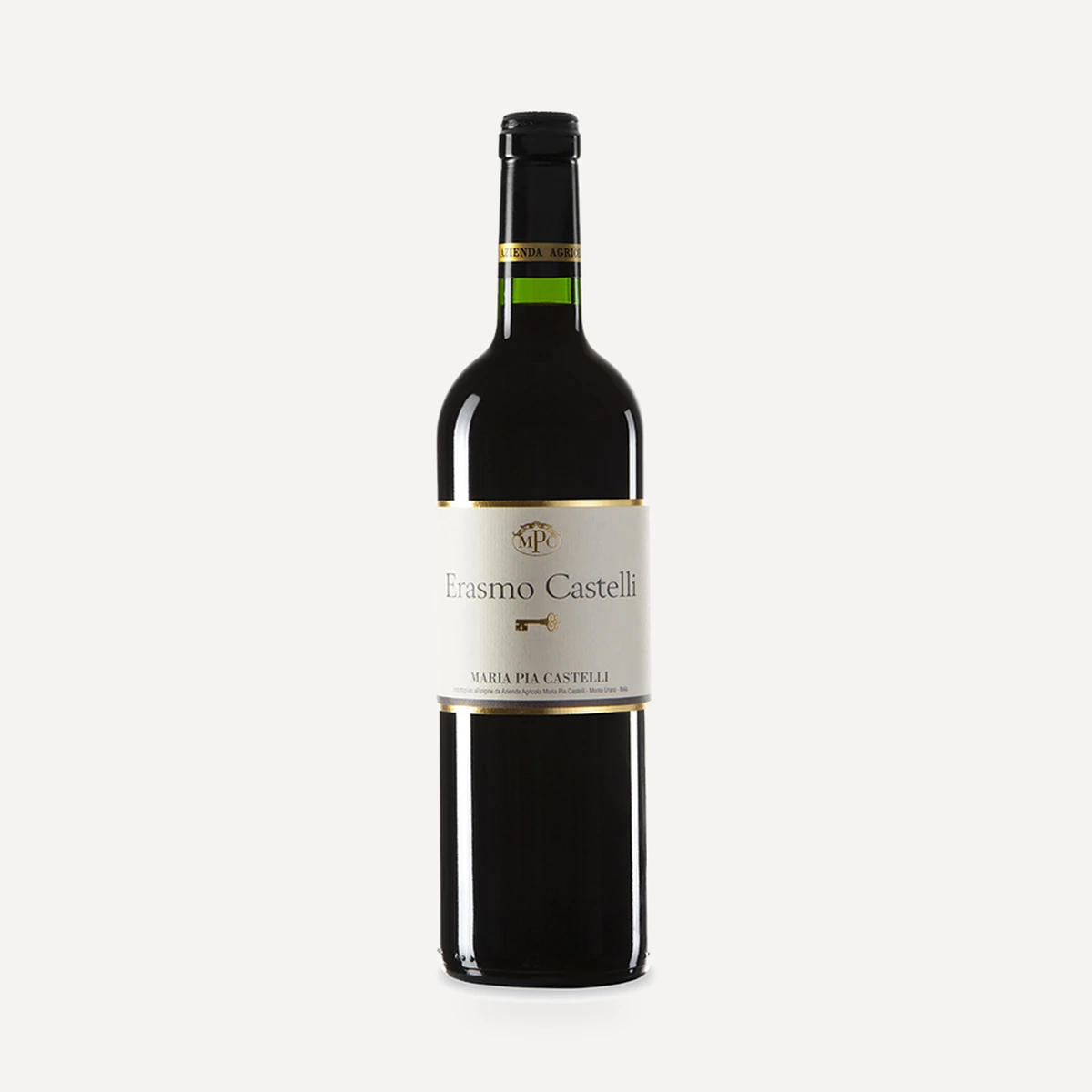
The first vintages of two of the estate’s four principal labels were produced in 2002. Erasmo Castelli, named for the founder, was conceived as the flagship red. Stella Flora established the estate’s skin-contact white expression, combining Pecorino, Passerina, Trebbiano and Malvasia di Candia.
2003: the first Lorano and Sant’Isidoro vintages
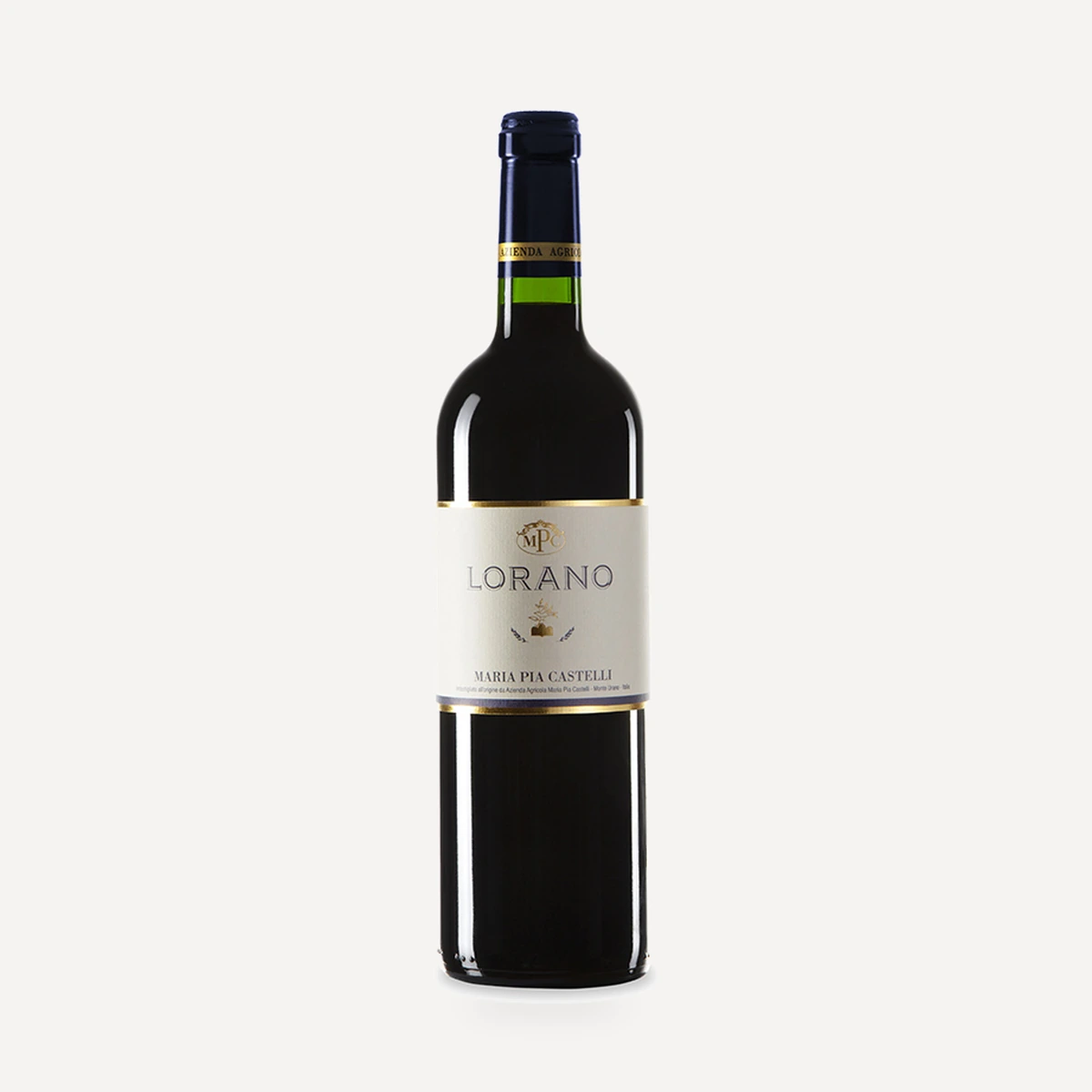
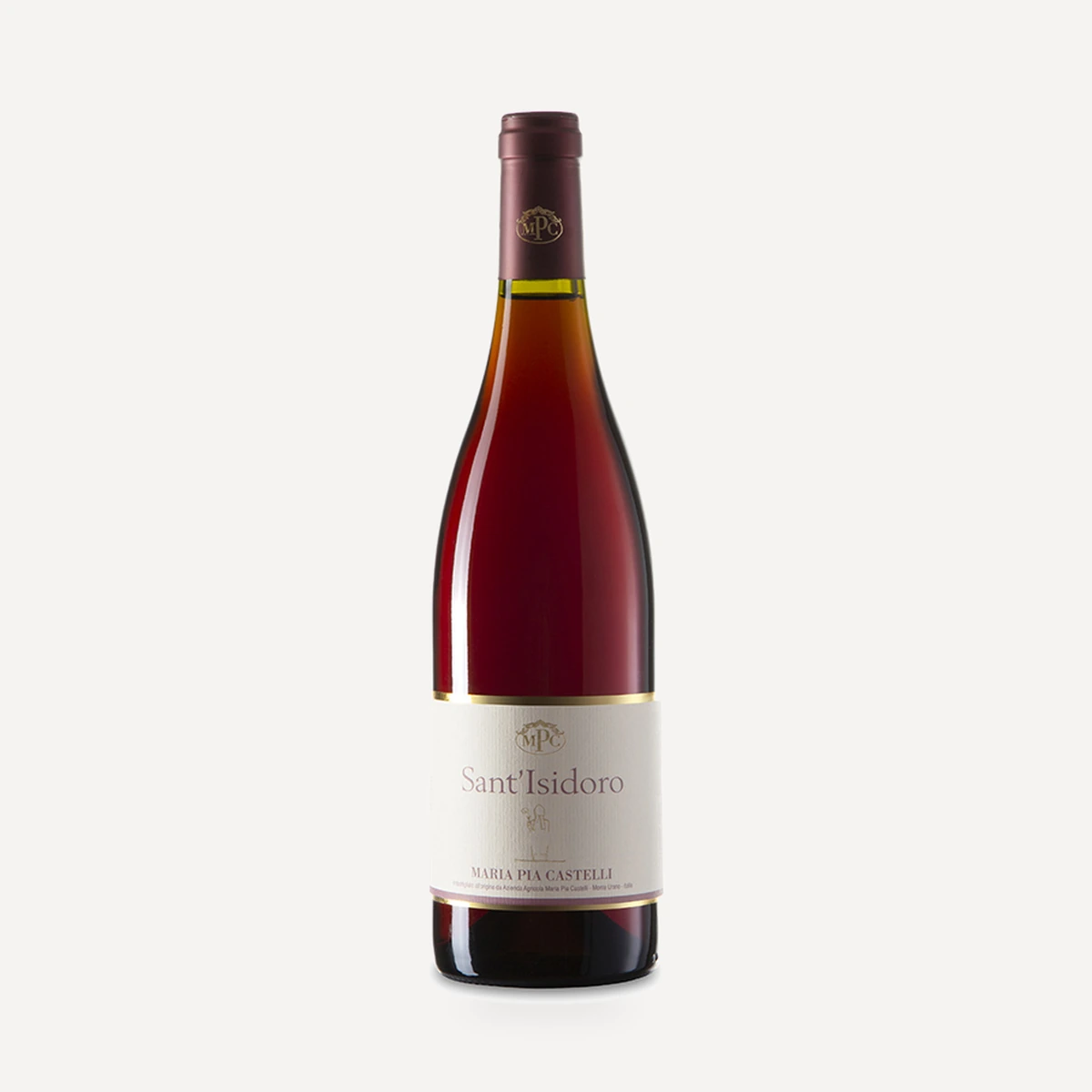
Lorano and Sant’Isidoro followed with their first vintages in 2003. Lorano became the estate’s pure Sangiovese, while Sant’Isidoro represented its Marche Rosato IGT production.
Twenty years and “Not Only Wine”
After twenty years of wine production, the company launched Maria Pia Castelli nsv—“non solo vino,” or “Not Only Wine”—as a parallel project. Its first item was a limited-edition garment referencing the estate’s roots through historic photographs and imagery from the four labels associated with its identity.
Terroir
The estate occupies 8 hectares of vineyards and land on the crest of the Monte Urano hill in the province of Fermo, at 200 metres above sea level. Its hilltop and plateau setting receives summer warmth and sunlight together with the influence of fresh maritime air.
The soils are clay-rich and naturally contain mineral components, specifically iron and magnesium. The interaction between this geology, summer conditions, solar exposure and maritime influence supports grape ripening.
Technical information for the four principal labels consistently identifies clay soils with iron-bearing mineral components. Red and rosé material is associated with a plateau position at 200 metres. The vineyard material used for Stella Flora has a north-east exposure at the same elevation.
Vinificazione
Vineyard work begins with meticulous winter pruning. Biodynamic treatments follow during the growing season, and excess bunches are thinned so that only selected fruit remains. Harvesting is entirely manual, with grapes placed in small baskets or crates.
The guiding principle is that quality takes precedence over quantity. The technical sheets reinforce this low-yield approach, giving approximate yields of 30 q/ha for the white varieties, 35 q/ha for the flagship red material and 40 q/ha for Sangiovese and rosé material. Vineyard work is described as natural and artisanal, with each stage performed by hand from the vine through transfer to cask.
The cellar consists of an underground ageing room, a winemaking and wine-storage room, and a tasting room. Post-harvest cellar work is handled with particular care to preserve the quality developed in the vineyard.
Traditional, hands-on methods guide production from the vineyard to the cask. Fermentation and maturation vessels across the range include stainless-steel tanks, large open oak vats, barriques and larger wooden vessels. Both red and white grapes may be vinified with skin contact. Some fermentations take place without temperature control. Depending on the intended wine, malolactic fermentation is completed in stainless steel or barriques.
French oak is selected for maturation, and used barriques are renewed frequently. The range includes maturation in new barriques, previously used barriques, larger wood and stainless steel. The flagship red undergoes a 20–25-day skin-contact fermentation in oak, followed by malolactic fermentation and about 24 months in new barriques. The pure Sangiovese ferments with its skins for 15–20 days, completes malolactic fermentation in barriques and matures for approximately 12 months. The white blend receives 15–20 days of skin contact in wood, completes malolactic fermentation in barriques and matures for approximately 18 months. Its production involves a low addition of sulphur dioxide. The rosé is obtained by drawing off selected Sangiovese and other red-grape must after 12–15 hours of maceration, followed by fermentation in stainless steel.
Bottle maturation follows tank or barrel ageing. The rosé receives six months in bottle before release, while Lorano, Erasmo Castelli and Stella Flora undergo extended bottle ageing without a stated duration.
Filosofia
Quality is placed ahead of quantity at every stage. The estate presents its approach as a meeting of tradition and innovation: selected grapes and appropriate equipment are combined with natural, traditional and fully artisanal work carried out by hand from vineyard to cask.
Cellar decisions are intended to protect the work completed in the vineyard and the character delivered by nature. Careful selection of French oak, frequent renewal of barriques and extended maturation support the goal of producing natural wines with personality and a recognisable identity of place. Quality of the finished wine remains the overriding objective.
Vini
Erasmo Castelli
Lorano
Sant'Isidoro