Storia
The agricultural and hospitality project
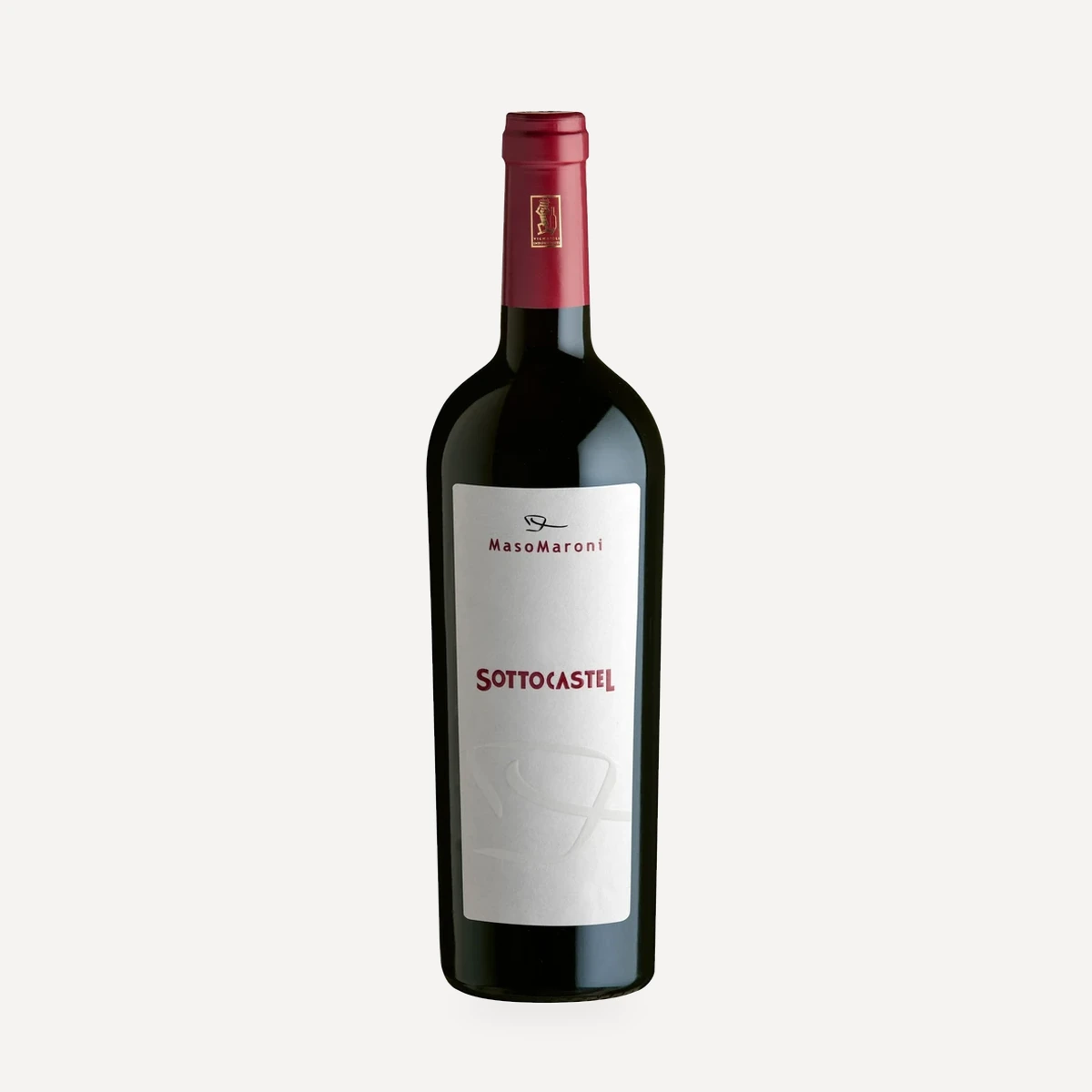
Maso Maroni is the flagship vineyard associated with Corte Figaretto. It occupies an amphitheatre-like hillside in Contrada Maroni, north of Verona and above the village of Santa Maria in Stelle. The project was conceived to enhance this place through both agriculture and hospitality, linking the vineyard with the preservation of local rural architecture.
2019 restoration
The small rural cottage in the vineyard was restored in 2019 as Maso Maroni Wine Retreat. The renovation retained the building’s original dimensions and exposed-beam ceiling, while Lessinia stone was used for the floors and bathroom surfaces. Original materials were preserved wherever possible.
A partially frescoed Roman spring beside the cottage, dated to approximately 350 BC, was incorporated into the guest experience. Visitors staying at the retreat receive access to the spring and its small corridor.
Expansion of hospitality
Following the development of the Wine Retreat, the hospitality project expanded to include Maso Maroni Agriturismo at Sezano. This second property comprises three bedrooms, a breakfast room, a swimming pool and a garden. The wider accommodation offering also includes Suite Vino, Suite Olio and Suite Bollicine, combining restored architectural details with handmade terracotta floors and solar-powered energy.
Terroir
Location and relief
Maso Maroni lies in the hills north of Verona at approximately 300 metres above sea level, in the hamlet of Maroni above Santa Maria in Stelle. The flagship vineyard forms an amphitheatre looking toward Verona. Its principal orientation is south-west, while the associated hillside blocks are variously described as facing south, south-east and south-west. Sunshine reaches the principal site from the first light of morning until sunset.
The broader production area is Valpantena. Vineyard holdings associated with the range include the hills of Santa Maria in Stelle and sites between Poiano and Quinto near Figaretto.
Airflow and mesoclimate
Southerly air currents move through the site during the day, followed by northerly currents at night. The resulting diurnal temperature changes maintain a dry, ventilated microclimate. Although the vineyard receives prolonged sunlight, it is described as never becoming excessively hot. On clear days, views extend across the valley and Verona toward the Apennines.
The exposure and ventilation help produce loose bunches with thick skins. Technological and phenolic ripeness are described as reaching balance each year.
Soils and terraces
The principal site combines pebbly, organic-matter-rich ground with silty-clay components, high limestone content and abundant organic matter. The wider hillside vineyards are likewise described as clay-rich and strongly calcareous. The entire Maso Maroni area is terraced and supported by traditional dry-stone walls known as marogne, a characteristic element of Valpolicella’s rural landscape.
Vinificazione
Quality work begins with clonal selection and the choice of rootstock suited to each planting. Winter pruning respects the vines’ dormant period, followed by careful canopy management and selection of the best fruit at harvest.
Guyot is the principal training system. The flagship Corvina, Corvinone and Rondinella plantings are set at approximately 5,000 vines/ha, while other Valpantena blocks range from 4,000 to 4,500 vines/ha. A smaller proportion is trained to Pergola Veronese at approximately 3,000 vines/ha.
The principal vineyard is irrigated by drip, allowing precise application and efficient water use. The surrounding vineyards are managed under a certified sustainable-viticulture method. Accommodation facilities complement this approach with solar power and, in at least part of the operation, ecological cleaning products.
Harvesting is manual. Depending on variety and intended use, picking runs from the first days of September through the third ten-day period of October. Small crates are used, including 5 kg crates for some harvests.
Harvest and reception
Fruit is harvested by hand into small crates. White grapes may be collected from the first days of September, while red-grape harvesting extends from the second half of September into late October.
The winery uses gravity to move crushed red grapes into small, 50 hl stainless-steel fermentation tanks. Daily pump-overs and délestage are employed during fermentation. Temperatures are controlled according to the lot, with published ranges spanning 18–22°C, 25–27°C and up to 28°C.
White-wine production
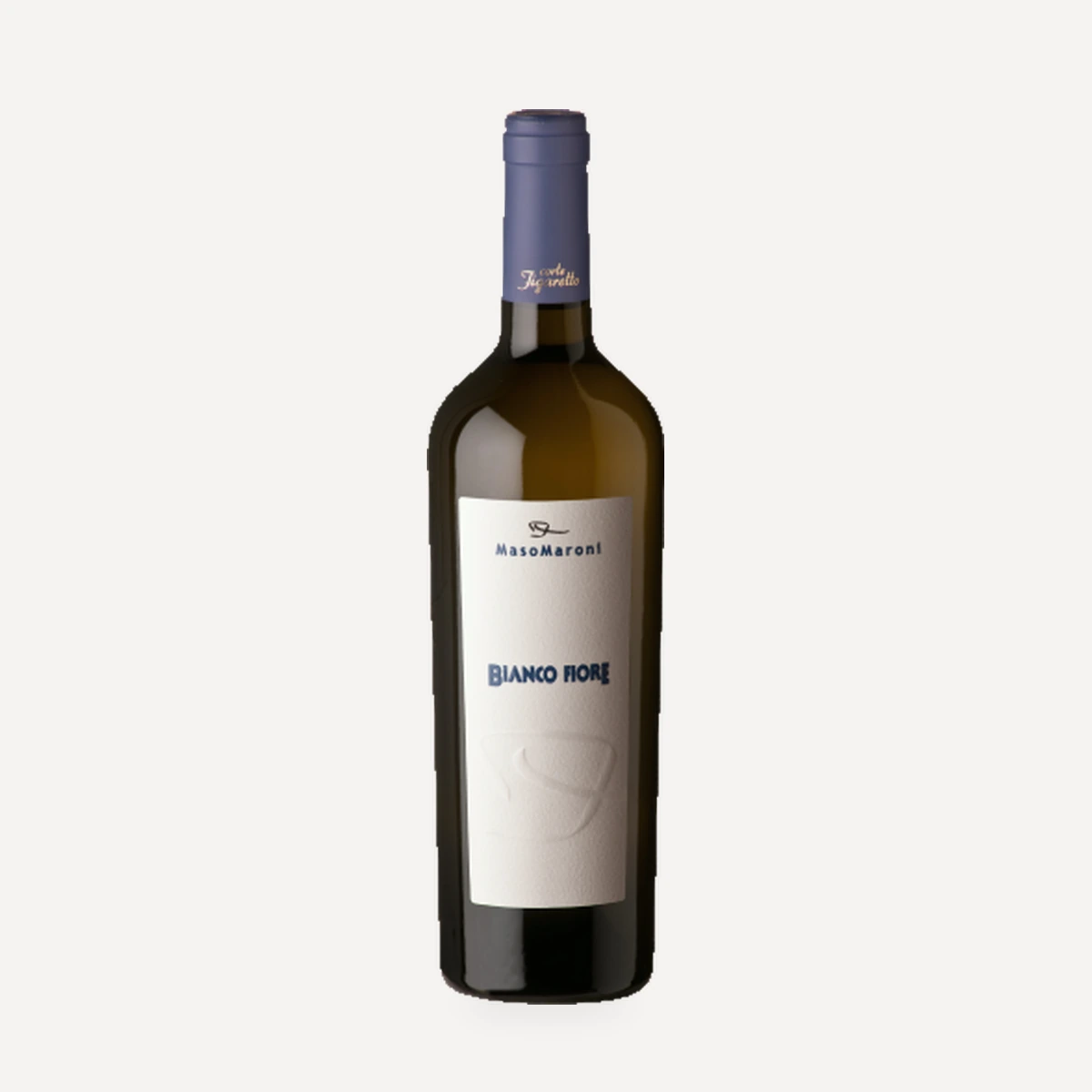
Garganega is gently pressed. The current approach gives the finished wine seven months in stainless steel. A more detailed technical protocol also describes spontaneous fermentation with yeasts naturally present on the grape skins, three months on the lees with periodic bâtonnage, followed by further maturation in steel.
Ripasso
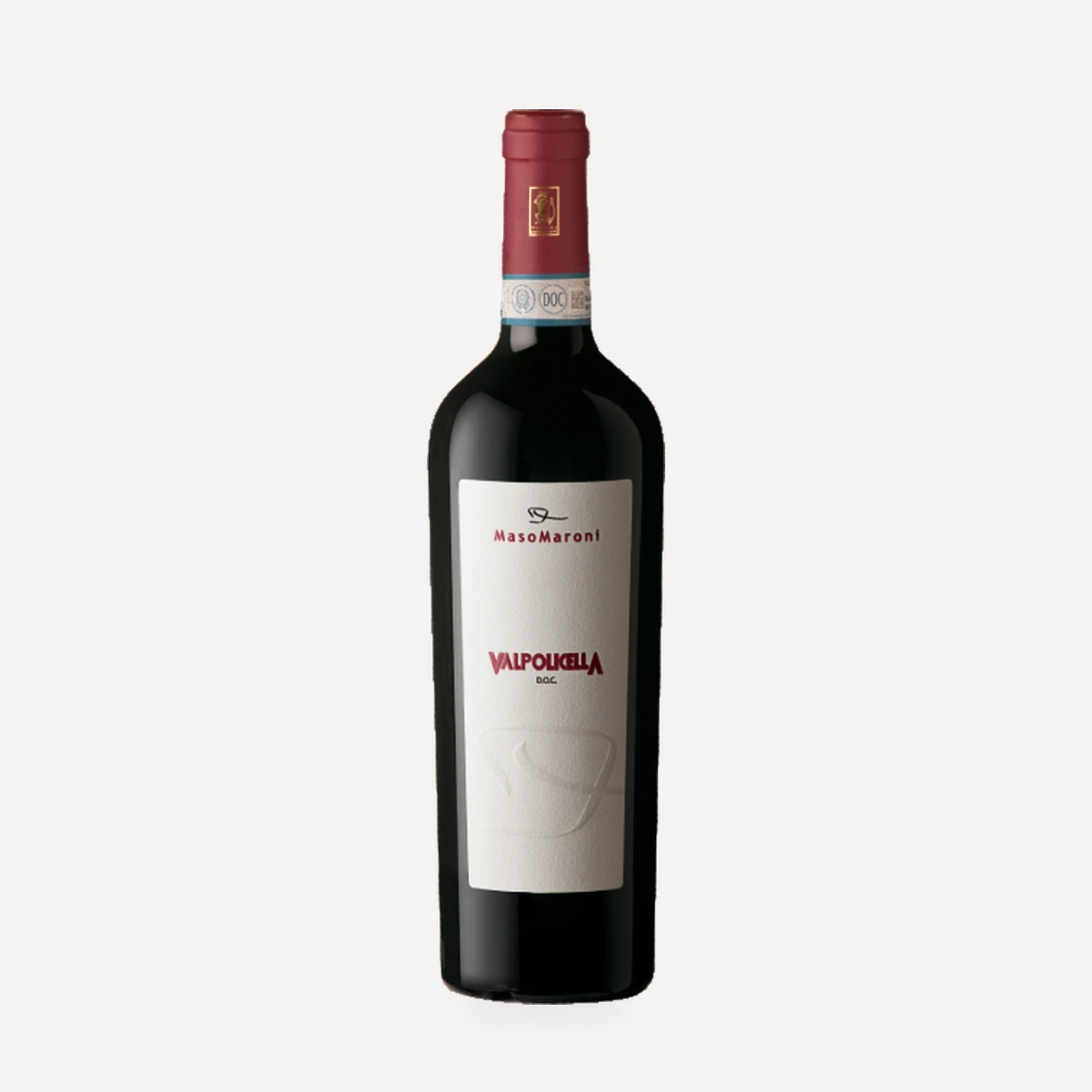
Valpolicella destined for Ripasso undergoes a second fermentation on Amarone pomace in February following the harvest. This refermentation generally lasts seven to nine days and increases colour, body, alcohol and aromatic intensity. Maturation takes place in selected French oak, principally barriques with a contribution from larger casks, followed by bottle ageing. One detailed protocol gives a minimum of 18 months in wood.
Amarone and appassimento
Grapes destined for Amarone are dried in the estate’s fruttaio. The current protocol specifies approximately 120 days of drying and a weight reduction of 55%. Drying duration can vary with vintage conditions, particularly autumn temperature and humidity. After drying, the grapes are crushed and transferred by gravity to 50 hl stainless-steel vats. Fermentation proceeds slowly under temperature control, with daily pump-overs and délestage. A detailed protocol identifies indigenous yeasts from the grape skins. The wine matures for 24 months in French oak barriques and large casks, followed by six months in bottle.
Other maturation regimes
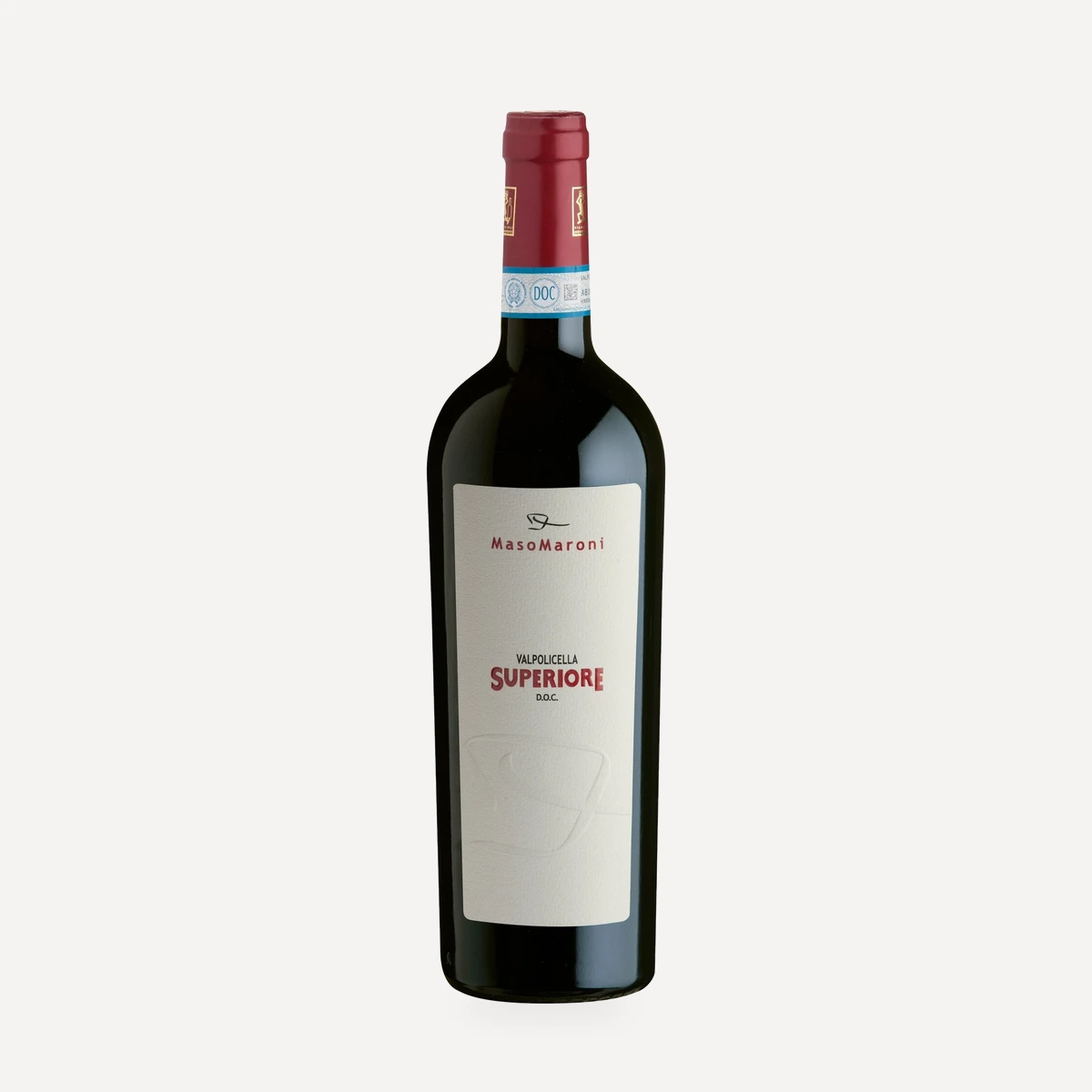
Valpolicella Superiore is matured in barriques for 14 months. A shorter French-oak regime of three months in barrique and three months in bottle is used elsewhere in the range. The young Valpolicella reaches its intended stage of refinement approximately one year after harvest.
Filosofia
Maso Maroni’s guiding idea is that quality begins in the vineyard. Clonal material, rootstocks, winter pruning, canopy work and fruit selection are treated as connected decisions rather than isolated operations.
The project links agricultural stewardship with hospitality and the conservation of Valpolicella’s rural landscape. Terraced vineyards, dry-stone marogne and the restored cottage are presented as parts of the same place. Traditional elements—including Pergola Veronese, the fruttaio and the historic rural building—coexist with temperature-controlled fermentation, gravity handling, drip irrigation and solar energy.
The viticultural objective is balanced ripening in a dry, ventilated microclimate, accompanied by precise water use and certified sustainable management of the surrounding vineyards.
Vini
Valpolicella DOC
Valpolicella Superiore DOC
Bianco Fiore