Storia
Origins within the Moretti family project
Montebamboli originated in Vittorio Moretti’s recognition of the potential of a high-elevation site within the Parco Naturale dei Montioni. The wider Moretti family wine project began in 1997, when Vittorio Moretti and his daughter Francesca selected the Tuscan Coast for a new venture and, with Professor Attilio Scienza, began studying soils and zoning the available land.
2000: development of Montebamboli
Vineyard development reached Montebamboli in 2000. The holding was subsequently known as podere Sant’Adele. Its position in the Colline Metallifere, at approximately 400 m above sea level and within an extensive natural park, distinguished it from the family’s lower and more coastal vineyard zones.
2024: a distinct contemporary identity
In 2024, Andrea Lonardi MW, working closely with the Moretti family, identified Montebamboli as the basis for a different interpretation of the Tuscan Coast. Rather than applying a pre-existing regional or stylistic model, the project would be shaped by the particular conditions of its elevated vineyards: cooler temperatures, greater rainfall, stronger ventilation, acidic iron-bearing soils and an environment dominated by Mediterranean woodland.
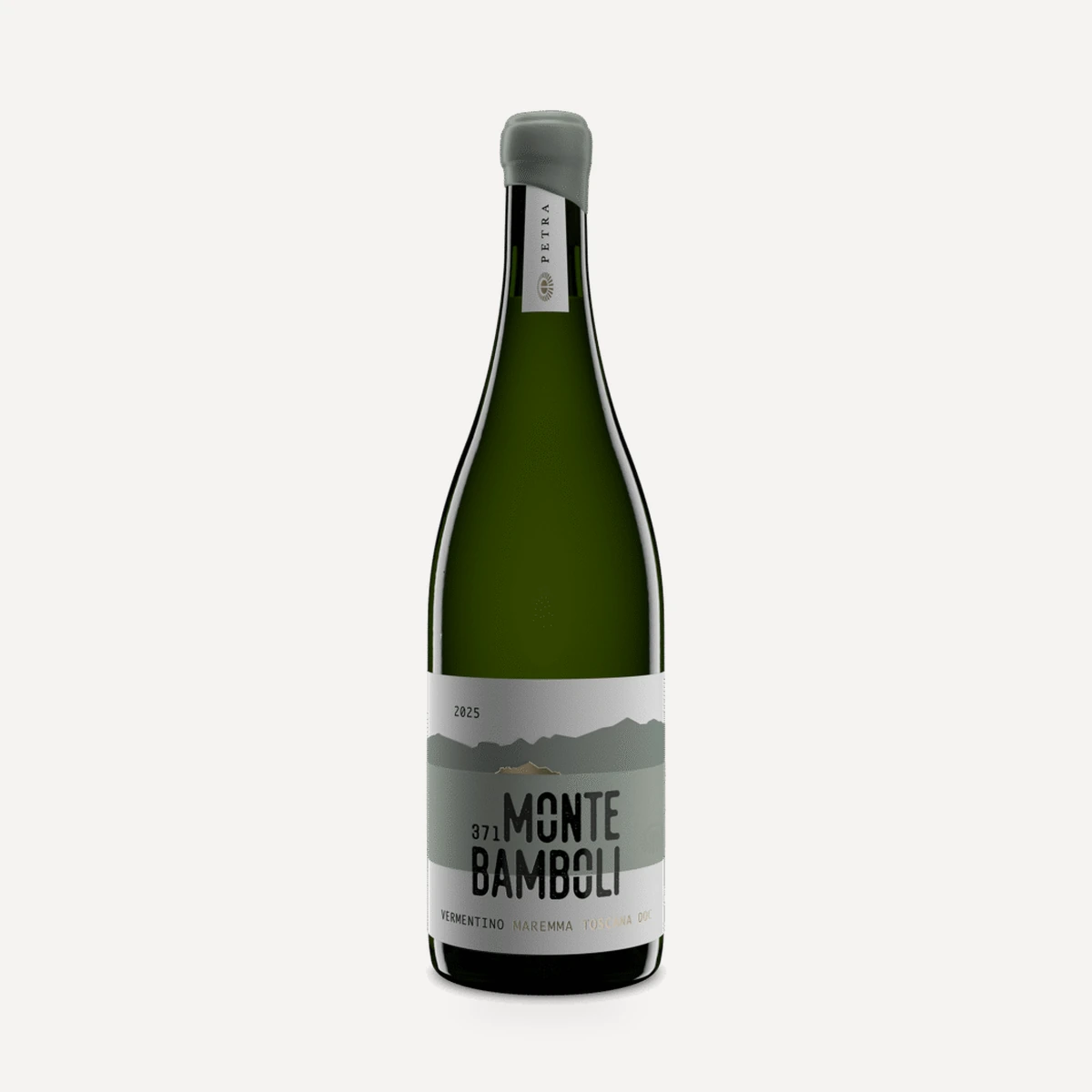
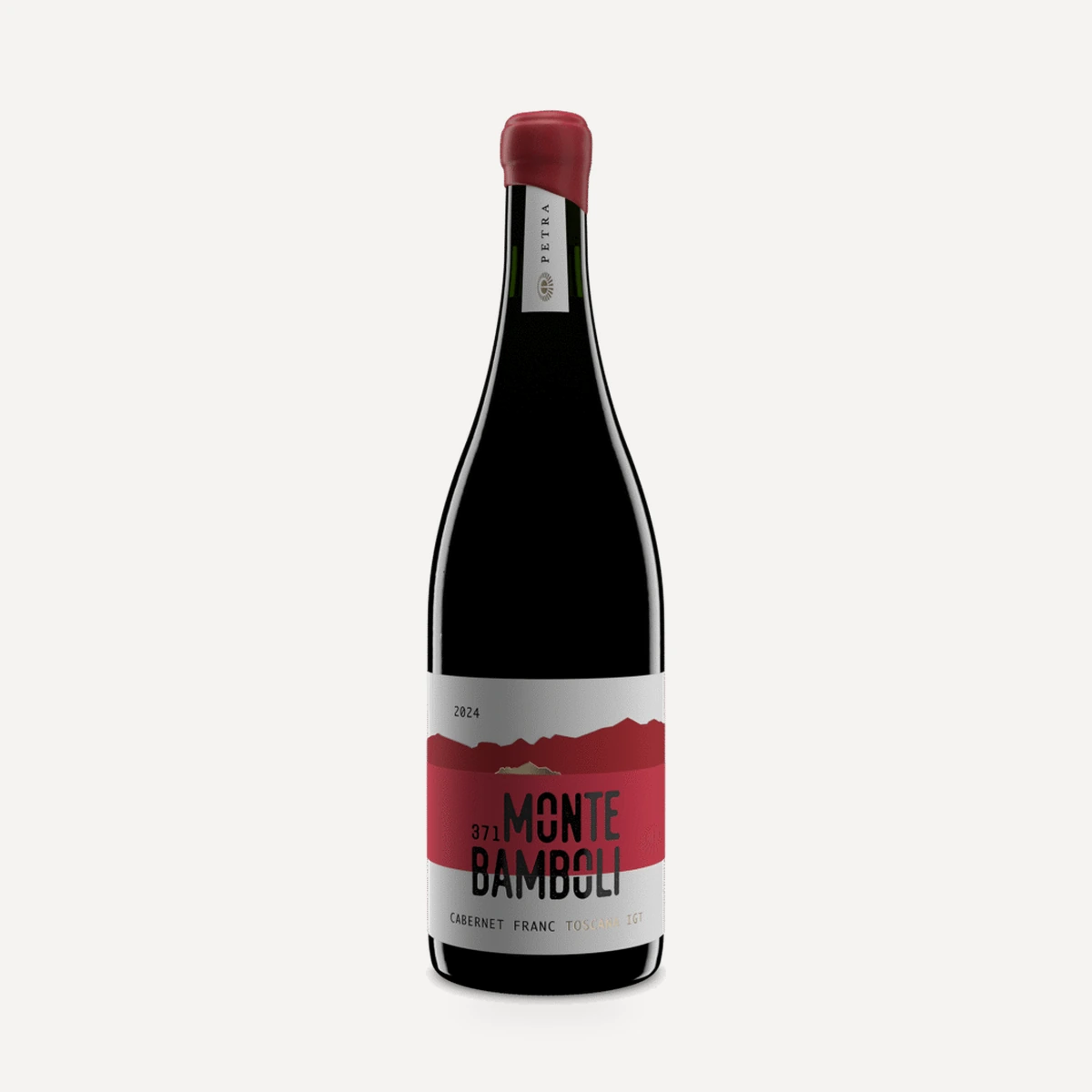
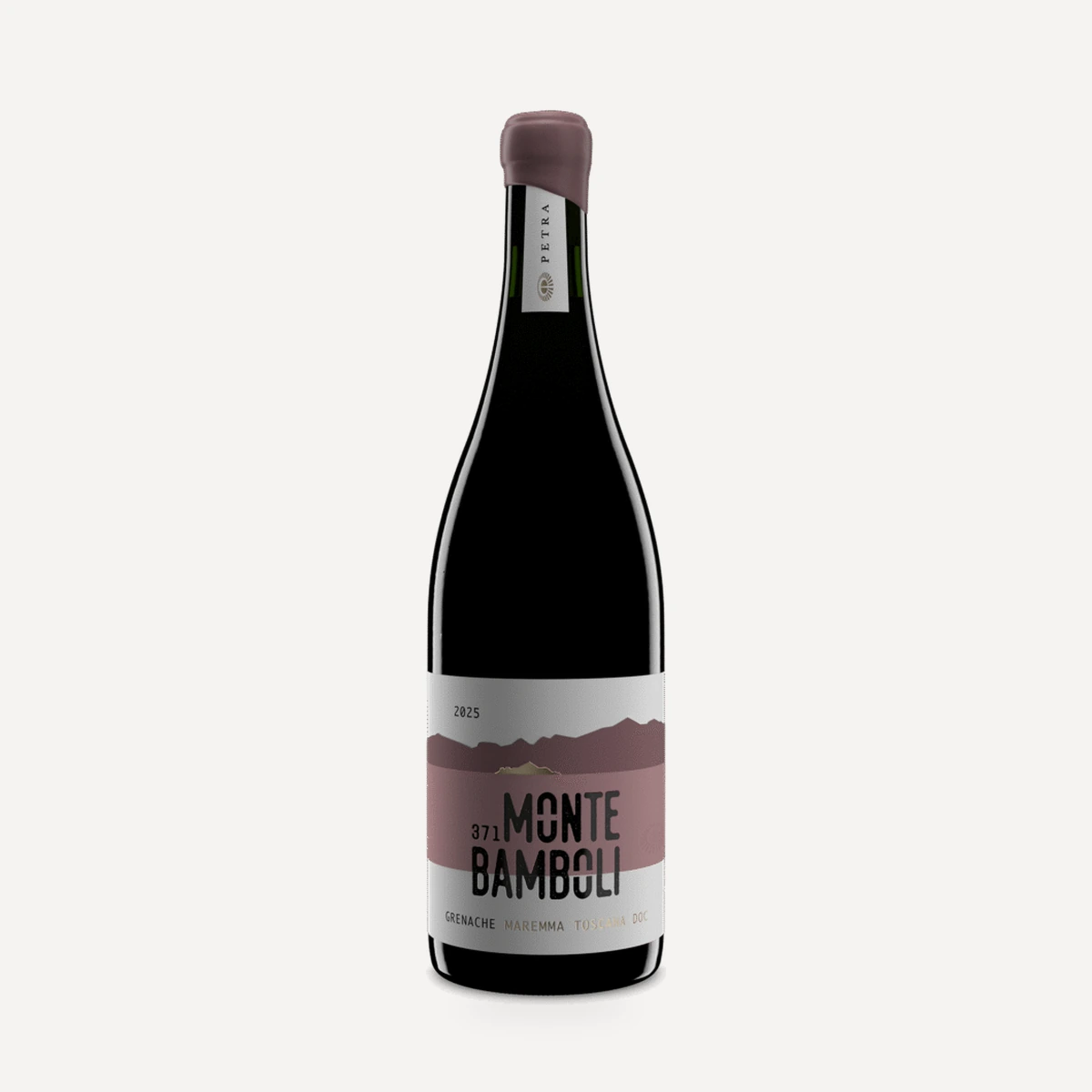
This direction established Montebamboli as the second, complementary expression of the family’s Tuscan Coast project. Its identity centres on three single-variety wines—Cabernet Franc, Grenache and Vermentino—each associated with a particular vineyard zone. The concept treats climate change as a reason to reconsider the potential of cooler, wetter, high-elevation sites rather than merely as a constraint on established coastal viticulture.
Terroir
Location and landscape
Montebamboli occupies an elevated vineyard terrace in the hilly Colline Metallifere, overlooking the Val di Cornia and the Tuscan Coast. The vineyards lie approximately 10 km from the Tyrrhenian coast, at around 400 m above sea level. The site forms a natural balcony facing the sea and stands at the summit of the Parco Naturale dei Montioni, an area of approximately 7,000 ha dominated by Mediterranean scrub.
The surrounding vegetation includes holm oaks, cork oaks, Spanish broom and strawberry trees (Arbutus unedo). The vineyard is conceived as a true woodland vineyard: biodiversity is not merely a surrounding feature but a defining element of the site.
Climate
Altitude and greater exposure to winds combine to produce a cooler and more humid microclimate than the valleys and lower coastal vineyards. Average temperatures are lower, ripening is slower and rainfall is more evenly distributed. Average annual precipitation is approximately 700 mm.
Rainfall and deep soil-water reserves reduce irrigation requirements almost to zero. These conditions are treated as an advantage as warming makes water management increasingly difficult at lower elevations. Clearer air, strong light and persistent ventilation complete the high-altitude coastal environment.
Soils
The soils are acidic, stony and rich in iron-bearing minerals, with a pH of approximately 5–5.5. Gravel derives from the weathering of iron-rich sandstones. Some zones also contain clay and calcareous flysch a palombini.
The soils drain rapidly at the surface while retaining water in deeper layers. This combination supports slow ripening and is associated with precise aromatic development, sustained natural acidity and fine, continuous tannin structure.
Vinificazione
A naturally low-input site
Montebamboli follows a minimal-intervention approach made possible by its natural conditions. The combination of elevation, evenly distributed rainfall, ventilation, fast-draining soils and deep water retention allows the vines to maintain a largely self-regulating balance. Irrigation demand falls close to zero, while fewer technical inputs and fewer vineyard interventions are required.
Biodiversity is integral to the vineyard environment. The vines grow within extensive Mediterranean scrub populated by holm oak, cork oak, Spanish broom and strawberry trees.
Soil and vine management
Conservative soil management uses harrows for surface cleaning and maintains either complete grass cover or alternating grassed rows. Autumn and spring fertilisation is planned around manure and pelleted biological products that add organic matter. Partial winter and spring cover crops combine grasses and legumes in alternating rows; spontaneous vegetation remains in the unsown rows. Surface cultivation is avoided during summer.
Pest pressure is managed preventively through canopy and under-row management and by maintaining the vine’s vegetative and productive balance. New plantings are preceded by a documented assessment of the site’s pedological and climatic suitability. Drainage ditches, underground channels and grated inspection points guide runoff and limit erosion.
Ripening and harvest decisions
During the final stage of ripening, grapes from each vineyard are analysed at least twice weekly. Regular tasting and daily vineyard monitoring complement the analytical work and track plant health. Each parcel and grape variety is harvested and processed separately, allowing vineyard practices—including yield targets and cluster shading—to be evaluated for subsequent seasons.
All three Montebamboli varieties are harvested by hand with field selection. Cabernet Franc and Grenache subsequently undergo optical berry sorting. Vermentino receives an additional selection for shaded green clusters whose aromatic precursors have been protected from direct sunlight.
Reception and parcel separation
Production is carried out by Soc. Agr. Petra srl from grapes through the finished bottled wine. Every parcel and variety is harvested and processed separately. Harvest timing combines laboratory measurements, regular tasting and daily observation of vineyard health.
The fruit is manually harvested and initially selected in the vineyard. Optical sorting is used for the red varieties and for Vermentino after cluster selection. Cabernet Franc and Vermentino are chilled overnight before processing. Movement of red berries into the fermentation vessels uses gravity to minimise mechanical impact.
Fermentation and extraction
Destemming and light crushing are adjusted to the characteristics of each incoming lot and the intended result. Whole berries and a measured proportion of whole clusters are retained where appropriate. Red-wine extraction is deliberately gentle, relying on short or reduced pump-overs and extended skin contact rather than aggressive mechanical action. Stainless steel and open fermenters are used according to the variety.
Each fermentation vessel is assessed every day through analytical measurements and tasting. Additions during alcoholic fermentation are adjusted to the actual needs of the yeasts, while skin contact is managed to obtain the intended extraction. Malolactic fermentation may use co-inoculation or selected lactic bacteria after racking. The operation does not employ grape drying or appassimento.
Vermentino is whole-cluster pressed and the must is settled statically. Fermentation is divided between stainless steel and French oak, followed by ageing on fine lees with regular bâtonnage.
Maturation, blending and bottling
The cellar uses concrete, stainless steel and French oak as complementary maturation vessels. Concrete is central to the Grenache programme and part of the Cabernet Franc élevage, while French oak is used selectively for Cabernet Franc and a smaller component of Vermentino. Wines matured in separate vessels are recombined before final settling and bottling.
Assemblies are decided first through sensory evaluation and then checked analytically. Protein stability is achieved with bentonite. Potassium polyaspartate is used where permitted to manage tartrate precipitation; a small proportion intended for markets that do not allow it still undergoes cold stabilisation. After blending, an accredited external laboratory analyses the wine before clarification, filtration and the final determination of stabilising agents, antioxidants and any mannoproteins.
Free and total sulphur dioxide are monitored from the end of fermentation to bottling at intervals of no more than two months, again before bottling and on the bottling day. Bottles are rinsed internally with filtered water. Filling takes place under nitrogen saturation, and a vacuum is created in the headspace at closure. Approximately six bottles—two each from the beginning, middle and end of a bottling run—are sampled for microbiological analysis.
Most tanks are insulated and equipped for heating and cooling. Software supplies only the required heating or refrigeration, maintaining the appropriate temperature of must and wine while limiting energy use.
Filosofia
Montebamboli is conceived as a contemporary, high-elevation reading of the Tuscan Coast. Its guiding principle is that the place should determine the wine rather than being made to conform to a pre-existing model.
The project defines itself through horizontality, essentiality and instinct. Minimal viticulture is presented not as deliberate deprivation but as a response to conditions that naturally reduce the need for irrigation, technical inputs and repeated intervention. The surrounding woodland, rainfall, altitude, wind and acidic soils are treated as active parts of the vineyard rather than as background scenery.
Climate change is approached as an invitation to reconsider the value of cooler, wetter vineyards at elevation. Montebamboli’s stated stylistic ambition is a transparent Mediterranean expression built around brightness, immediacy and tension: pale colour, luminous fruit, sanguine and iron-like nuances, fine tannin, juicy palate rhythm and a persistent ferrous character.
Each wine is single-variety and linked to a particular vineyard zone. Across the range, elevation and higher rainfall are understood to sustain natural acidity, while gentle cellar handling seeks to preserve freshness, fruit clarity and the distinctions among the vineyard areas.
Vini
Cabernet Franc
Grenache