Storia
Viticulture before Nebraie
Viticulture was once widespread in this part of Val Borbera. Timorasso grew alongside numerous other grape varieties, many of them unidentified. This agricultural landscape declined as the mountain territory began to lose population in the 1960s.
2014 — the family project begins
Nebraie was established in 2014 as a family business. Its purpose was to help revive the mountain territory through winegrowing and wine production. The project was made possible by the careful recovery of family-owned land, with biodiversity and organic-farming principles incorporated from the outset. The holding remained diversified: vines became its principal crop, while forage hay, green-manure legumes and an old wheat variety were also sown and harvested.
One of the estate’s three vineyard plots is called Nebraie and gave the business its name.
2019 — organic certification
After operating according to self-declared organic principles from its founding, Nebraie obtained organic certification in 2019.
Terroir
Nebraie lies in Val Borbera, in the heart of the Ligurian Apennines while remaining within the Province of Alessandria. The wider holding occupies elevations of approximately 450–600 metres above sea level; its vineyards are concentrated between 500 and 600 metres.
Temperatures are cooler than in the neighbouring hill districts, and temperature swings are frequent. The area is well ventilated and regularly receives the locally named marino, a wind that carries the sea’s milder temperatures inland.
The Timorasso vines grow on clay-loam soils that contain a substantial coarse mineral fraction and are moderately calcareous. The subsoil is distinguished by reddish-grey schists and the conglomerati di Savignone: detrital formations composed of rounded clasts of widely varying sizes.
All vineyards face south-west. Their rows run directly down the slope in a rittochino arrangement.
Vinificazione
Nebraie has followed organic principles since its establishment in 2014 and has held organic certification since 2019. Its soil management is intended to preserve biodiversity and keep the soil’s humus biologically active.
Organic manure in pellet form is distributed in the vineyards. Green manure is sown in alternating rows using legumes, an old wheat variety produced on the farm and other plants already occurring naturally on the property. Rows not used for these sowings are aerated or cultivated during spring and summer.
Inter-row vegetation is mown periodically during the growing season with a chain mower. The resulting cover crop is left as a mulch-like layer to reduce summer evaporation. Beneath the vines, a rotary inter-vine implement mechanically cuts vegetation and cultivates the soil.
Winter pruning follows the Simonit & Sirch method: a gentle, branched approach intended to maintain the vines’ long-term balance. Spring and summer canopy work encompasses selecting an appropriate number of shoots, positioning and training them along the row, removing leaves to ventilate the fruit zone, further pre-harvest leaf removal to aid ripening, and thinning bunches.
From the growing season through harvest, cover treatments are applied by atomizer using only liquid copper hydroxide and liquid wettable sulphur. Pyrethrum is used for legally required control of flavescence dorée.
Harvest is conducted manually, with the grapes collected in boxes. Several baskets are selected a few days in advance to prepare the native-yeast pied de cuve used to initiate the main fermentation.
Biodiversity measures extend beyond the vineyard. Thirty beehives belonging to a partner farm are hosted on the property, while the wider agricultural holding includes forage hay, green-manure legumes and an old wheat variety.
Several baskets of grapes are selected a few days before the main harvest to establish a pied de cuve. The grapes are made into must; native yeasts normally begin fermentation after approximately two days, and the starter usually reaches full fermentation within about one week. This active culture is intended to reduce the uncertainty associated with leaving spontaneous alcoholic fermentation entirely to chance.
The principal harvest is carried out manually into boxes. Loads are transported by trailer to the cellar, where the grapes undergo gentle direct pressing to retain freshness and fruit integrity. The resulting must is transferred to stainless-steel tanks equipped for temperature control when required.
Alcoholic fermentation proceeds with indigenous yeasts. A few days after it begins, the fully fermenting pied de cuve is added. Once fermentation is complete, the wine is racked so that only the fine lees remain. Sulphur dioxide is added only when the conditions of the vintage require it.
The wine then matures on its fine lees until a final racking before bottling. It is bottled without filtration and undergoes no other oenological treatment.
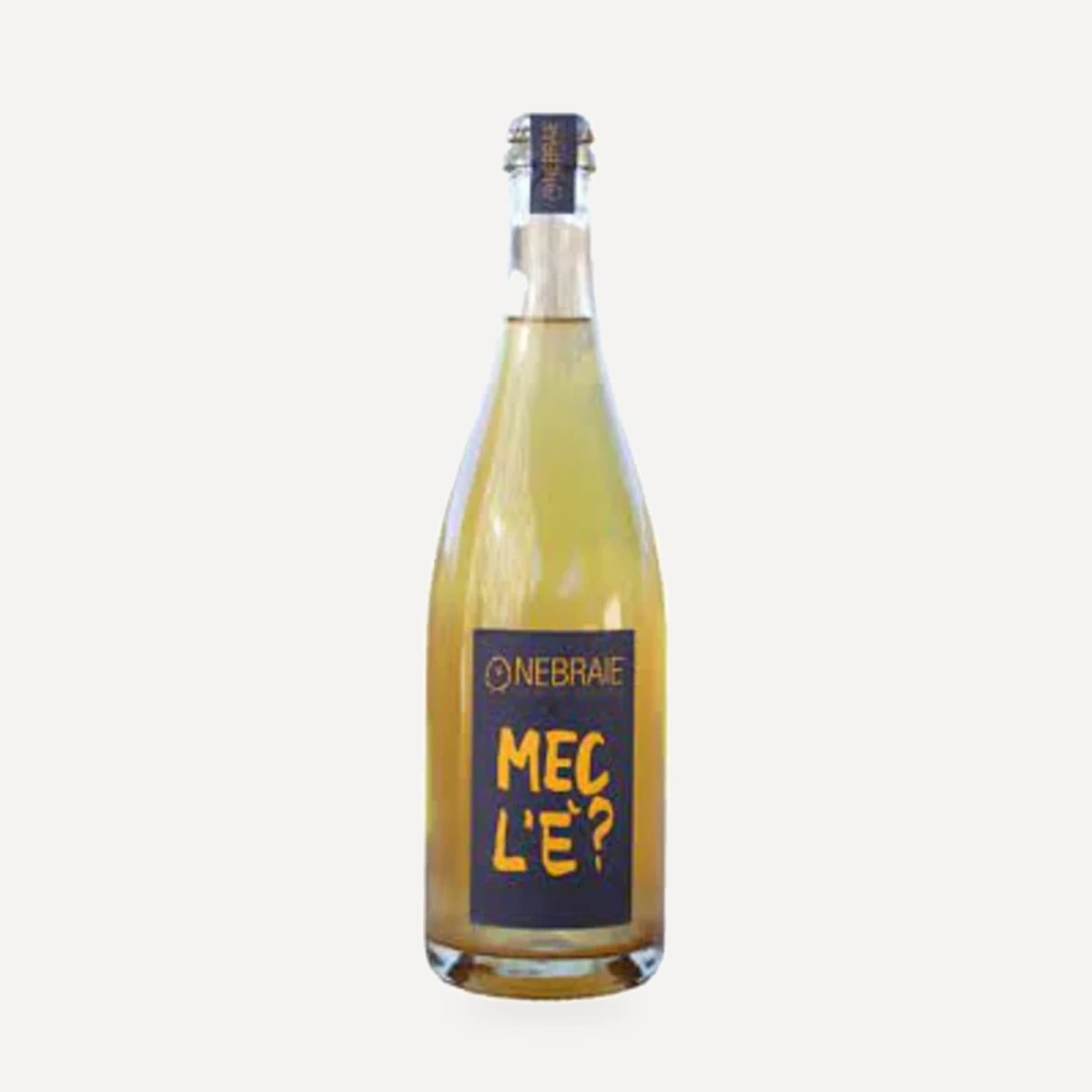
The same broad principles—Timorasso, indigenous-yeast primary fermentation and no filtration—apply across the range. The sparkling wines receive their secondary fermentation in bottle: Bolle in Valle uses selected yeasts and is not disgorged, while Mec l’è? is refermented with must. Kinze is made with 15 days of skin contact.
Filosofia
Nebraie’s founding purpose is the revival of a depopulated mountain territory through active agriculture and wine production. The recovery of family land, the continuation of mixed farming and the restoration of vineyards form part of the same project.
Its vineyard philosophy connects the production of what it calls a true, natural wine with living humus and preserved biodiversity. Organic fertilization, green manure, resident vegetation, mechanical under-vine work and gentle pruning are intended to sustain that living system rather than treat the vineyard solely as a source of grapes.
In the cellar, the approach centres on careful handling and limited intervention: manual harvest, gentle direct pressing, indigenous yeasts supported by a pied de cuve, retention of fine lees, conditional rather than routine sulphur use, and bottling without filtration or further oenological treatments. The pied de cuve represents a practical meeting of tradition and control, preserving native fermentation while reducing the risks of leaving its start entirely to chance.
Vini
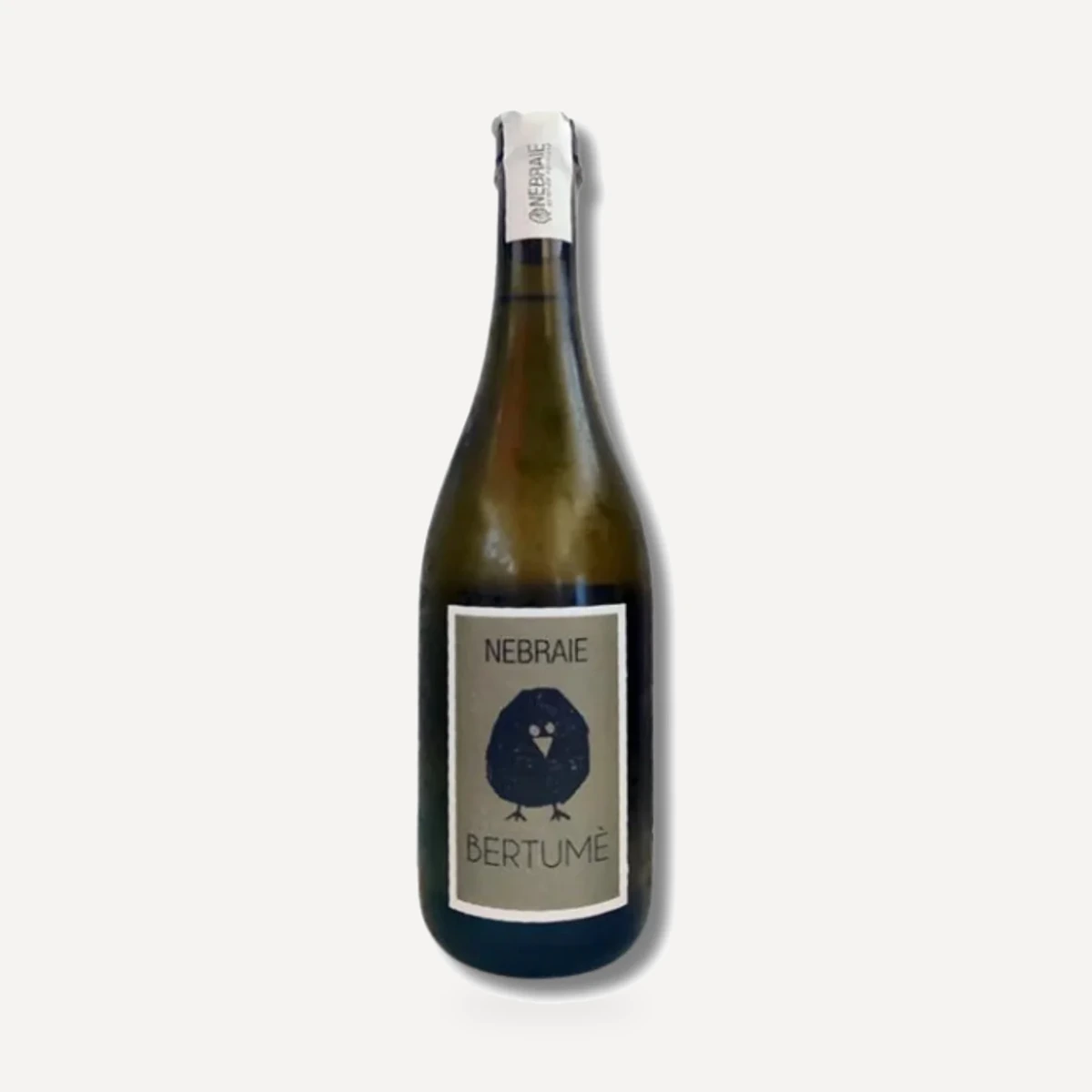
Bertumè