Storia
1919 — Foundation
Antonio Franco founded Cantine Franco Antonio, Produttore e negoziante in vini in Valdobbiadene. The business began as a family wine enterprise rooted in local wine culture, with Antonio working as a wine merchant.
1966 — The second generation
Antonio’s son Giovanni Franco, known as Nino, renamed the business Nino Franco di Franco Giovanni. He continued its winemaking activity with both white and red wines and began producing sparkling wines. His nickname ultimately supplied the enduring identity of the winery.
1971 — Primo Franco and the decision to specialise
Primo Franco, the third generation and a graduate of the Scuola Enologica di Conegliano Veneto, entered the cellar alongside his father. He made the defining decision to concentrate exclusively on Prosecco. His education was complemented by extensive travel, encounters with chefs and gastronomes associated with Nouvelle Cuisine, tastings, friendships and a personal interest in architecture. These experiences shaped a more authorial, vineyard-conscious interpretation of Valdobbiadene Prosecco.
1979 — Rustico becomes a sparkling wine
Rustico, produced since the 1970s, changed from a wine matured on its lees into a Charmat-method sparkling wine. The change marked an important technical and stylistic step in the company’s specialisation.
1982 — Succession and international development
Following Giovanni Franco’s death, Primo inherited the winery. He began an extensive programme of travel throughout Italy and abroad to introduce Prosecco and its culture to international audiences, including leading restaurants.
1983 — The first signed, vintage-labelled Prosecco
The winery created Primo Franco, presented as the first Prosecco to carry both a vintage and the producer’s signature on its label. The bottle was closed with a brace rather than a conventional wire cage. The project became the emblem of Primo’s effort to establish the idea of an individual, producer-signed Prosecco. During this broader period of international activity, Primo and Silvia also developed a Prosecco cocktail list for the Mayfair Regent Hotel in New York.
1991 — Grave di Stecca as a single vineyard
Grave di Stecca began to be cultivated as an individual vineyard. Enclosed by high stone walls and associated historically with Villa Barberina, it became the focal point of Primo’s attempt to connect Prosecco explicitly to individual parcels and their distinct conditions.
1993 — Replanting Grave di Stecca
Annalisa joined Primo in the cellar. Together they developed Grave di Stecca as a single-vineyard project. Following mass selection of Glera from the existing vineyard, they replanted it in collaboration with Monsieur Guillaume, a French vine nurseryman. The work preserved selected local material while redefining the parcel as a distinct viticultural and vinification unit.
1999 — Riva di San Floriano
The first harvest of Vigneto della Riva di San Floriano took place. It was among the early single-vineyard Prosecco projects to reach the market and extended the parcel-by-parcel approach beyond Grave di Stecca.
2004 and 2008 — Villa Barberina
Primo Franco and Annalisa purchased Villa Barberina in 2004. The early-18th-century Venetian villa stands within the Grave di Stecca vineyard and had belonged for about a century to the textile-manufacturing Piva-Viansson family. Restoration was completed in 2008, preserving its interiors, furnishings, curtains and frescoes and returning the building to its 18th-century architectural character. It then became a relais managed by Annalisa, while remaining closely connected to the walled vineyard and its historic barchessa.
2006 — The fourth generation
Silvia Franco joined the management of the winery as the fourth generation. Her pursuit of beauty, together with Primo’s architectural sensibility and their shared interest in vineyard identity, became central to the company’s contemporary direction.
2014 — Recovery of Col del Vent
Nino Franco began collaborating with the master-pruning specialists Simonit & Sirch to recover the century-old vines of Col del Vent. The work centred on conserving historic Glera material and the vitality of the old plants.
2015 — Nodi
The recovered Col del Vent vineyard gave rise to Nodi, made from vines more than a century old, including some ungrafted plants. Its name refers both to the knots of the old vine trunks and to knots as a measurement of the wind.
2019 — Centenary and UNESCO landscape
Nino Franco celebrated 100 years of history and experimentation. In the same year, the hills of Conegliano-Valdobbiadene were inscribed as a UNESCO World Heritage cultural landscape, recognising a terrain shaped by generations of winegrowers.
2024 — Società Benefit
Nino Franco Spumanti became a Società Benefit, formally incorporating environmental, social and cultural benefit objectives into its governance alongside economic aims. The change formalised a long-term approach based on responsibility, transparency, territorial continuity and measurable impact.
2024–2025 — Formal impact programme
During its first reporting period as a Società Benefit, the company adopted the B Impact Assessment developed by B Lab, appointed an impact manager and prepared an ethical code. Its initial B Impact Assessment score was 79.4 points. The programme also documented the organic and SQNPI systems, biodiversity projects, lower-impact packaging, renewable-energy sourcing, research partnerships, employee training, community support and educational activity. Enologist Renato Meneghello joined the fourth-generation team in consolidating the long-term focus on territorial care and sustainability.
Terroir
Valdobbiadene landscape
The winery’s core territory rises from the Venetian plain toward the Pre-Alps in an abrupt sequence of terraces, steep hillsides and wooded slopes. Vineyard rows follow these inclines and sometimes climb sites inaccessible to mechanised work. All vineyard operations on the steep terrain are therefore performed manually.
The name Valdobbiadene is connected to the “valley of Duplaviis,” the Piave River. The wider landscape originated in ancient seabeds and was subsequently modelled by Dolomite and Alpine glaciers, which excavated valleys and transported large quantities of rock sediment.
Valdobbiadene’s soils are deep but highly variable, combining rocky and sandy conglomerates with clay, minerals and iron. In the more easterly Conegliano sector, gentler hills and silty-loamy soils predominate. The steeper Mandamento of Valdobbiadene alternates fine-textured ground with soils rich in coarse material and, in places, substantial gravel. These relatively poor soils encourage Glera roots to descend deeply.
The winery’s directly cultivated parcels lie within the municipality of Valdobbiadene. The three sites are small—none larger than a few hectares—and together cover approximately 4 ha. Each is treated and vinified separately.
Grave di Stecca
Grave di Stecca covers about 2.4 ha at approximately 270 m at the foot of the southern slope of Mount Cesen. High stone walls enclose and shelter the vineyard on every side, creating a protected microclimate comparable in form to a French clos.
Its name derives from Valle di Stecca and from the “grave,” or colluvial ground formed through layers of material washed and eroded from mountain slopes. The vineyard contains limestone rocks that vary in age, purity and stratification, with gravelly areas among them. Trees and other natural vegetation contribute to the site’s high degree of natural enclosure.
Col del Vent
Col del Vent lies just outside the centre of Valdobbiadene and covers less than 1 ha. Its reddish soils are of fluvio-glacial origin, with clay predominating and a limited coarse fraction. Wind is an identifying feature of the site and is reflected in the name Nodi, which evokes both wind measured in knots and the knotted trunks of the old vines.
Riva di San Floriano
Riva di San Floriano covers approximately 1 ha on very steep slopes. “Rive” is the Venetian term for vineyards placed along the side of a hill. The site’s incline makes cultivation particularly demanding and historically prevented complete uprooting when the vineyard required renewal.
The ground is whitish, marly and calcareous. The lower section contains fragments of biancone limestone and silt; more detailed geological descriptions identify marly and flinty limestone of different ages with regular clay interlayers belonging to the biancone formation.
Cartizze
Cartizze occupies a 107 ha hill between Santo Stefano, Saccol and San Pietro di Barbozza, divided among 108 producers. The source vineyards used by Nino Franco have full southern exposure and steep slopes, with elevations ranging from approximately 230 to 320 m. The limestone substrate is eroded, thin and medium textured; marl emerges in some places. Permanent grass cover contributes organic matter at the surface.
Other denomination vineyards
Fruit for the broader Valdobbiadene Prosecco Superiore range comes from the Conegliano-Valdobbiadene territory. Middle-elevation and high-hill sites encompass thin soils on steep, eroded slopes, where surface organic material may rest directly on calcareous substrate. More developed sites formed on fluvio-glacial deposits have moderately deep, stable soils with clay in the lower layers. The highest source areas average about 366 m, have steep slopes and northern exposures, and record the lowest average temperatures within the denomination.
Vinificazione
The three directly cultivated parcels are managed under site-specific protocols and recovered through rigorous mass selection. The company maintains an organic management system certified by Bioagricert; the certification passed two annual audits during the 2024–2025 reporting period. It also participates in the Sistema di Qualità Nazionale Produzione Integrata (SQNPI), favours SQNPI-certified grape and must suppliers and obtained SQNPI certification for two labels during that period.
All grapes associated with the Conegliano-Valdobbiadene denomination are harvested manually. On the steep hillsides, every vineyard operation must be carried out by hand because the rows follow severe inclines and inaccessible terrain.
Historic-vine conservation is a major focus at Col del Vent. Work with Simonit & Sirch began in 2014 to recover century-old plants. A later mass-selection programme protects old Glera biotypes by producing nursery vines from selected material. A mother block was established at a certified-organic supplier, and three local growers initially planted the selected vines, extending conservation beyond the estate parcels.
Riva di San Floriano preserves genetic diversity through its mixed-age population of mass-selected Glera. Because its extreme slope historically prevented complete replanting, individual vines were replaced separately, often with different clonal material.
At Grave di Stecca, permanent grassing supports the balance of the soil ecosystem and functional biodiversity. Beehives are placed temporarily in the vineyard with a local beekeeping technician; bee activity is used as a biological indicator of environmental health. The company intends to assess expansion of these practices to other vineyards within five years.
A meteorological station installed with XEM WINE and Politecnico di Torino supplies climatic observations to predictive models, research projects, academic theses and scientific studies. In response to changing climatic conditions, the company has also begun evaluating carefully targeted use of well water for irrigation, while monitoring consumption and seeking greater water efficiency.
The grape supply chain remains predominantly local: 95% of purchased grapes in the 2024–2025 period came from suppliers within the Conegliano-Valdobbiadene DOCG territory. Supplier engagement includes sustainability questionnaires, preference for certified growers and the sharing of knowledge and selected plant material.
The production model is organised around the identity of Valdobbiadene and, for the three directly cultivated parcels, separate vinification. Grave di Stecca, Col del Vent and Riva di San Floriano are handled individually so that each bottling reflects its own vineyard conditions.
For the principal sparkling wines, the shared sequence is pressing, destemming, cooling of the must and primary fermentation at controlled temperature in stainless-steel tanks. Secondary fermentation takes place in autoclaves according to the Charmat method.
A defining cellar practice is the prolonged retention of base wines on sediment from the first fermentation without racking. The wines remain at low temperature and receive regular bâtonnage. This contact is intended to extract components from the lees that increase aromatic and textural complexity without obscuring vineyard identity. Selected single-vineyard wines remain on their first-fermentation sediment for an extended period and receive additional bottle ageing after secondary fermentation; Grave di Stecca is given long bottle maturation, while Nodi rests in bottle for several months.
Rosé production uses brief, low-temperature contact between Merlot and Cabernet Franc skins and must to obtain colour, followed by primary fermentation in steel and secondary fermentation in autoclave.
The winery has continued to improve workplace safety in its production areas, including the installation of 12 agitators for stainless-steel tanks during the 2024–2025 reporting period.
Filosofia
Nino Franco treats wine as an idea that first takes form in the mind and then becomes tangible in the bottle. Primo Franco compares the work to sculpture: the producer reads the internal structure of the raw material and imagines what can be revealed from it.
The central principle is to anchor Prosecco to Valdobbiadene, replacing the idea of a standardised sparkling wine with wines shaped by individual vineyards. Separate parcels are treated as distinct expressions, and complexity is not concealed. Primo’s architectural interests, Silvia’s pursuit of beauty, travel, tastings, friendships and relationships with chefs all form part of the creative process.
The stated cellar objective is to enrich without distorting and to create complexity without making the wine complicated. Prolonged lees contact, low temperatures and regular bâtonnage serve this aim. Pleasure remains fundamental: the wines are intended to be satisfying shortly after bottling while retaining freshness and developing through years of bottle age.
As a family-run, fourth-generation company, Nino Franco defines quality in sensory, aesthetic and cultural terms. Its Società Benefit mission combines those standards with the creation of environmental, social and cultural value. Declared values include respect for people and places, consistency between words and actions, transparency, honesty, shared knowledge and beauty understood as harmony among work, territory, culture and quality of life.
The long-term environmental commitment encompasses careful vineyard management, biodiversity protection, reduced greenhouse-gas and water footprints, energy efficiency and renewable energy. The company also treats wine as a means of knowledge, conviviality and cultural exchange rather than solely as a commercial product.
Vini
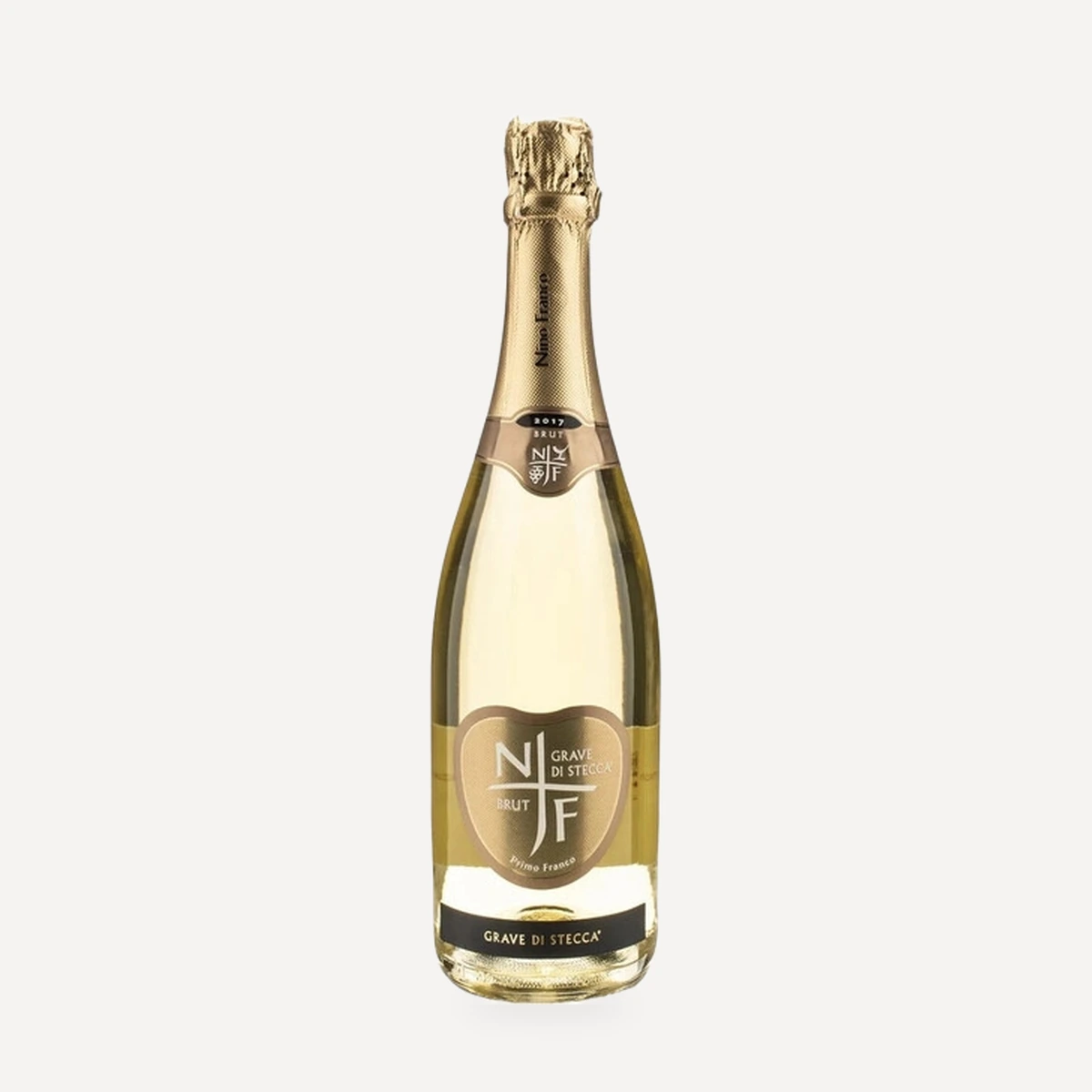
Grave di Stecca Brut
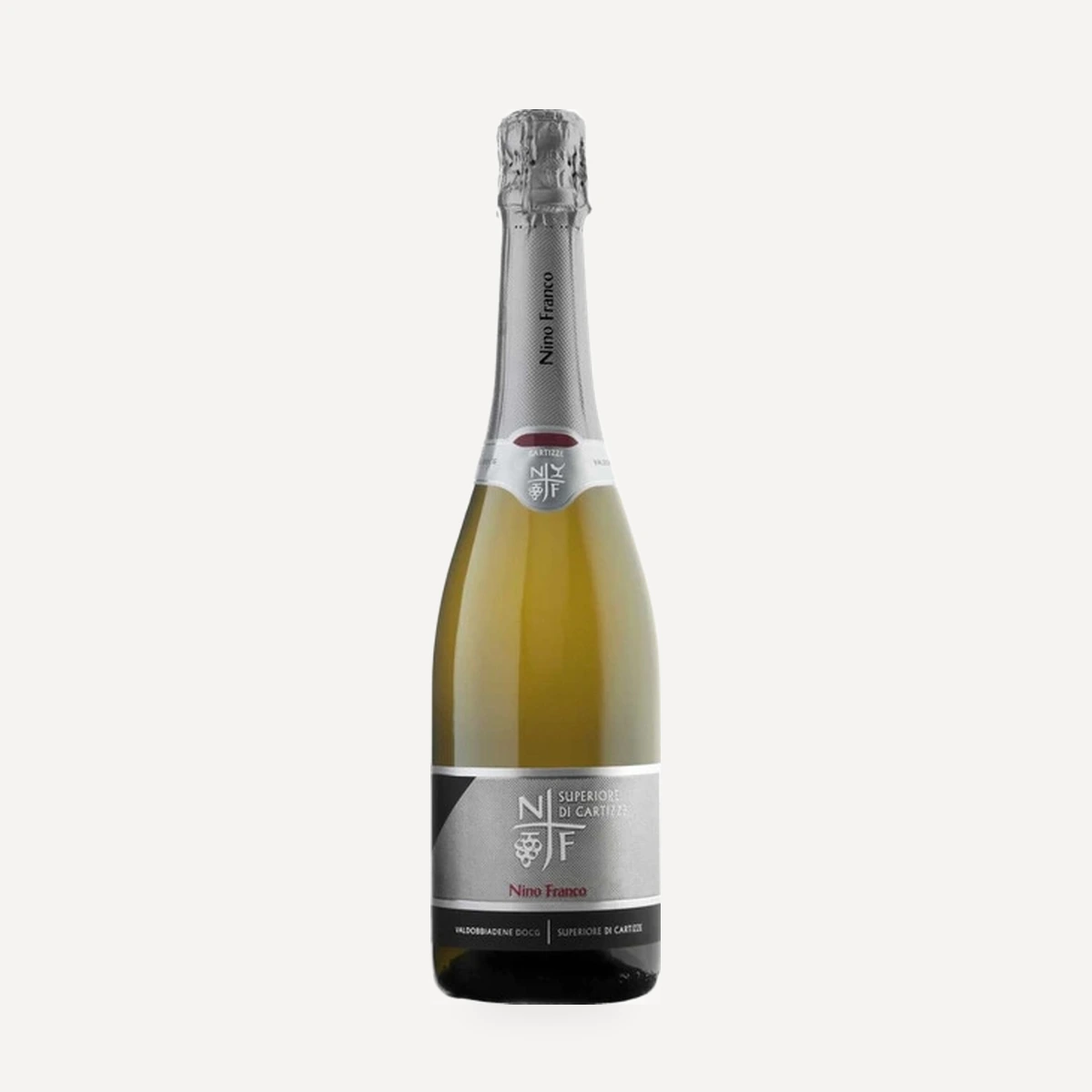
Superiore di Cartizze Dry
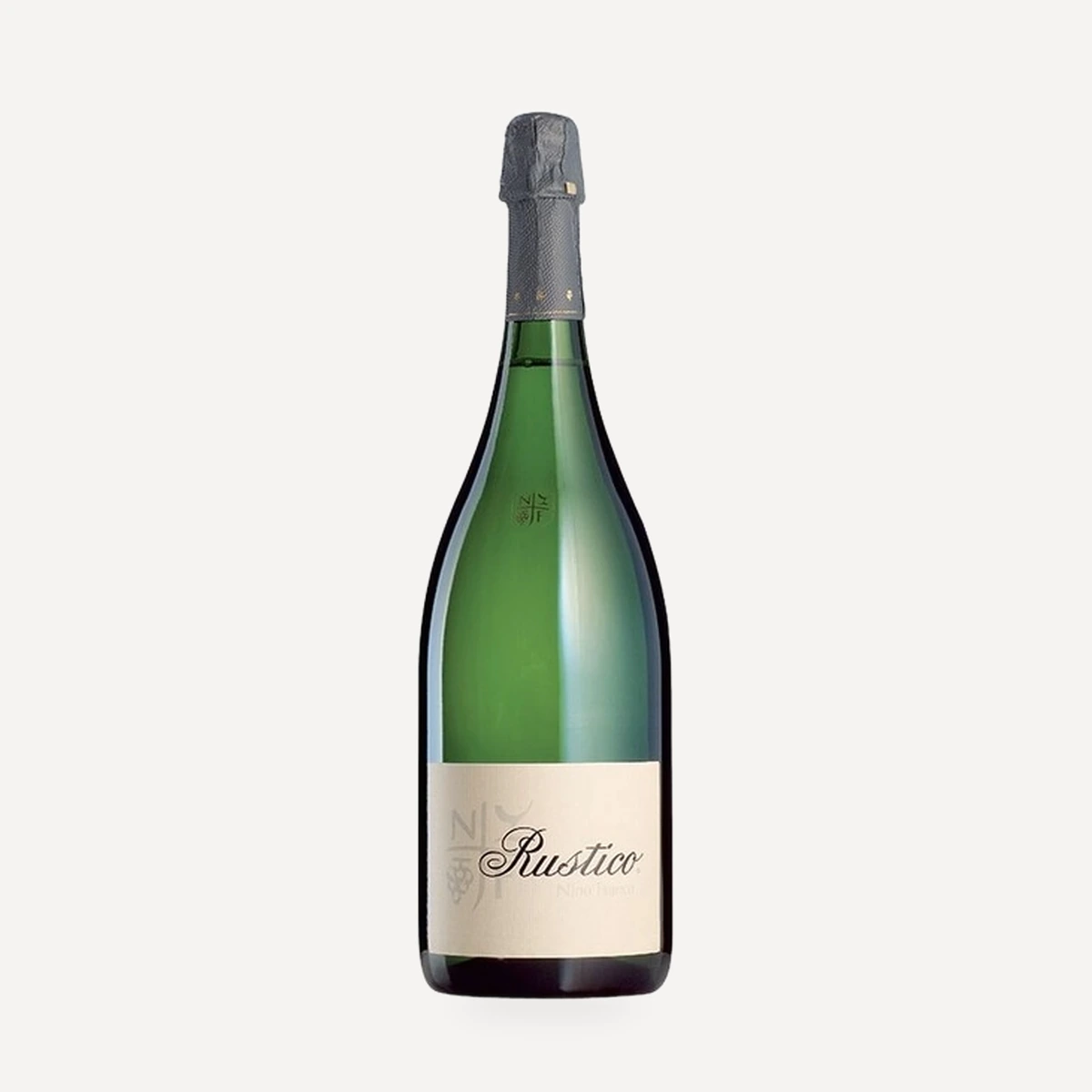
Rustico Brut
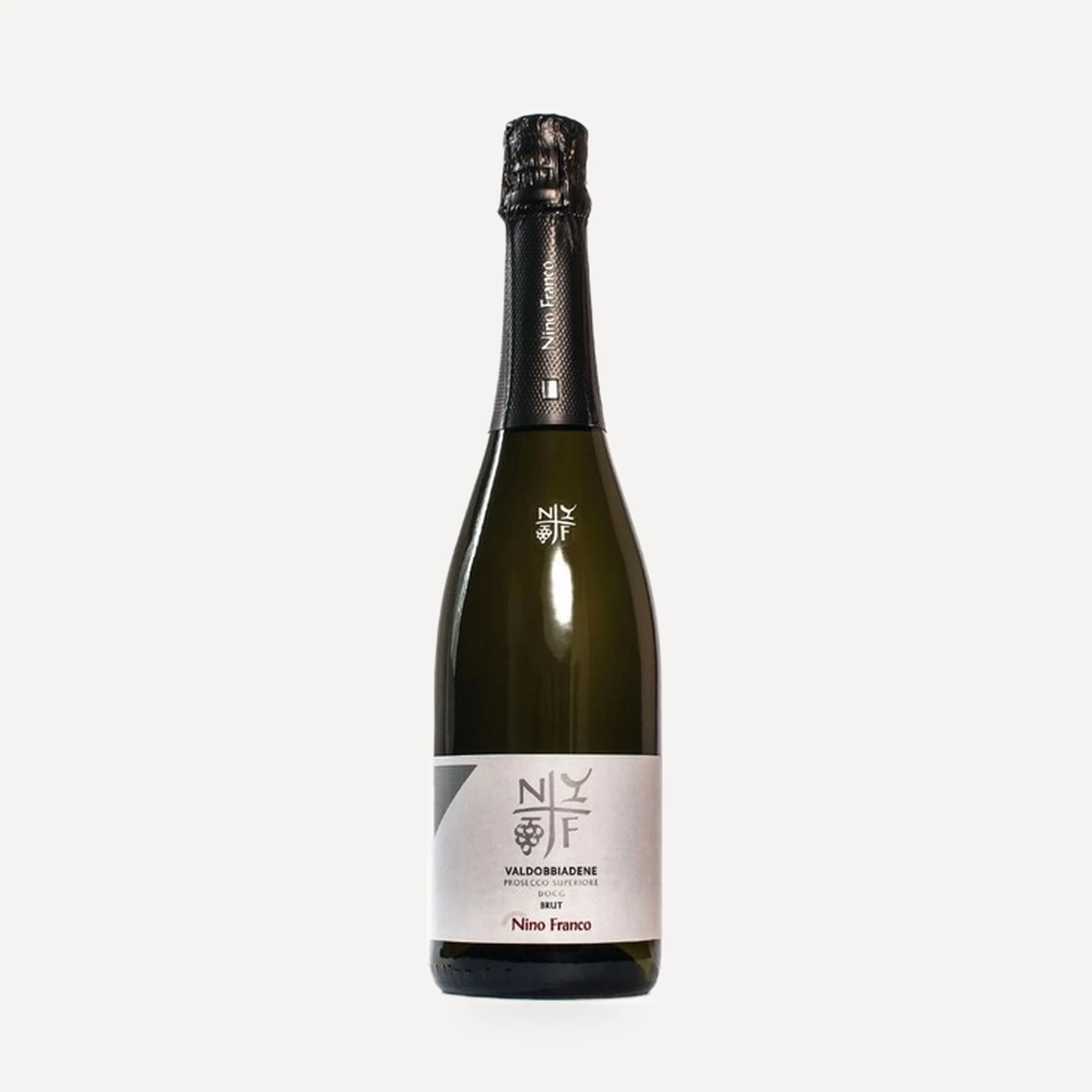
Nino Franco Brut