Storia
The founder’s origins
Giuseppe Fracchia was born in Quattordio, near Vignale Monferrato, on 19 March 1901. He came from a farming family, and the income from his father’s small vineyard enabled him to study at the Politecnico di Torino. After graduating, he emigrated to the United States and joined General Electric in Schenectady, New York, where he developed his technical knowledge in electrical technologies and coatings.
Industrial career and return to agriculture
After returning to Italy, Giuseppe worked with his brother-in-law Cesare Pettazzi. Between the late 1930s and the mid-1960s, they founded four manufacturing companies in Quattordio and neighbouring communities, creating approximately 4,000 jobs.
In 1965 Giuseppe purchased the former lands of the Counts Callori at Vignale Monferrato. He established Nuova Cappelletta there as the realization of a long-held ambition to pursue quality-oriented agriculture.
Organic and biodynamic conversion
Giuseppe’s daughter, Adele Fracchia Uslenghi, began taking responsibility for the estate in the early 1980s. She first converted all its crops to organic agriculture and subsequently introduced biodynamic methods. The transition went beyond discontinuing synthetic chemicals: agricultural decisions were reorganized around product quality and the long-term preservation of soil fertility.
The estate dates its formal adoption and certification of organic agriculture to 1984. It developed an integrated model in which vineyards, arable rotations, pasture and cattle support one another, while Demeter certification covers its biodynamic production.
The next family succession
At the beginning of the 1990s, Adele transferred responsibility to her son Alessandro Uslenghi, the founder’s grandson. Alessandro became the estate’s full-time manager and continues its combination of agricultural innovation and respect for natural systems.
Conservation and the contemporary estate
In 2002, with authorization from the Province of Alessandria, an oasis for the protection of wildlife was established on the estate. Its hedges, small woods, ponds, chemical-free soils and biodynamic management created habitat for beneficial insects, wild animals and migratory birds.
Nuova Cappelletta now operates as a 210-hectare mixed farm. Winegrowing and winemaking are its principal activities, with 20 hectares under vine; the remaining land supports cereals, legumes, crop rotations, pasture and free-ranging Piemontese cattle. All grape-to-bottle operations take place in the historic winery known as Il Portone, a horseshoe-shaped complex dating from the 16th century.
Terroir
Nuova Cappelletta is located at Vignale Monferrato, where all of its vineyards occupy hilly positions within the estate. The vine parcels are separated by rotational fields and pastures rather than forming an uninterrupted monoculture.
The estate lies over marine sediments dating from the Miocene. A geological boundary runs through the property from north to south, introducing geological variation across its land.
The four vineyards have distinct physical settings. Novareto forms a natural amphitheatre facing south-southeast. A constant breeze crosses its ridge from spring until late autumn, supporting later harvests while preserving healthy fruit. Collina faces southwest and has an average gradient of 30°. Montalbava was selected for its favourable exposure on land that had also supported small vineyards in the past. Minola faces south and combines loose soil with a sheltered position in the area of Vignale Monferrato known as Regione Barbera, conditions considered particularly suitable for Barbera.
Vinificazione
Integrated organic and biodynamic farming
Nuova Cappelletta has followed certified organic agriculture since 1984 and applies the Demeter-certified biodynamic method to all of its production. Organic control is provided through CCPB, with certification for European, United States, Canadian and Japanese markets. The estate treats the farm as a living organism whose vineyards, other crops, livestock and uncultivated habitats perform complementary functions.
Permanent soil fertility is pursued through crop rotation and fertilization exclusively with composted manure from the estate’s own cattle herd. Synthetic chemical products have been abandoned. Plant and animal varieties are selected with attention to local identity, climate and soil composition, while available technologies are tested and used to lower energy consumption, improve product quality and protect the health of estate workers.
Vineyard management
The vineyards are Guyot-trained, with fruiting canes pruned to five to seven buds. Permanent grass is maintained between the rows. Competition from this cover naturally limits vine productivity. Preventive and curative treatments use substances of mineral, animal and plant origin under organic controls, while Demeter oversees the biodynamic programme.
The vineyard parcels are interspersed with rotational fields and pasture. Cereals and legumes occupy part of the non-vineyard land, while free-ranging Piemontese cattle provide the manure used for compost. Hedges, small woods and ponds add further habitat diversity and encourage beneficial insects and wildlife.
Materials and resource use
Purchasing favours materials produced through low-impact processes; recycled and recyclable materials are selected where possible. Lightweight glass bottles reduce annual glass consumption by approximately 10 tonnes, lowering resource and energy use from bottle manufacture through the distribution of the packaged wine.
All stages from harvested grapes to finished bottles take place at Il Portone, Nuova Cappelletta’s winery. The facility occupies a large, horseshoe-shaped building dating from the 16th century. Its traditional construction alternates large blocks cut from tuff with smaller fired-clay bricks, while the lower cellars are excavated directly into rock.
The rock-cut cellars are used to mature wine in French oak barrels. Modern equipment for grape pressing, vinification, storage and bottling has been installed within the historic complex while preserving its original architectural character and complying with current requirements.
Equipment and cellar techniques are selected to retain as much as possible of the positive organoleptic character already present in the grapes. Each separate lot receives close attention and is checked weekly by enologists. The estate’s organic and Demeter standards extend beyond grape growing to permitted winemaking and bottling techniques and inputs.
Filosofia
Nuova Cappelletta places environmental sustainability and the highest attainable quality ahead of maximizing profit or pursuing quantitative growth. Its approach links responsible farming with healthier conditions for workers and consumers and with a more intellectually engaging way of life.
The farm is conceived as a living, interconnected organism. Cattle, composted manure, arable rotations, vineyards, pasture, hedges, woods and ponds all contribute to the continuing fertility and ecological balance of the land. The objective is not simply to eliminate synthetic chemicals, but to make every agricultural decision serve long-term soil fertility and product quality.
The estate considers farm-derived inputs essential to regional expression. Lower yields are accepted in pursuit of better-quality grapes, while fertilizers and herbicides brought in from outside are regarded as forces that can homogenize wine and diminish its connection to Monferrato. Traditional Piedmontese grape varieties and locally appropriate animal and plant types are prioritized, although technology remains welcome when it solves practical problems, lowers energy use, improves quality or protects human health.
Wine production follows the same principle of continuity between vineyard and cellar: the equipment and techniques at Il Portone are intended to preserve the positive characteristics already present in the harvested grapes.
Vini
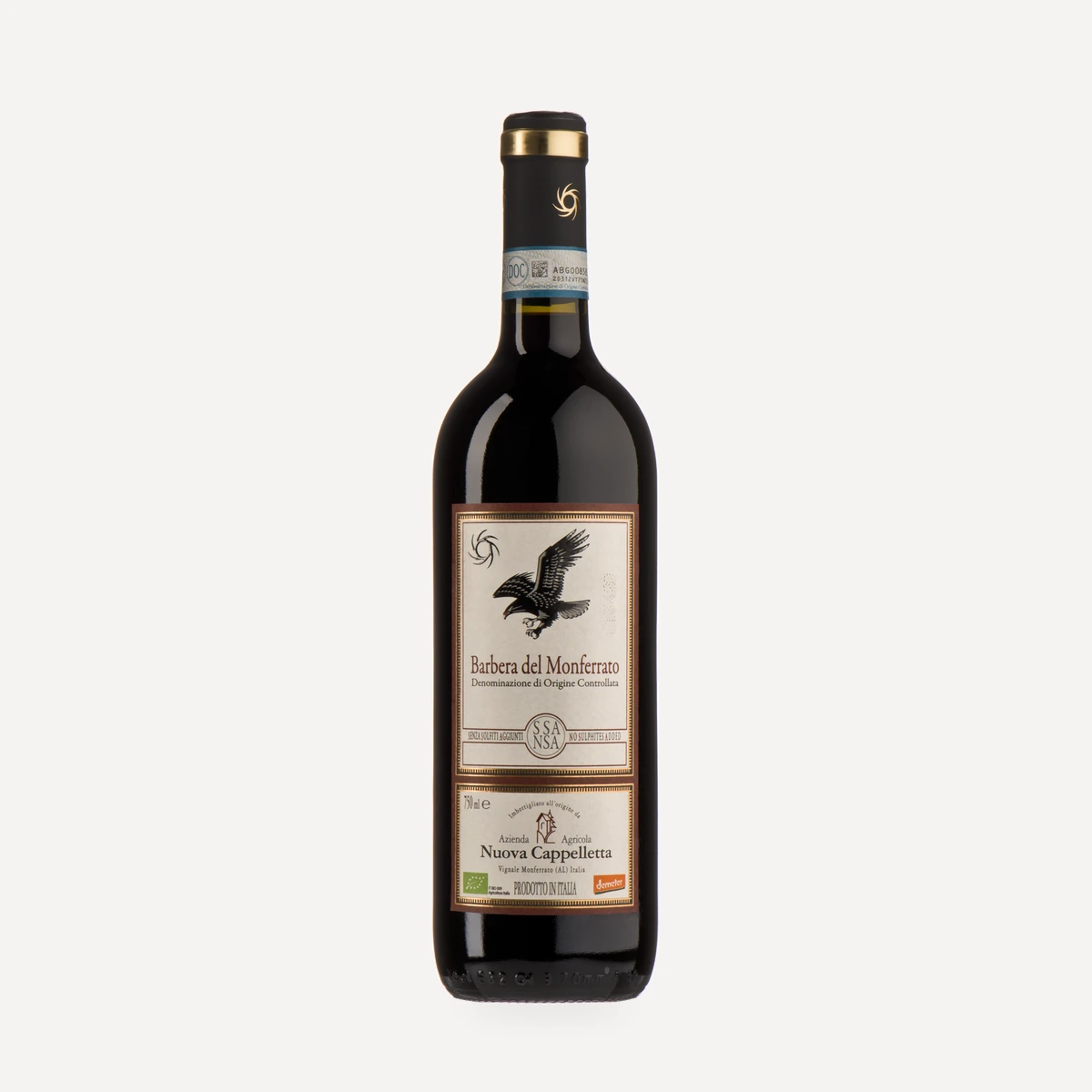
"SSA500" BARBERA del Monferrato d.o.c. senza solfiti aggiunti
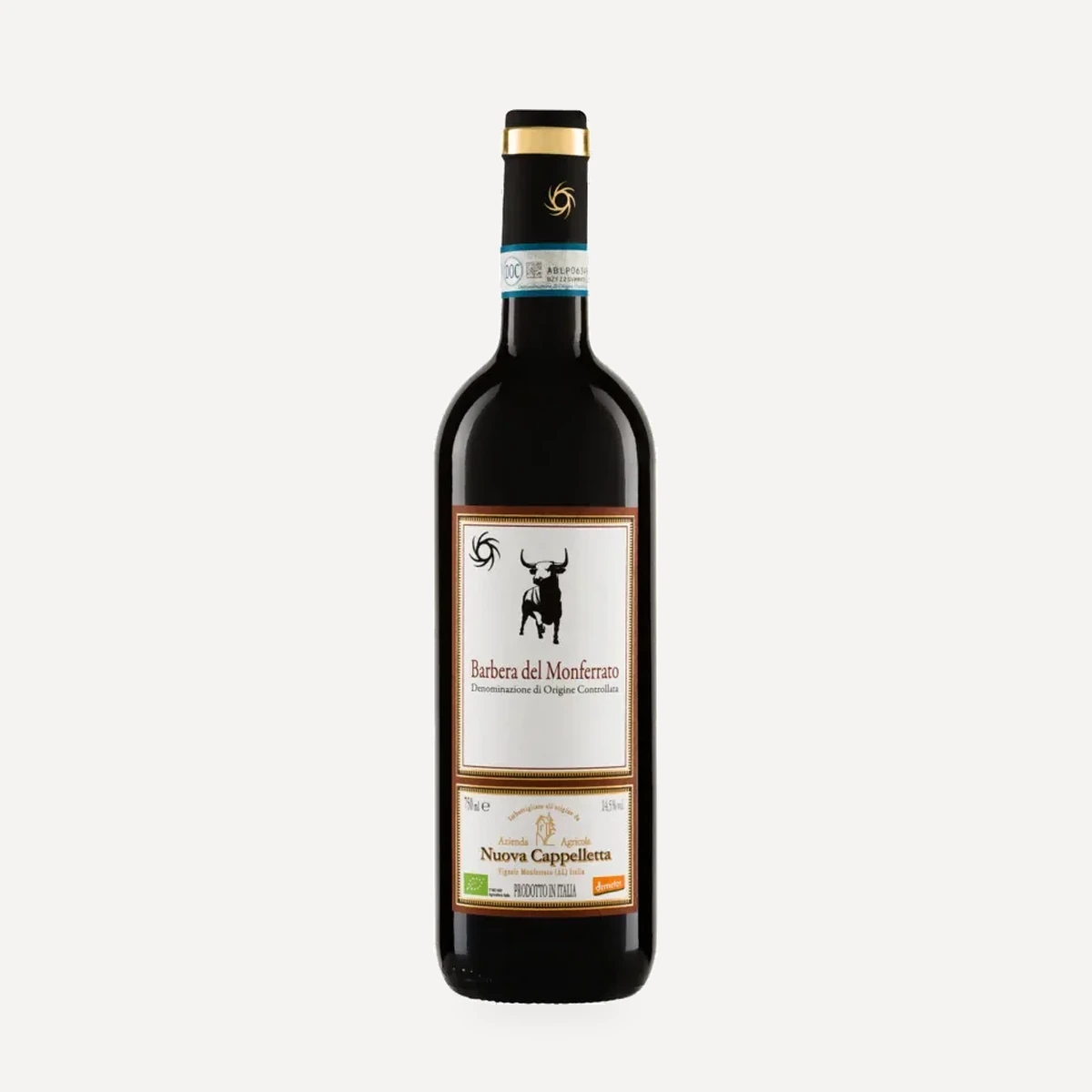
BARBERA del Monferrato d.o.c.