Storia
Roots in Gorizia
Luca Dellisanti was born and raised in Gorizia, on the Italian–Slovenian border. He grew up in a family in which both Italian and Slovenian were spoken and identifies with both cultures. The family connection to viticulture includes an old vineyard in Gorizia that remains part of the project.
Scientific training and return to Friuli Venezia Giulia
Before working with vines, Dellisanti studied and worked in genetics in the United Kingdom. He subsequently chose to return to Friuli Venezia Giulia and cultivate his home territory.
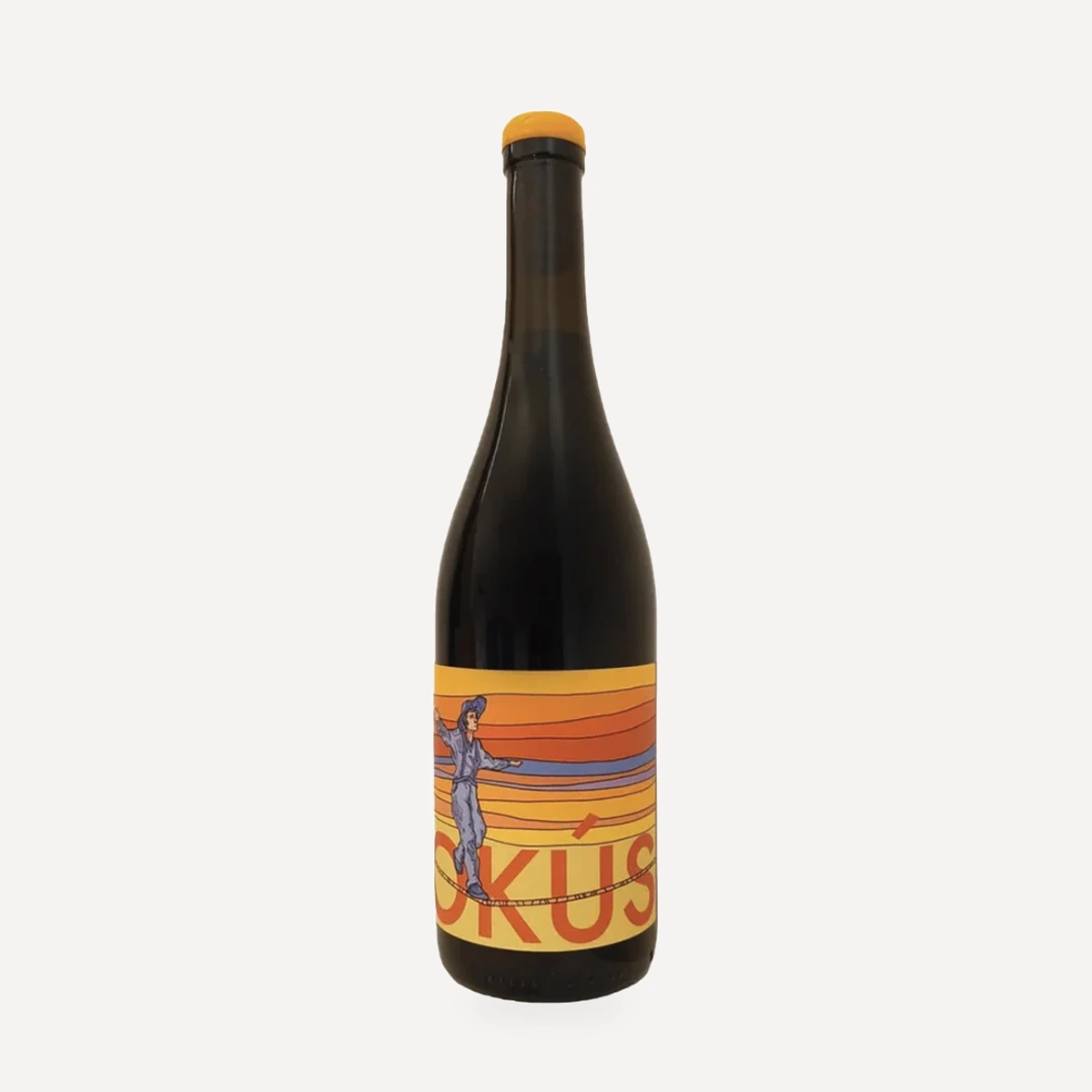
Development of Okús
Dellisanti developed Okús with his friend Davide. Their shared objective was to bring artisanal viticulture and genuine wines back to the foreground. The project joined the old family vineyard in Gorizia with a vineyard of less than one hectare at Cormons.
Okús was conceived around sustainable, small-scale viticulture, environmental balance and restraint in both vineyard and cellar. Close observation of the vines, weather, disease pressure and developing wine became the basis for limiting intervention to measures considered genuinely necessary.
Terroir
Location
Okús works with two vineyard sites in Friuli Venezia Giulia: less than one hectare at Cormons, near Gorizia, and an old family vineyard in Gorizia. The project is rooted in the Italian–Slovenian borderland in which Luca Dellisanti grew up.
Soils and water availability
The soils have a loamy texture with frequent stones. An impenetrable layer lies approximately 60 cm below the surface and restricts deeper root growth. This shallow rooting environment regularly creates moderate water stress, a condition considered favorable to grape quality.
The 2022 growing season
May 2022 was cool and rainy. From June through August, temperatures were very high and rainfall was minimal, progressively intensifying vineyard water stress. Weather during harvest was variable, but grape health remained excellent and the crop was quantitatively good.
Vinificazione
Okús follows a sustainable, artisanal approach based on observation and limited intervention. Neither vineyard receives herbicides, synthetic fertilizers or synthetic fungicides.
Bud load and vine vigor are managed so that bunch thinning, canopy topping and defoliation can be avoided. Permanent grass cover is retained and mown late in the season to support pollinators in the vineyards and surrounding environment.
Weather conditions and disease pressure are monitored closely. Sulfur and copper are used sparingly and only when judged useful. Harvesting is carried out by hand.
Source-vine profiles recorded for 2022
The vines supplying the white production averaged 30 years of age, were trained to double bent Guyot at 4,000 vines per hectare and yielded 1.2 kg per vine. Those supplying the red production averaged 25 years, combined single Guyot with spur-cordon training, stood at 6,000 vines per hectare and yielded 1.5 kg per vine.
Grapes are harvested by hand and destemmed before skin maceration. Three days before harvest, Luca Dellisanti prepares a pied de cuve to establish a clean, regular alcoholic fermentation with indigenous yeasts.
The duration of skin maceration is adjusted to the condition of the grapes and the character of the vintage. Once maceration is complete, the skins receive a brief pressing. The wine then rests in stainless-steel tanks until March.
At the beginning of spring, the wine undergoes its sole racking. A very small sulfite addition is made at this stage to protect against oxidation. It is then left to settle and clarify ahead of bottling at the end of July.
Bottling is performed by hand with a semi-manual gravity filler. Pumps are not used, and the wine is bottled without filtration or an additional sulfite dose.
In 2022, the fermentations were clean and rapid. Combined production comprised 1,850 bottles of Bianco and 1,950 bottles of Rosso, for a total of 3,800 bottles, with both 0.75- and 1.5-liter formats produced.
Filosofia
Okús defines its objective as restoring prominence to artisanal viticulture and genuine wines. The intended starting point is healthy fruit from vineyards kept in balance with their surroundings while respecting the fertility and health of the environment.
Its approach is deliberately small-scale and restrained. Intervention in the vineyard and cellar is reserved for occasions when it is considered necessary. Close monitoring provides the practical foundation for this restraint: decisions are made through observation of the weather, disease pressure, vine condition and the wine itself rather than through a fixed intervention schedule.
The project also carries Luca Dellisanti’s connection to the Italian–Slovenian borderland. Its Slovenian name and his bilingual family background make that cultural identity part of the project’s conception.
Vini