Storia
Ancient viticulture in the Oltrepò
The winegrowing history presented by Oltrenero begins with the earliest settlements of the Oltrepò. Ligurians and Insubrian Gauls inhabited the area before it came under Roman control following the Battle of Clastidium, present-day Casteggio, in 222 BC. Roman rule brought expansion and the construction of roads and other communications infrastructure. Viticulture was already established and valued during this period, as reflected in the writings associated with Pliny the Elder and Columella.
In 40 BC, Pliny and Strabo referred to the territory. During his passage with a Roman legion, Strabo described a place associated with good wine, hospitality and very large wooden casks.
The Middle Ages and successive dominions
After the fall of the Western Roman Empire, the Oltrepò was invaded by groups described as Barbarians. During the Middle Ages, Benedictine monks returned abandoned hillsides to cultivation and revived the vine. The hills around Zenevredo were then associated with juniper berries, and the local wine culture traces its roots to this medieval recovery of the land.
The territory was subsequently contested and governed by noble and ecclesiastical powers including the Malaspina, Visconti, Beccaria, Dal Verme and Sforza families. Their period left castles, towers and churches that remain visible in local settlements. Over later centuries the Oltrepò passed through French, Spanish and Austrian rule.
Eighteenth- and nineteenth-century development
Under the Treaty of Worms, the Oltrepò was ceded to the Kingdom of Sardinia in 1743. Winegrowing became one of the territory's principal activities during this period, as recorded in cadastral surveys and the ampelographic studies conducted toward the end of the eighteenth century.
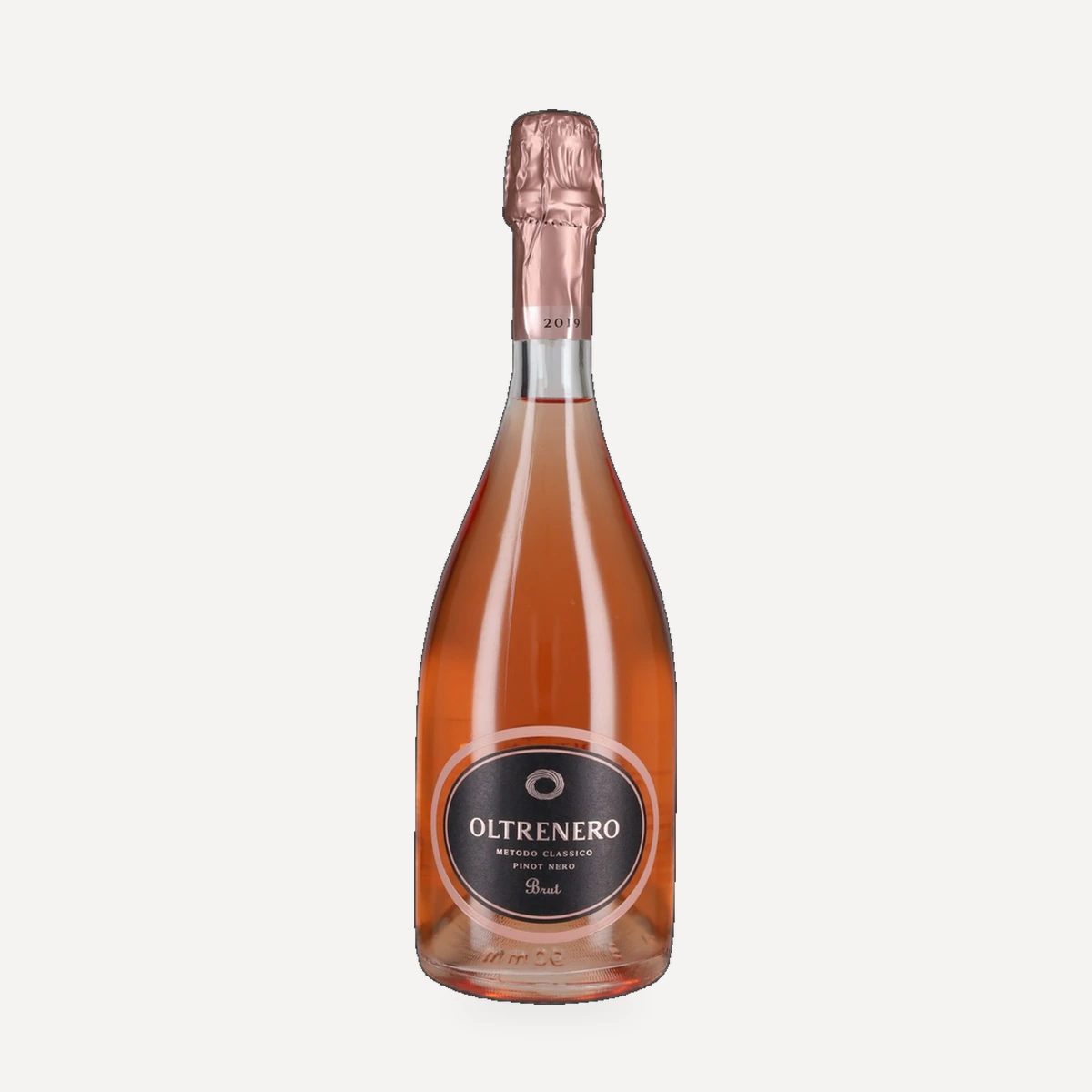
Following a brief return of French rule under Napoleon in the nineteenth century, Piedmontese growers introduced Pinot Nero to the Oltrepò. The variety proved particularly suitable for white vinification and helped produce the area's first sparkling wines. By the end of the nineteenth century, Pinot Nero and the Metodo Classico had placed the territory at the beginning of Italian sparkling-wine production. The area was also known as the “Vecchio Piemonte.”
The Zonin era
The Zonin family acquired the estate in 1987 and placed Pinot Nero at the centre of Oltrenero's identity. The estate developed as a specialist sparkling-wine house in Zenevredo, beyond the River Po, interpreting the regional Metodo Classico tradition through parcel-conscious viticulture and extended bottle ageing.
In 2021, Paolo Tealdi joined as estate director and oenologist. His work has included multifunctional cover crops, improved management of woodland, more strategic deployment of machinery during plant-protection treatments, reorganization of estate technology and careful selection of products with low or no environmental impact.
Terroir
Oltrenero is located at Località Il Bosco in Zenevredo, in the province of Pavia and the Oltrepò Pavese, approximately 40 km from Milan. The estate lies beyond the River Po and is surrounded by oak and acacia woodland.
Zenevredo's name derives from the Latin ginepretum, referring to the juniper berries historically found on the surrounding hills. The vineyard landscape is described as morainic hills with mineral-rich soils. Detailed vineyard profiles identify deep clay-silt-calcareous soils containing marl. A favourable microclimate enables slow grape maturation, supporting freshness, minerality and the structure required for extended bottle ageing.
Pinot Nero is treated as the estate's principal expression of this environment. The vineyard programme recognizes differences among individual plots, and selected parcels are vinified separately in small lots when pursuing the highest quality.
Vinificazione
Oltrenero combines inherited winegrowing knowledge with environmental monitoring and soil-focused practices.
Grass is allowed to grow spontaneously or is sown between vineyard rows. This cover reduces erosion, raises soil organic matter and supports biodiversity. Green manure incorporates herbaceous crops into the soil, improving its structure and fertility while reducing dependence on chemical fertilizers. Organic humus is also used to maintain long-term soil health and productivity.
Since joining in 2021, Paolo Tealdi has promoted multifunctional cover crops. These combine species intended to improve soil fertility with melliferous plants that support bees and other insects important to biodiversity. Woodland management is optimized to protect plant species around the vineyards.
Weather stations installed in the vineyards provide real-time atmospheric data and guide targeted, efficient use of irrigation water. The Phyto-Bach system treats wastewater naturally as part of the estate's water-management programme.
Plant-protection work is organized to reduce the carbon footprint through more strategic machinery use. Products with low or no environmental impact are prioritized, while the estate's broader technology has been reorganized to support these goals. Solar panels supply estate activities, reduce fossil-fuel use and advance greater energy self-sufficiency.
Harvesting documented for both estate varieties is manual. Pinot Nero destined for the most selective Metodo Classico production is collected in small 16 kg crates, with attention to differences among individual parcels.
Metodo Classico is the core of Oltrenero's production. The process begins with presa di spuma: the base wine receives sugar and selected yeasts, and the second fermentation takes place inside the bottle. The wines then remain on their lees for an extended period. The general production description gives a range from 18 months to five years, while the estate's longest-aged selection can remain on its lees for more than 96 months.
At the end of lees ageing, the bottles undergo remuage, with gradual rotation bringing the yeast sediment into the neck. Dégorgement removes that sediment before the wine completes its post-disgorgement rest.
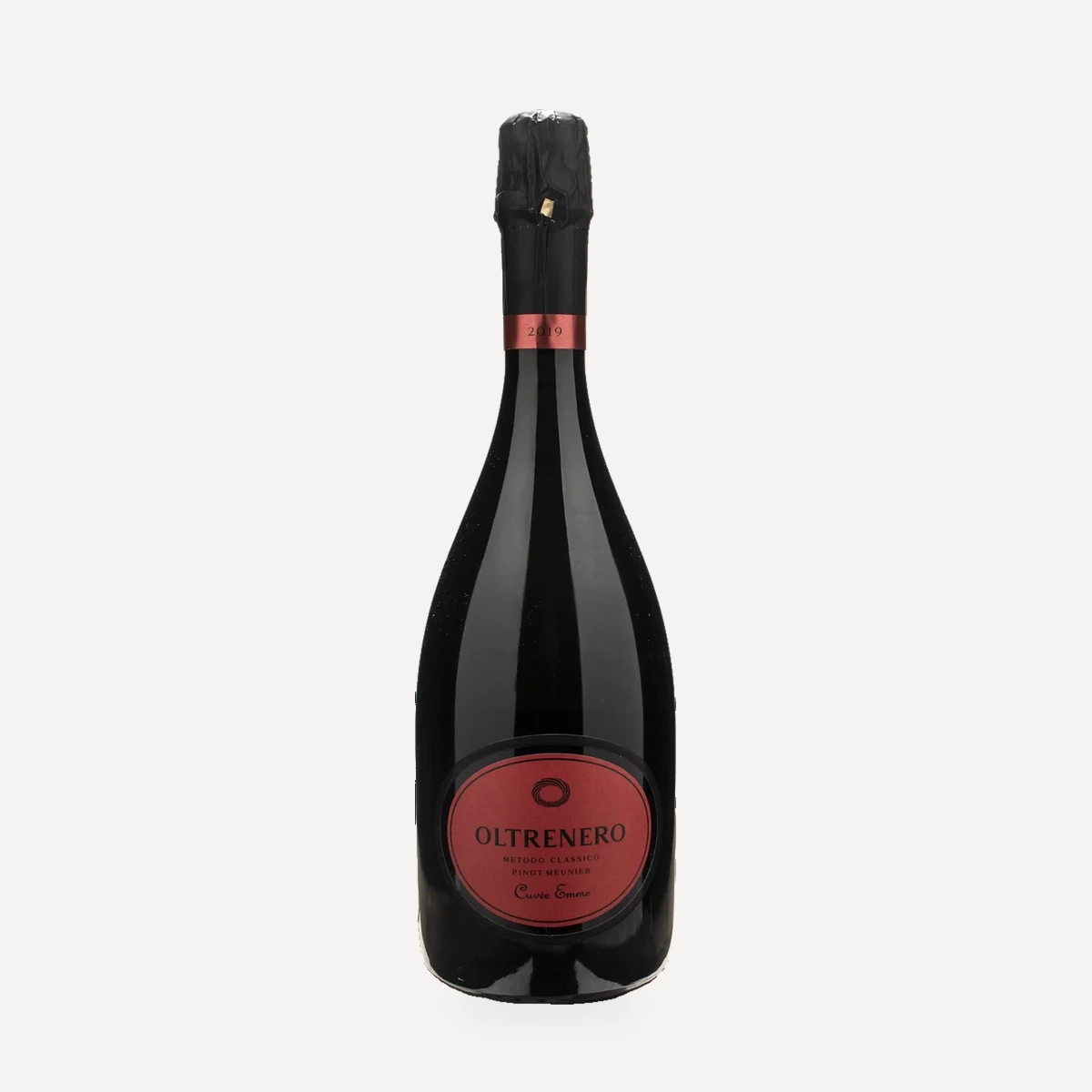
Documented base-wine methods include gentle pressing of whole bunches, static settling for 12 hours at 16°C and alcoholic fermentation for approximately 12 days at 18°C. Depending on the selection, base wines mature in stainless-steel tanks alone or partly in stainless steel and partly in large oak casks. Pinot Meunier is pressed and fermented in steel, followed by five to six months on the fine lees before its second fermentation in bottle.
Parcel selection plays a role before and during vinification. Fruit from older Pinot Nero vines may be handled in small, parcel-specific lots, with the best lots selected for extended-ageing cuvées. The rosé expression adds destemming and a six-to-eight-hour skin maceration before gentle pressing. Across the range, bottle ageing after disgorgement extends from approximately two or three months to 12 months, depending on the cuvée.
Filosofia
Oltrenero presents itself as a contemporary interpretation of the Oltrepò Pavese tradition, built around Pinot Nero and Metodo Classico. Its declared aim is to maintain the link with regional history while allowing practices and wines to evolve through continual refinement and innovation.
The estate's symbol expresses this philosophy as a regenerating circular movement. The circle represents life, perfection, homogeneity, unity and an unlimited capacity for growth and transformation. Its movement conveys a continuing effort to improve with every harvest, vintage and production detail.
Wine is understood as the product of a particular land that should be protected for future generations. This principle connects vineyard care, biodiversity, natural soil practices, water treatment and renewable energy with the pursuit of quality. The estate also frames responsible drinking, moderation and awareness as means of respecting and sustaining inherited wine culture.
The approach to Pinot Nero emphasizes its ability to transmit the character of its growing place. Metodo Classico is treated both as a historic regional craft and as an evolving discipline in which innovation should enhance the grapes without severing the connection to tradition.
Vini
Cuvée EMME