Storia
A cellar within the walls
Oppeddentro operates in a 15th-century building within the walls of Maiolati Spontini. Its stone-and-brick fabric and medieval underground tuff caves form the historical setting for the cellar. Winemaking takes place at the meeting point of inherited techniques and experimentation, with ancient practices retained alongside contemporary work.
The historical setting of Maiolati Spontini
The wider setting has an earlier documented history. The Fraticelli settled in Maiolati’s castle during the 14th century, making it an important centre in the Marche. The castle was destroyed in 1428 by order of the inquisitor Saint James of the Marches. The village later took the name of composer Gaspare Spontini, who was born there in 1774.
Terroir
Oppeddentro’s 4 ha of vineyards are divided among small plots in the Cupramontana contrade of San Marco, San Michele and Brecciole. Each vineyard has its own microclimate, contributing distinct characteristics to its fruit.
Cupramontana lies within the hilly Marche landscape. The broader setting around Maiolati Spontini is positioned between the Apennines and the Adriatic Sea, in the Castelli di Jesi area, amid rolling hills planted with vineyards and olive groves. This position between mountain and sea shapes a microclimate favourable to viticulture.
Vinificazione
Oppeddentro follows a natural approach across 4 ha of small vineyard plots in Cupramontana. Vines are cultivated with the aim of maintaining natural balance and soil fertility rather than forcing production.
Plant protection is limited to organic copper- and sulfur-based treatments. Pesticides and fungicides that could disturb the vineyard ecosystem are avoided. Cyclic green manuring is used to improve soil vitality. The work is intended to preserve the individual microclimate and character of each plot while allowing the vines to develop without production being pushed beyond their natural balance.
Harvest timing varies by grape and site. Verdicchio from San Michele and Brecciole is generally picked around mid-September, while Sangiovese, Montepulciano, and the Verdicchio and Trebbiano used for the macerated wine are harvested between the middle and end of September.
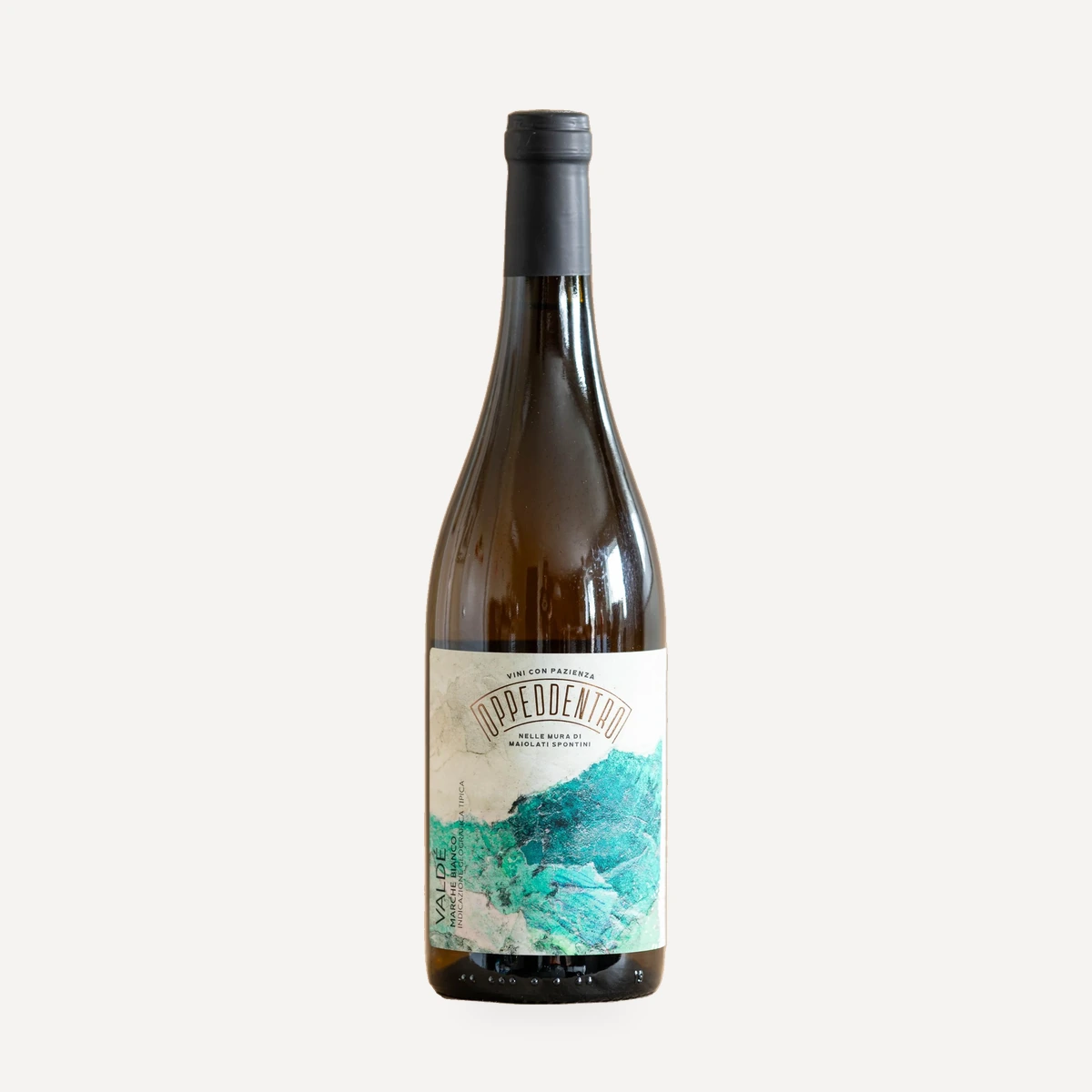
Oppeddentro produces approximately 12,000 bottles annually across five wines in its 15th-century cellar at Maiolati Spontini. The production philosophy combines preserved winemaking techniques with experimentation and close attention to every stage of work.
Fermentations are spontaneous and initiated through the pied de cuve method. Lees are treated as an important means of building structure and complexity. Sulfite use is kept to a minimum.
The cellar uses stainless steel as well as tonneaux and barriques. Depending on the intended expression, wines may mature on their lees, undergo extended skin contact or receive only a brief maceration. The production described includes nine months on the lees for one steel-vinified white, tonneau and barrique vinification and maturation for another white, a Trebbiano maceration lasting 4–6 months for the skin-contact wine, and approximately five hours of maceration for the rosé.
Filosofia
Oppeddentro’s mission is to make authentic, distinctive wines through tradition and craftsmanship. The cellar seeks to preserve ancient winemaking techniques while leaving room for experimentation and innovation.
Its approach is centred on purity, natural rhythms and an unforced expression of place. Spontaneous fermentation, work with the lees and minimal sulfite use support the objective of producing wines closely connected to their vineyard origins. In the vineyards, the same philosophy appears in the refusal to force production, the effort to sustain natural balance and soil fertility, and the avoidance of treatments considered disruptive to the ecosystem.
Quality is framed as the result of careful work at every stage rather than shortcuts or compromises. The distinct microclimate of each small vineyard plot is treated as a source of individuality.
Vini
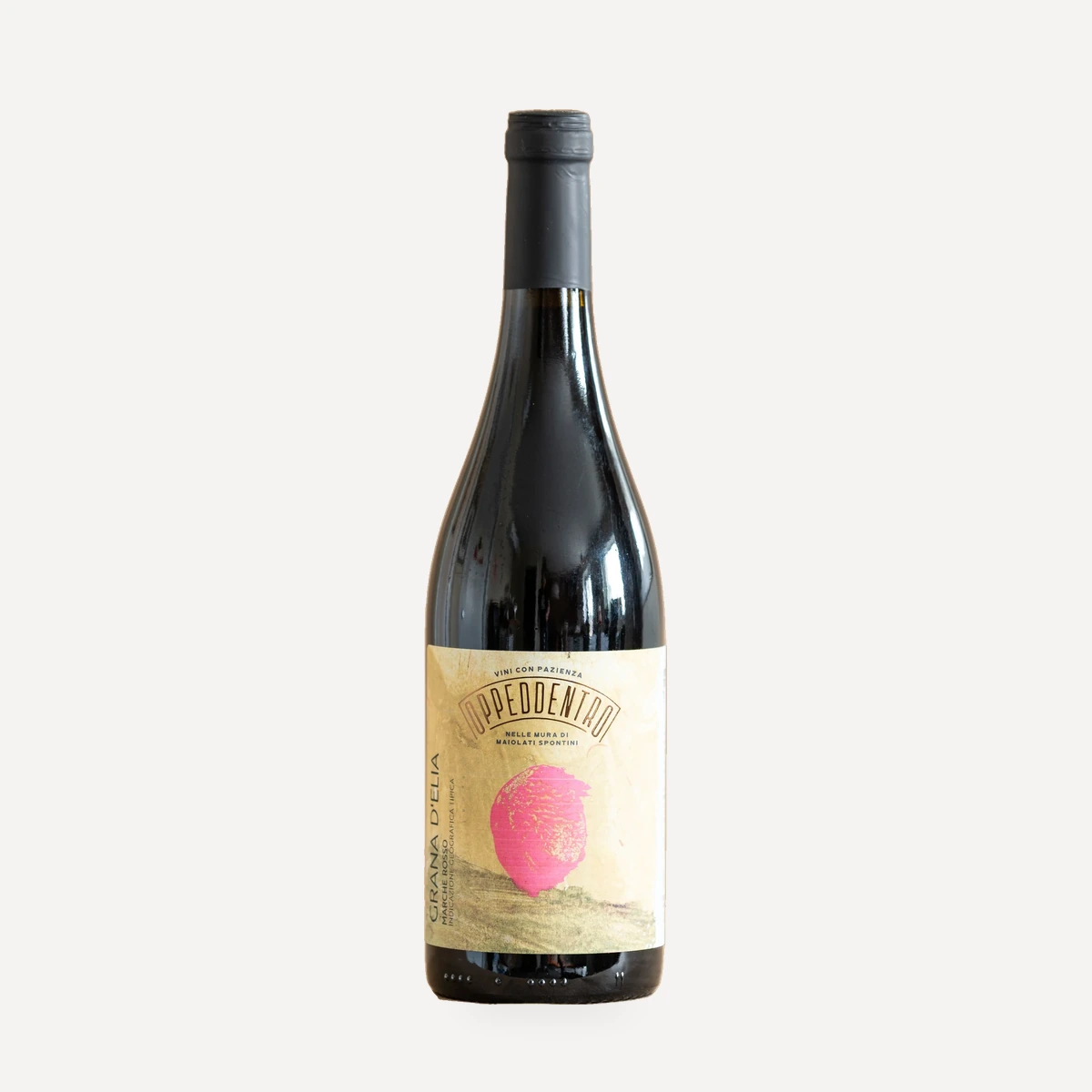
Grana d'Elia