Storia
Sant’Erasmo’s earlier vineyards
Sant’Erasmo supplied Venice with fresh vegetables for centuries and was extensively planted with vines in the 16th century. Viticulture was subsequently neglected, although historical maps preserved evidence of the island’s vineyards. By 1700, vines occupied the land now associated with Orto Venezia. The property connects this earlier vineyard with the wine of the “Nobil Uomo,” reputedly appreciated by the Doges and Casanova.
Restoration and planting
Around the turn of the 21st century, French television producer Michel Thoulouze restored a farm on the northern coast of Sant’Erasmo. After learning about the island’s former vineyards and confirming their presence on old maps, he accepted a challenge from Italian friends to plant vines around the property. Planting began in 2002.
Michel Thoulouze and his family combined the agricultural knowledge of Sant’Erasmo’s farmers with the soil expertise of agronomists Lydia and Claude Bourguignon and the winemaking experience of Alain Graillot. Lydia and Claude Bourguignon prepared the marine ground through successive plant crops rather than ploughing. Alain Graillot personally evaluated hundreds of candidate vines and selected northern Italian varieties in preference to internationally widespread grapes. Malvasia Istriana became the dominant variety, with Vermentino and Fiano completing the named blend.
The vineyard was planted directly on its own roots, without American rootstocks. The island’s ancestral hydraulic system was also restored: narrow canals crossing the vineyard collect rainwater, while sluice gates allow it to flow into the lagoon at low tide. Venice’s water authority entrusted Michel Thoulouze with the keys used to operate the Sant’Erasmo sluices.
The project was discussed with island residents, who understood it as a source of local employment. Sant’Erasmo workers participated in the harvest, carrying the ripe grapes by boat through the canals to a winery built specifically for the project. The restoration of the farm, creation of the vineyard and construction of the winery represented an investment of approximately €1 million.
The first commercial vintage and subsequent developments
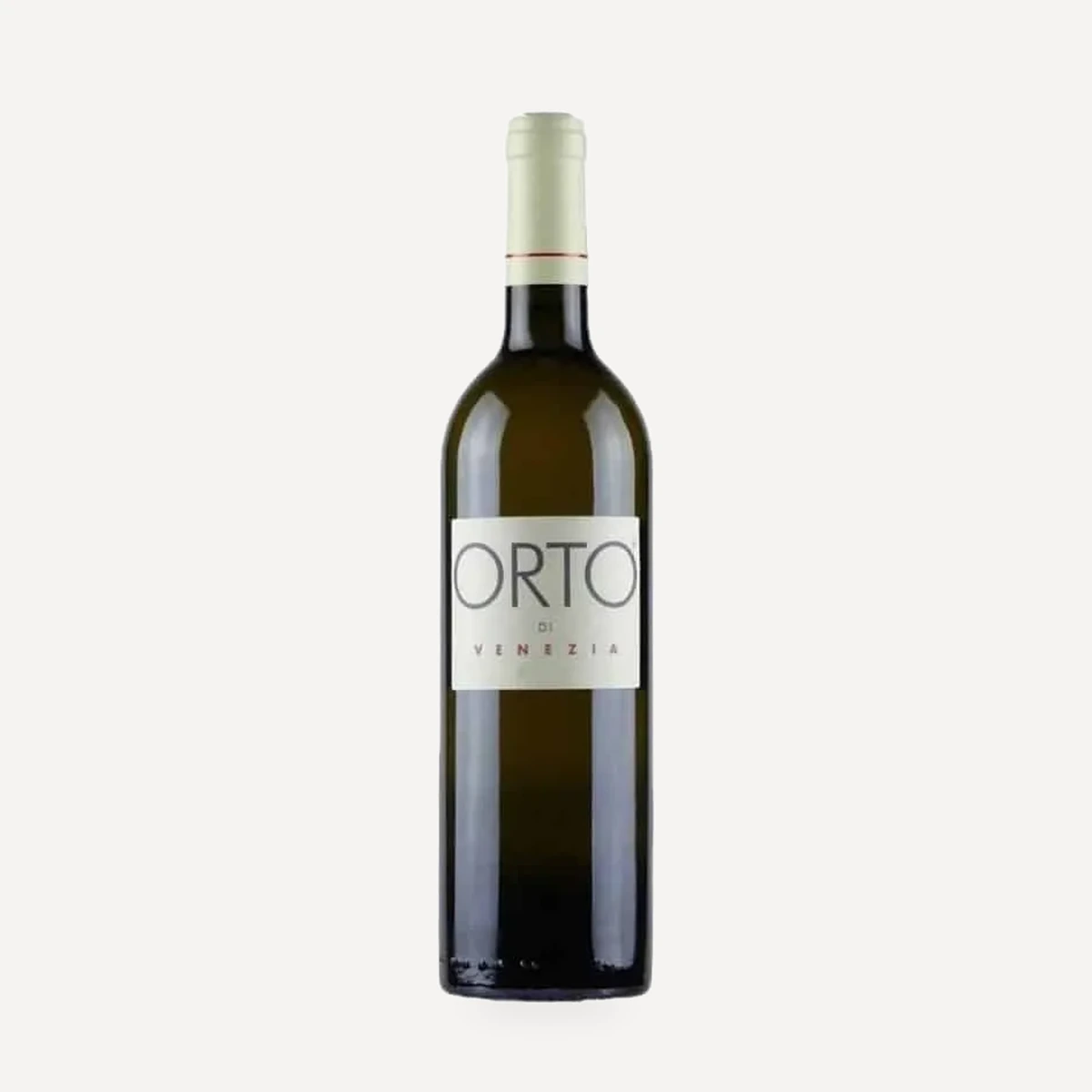
By September 2009, Venetian restaurants were serving the 2008 vintage and the wine was reaching Paris. It was released as ORTO and presented as the only wine cultivated within the territorial boundaries of Venice.
On 25 November 2011, the project appeared in the ARTE television programme Le vin et la science — un nouveau pacte. A further appearance followed on ARTE’s Global Mag on 16 December 2011. Casa Rossa, the restored lagoon house beside the winery and within the vineyard, opened as holiday accommodation in 2013. Online sales were announced in April 2014.
A limited edition of 360 magnums from the 2011 vintage was matured beneath the lagoon. The bottles were loaded onto a traditional Venetian sandolo and submerged in an environment with little light and no abrupt temperature changes.
In January 2018, Alain Ducasse acquired 100 Orto Venezia magnums to serve by the glass in his Paris restaurants. On 5 November 2020, Orto Venezia appeared in the lunchtime news broadcast on France 2.
Terroir
Orto Venezia occupies the northern side of Sant’Erasmo, an island in the Venice lagoon and part of the City of Venice. The vineyard surrounds a restored farm on a narrow tongue of land between the sea and the quieter waters of the lagoon. Fresh winds descending from the mountains meet marine breezes over the site.
The ground is marine in origin, with shells emerging between the vines. Water management is integral to the vineyard: narrow canals run among the rows, collect rainwater and connect to hydraulic sluice gates. At low tide, opening the gates allows the collected water to flow into the lagoon. This system revives the ancestral drainage practices of Sant’Erasmo and works with the lagoon’s tidal rhythm.
The combination of marine ground, lagoon water, sea air, mountain winds and tidal drainage underpins the project’s pursuit of a distinctly mineral white wine associated with its island setting.
Vinificazione
The vineyard was established according to soil principles developed with Lydia and Claude Bourguignon. Instead of ploughing before planting, the ground was prepared with a succession of barley, radish, oats and Chinese radish or root. This duro su duro method avoided disturbing the ground with a plough. Fertilisers and herbicides were excluded.
The vines were planted directly on their own roots rather than grafted onto American rootstocks. This choice was intended to recover flavours associated with European wine before the late-19th-century phylloxera epidemic. Planting material was selected from antique northern Italian varieties, with Malvasia Istriana dominant and Vermentino and Fiano also represented.
The restored hydraulic system manages rainwater through canals crossing the rows. Collected water flows into the lagoon when the sluice gates are opened at low tide. Local workers harvest the ripe grapes, which are transported by boat through the island’s canals to the winery.
Ripe grapes harvested by local workers are moved by boat through the canals to a winery constructed specifically for the Orto project.
ORTO is assembled from antique Italian white varieties, led by Malvasia Istriana and supplemented by Vermentino and Fiano. Barrel maturation is deliberately avoided because wood would impart an unwanted woody character. The production approach is intended to retain freshness and the mineral expression associated with the marine, lagoon-side vineyard.
A separate limited project matured 360 magnums from the 2011 vintage beneath the lagoon. The bottles were loaded onto a traditional Venetian sandolo and submerged in a dark environment protected from abrupt changes in temperature.
Filosofia
Orto Venezia was conceived as a revival of Sant’Erasmo’s historical viticulture and agricultural culture rather than an imitation of an international wine style. The project combines the traditional knowledge of island farmers with the soil expertise of Lydia and Claude Bourguignon and the winemaking judgement of Alain Graillot.
The selection of antique northern Italian varieties, the use of ungrafted vines and the avoidance of barrel maturation are intended to recover flavours associated with wine before phylloxera and to retain the mineral expression of the lagoon landscape. Chardonnay, Sauvignon and Muscat were rejected as widely planted international varieties; the project instead centred on Malvasia Istriana, Vermentino and Fiano.
The vineyard works with the site’s natural dynamics through tidal drainage, successive plant crops and the exclusion of ploughing, fertilisers and herbicides during establishment. Michel Thoulouze described the undertaking as work for the following 50 years rather than a short-term financial investment. Its defining ambition is to produce a wine rooted in Sant’Erasmo and within the agricultural territory of Venice.
Vini