Storia
The Blanc de Blancs project
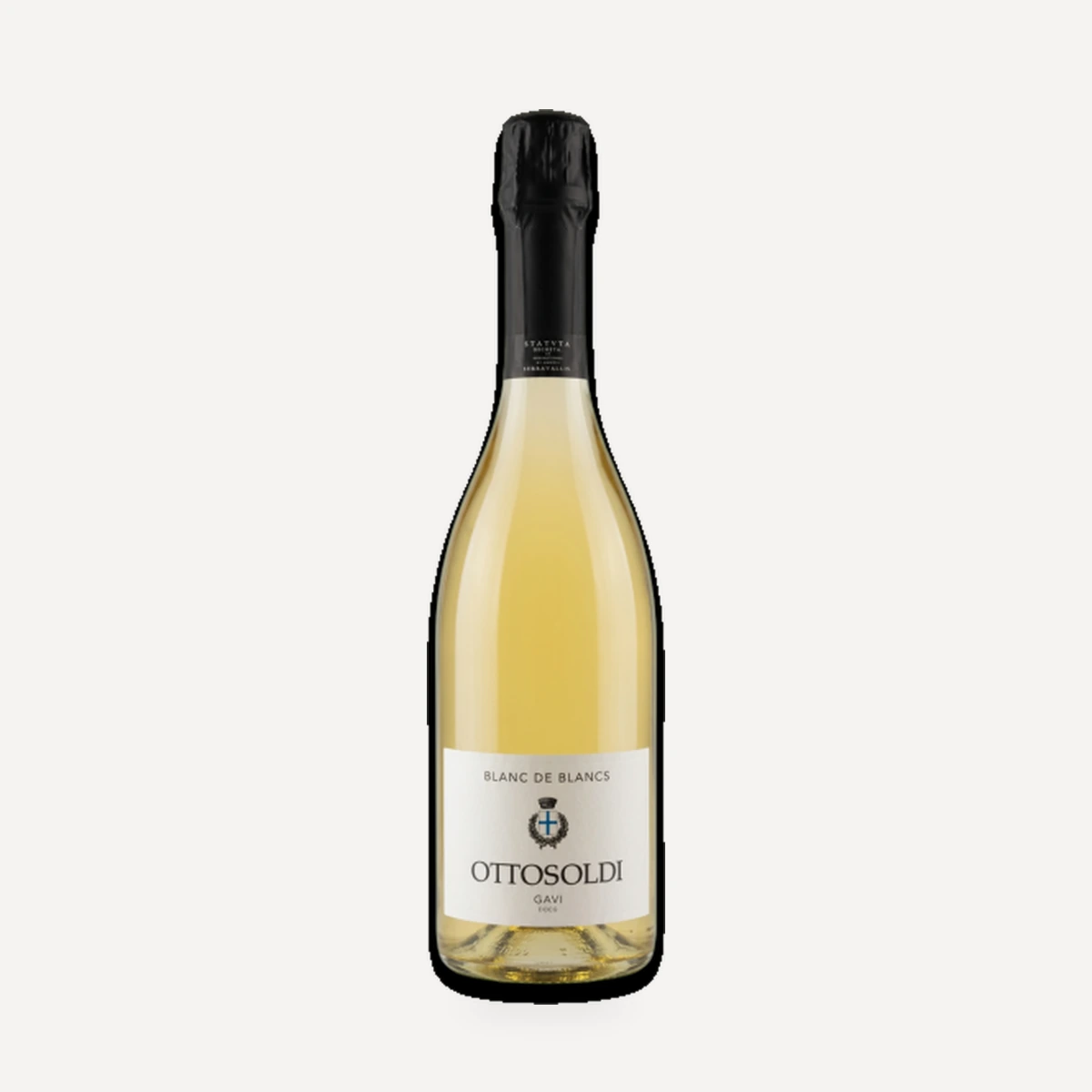
Ottosoldi introduced its vintage Extra Brut Blanc de Blancs in 2010. The inaugural production comprised 5,693 bottles of 750 ml and 465 magnums of 1,500 ml, all numbered. The wine was based entirely on Cortese from a 5.1-hectare vineyard and was produced under the Gavi DOCG designation.
The project joined Gavi’s native Cortese grape to traditional bottle fermentation. The first release underwent at least 36 months of maturation on the lees in centuries-old cellars in Gavi, where the natural temperature was approximately 12°C.
Terroir
The documented Cortese vineyard lies at 250–300 metres above sea level and has a predominantly south-western exposure. Its soils are composed of marl and limestone. This vineyard supplies the native Cortese used for Ottosoldi’s Gavi DOCG Blanc de Blancs project.
Vinificazione
The Cortese vineyard associated with the Blanc de Blancs project is trained to Guyot at a density of 5,000 vines per hectare. Its producing vines average 20 years of age, while the documented crop level is 90–95 quintals per hectare. Grapes are harvested manually at the end of August.
The documented Blanc de Blancs process begins with manually harvested Cortese. Fermentation takes place mainly in temperature-controlled stainless-steel tanks, with tonneaux also employed. Alcoholic fermentation proceeds at 16°C for three weeks, and malolactic fermentation is not carried out.
Secondary fermentation follows the traditional Classic Method in bottle. This stage takes place in centuries-old cellars in Gavi at a natural temperature of approximately 12°C. The wine remains on its lees for at least 36 months before release.
Filosofia
The Blanc de Blancs project is conceived as an expression of the Gavi territory and its native Cortese grape. Its identity rests on a defined vineyard origin, manual harvesting and traditional bottle fermentation, followed by prolonged maturation in Gavi’s old cellars.
Vini