Storia
1986 — Organic wine production begins
Pianora has produced artisanal, organically grown wines from its Monte Orfano vineyard since 1986. The vineyard has been under certified organic management from that year.
Development of the Pianora project
The agricultural project was built around one historic, steeply terraced parcel named Pianora. Its different soils—Monte Orfano conglomerate, red clay and rarer white clay—became the organizing principle for separate vineyard selections. Production was focused on still red wines in order to preserve the vineyard’s longstanding vocation and the area’s tradition of red wine.
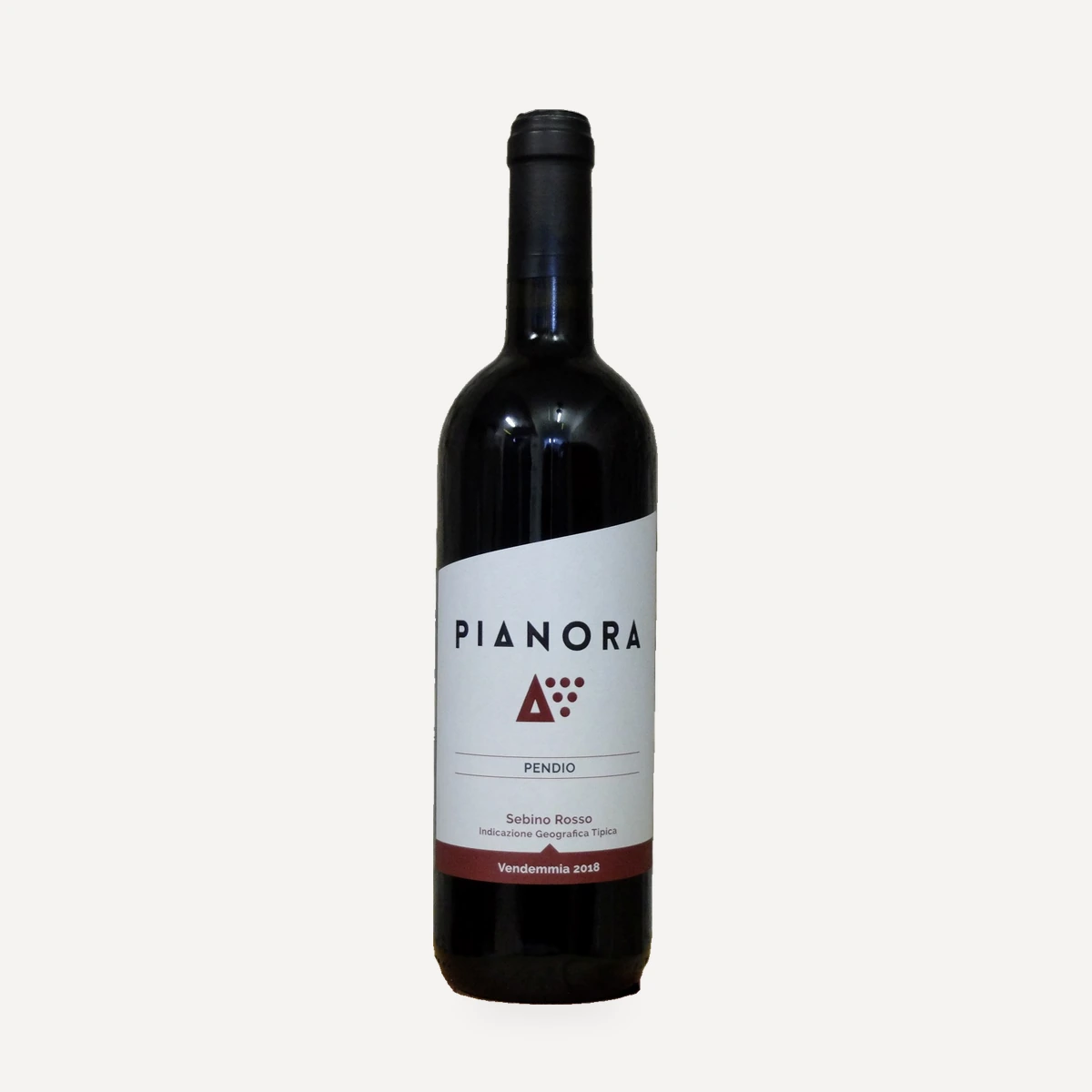
The estate subsequently developed several site-related bottlings: Terrazze from a gentler Merlot section; Pendio from a particularly steep section planted with Merlot, Cabernet franc and Cabernet sauvignon; the historic Tersicore selection from Cabernet franc rows in the lower, sunny part of the vineyard; and Riva del Ciliegio from old Cabernet sauvignon vines in its highest sector. A Merlot rosato and an artisanal wine-based vermouth were also added to the range.
Throughout this development, production remained tied exclusively to grapes from the single estate vineyard. Cellar work was deliberately kept simple and limited so that individual vintages and the differences among the vineyard’s soils would remain recognizable.
Terroir
Location and landscape
The Pianora vineyard lies in the locality from which it takes its name, on Monte Orfano in the commune of Coccaglio, at the southern boundary of Franciacorta. Monte Orfano is described as Lombardia’s only relief of marine origin. Its viticultural landscape is distinguished by old, strongly inclined vineyard terraces.
Pianora occupies 2 ha in total, of which 1.6 ha are planted with vines. The remainder is divided between an orchard and a small woodland. The historic terraces lie at approximately 280 m above sea level, generally face south-west and reach gradients of around 50%; the Pendio sector reaches 55%. The highest Cabernet sauvignon sector faces south, while gentler western-facing terraces overlook the Pianura Padana and the setting sun.
Geology and soils
The soil structure is tectonic in origin. Conglomerate pebbles and stones of varying sizes form its framework, with surface layers of red clay and rarer white clay containing quartz sand and limestone. Pianora distinguishes three principal soil expressions within the single vineyard: Monte Orfano conglomerate, red clay and white clay.
Conditions vary materially within the parcel. Terrazze has the vineyard’s poorest and shallowest soil, combining conglomerate with surface red clay; its limited fertility naturally restrains vine productivity. The lower, sunny Cabernet franc rows near the woodland grow in a varied mixture of chalky clay, red clay and conglomerate. Higher on the slope, old Cabernet sauvignon vines grow among large exposed boulders associated with an ancient marine soil and a substantial red-clay component.
Vinificazione
Pianora has practiced certified organic farming since 1986 and works exclusively with organically grown grapes from its own vineyard. The 2 ha property integrates 1.6 ha of vines with an orchard and a small woodland, maintained to support biodiversity.
The steep terraces are trained to Guyot at a density of 3,000 vines/ha. The individual sectors have stated yields of 40–70 q/ha, reflecting their varieties, vine ages and soil conditions. Permanent grass cover in the old-vine Cabernet sauvignon sector helps restrain vine vigour.
Harvesting is performed entirely by hand in small crates. Depending on variety and sector, picking extends from mid-September to early October, with the Cabernet sauvignon from the highest sector collected between late September and early October. Grapes are picked at full ripeness.
Pianora works exclusively with estate-grown fruit from its single small vineyard. The intention is to bottle individual growing seasons rather than create standardized labels: each release is conceived as an expression of its vintage, soil and vineyard section.
Cellar operations and treatments are deliberately reduced to a minimum. The focus on red wine allows work to remain concentrated on fruit quality in the vineyard and on simple cellar procedures. Stainless-steel tanks are the principal vinification vessels. Cabernet and Merlot lots intended for blending are harvested and vinified separately before assembly.
Maturation varies across the range. Fruit-led Merlot is retained in stainless steel, while structured red selections may mature in small French-oak barriques. The oak vessels are not new: specified lots use second-fill or at least third-fill barrels. Stated barrel maturation periods extend from 12 to 16 months, followed by 8–12 months in bottle. Stainless-steel wines receive 4–6 months of bottle maturation.
The rosato undergoes a few hours of low-temperature maceration and is vinified in temperature-controlled stainless steel. For the old-vine Cabernet sauvignon selection, indigenous yeasts are used and sulfur is added only in a minimal amount immediately before bottling.
The objective throughout is balance between fruit and élevage, with fruit taking precedence, and the avoidance of a standardized style that would obscure vintage and terroir differences.
Filosofia
Pianora defines itself as an agricultural project devoted to giving a voice to the different soils within a single parcel. Its guiding ideas are attachment to the land, passion for its produce and a continuing search for what is beautiful, good and wholesome.
The specialization in local red wines follows from the vineyard’s soil, microclimate and history. Pianora regards the site as historically suited to still wine and seeks to preserve that tradition at a time when much local attention is directed toward metodo classico. The goal is not to oppose that work, but to carry forward a part of the area’s still-red-wine heritage that Pianora believes risks being lost.
Vineyard work takes priority over cellar manipulation. Red-wine production is valued because it allows the team to concentrate on the fruit and restrict cellar activity to simple, minimal operations. Pianora describes its output not as a collection of fixed labels but as vintages put into bottle. Exclusive reliance on grapes from one small estate vineyard makes each release an uncompromising reflection of its growing season.
The intended result is non-standardized wine with a recognizable identity, shaped by its terroir and year. Where wood is used, the sought balance remains in favour of fruit rather than oak.
Vini