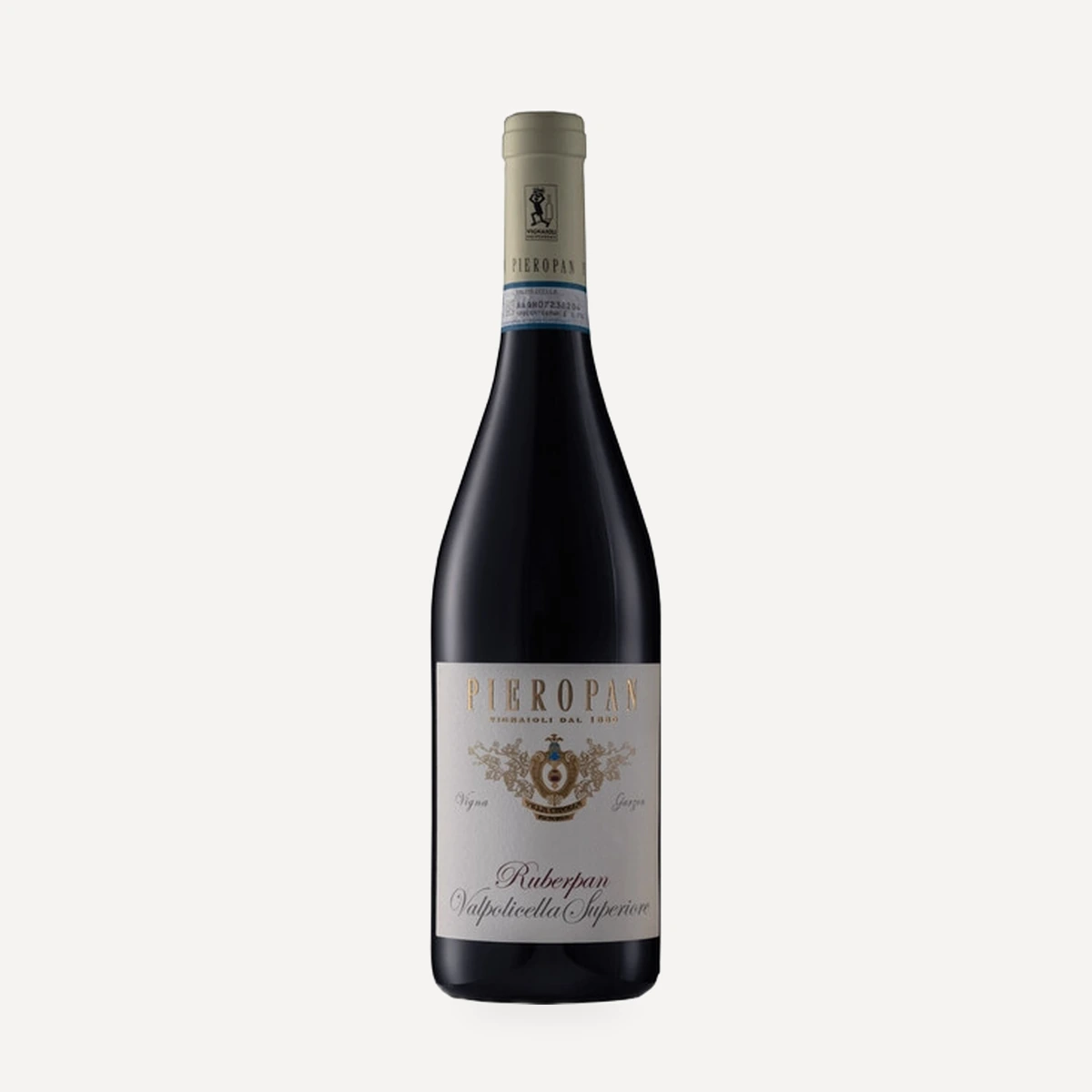
Questo vino
Vineyard and terroir
The grapes come from the certified-organic Monte Garzon vineyard in Cellore d'Illasi. The vines are 20 years old and grow on south-facing slopes at 350–500 m above sea level, in clay and limestone soils. The wine is biodynamic.
Grapes
The blend contains at least four grape varieties. Unlike Pieropan's other reds, it is made from fresh grapes rather than dried ones.
Vinification
The grapes are harvested by hand in the first and second ten-day periods of October. They are crushed and destemmed, and the varieties are vinified together in large stainless-steel tanks under strict temperature control. Fermentation takes place at 23–24 °C, followed by 12 days of maceration with daily pump-overs and punch-downs. The wine does not undergo malolactic fermentation.
Ageing
The wine is aged for 18–24 months in French oak barrels, 40–50% of them first-fill. It then rests for several more months in bottle after bottling.
Vintage notes
2021. From December, heavy snowfall brought record amounts of snow to almost the entire Alpine region, while the Soave area received plentiful rain that replenished groundwater reserves. January 2021 brought severe sub-zero temperatures. Growth began during several favourable days at the end of March, but a sudden return of cold and frost damaged the plains. The hillside vineyards and the late-ripening Garganega were unaffected. Continued low temperatures delayed flowering.
Hot weather arrived at the end of June, and the vines suffered water stress, so emergency irrigation was needed in some vineyards. Changeable weather during flowering produced clusters smaller than average with fewer berries, and excessively high temperatures and a complete lack of rain also affected fruit set. July was unsettled, with rain and hail, but milder temperatures allowed the plants to complete budding. The end of the season was dry and windy, which favoured good ripening. From October the nights grew colder and the temperature range more pronounced, which benefited the final stages of ripening and fruit quality. The vintage was of excellent quality, but yields were 25% lower than in 2020.
Label / history
"Ruberpan" combines ruber, Latin for "red", with the ending of the producer's name, Pieropan.