Storia
More than three decades of family production
The Buganza family has produced and bottled wine from the Langhe and Roero for more than 30 years. Renato Buganza continues this family activity through the agricultural estate bearing his name, with Radici e Filari focused on organic and natural wines.
A remembered Roero cellar tradition
Renato Buganza recalls accompanying his father on visits to local farmers during his childhood. Each farmer kept a demijohn of wine made from traditional local grapes. Reserved for festive occasions, it was produced through fermentation and maceration with the skins.
1990 and the changing treatment of Arneis
The introduction of the Arneis DOC in 1990 marked a change in local practice: the rural tradition of macerating Arneis on its skins receded as white vinification came to be treated as the recognized approach. Radici e Filari later returned to the earlier macerated method for Coclicò, interpreting it as an orange wine rooted in that remembered Roero tradition.
Organic continuity
The present operation is certified organic by ICEA under operator code I2141. Its vineyards and production are divided between the Langhe and Roero, with the registered agricultural address at Regione Serra Denari 10 in La Morra and a second worksite in Montà.
Terroir
Radici e Filari works in the Langhe and Roero, in the heart of Piedmont. Its identified vineyard geography includes Cascina Garbianotto e Gerbole, Gerbole, Barolo and La Morra. The agricultural address is in Regione Serra Denari at La Morra, while Montà is identified as a second worksite.
One documented young Freisa vineyard has chalky marl soil. The site associates the estate’s Arneis tradition specifically with Roero and its long-standing rural practice of fermenting the variety with its skins.
Vinificazione
The agricultural operation is certified organic by ICEA under operator code I2141. Its public identity emphasizes organic and natural wine, while the family’s stated objective is to remain in harmony with nature and the agricultural cycle.
Harvesting is performed entirely by hand. Grapes are collected in boxes before reaching the cellar.
Cellar work combines traditional practices with restrained use of equipment. Grapes are harvested manually into boxes, and stainless-steel tanks are central to fermentation and maturation.
The documented production methods include indigenous or spontaneous fermentation, alcoholic and malolactic fermentation, skin maceration and maturation in steel. For skin-fermented white grapes, fermentation proceeds without temperature control, cap management is performed manually and malolactic fermentation is completed without oenological additives. Traditional vats are also used after fermentation.
Wood is applied selectively rather than uniformly. Some wine remains in steel to preserve a direct, youthful expression, while another part of the range is transferred after spring to 350- or 500-litre oak casks. Bottling without filtration is a recurring practice. Bottle maturation follows cellar ageing where appropriate.
Filosofia
Radici e Filari presents winegrowing as the continuation of a family tradition spanning more than three decades. Renato Buganza’s stated aspiration is for a human-scale world in which sowing and harvest give rhythm to the seasons and help people live in harmony with nature, the earth and one another.
This outlook is reflected in certified organic farming, manual harvesting and the recovery of local cellar customs. The return to skin-macerated Arneis is framed as a revival of the rural Roero method Buganza encountered during childhood, while selective use of stainless steel, traditional vats and oak allows different wines to retain distinct expressions.
Vini
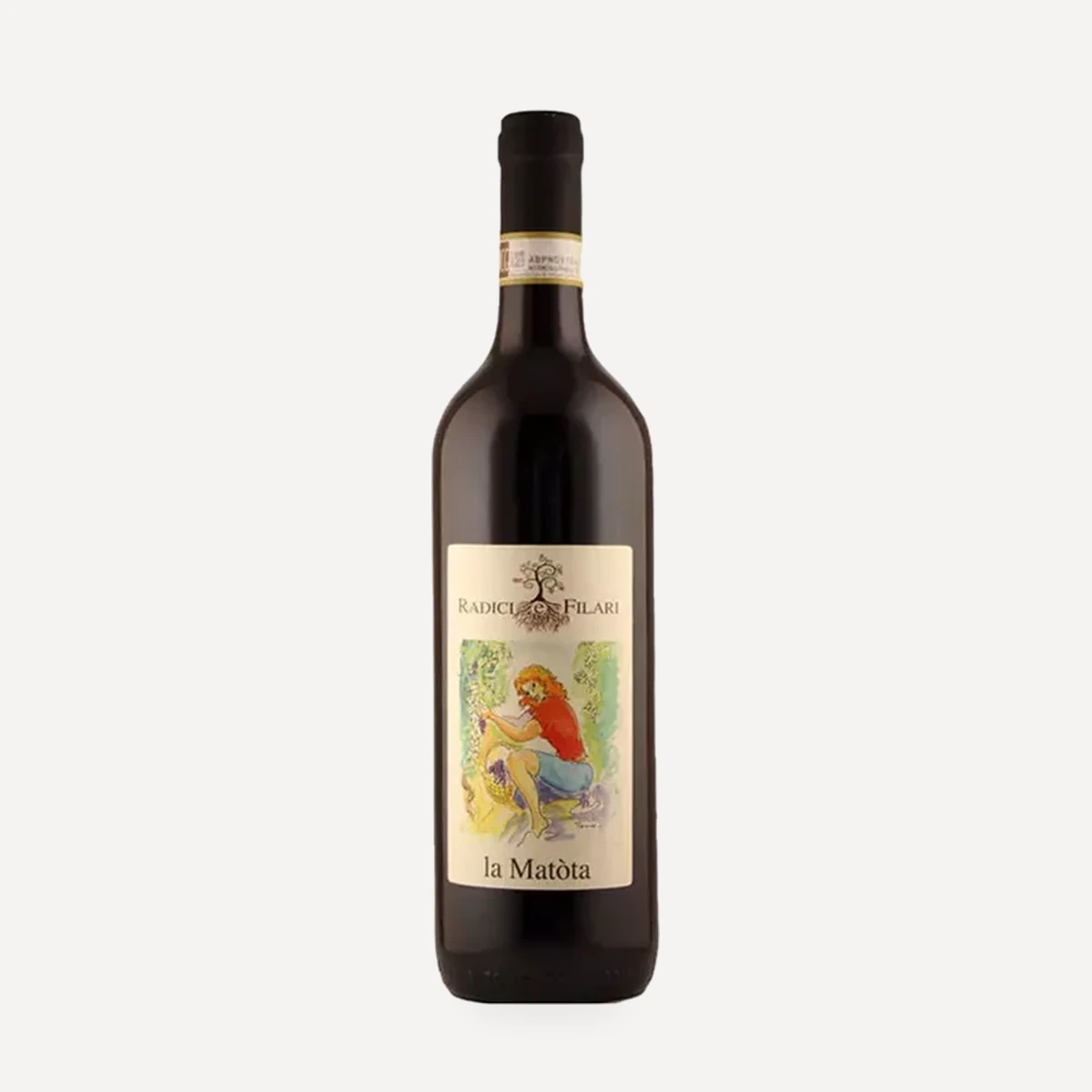
Matota
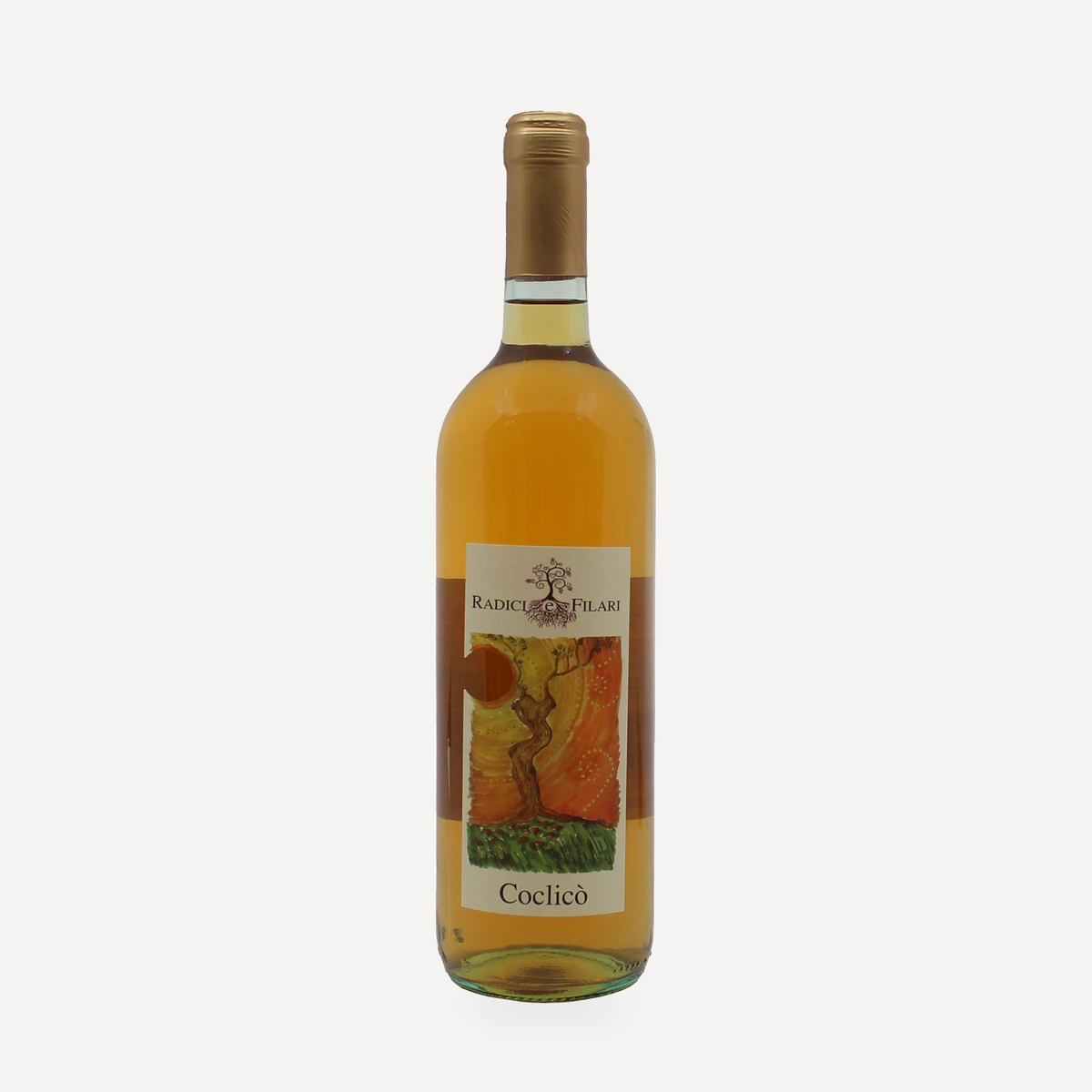
Coclicò