Storia
Family origins and 1943 foundation
Reginin originated in Vinchio as a family winegrowing business. The Laiolo “Reginin” family founded the estate in 1943, continuing a relationship with vineyards, cellar work and direct wine sales that involved successive family generations.
One account of the early family history identifies Guido Laiolo as the young successor to his father. Guido had grown up playing among the barrels, meeting friends and customers visiting the cellar and asking questions about vineyard and cellar work. He ultimately assumed control of the family business, married Alfreda and had two sons: Gianluca, known as Luca, whose interest lay in engines, and Gianpaolo, known as Paolo, who shared his father’s attachment to the vineyards and cellar. Another account names Giuseppe as the earlier family producer before Paolo.
After spending a period working outside the estate, Paolo concluded that his future lay in the family business and returned to it.
1999: a new era
With his father’s approval, Paolo began a new phase in 1999. Production increased by 150%, and the family created Barbera d’Asti “Da Sul,” its first bottled wine. The Piedmontese expression da sul means “alone”; here it also signified that the wine was made within the family and without an oenologist. Paolo intended the project to establish a distinct identity among local producers.
Word of mouth broadened recognition of Da Sul, which developed from vintage to vintage and received awards. Distribution subsequently expanded throughout Italy and into Switzerland, England, Germany, Denmark, Japan and Peru. Despite this expansion, Paolo’s stated attitude remained one of continual improvement rather than considering the work complete.
2004: Paolo and Anna
Paolo met Anna in 2004, and she later became his wife and partner in the estate. She joined his projects step by step, and their shared work grew around Paolo’s enthusiasm and their attachment to nature and wine. Their relationship inspired the sweet filtered wine “Ad Anna, l’Amore per il vino.”
Their daughter Alessia was born in September 2008, followed by Nicolò in January 2010. As children, both spent time among the vineyard rows and barrels and helped entertain friends and customers visiting the cellar, repeating a pattern associated with the preceding generations.
The estate today
Paolo—also identified as Gianpaolo—and Anna lead the family business, which grows grapes, vinifies and bottles its wines at Vinchio. The estate has 7 hectares of owned vineyards and an annual production of approximately 35,000 bottles. Its recent development has combined continuity of family production with broader distribution, direct sales, hospitality and a cleaner approach to vineyard and cellar work.
Terroir
Reginin’s vineyards lie in Vinchio, among the vineyard-covered hills between the Langhe and Monferrato. The individually documented growing sites are at approximately 240–300 metres above sea level and have southern exposures.
Three soil families coexist within Vinchio’s compact territory: white tuff or white marl, sand and red clay. Their contrasting characteristics are associated with markedly different expressions in the resulting wines. The estate’s documented sites include white-marl and white-tuff ground, sandy soils, and combinations of tuff, limestone and sand.
The broader landscape includes the wooded Riserva Naturale della Val Sarmassa, with robinia, chestnut and oak. Vinchio’s centuries-old viticultural landscape has formed part of the UNESCO World Heritage area covering much of the Langhe and Monferrato since 2014.
Vinificazione
Reginin defines its approach as cleaner agriculture shaped by concern for the environment and the people living in it. Herbicides, desiccants and chemical fertilizers are excluded, as are genetically modified vines. Harvesting is performed entirely by hand.
The same environmental approach extends to resource use. Water, electricity and fuel consumption are deliberately restrained throughout the working processes. Vineyard practices are intended to follow the vines’ natural life cycles rather than override them.
Reginin grows its grapes, vinifies the harvest and bottles still wines within the family estate.
Fermentations rely exclusively on indigenous yeasts carried by the grapes. The cellar excludes added vitamins, enzymes, bacteria, colorants and concentrated wine. Red wines undergo long spontaneous fermentations without temperature control and without chemical assistance. Documented skin-contact periods range from 15 days for Grignolino and 16 days for Freisa to 40 days for several Barbera wines.
Cortese from Valmasia is pressed and cooled immediately after harvest, with fermentation beginning over the following three days; its technical description specifies processing without skins. Steel is used for wines such as La Mora, while selected wines mature in 700-litre tonneaux. Documented maturation includes six months in tonneau for Da Sul and Setfii and 12 months in tonneaux followed by six months in bottle for Lai Man.
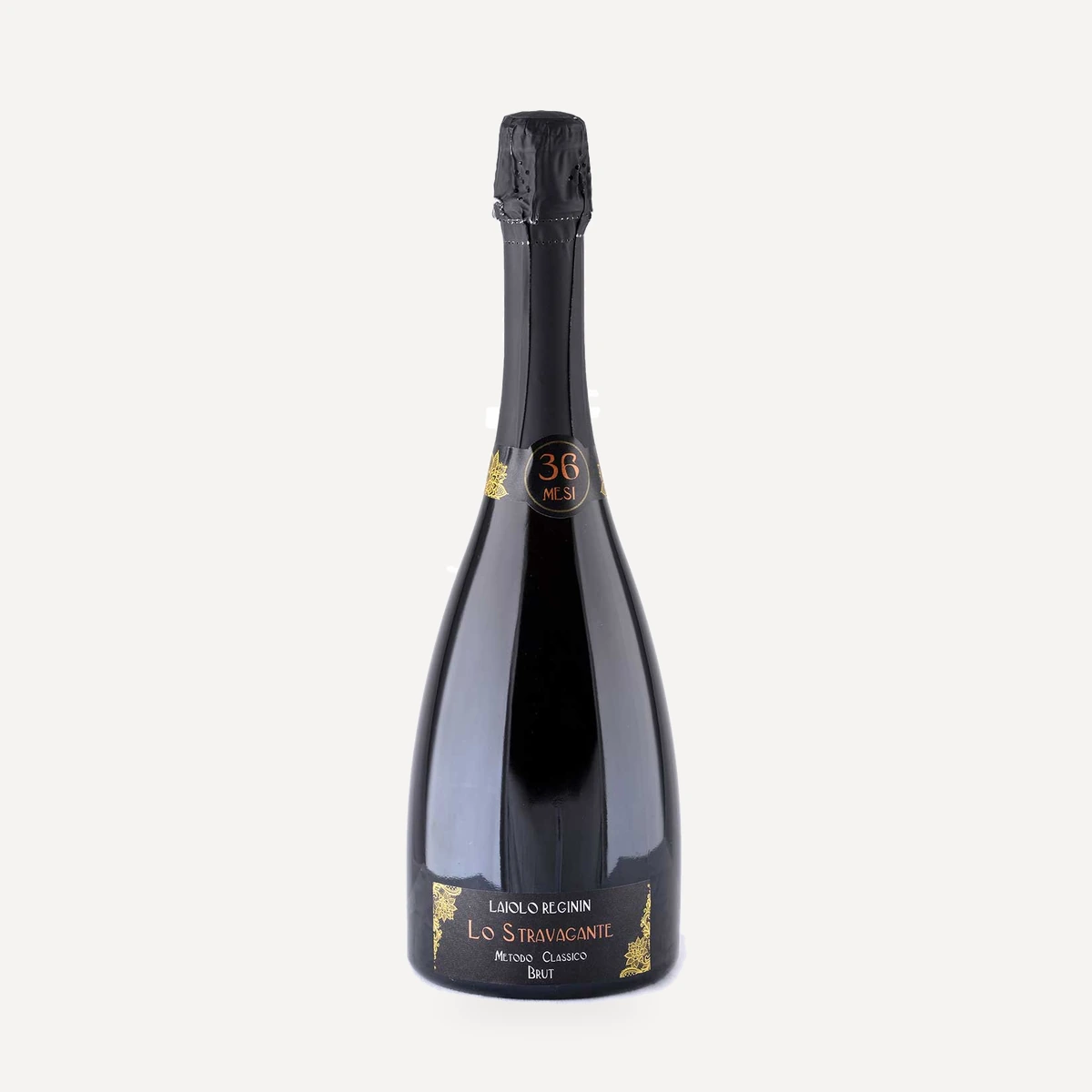
Traditional-method sparkling wine is produced from red grapes. After the first fermentation, it is bottled in July of the following year for secondary fermentation. The current description specifies at least 36 months before disgorgement, followed by a further six months of rest.
Clarification is achieved solely through natural winter cold, a deliberately slower process. Still wines are bottled on the premises through a controlled gravity-drop filling system intended to avoid compression and alteration. The estate uses lighter glass to reduce disposal impact and transport-related consumption, and closes its bottles with cork.
Finished products are stored and prepared for maturation before being packaged for private customers and national and international distributors. The estate also makes Barbera and Grignolino grappas from selected marc, distilled in small copper boilers using a bain-marie process, matured in steel and rested for another six months after bottling.
Filosofia
Reginin’s guiding aim is to practise clean cultivation and produce wines capable of improving with age without losing their natural spontaneity. Its approach seeks to respect both the environment and the people who live in it, following natural cycles in the vineyard and cellar.
This philosophy combines avoidance of synthetic vineyard inputs with indigenous-yeast fermentation, spontaneous red-wine fermentations, winter-cold clarification and restrained use of water, electricity and fuel. Lighter bottles reduce material and transport impact, while cork remains the chosen closure.
Family continuity is central to the estate’s identity. Vineyard work, winemaking and bottling are presented as a shared family craft grounded in accumulated experience, attachment to Vinchio and a desire to pass that relationship with the land to the next generation. Tradition is paired with a continuing ambition to improve rather than treating past achievements as a finished result.
Vini