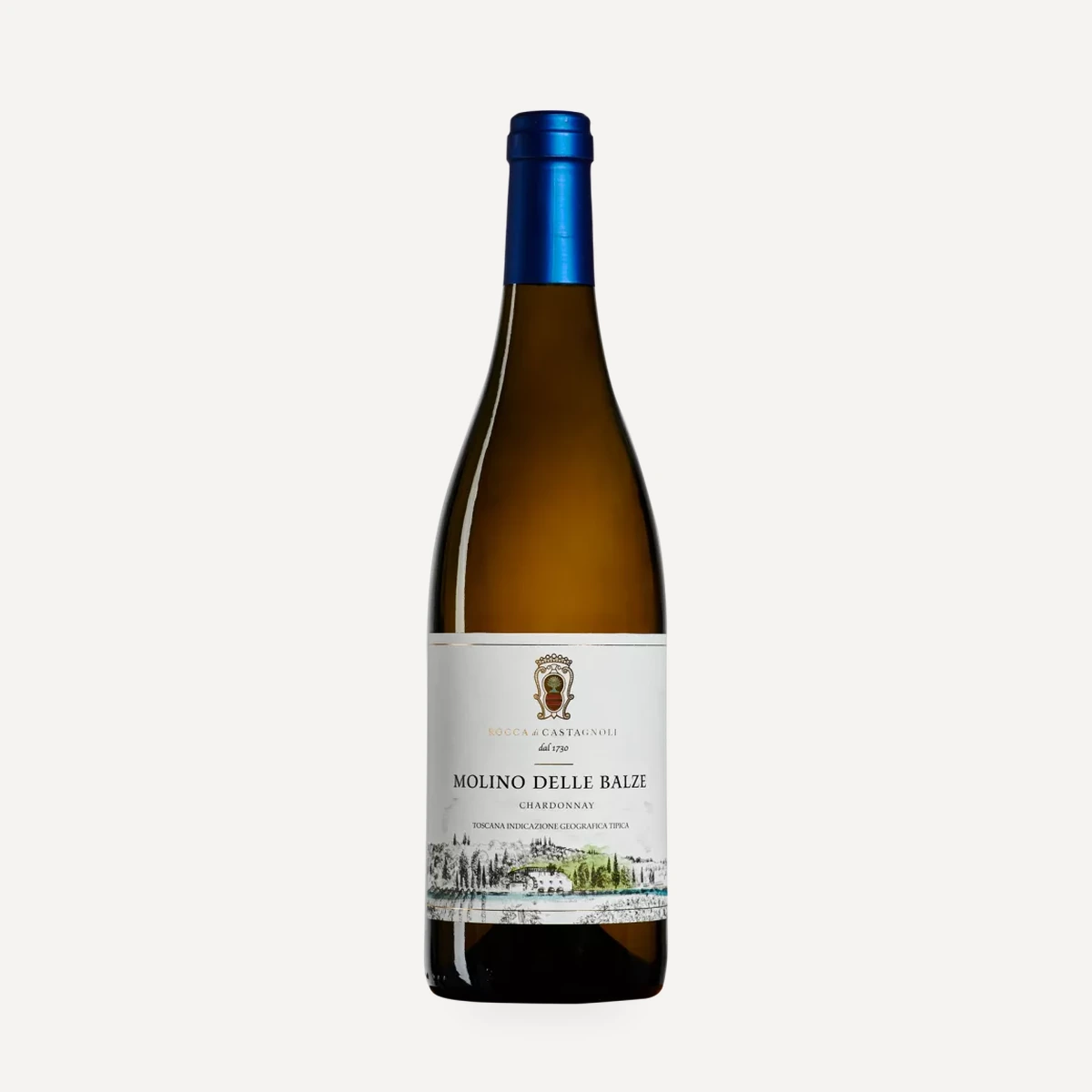
Questo vino
Vineyard and terroir
Molino delle Balze has been produced since 1985. Its Chardonnay comes from four plots at Castagnoli whose differing elevations, aspects and geological compositions contribute structure, acidity and mineral character.
Podere La Stella comprises approximately 1 ha at about 480 m a.s.l., facing north-east, with Macigno del Chianti and other sandstone-rich soils. Caciaie is approximately 1 ha at about 400 m, faces north and contains Alberese with calcareous clay sequences. Sodone covers approximately 1 ha at about 380 m, faces west and is marked by Alberese and limestone. Campi comprises approximately 0.9 ha at about 300 m, faces east and is the coolest parcel, with Pietraforte and Alberese.
The technical summary describes 3 ha of vineyards at an average 420 m a.s.l., with east/west exposure and soils rich in Alberese and limestone. The vines range from 6 to 20 years old and are planted at 5,000 vines/ha. Average yield is 1 kg per vine, and spur pruning is used.
Grapes
100% Chardonnay.
Vinification
Harvest takes place in the second half of September, after the day-to-night temperature variation of the upper Chianti Classico zone has accompanied ripening from August onward. The fruit undergoes a 48-hour cold treatment followed by gentle pressing. Fermentation lasts approximately ten days: 50% takes place in stainless steel and 50% in first- and second-use barriques. Malolactic fermentation occurs partly in wood and partly in stainless steel.
Ageing
The wine receives at least ten months of bottle ageing.
Technical data
Annual production is approximately 10,000 bottles.
Tasting profile
Clear, bright straw yellow. The persistent bouquet evokes peach and apricot over quince and acacia honey. The palate is supple and enveloping, combining pronounced minerality and savoury character with freshness, body and structure. It is balanced, elegant and persistent, with a long finish.
Serving and pairing
Serve at 8–10°C with white meats, fresh or medium-aged cheeses, and fish of all kinds. It is suited to early drinking but can evolve over the following 5–10 years.