Storia
Late 19th century: Giovanni Russolo
The Russolo family's association with wine began in the late 19th century, when Giovanni Russolo became known as a producer in the Pordenone area. This origin places the family's winemaking history more than a century before the present business.
The 1960s: Rino Russolo
From the 1960s, enologist Rino Russolo played a prominent role in the family's contribution to Italian wine. He is identified as the grandfather of the present proprietor.
Early 1970s: a new interpretation of Pinot Grigio
In the early 1970s, Rino Russolo responded to a request for a fresh, fruity and modern wine by vinifying Pinot Grigio as a white wine and bringing it to market in that form. The family presents this decision as an important episode in the development of Italian Pinot Grigio.
1974: the present business takes shape
Russolo assumed its present form in 1974, when Iginio Russolo and his wife Sonia established their own activity. It began as a vinification cellar and retained a family-management structure, with family members involved in different capacities.
Mid-1980s: focus on San Quirino
During an initial phase, the business also made wines associated with Collio and Alto Adige alongside Friulian wines. From the mid-1980s, Iginio concentrated production on grapes grown in San Quirino. The choice focused the estate on the Pordenone foothills, where cool nocturnal air descending from the mountains supports acidity and aromatic development in both regional and international cultivars.
1990: acquisition of the vineyards
The purchase of the San Quirino vineyards in 1990 brought the fourth family generation into the business operationally. Antonella and another family member named Rino are associated with the support of this generational transition and the new phase that followed.
2000: the winery moves to Ronco Calaj
At the beginning of 2000, Russolo left its former premises and moved to a newly built winery at San Quirino. The building stands within Ronco Calaj, the principal and largest operational vineyard. It combines local architectural references with a high level of production technology.
2009: on-site renewable energy
A photovoltaic installation entered service at the end of 2009. It was designed to make the business almost self-sufficient in energy while reducing the environmental impact of its electricity use.
2010: renewal and investment
Investment continued in cellar technology and in the renewal of older, more widely spaced vineyards. A packaging redesign introduced in 2010 updated the presentation of the bottles while retaining the restrained visual identity associated with the family.
Terroir
Location and relief
The vineyards are at San Quirino on the Pordenone plateau in western Friuli Venezia Giulia, close to the Friulian and Pordenonese Dolomites. The landscape is flat and lies on the alluvial fan of the Cellina stream. Vineyard elevations extend from approximately 98 to 140 metres above sea level.
Soils
A deep layer of fluvioglacial alluvial sediment underlies the vineyards. The material is calcareous-dolomitic and was deposited at the foot of the Friulian Dolomites. Pebbles and stones are abundant throughout the vineyard soils. The family's interpretation of minerality links the interaction of savoury character and acidity to these soils and the surrounding environmental conditions.
Climate
San Quirino has a warm-temperate climate with cold winters and hot summers. There is no intervening chain of hills between the mountains and the plateau, allowing descending mountain winds to reach the vineyards directly. The resulting conditions resemble a mountain valley floor and produce marked day-to-night temperature variation.
Average annual rainfall is approximately 1,350 mm. Earlier climatic measurements also record precipitation spread across 94 days, average solar energy of 1,373 kWh/m² and an annual average temperature of 19.5°C; July averages range from a low of 16°C to a high of 29.7°C.
Cool nights alter how the vines use compounds synthesized during the day: instead of directing them primarily toward leaf growth under constant temperatures, the vines accumulate more of them in the berries. This preserves acidity and increases the grapes' aromatic load.
Vinificazione
The approximately 16 ha of vineyards are planted on the flat Cellina alluvial fan. Rows use both Guyot and Cappuccina systems, with densities ranging from 3,850 to 5,500 vines/ha. Vineyard orientations vary by sector: north-northwest to south-southeast is common for white varieties at 98 m, while several red-grape and Ribolla Gialla sectors run east-northeast to west-southwest at 105–120 m.
The family has invested in renewing older vineyards and replacing less densely planted sectors. Hand selection and picking are specifically documented for Pinot Grigio from Ronco Calaj and Cabernet Sauvignon. Harvest timing varies by cultivar: Pinot Grigio, Chardonnay, Sauvignon and Müller Thurgau are generally picked in the first half of September; Friulano and Ribolla Gialla in the second half; Merlot, Cabernet Sauvignon and Pinot Nero toward the end of September; Refosco between late September and the first half of October; and the late-harvest blend varieties during the first half of October.
Winery
The cellar was built in 2000 within Ronco Calaj. Its design combines the local architectural idiom with modern production technology. Temperature-controlled stainless steel is the principal fermentation medium, supplemented by wooden vessels for part of the Chardonnay.
White-wine production
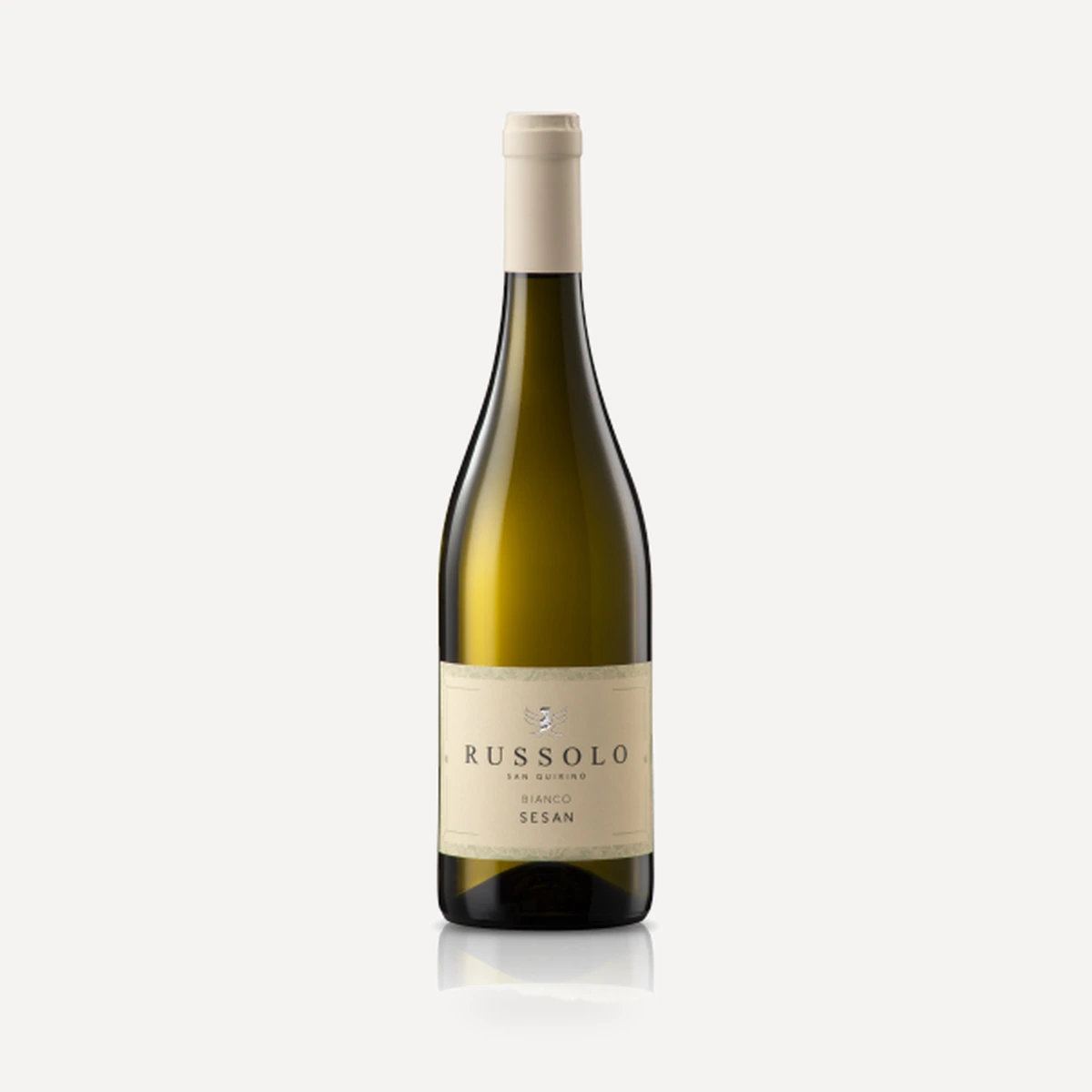
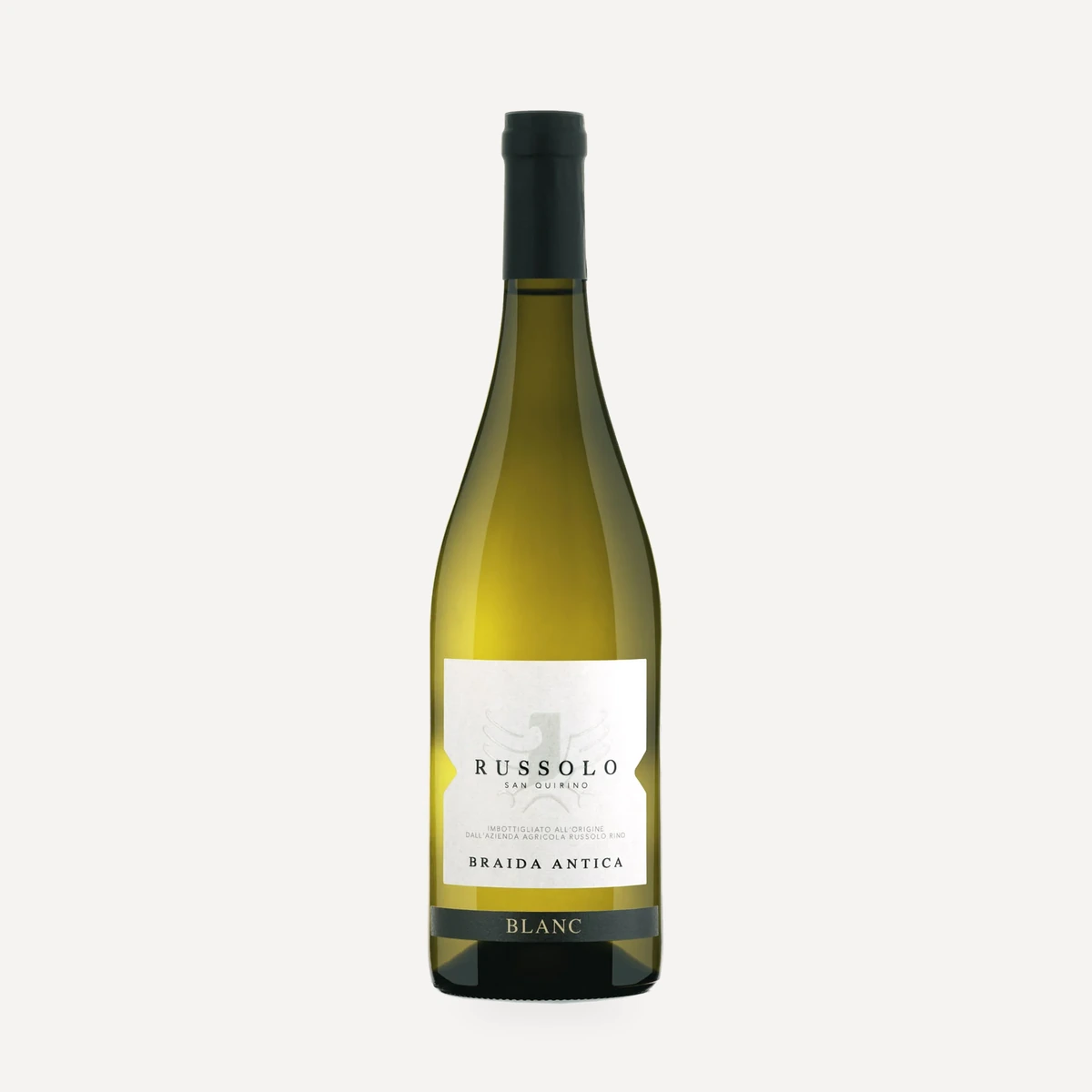
White grapes generally ferment in temperature-controlled stainless-steel tanks for 7–10 days. Temperatures vary by cultivar: 12–14°C for Müller Thurgau; 13–15°C for Ribolla Gialla; 13–16°C for Sesan; 13–18°C for Blanc; 14°C for Pinot Grigio Braida Antica; 14–16°C for Pinot Grigio, Chardonnay and Doi Raps; and 18–20°C for Friulano and Sauvignon. Chardonnay is fermented partly in wooden containers. Malolactic fermentation is not carried out for these white styles.
A documented Pinot Grigio protocol uses hand-picked fruit, soft pneumatic pressing at 0.20–0.40 atm, static settling of the must, inoculation with selected yeasts and controlled fermentation. After fermentation, the wine remains on its fine lees until bottling.
Most white wines are bottled from the spring following harvest. Doi Raps, made from varieties harvested at the end of the season, is bottled about one year after harvest.
Red-wine production
Red grapes ferment in temperature-controlled stainless-steel fermenters. Depending on the variety or blend, fermentation lasts 5–10 days at 16–24°C. Pinot Nero and Refosco ferment for 5–8 days at 16–18°C; Merlot and Cabernet Sauvignon for 6–8 days at 18–24°C; Borgo di Peuma for 8–10 days at 16–18°C; and Neri for 5–8 days at 18–24°C. Malolactic fermentation takes place concurrently with alcoholic fermentation.
For Cabernet Sauvignon, selected, hand-picked grapes receive a light pressing before maceration in stainless steel. Extraction work during maceration is intended to draw phenolic material from the skins, while deliberately moderate temperatures preserve fruity aromas. Maturation before bottling takes place in stainless steel at a constant temperature.
Merlot and Cabernet Sauvignon are bottled during the second spring following harvest. Refosco, Pinot Nero and Borgo di Peuma are bottled at approximately two years. Neri is bottled from the spring after harvest.
Filosofia
Russolo's family philosophy defines drinking pleasure through balance. Aromatic and structural harmony must connect nose and palate, while sweetness, acidity, tannin and other sensations should remain in equilibrium; an excess or deficiency is considered unnatural and detrimental to the wine.
The family's traditional idea of wine is rooted in its former place as an honest, straightforward household agricultural product. Simplicity, immediacy and ease of drinking remain central values. Production choices consequently favour fresh, fragrant Friulian wines without excessive alcohol.
Territorial expression rests on two linked elements: San Quirino's microclimate and its stony alluvial ground. Cool mountain air, substantial nocturnal temperature changes and calcareous-dolomitic sediments are treated as the foundation of acidity, aromatic clarity and savoury character. The approach combines respect for this local identity with technical investment in the winery and vineyards.
Environmental policy is framed around minimizing impact. The photovoltaic installation introduced at the end of 2009 was intended to provide almost complete energy self-sufficiency without polluting electricity generation.
Vini
Blanc Braida Antica
Casali Bearzi
Prato delle Rose