Storia
The farmhouse and the Piacentino family
The name Socré predates the Piacentino family and derives from the occupation of the farmhouse’s previous proprietor, a maker of wooden shoes or clogs. An ancestor of the present owners acquired the cascina in 1869. The holding thereafter remained in the Piacentino family and maintained an exclusively wine-growing and wine-producing orientation.
Vineyard development
Dolcetto and Barbera vineyards planted during the 1960s and 1970s survived around the Barbaresco farmhouse into the opening years of the twenty-first century. Beginning in the 1990s, the family strengthened and modernised the estate through further land purchases in the Langhe and Monferrato.
For a long period, most of Socré’s grapes were sold to farmers from the Piedmont plains—many of whom traditionally made wine for domestic consumption—and to other wineries. Only a small proportion was retained and vinified for the family.
The shift toward estate bottling
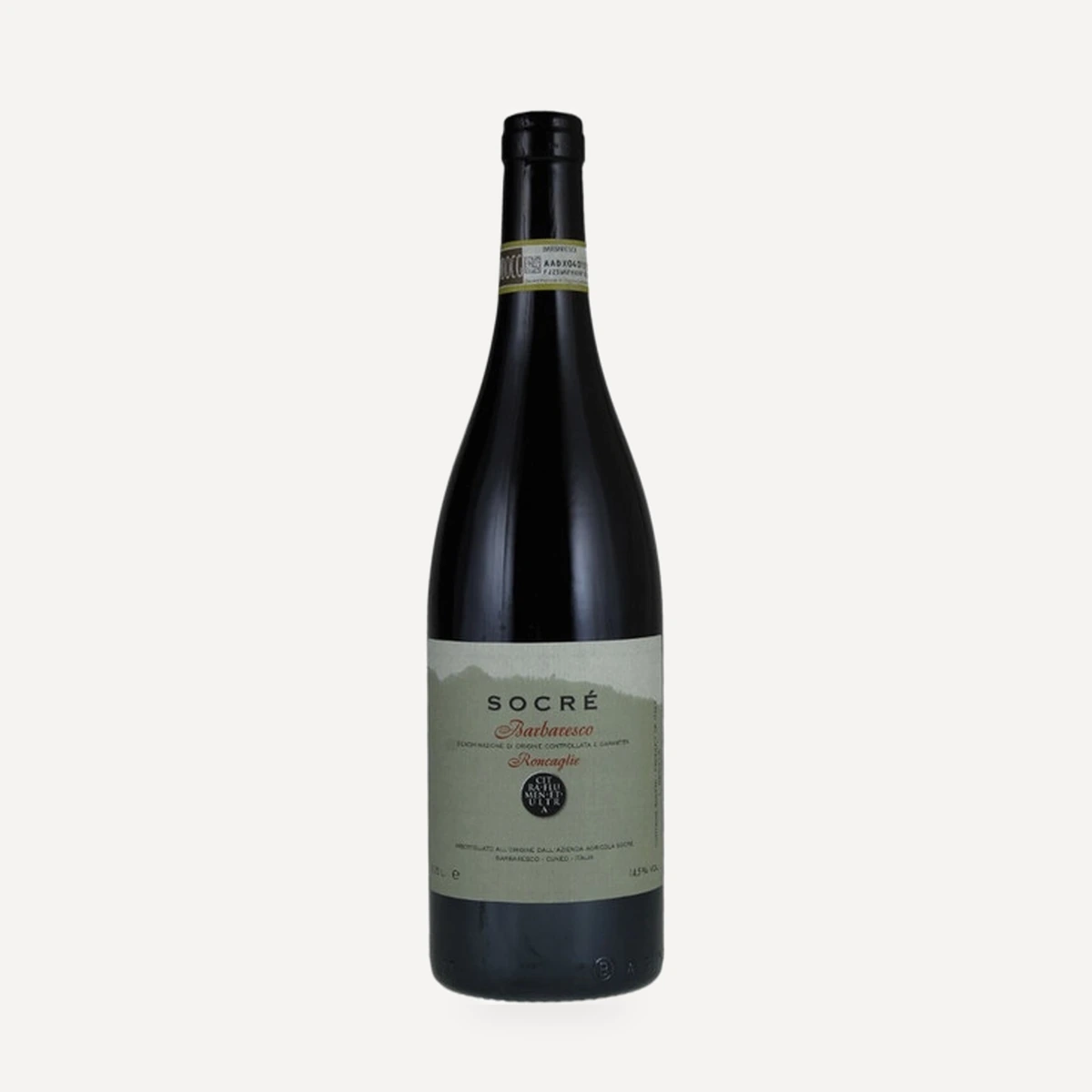
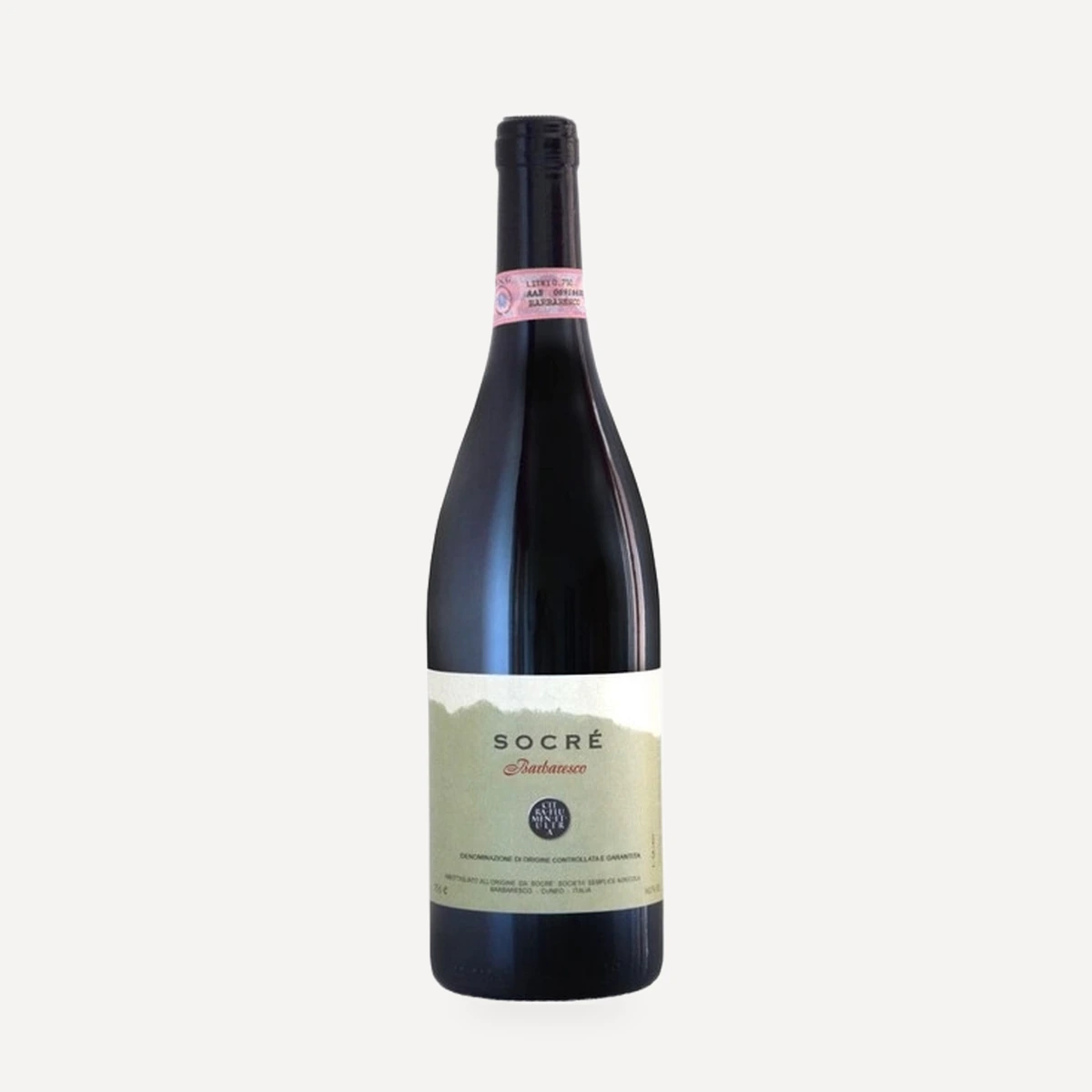
In 1999, Socré began progressively increasing the share of its own grapes vinified on the property. This transition included moving the winery and investing in equipment. Barbaresco remained the principal wine, both as a vintage bottling and as the Roncaglie selection, while the estate also committed to Croatina and the small Cisterna d’Asti denomination.
During the 2000s, the Barbaresco vineyards underwent a production reorganisation. The surviving Dolcetto and Barbera there were replaced, leaving the approximately three-hectare Roncaglie holding planted exclusively to Nebbiolo. Alba continued to supply Dolcetto, Barbera and Nebbiolo, while the Cisterna d’Asti vineyards supported a broader mix of Piedmontese and international varieties.
Dogliani and sparkling-wine plans
The latest major addition was an approximately five-hectare contiguous holding at Taricchi, in the Biarella area of Dogliani. Apart from a small parcel of Nebbiolo planted during the 1990s, this land was planted in 2019. By 2020, the stated programme for the holding centred on Pinot Nero and Chardonnay intended for Alta Langa sparkling wine. At the same time, Socré was developing its interest in Metodo Classico, initially working with Nebbiolo and anticipating further Alta Langa labels.
Terroir
Barbaresco and Roncaglie
The approximately three-hectare Barbaresco vineyard area lies below the Socré farmhouse, about 1 km before the hamlet of Tre Stelle when approaching from Alba. The entire holding belongs to the Roncaglie subzone. Its medium-to-steep slopes face between south and west and rise from 250 to 290 m above sea level; the farmhouse itself stands at approximately 270 m.
The soils are predominantly clay over a calcareous base and show a pronounced alkaline reaction. Their structure consists of stratified clay-and-silt marls derived from a marine floor deposited by very fine turbid currents approximately 50 million years ago. Uplift was followed by mixing with Quaternary alluvial material, now distributed in small localised zones. Gray-blue tuff and Pietra di Langa emerge on the steepest slopes. The blue-gray colour is associated with marine sediment deposited under oxygen-poor conditions.
Cisterna d’Asti
The approximately two-hectare Cisterna d’Asti holding lies between Monferrato and Roero. Its steep slopes face from south to east at elevations of 240–270 m. The soil is clayey-sandy over a mainly calcareous base.
Morphologically and geologically, the area belongs to the Roero sector of the Ligurian-Piedmont Tertiary Basin. Its compact sandy formations, which shape the local rocche, date to the Astian stage of the Upper Pliocene and consist of yellowish, moderately fossil-bearing marine sands and silts. The most consolidated parts of these hills have historically been excavated into shelters, storage spaces, wells and cellars known as crotin.
Alba
The Alba vineyards are close to the Barbaresco centre of operations. Their soils are cooler and deeper than those at Barbaresco, with exposures ranging from south to east.
Dogliani
The Dogliani vineyards lie at Taricchi, within Biarella. Approximately 3 ha occupy a highly exposed southwest-facing position, while about 2 ha lie on a gentler northeast-facing slope.
Vinificazione
Viticultural practice varies with each holding and variety. On Barbera parcels, production is controlled through vineyard management and targeted summer thinning, followed by careful selection during harvest. The old Barbera d’Alba vineyard and the Barbera d’Asti vineyard are both Guyot-trained at 5,000 vines/ha; the latter was planted in 2001.
Harvest timing at Alba follows the varieties’ ripening sequence. Dolcetto normally opens the harvest between the first and second weeks of September, Barbera follows, and Nebbiolo is picked around the middle of October.
The Barbaresco reorganisation concentrated the Roncaglie property entirely on Nebbiolo, while the Dogliani development preserved a small 1990s Nebbiolo planting and planted most of the remaining land in 2019. All wines are made from grapes grown by Socré.
For many years, Socré vinified only a small share of its grapes for family consumption and sold the remainder. From 1999 onward, it progressively increased estate vinification, relocated the winery and invested in production equipment. The cellar remains small, and all production is based on estate-grown grapes.
The production programme is not tied to a single vessel or maturation format. Documented cellar equipment and élevage vessels include stainless-steel tanks, concrete vats, 20-hl truncated-conical wooden vats, 225-litre French-oak barrels, second- and third-use oak, and 20-hl large oak casks. Depending on the cuvée, maturation may continue through sequential periods in small wood, large casks, steel or concrete, followed by bottle ageing. Freisa is vinified and matured exclusively in stainless steel.
Socré’s sparkling-wine work includes Metodo Classico based on Nebbiolo and a stated Alta Langa programme connected to Pinot Nero and Chardonnay planted at Dogliani.
Filosofia
Socré’s approach is rooted in family continuity and direct control of raw material: only estate-grown grapes are vinified. The progressive move from selling grapes to estate production, begun in 1999, joined investment in equipment with a reorganisation of the vineyards.
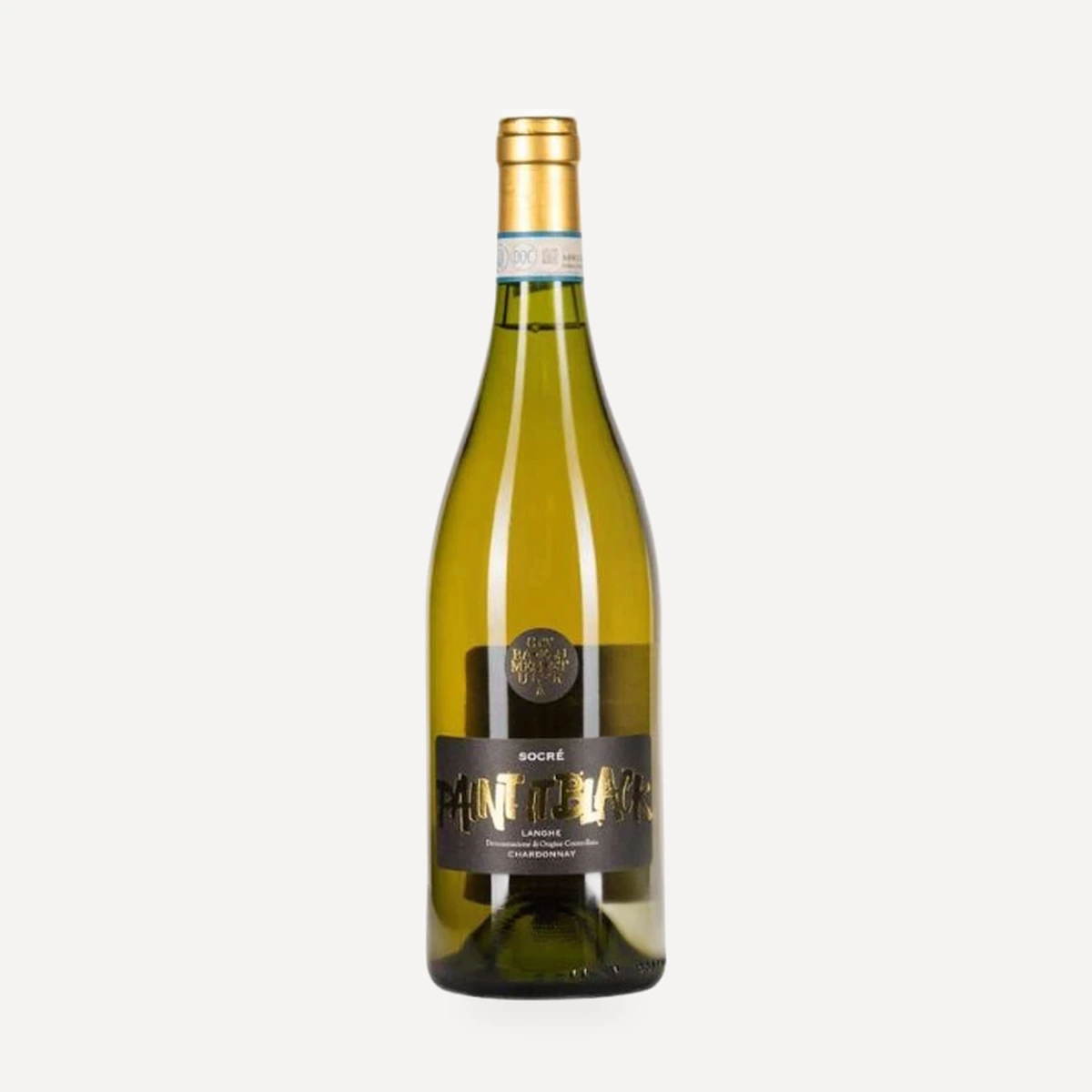
The estate treats Barbaresco from Roncaglie as the centre of its identity while also supporting less prominent local expressions. Its commitment to Croatina reflects a belief that the small Cisterna d’Asti denomination can offer a distinctly local, fresh and succulent alternative. At the same time, plantings of Cabernet Sauvignon, Merlot, Chardonnay and Pinot Nero and the use of Metodo Classico show an openness to expanding the range beyond the historic Nebbiolo focus.
Vineyard decisions emphasise matching varieties to individual sites, controlling the natural productivity of Barbera and selecting grapes carefully at harvest. In the cellar, steel, concrete and different oak formats are used selectively rather than as a single uniform protocol.
Vini
Barbaresco Roncaglie
Chardonnay Paint it Black Langhe DOC
Barbaresco