Storia
Austrian origins and settlement in Zegla
The Sturm family originated in Andritz, in Styria in southeastern Austria. The forebears left Austria for the Collio in the early nineteenth century, choosing its hills as a place to establish new roots. The family settled in Zegla in 1850, attracted by its sunlit slopes, clear air and fertile ground.
Three generations of winegrowers
Winegrowing has passed through three generations of the Sturm family. Oscar Sturm represents the preceding generation: he worked among the vines before the Collio achieved its later prominence, concentrating on practical vineyard knowledge, careful cane positioning and the cultivation of Sauvignon. His sons Denis and Patrick inherited from him a commitment to the land, local culture and wine.
Travel subsequently broadened the brothers’ perspective. Their encounters with Rhine wines and ageworthy French wines became reference points for an evolution toward greater structure, elegance and longevity. Patrick applied that direction to the disciplined work of vineyard and cellar, while Denis brought an economics education and a strategic approach to the estate’s identity and markets.
Organic development
Organic vineyards and an Organic range became part of the estate’s effort to carry inherited skills and local traditions into future generations. The approach combines respect for natural cycles, sustainable practices, green manure and close attention in both vineyard and cellar.
2019: renewal of the Classic range
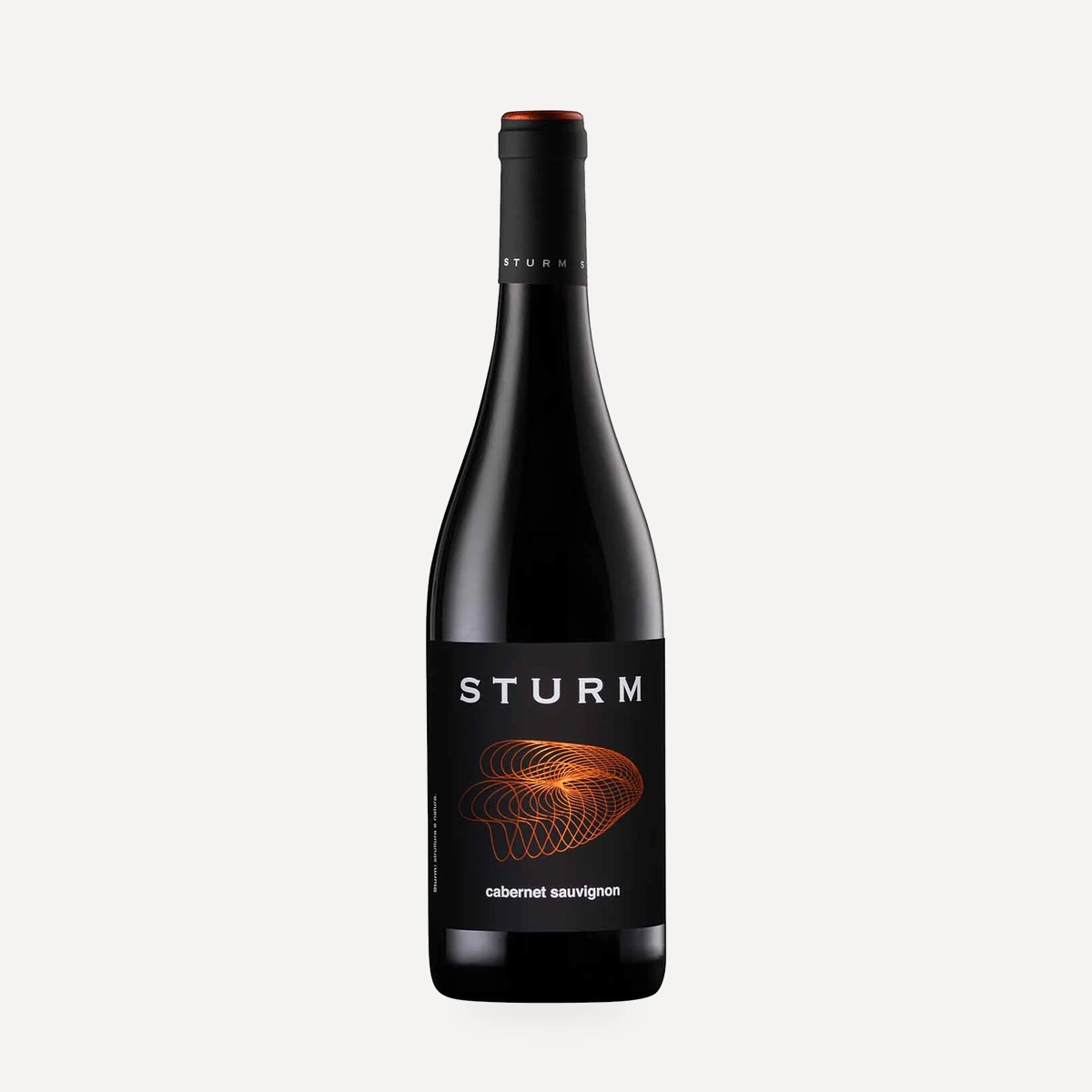
In 2019 Sturm introduced a new presentation for its Classic wines. The design translates the contours of the Zegla hills and the minute shells and sedimentary structures preserved in the Eocene ponca into flowing graphic forms. Soft-touch paper and textured foils were chosen to extend the sensory experience to the packaging. The renewal framed the estate’s continuing pursuit of wines defined by freshness, minerality, structure and the ability to develop over time.
Terroir
Zegla and the Collio
Sturm is based in Zegla, a succession of slopes rising from the Friulian Collio toward Slovenia. The cru lies in the eastern part of Friuli-Venezia Giulia and is characterized by terraced, middle-elevation hills around a sparsely inhabited plain. The vineyards run broadly east to west, providing favorable sunlight through the seasons. Zegla is also sheltered from harsher winds and has a microclimate suited to healthy grape development.
The wider Collio forms an east–west crescent and ranges from approximately 120 to 250 metres above sea level. Its low hills receive the mild influence of the Upper Adriatic. The strong northeasterly Bora provides ventilation, substantially lowering atmospheric humidity and keeping the air clear. To the north, the Julian Alps form a barrier against Atlantic weather, cold and rain.
Marked day–night temperature differences contribute to aromatic development and to firm, crisp berries. The relatively undisturbed plain enclosed by Zegla’s terraces retains its flora and fauna, which share the same microclimatic conditions.
Ponca
The defining soil is ponca: stratified marl and sandstone of Eocene origin, formed through ancient sedimentation and rich in salts and microelements. Marine fossils and small shells are frequently encountered in the vineyards. This geological matrix is associated with the pronounced mineral and savory character sought in Sturm’s wines.
The Collio DOC/DOP encompasses approximately 1,300 hectares of vineyards. Sturm’s own holdings also refer to vineyard hills in Pradis, Russiz and Zegla, while the estate identifies Zegla as its home cru.
Vinificazione
Sturm combines organic farming with sustainable practices and respect for natural cycles. The Organic range comprises Pinot Grigio, Friulano, Ribolla Gialla, Sauvignon, Merlot and Andritz Bianco. Green manure is used in the organic vineyards; its flowering and aromatic plants nourish the ground, while yarrow and chamomile are specifically associated with the Russiz Sauvignon site.
Vineyard work focuses on precise cane positioning, careful management through ripening and selection at harvest. Guyot is the predominant training system. Older Friulano vines use cappuccina, and Ribolla Gialla may combine cappuccina and Guyot. Hand harvesting is identified throughout the range, with the harvest extending from August or early September for earlier white varieties to October for the red varieties. Andritz Bianco is selected from the best vineyards, with only fully ripe clusters chosen.
The vineyard environment around Zegla retains relatively undisturbed flora and fauna. Bora-driven ventilation reduces humidity, while the sun exposure and day–night temperature differences support healthy ripening and aromatic development.
Production varies by variety and range but follows a recurring set of cellar practices. White grapes are generally destemmed before either cold skin contact or direct pressing. Pinot Grigio for the Classic range is placed in a pneumatic press without maceration, while several other Classic whites undergo cold maceration before temperature-controlled fermentation in stainless steel, generally at 14–18°C. These wines commonly remain on their lees for several months before bottling.
The Organic whites and Andritz Bianco may use the Ganimede system for dynamic skin maceration. Fermentation gas circulates the cap inside the macerator, promoting gentle extraction. The carbon-dioxide-saturated environment protects the must from oxidation. Fermentation is described as natural and takes place at approximately 18°C. After racking, maturation occurs partly in stainless steel and partly in 500-litre oak tonneaux, with several months on the lees. Andritz Bianco is then blended and bottled, followed by additional bottle maturation before release.
The organic Pinot Grigio undergoes Ganimede cold maceration, soft pressing and spontaneous fermentation with indigenous yeast before divided maturation in stainless steel and 500-litre tonneaux. Chardonnay Andritz ferments in stainless steel at 16–18°C and matures on its lees partly in steel and partly in French-oak tonneaux before blending and bottling.
Red grapes are destemmed and macerated on their skins for an extended period. Cap management combines pump-overs, délestage and punching down or aerative mixing. Merlot is macerated with its own yeasts. After racking, the reds mature for several months; oak barrels are used for Cabernet Franc, Cabernet Sauvignon and Refosco dal Peduncolo Rosso before bottling.
Filosofia
Sturm presents wine as an evolving expression of season, structure and place. The family’s stated objective is to combine the culture inherited from Oscar with lessons drawn from Rhine wines and ageworthy French wines, pursuing structure, elegance and longevity rather than immediacy alone.
Natural cycles and sustainable practice form the environmental basis of this approach. Close attention is given to both vineyard and cellar so that freshness, minerality and the aromas of the terroir remain recognizable. Technology is not treated as the opposite of tradition: Patrick regards stainless steel as a tool of precision, control and strength, used alongside intuition and accumulated experience.
The family also connects continuity with change. Organic vineyards are intended to preserve the land and inherited skills for future generations, while the 2019 renewal of the Classic range translated the hills, marine fossils and sedimentary architecture of Zegla into a contemporary visual identity. Denis’s role extends the same idea into commercial strategy through clearly defined vision and values.
Vini