Storia
Experimental beginnings
Tascante grew out of Tasca d’Almerita’s search for Sicilian sites with distinctive winegrowing potential. Experimental vinifications on Etna began in 2004, before the family committed itself to vineyards on the volcano.
Establishment on Etna — 2007
The project took shape in 2007, when the Tasca d’Almerita family settled between Castiglione di Sicilia and Randazzo and acquired its first vineyards in Contrada Sciaranuova and Pianodario. The name Tascante combines Tasca and Etna. Its founding idea was to study and interpret the vineyard on Europe’s highest active volcano rather than impose a predetermined model upon it.
The work began with research into the northern slope, repeated trials with local varieties and close observation of the differences created by altitude, exposure, soil composition and the age and morphology of individual lava flows. Nerello Mascalese became the central red variety, joined by Carricante and Nerello Cappuccio. In 2008, the first Tascante made from Nerello Mascalese debuted.
Building a contrada-based estate
Sciaranuova’s newer Nerello Mascalese block was planted in 2008. Pianodario subsequently developed as a complex of old and new vineyard blocks: existing plantings dated to 1950, 1965 and 2005 were joined by plantings in 2011 and 2020. The estate retained traditional terracing, dry-stone walls and locally characteristic forms of vine support, including untreated split-chestnut poles.
Contrada Rampante was added in 2015. Its vineyards included Nerello Mascalese and Chardonnay planted in 2000 as well as a small Nerello Mascalese alberello block dating to 1950. In 2016 the project gained another vineyard and the Marchesa winery. Rampante became the location of the Tascante winery, while hospitality and vineyard visits developed around Rampante and Pianodario in the Passopisciaro area.
Sciaranuova expanded to include a Carricante block planted in 2017. At Grasà, Nerello Mascalese was planted in 2018 and further Nerello Mascalese and Carricante blocks followed in 2020.
From research to individual contrada expressions
Years of research and numerous trials with local varieties gradually defined the estate’s direction. Red grapes are now vinified contrada by contrada at Passopisciaro, preserving the distinctions among neighboring sectors of the northern slope. The estate’s four principal contrade are Sciaranuova, Rampante, Pianodario and Grasà, with Sciaranuova Vigna Vecchia treated as a particularly significant old-vine expression.
Sustainability and landscape stewardship
Tascante participates in Tasca d’Almerita’s independently certified SOStain program, adopted in 2010, and in the VIVA measurement program, whose organization-level air, water, vineyard and territory indicators have been monitored since 2016. Tasca d’Almerita became the first wine company reported in its chronology as receiving VIVA/SOStain sustainability certification in 2017 and became a certified B Corp in 2023. Its current vineyard management is also SQNPI-certified integrated production.
At Tascante, this framework is expressed through natural ground cover, the avoidance of chemical weed control, predominantly manual work or light machinery, recyclable or biodegradable vineyard materials, biodiversity refuges and the maintenance of historic terraces and dry-stone walls. By 2024 the estate covered 35.79 ha, including 20.40 ha of vineyards, 13 ha of natural areas, 8.8 ha of woodland, 1.38 ha of olive groves and 0.84 ha of pasture.
Terroir
Northern Etna
Tascante lies on the northern side of Mount Etna, on Sicily’s eastern coast, between Castiglione di Sicilia and Randazzo. Its vineyards occupy the Passopisciaro, Solicchiata, Montelaguardia and Randazzo area. Most of the estate lies between approximately 730 and 780 m above sea level; Grasà is lower, at 550 m.
The landscape is organized into terraces climbing the volcano, divided and supported by lava-stone walls. Chestnut and downy-oak woods surround the cultivated areas, while olive trees, pasture, wild herbs and uncultivated ground contribute to the estate’s biodiversity. In 2024, 13 ha were classified as natural areas and 8.8 ha as woodland.
Contrada differences
Altitude, exposure, soil composition and the form and age of successive lava tongues distinguish the four neighboring contrade. These variations can be pronounced over very short distances. The volcanic substrates documented across the estate range from relatively young, sandy and fragmented surface deposits to much older, more consolidated rock layers.
Sciaranuova contains lava formations spanning approximately 4,000–40,000 years. Within its old-vine clos, sandy and crumbled surface material from the Solicchiata formation, dated to roughly 1,000–6,000 years, rests over more solid rock formed about 15,000–24,000 years ago. Rampante’s formations are lithologically varied but belong broadly to a 4,000–15,000-year period. Pianodario is likewise associated with volcanic formations approximately 4,000–15,000 years old.
Growing conditions
Ventilation, high elevation and exposure support a slow, extended ripening cycle. Nerello Mascalese can ripen very late, and Pianodario’s harvest may extend into early November. The vines can reach maturity without major health problems even in wet years, but vineyard work remains demanding because of steep inclines, terraces and the long ripening period. Close observation is essential: different parts of the same vineyard may be harvested in as many as three separate passes.
Vinificazione
Tascante follows SQNPI-certified integrated production and participates in the independently audited SOStain protocol. Tasca d’Almerita has applied SOStain since 2010 and has monitored the VIVA indicators for air, water, vineyard and territory since 2016.
Chemical weed control is excluded throughout the family’s estates. At Tascante, vineyard ground cover is exclusively spontaneous and composed of native species. Its management is adjusted to water availability. Work is mainly manual or performed with light equipment such as rotary tillers and motorized wheelbarrows, limiting the use of heavy machinery on the terraces.
The vines are observed daily through their long ripening period. Harvest decisions are highly selective, and a single vineyard may be picked in as many as three passes. Pre-harvest work focuses on plant health, sunlight and air circulation around the bunches, and humidity monitoring.
New vineyard installations exclude materials that are neither recyclable nor biodegradable. Wood or metal posts and biodegradable ties are preferred. In Sciaranuova, 700 new posts obtained while cleaning the estate’s chestnut woodland were installed in the vineyards. Synthetic raffia was replaced with natural raffia, and locally gathered broom branches have been tested for tying the fruiting cane in Guyot-trained vines.
Biodiversity infrastructure includes three Sicilian Black Bee hives and a bug hotel that provides nesting habitat for local insect species. Natural areas, woodland, pasture, olive groves and chestnut stands surround the vineyards. The estate also maintains its historic dry-stone walls through routine and extraordinary conservation work. The 2024 inventory records 252 walls extending for 9,168 linear metres across the estate.
The 2024 pesticide-impact assessment placed Tascante’s measured impact on the environment, workers and consumers below the comparison benchmark for an equivalent organic system. This is an integrated-production result rather than an organic certification claim.
Tascante’s winemaking developed through years of research and numerous experimental vinifications of local varieties. The principal production model is site-specific: red grapes are vinified contrada by contrada at Passopisciaro so that neighboring vineyards with different elevations, exposures and lava formations remain identifiable as separate expressions.
The winery is located in Contrada Rampante. The estate’s hospitality description identifies a cellar of nearly 1,000 m² and an old palmento used for maturation. The estate’s published cellar protocols repeatedly employ stainless steel for red vinification and large Slavonian oak vessels for maturation, with French oak used selectively in certain lots. The cellar’s electricity consumption remains within the SOStain limit of 0.7 kWh per litre of wine processed. Tascante recorded 4.48 litres of water used per litre of wine in 2024, down from 6.13 litres in 2023.
All finished wines undergo annual residue analysis under the SOStain framework. No residues have been detected in the company’s analyses over the years, and Tascante’s sulphite levels are reported as remaining below the thresholds established for organic wine.
Filosofia
Tascante’s guiding idea is to understand the volcano through patient observation. The estate treats a first impression of Etna as insufficient: the decisive information lies in the details of elevation, exposure, lava morphology, vineyard age and the behavior of each variety over time.
Its contrada-based approach aims to preserve differences between neighboring sites rather than smooth them into a single generalized Etna style. Years of trials preceded the definition of this direction, and the long maturation of Nerello Mascalese is matched by close, repeated observation and selective harvesting.
The wider Tasca philosophy frames beauty as something that must be cultivated through sustained work across generations. At Tascante this is expressed through respect for the volcano as a living environment, care for dry-stone terraces and woods, low-impact vineyard materials, protection of biodiversity and the preservation of resources for future generations.
Alberto Tasca’s sustainability position goes beyond reducing damage or reaching zero impact. His stated objective is a regenerative, Nature Positive model that integrates economic, environmental and social criteria and returns more value than the business removes. Hospitality follows the same outlook: respect for nature and people, enduring quality and attachment to Sicily are presented as the principles guiding the family’s work.
Vini
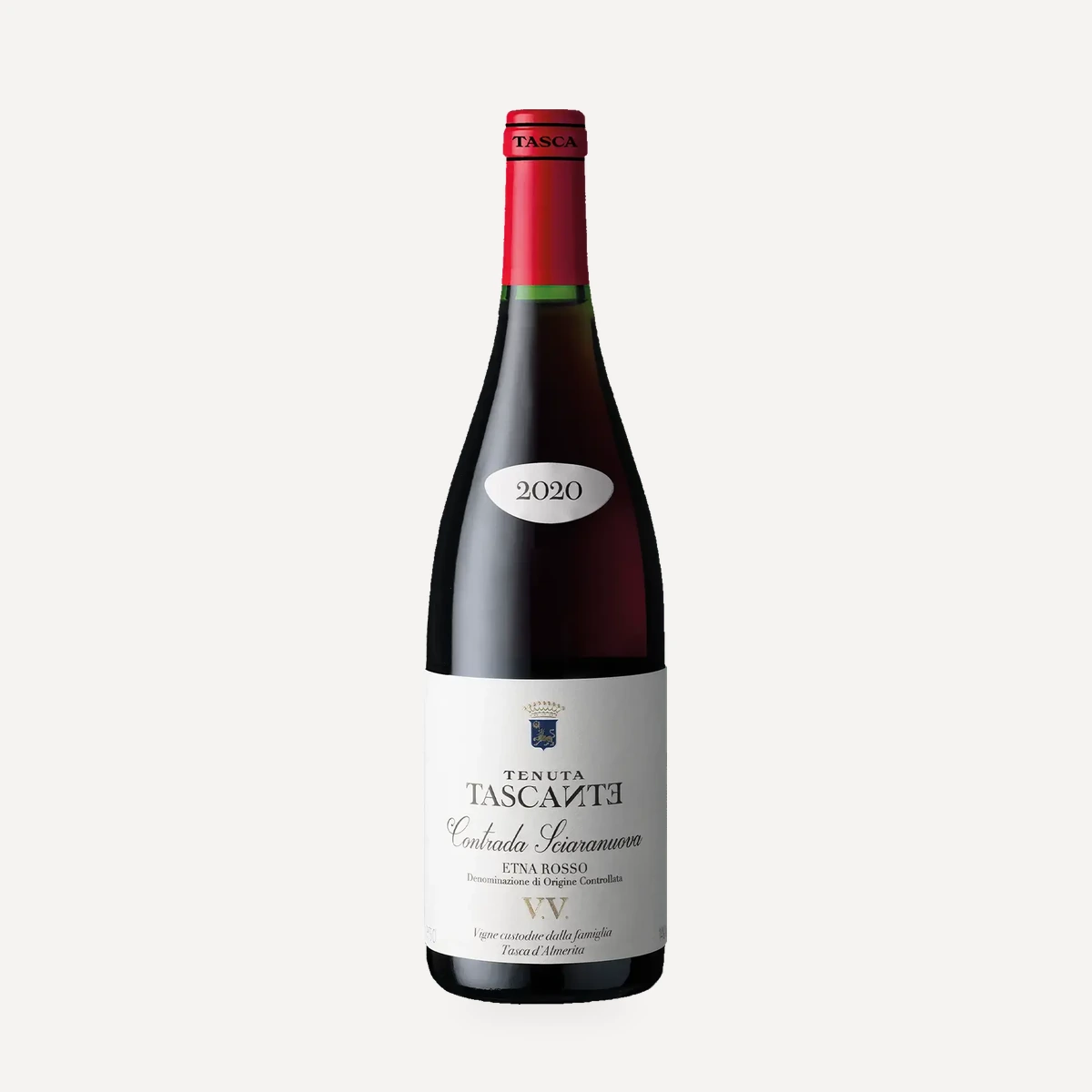
Contrada Sciaranuova Vigna Vecchia
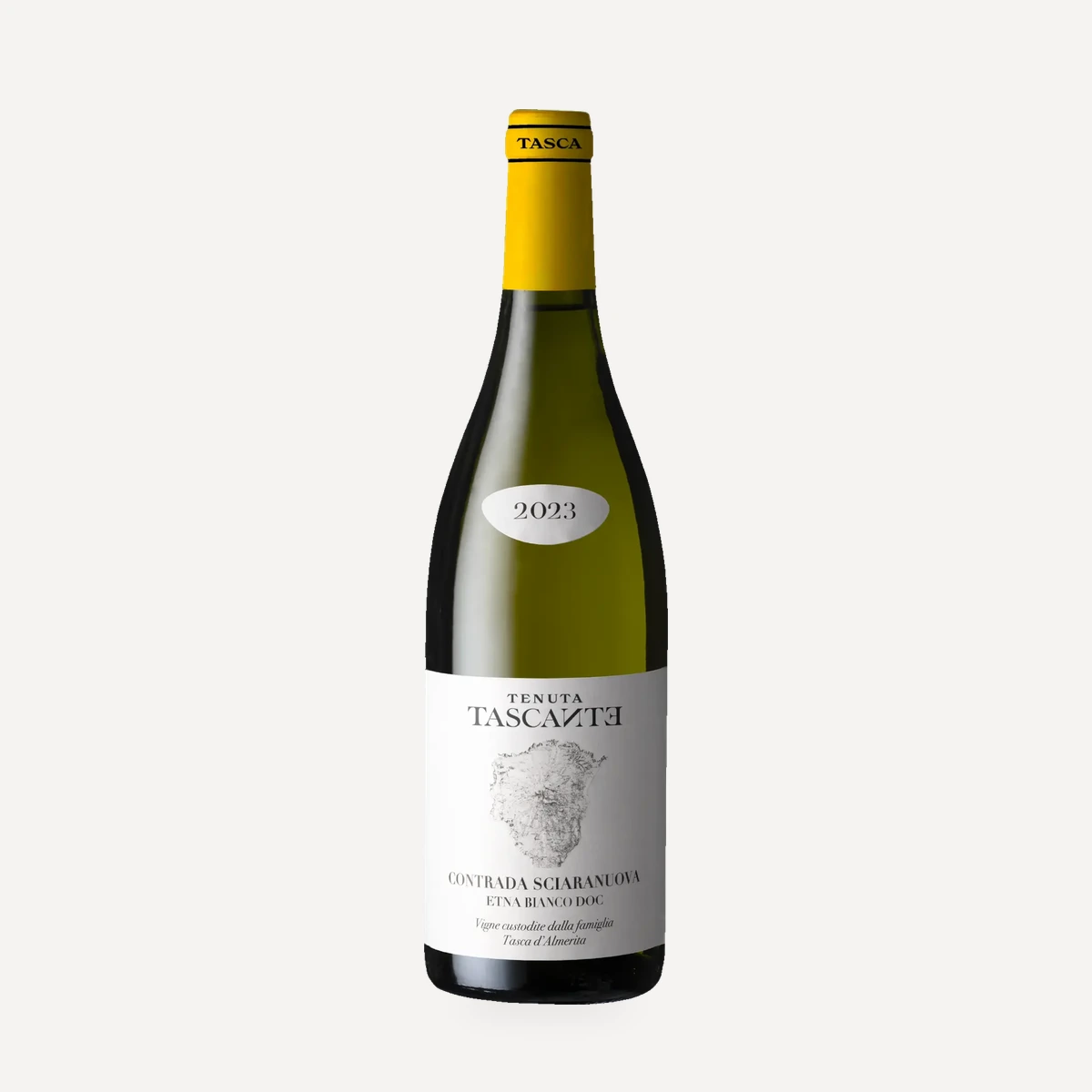
Contrada Sciaranuova Bianco
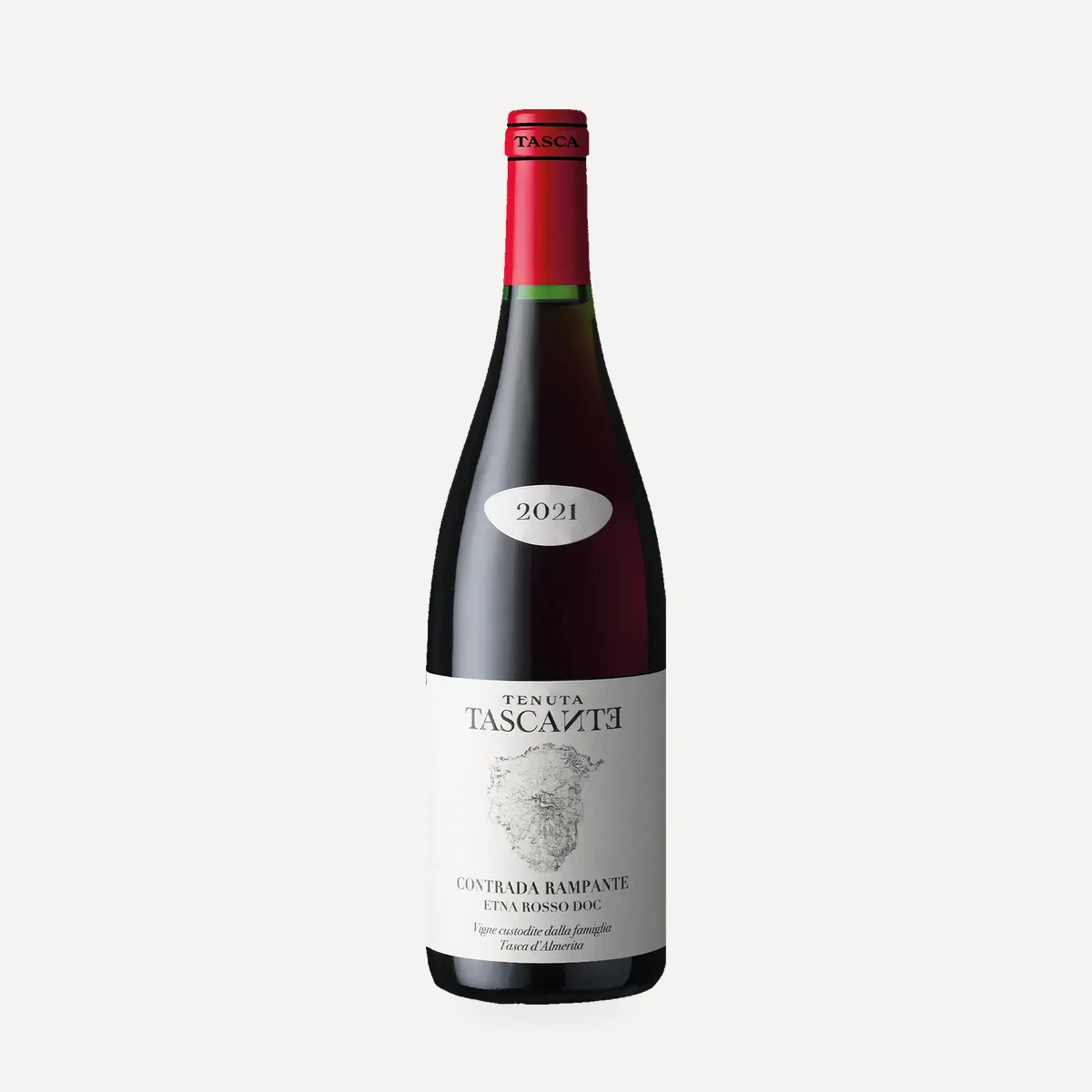
Contrada Rampante
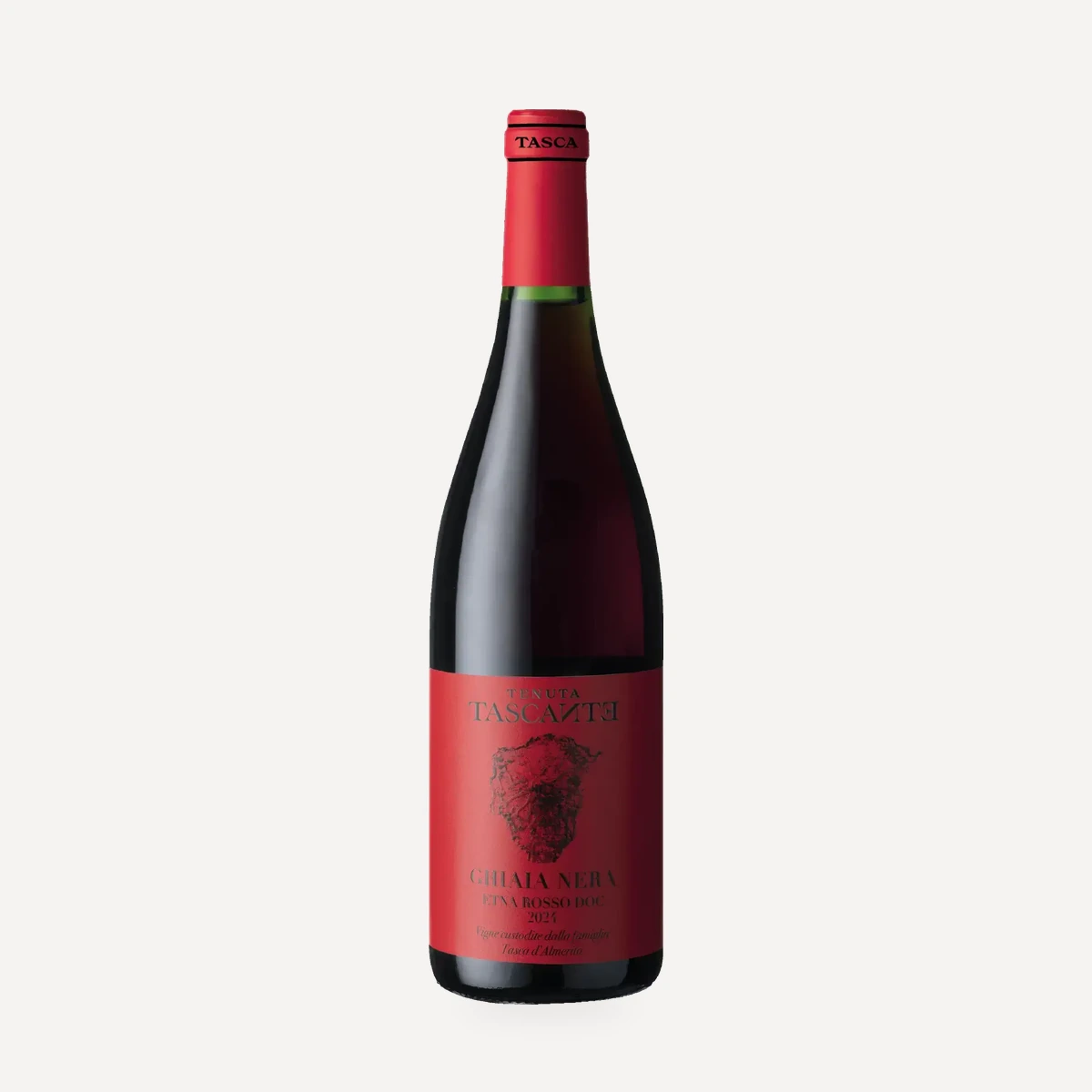
Ghiaia Nera
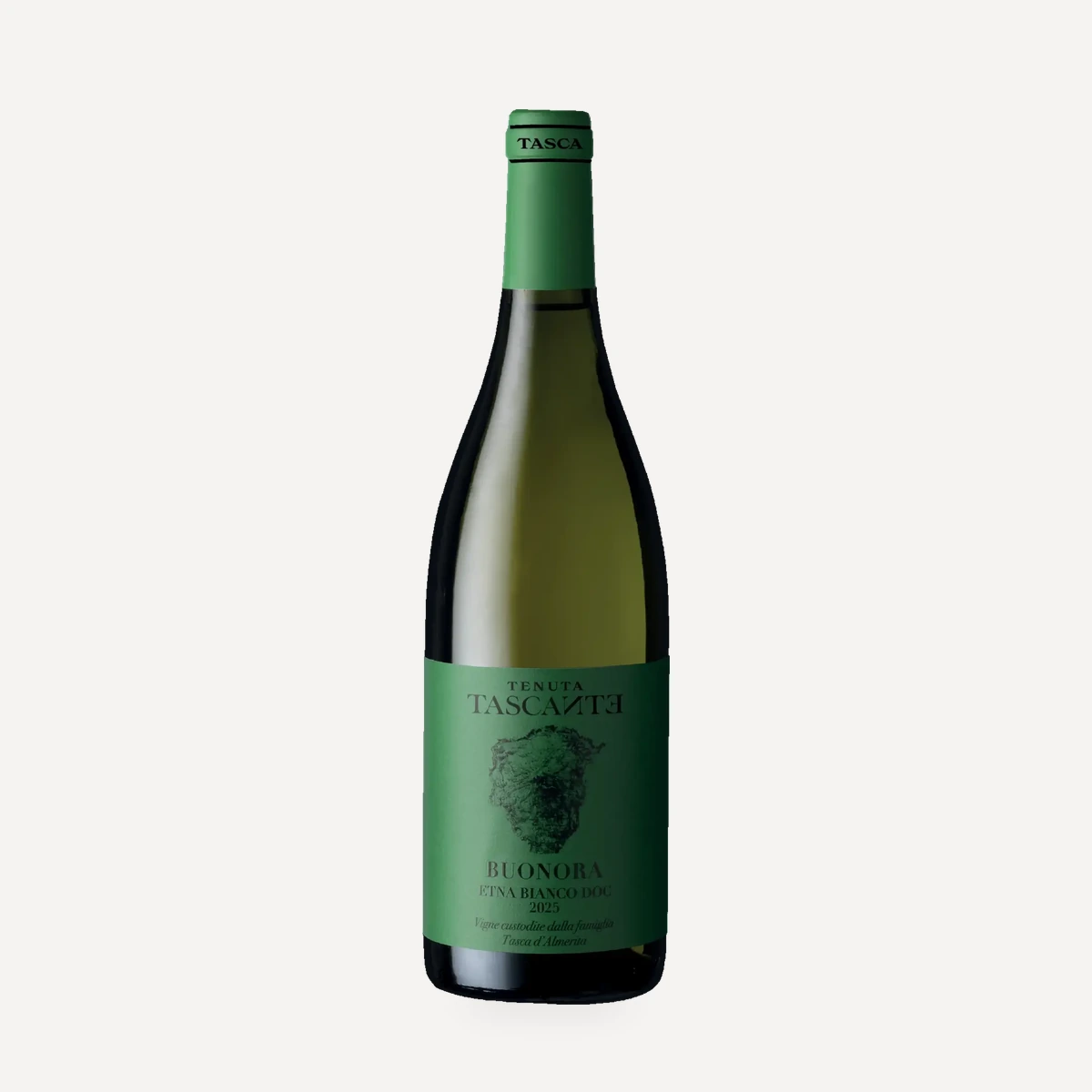
Buonora
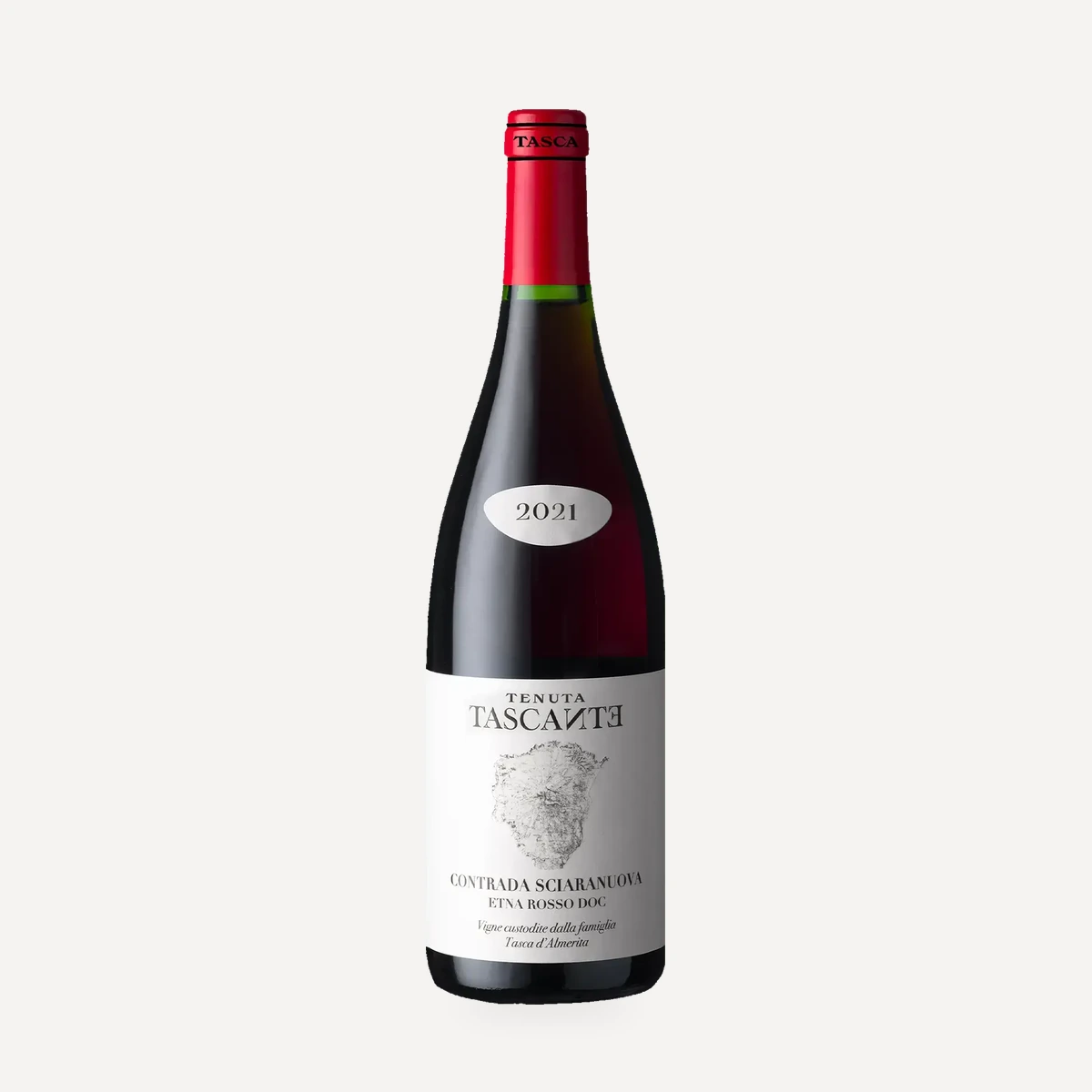
Contrada Sciaranuova
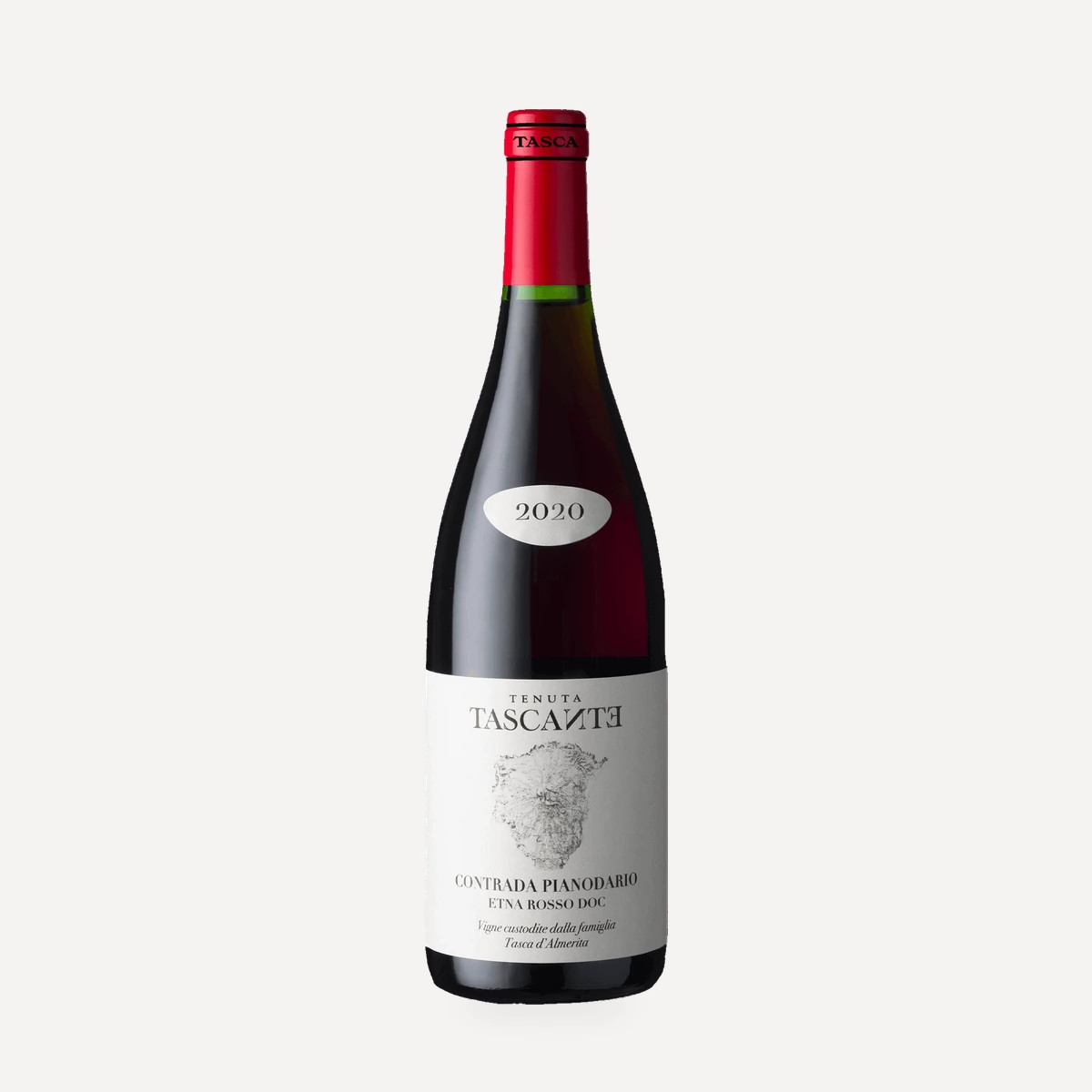
Contrada Pianodario
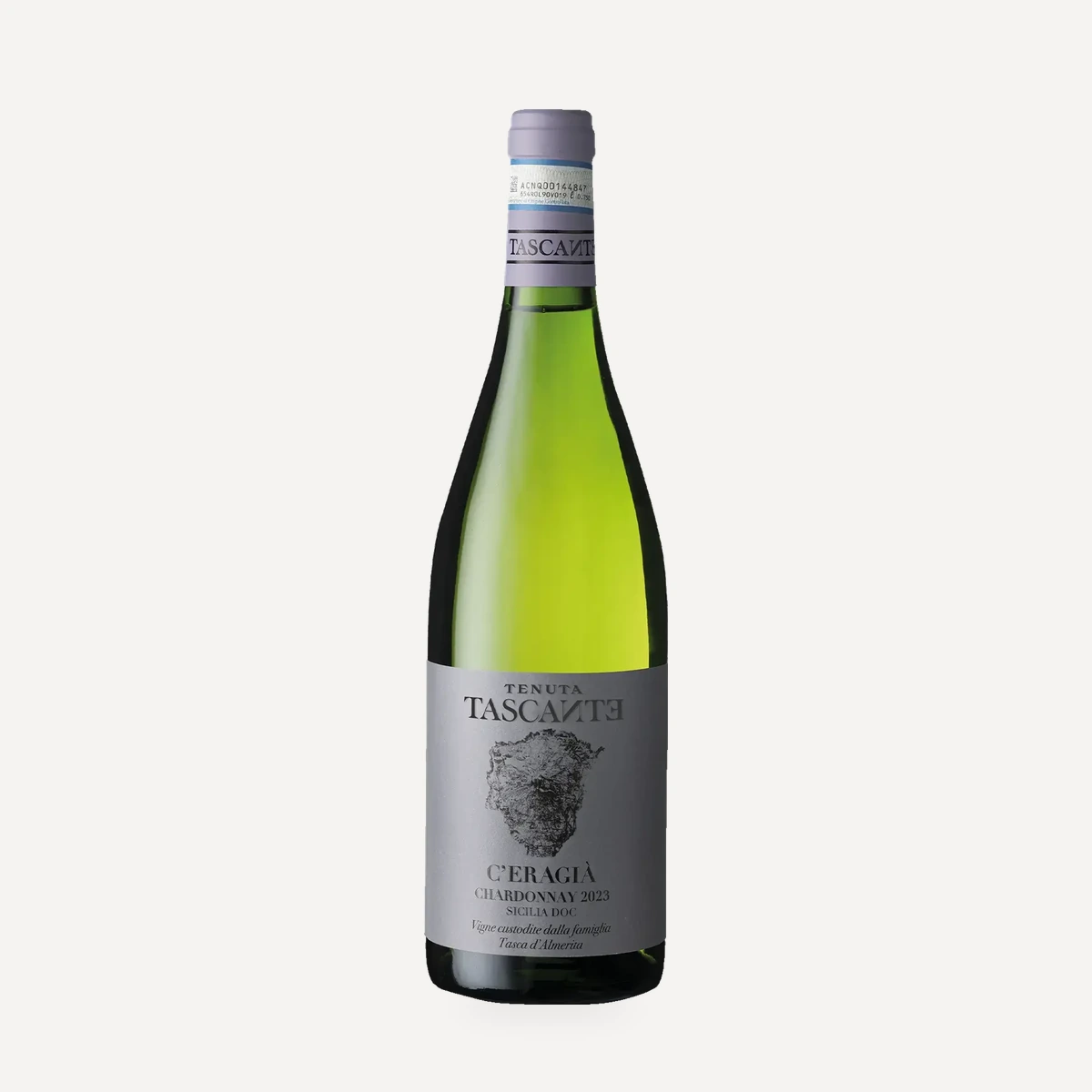
C’eragià