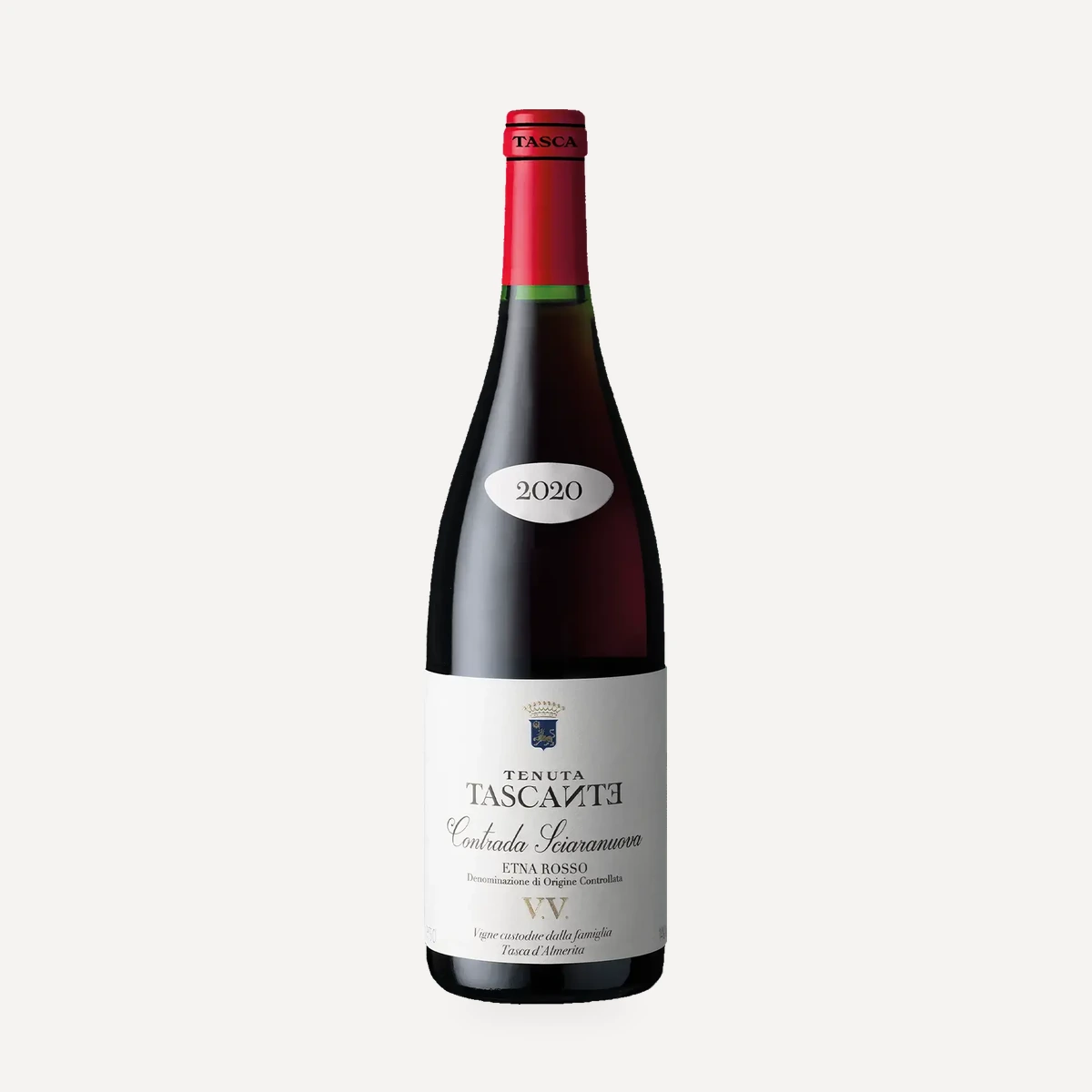
Questo vino
Vineyard and terroir
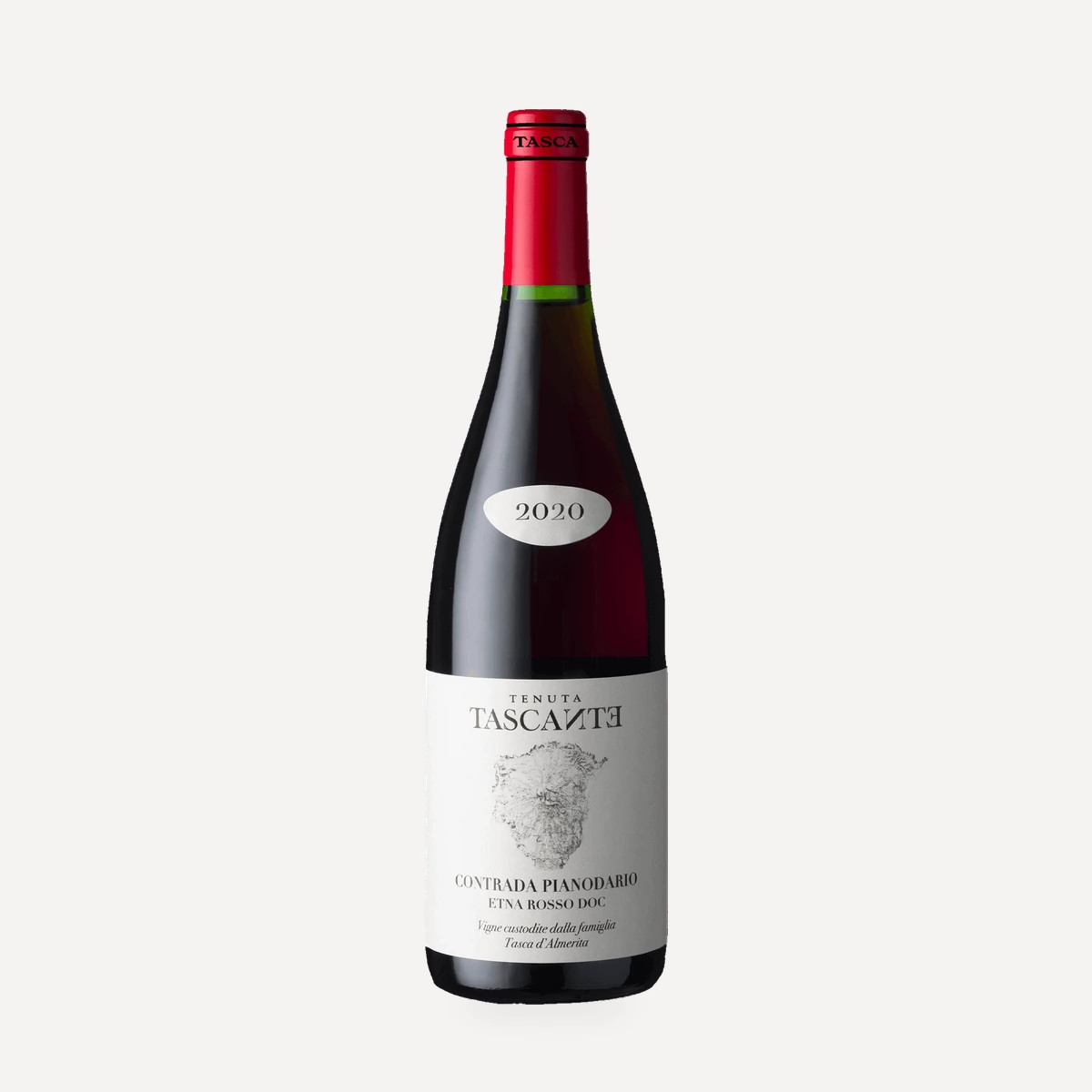
Contrada Pianodario lies on Etna’s northern slope between Montelaguardia and Randazzo. The 11.39 ha property includes 8.84 ha under vine and is arranged across 99 terraces at an average elevation of 775 m a.s.l. The vines face northeast–southwest and are trained mainly as walled bush vines, with a small proportion on untreated chestnut stakes. The technical specification also identifies espalier training. Planting density is 7,000 vines/ha.
The layered volcanic ground comprises formations dating mainly to 15,000–4,000 years ago over much older strata. Ventilation, exposure and altitude promote a slow ripening cycle.
Grapes
Nerello Mascalese.
Vinification
The 2020 grapes were harvested on 25 October. Traditional red-wine fermentation took place in stainless steel at 25–30°C for 10 days, followed by complete malolactic fermentation.
Ageing
The wine matured for 12 months in 25 hl Slavonian oak barrels.
Technical data
2020: 13.5% vol.; pH 3.26; residual sugar 1.0 g/L. Total acidity is given as 6.19 g/L on the wine page and in the Italian section of the technical sheet, but as 5.96 g/L in the sheet’s English section. Total extract is similarly reported as 26.1 and 26.3 g/L. The published yield is 65 q/ha, except for 63 q/ha in the English PDF text.
Tasting profile
Light ruby in color, with floral aromas and a finely drawn palate. Soft, subtle tannins lead into a long, complex and persistent finish.
Vintage notes
Spring 2020 was cool with limited rainfall. Summer remained moderate and brought useful rain, while September was warm and wet before dry weather returned at the beginning of harvest. Adequate water and restrained temperatures supported the slow, complete ripening of Nerello Mascalese.