Questo vino
Vineyard and terroir
Duca Nero comes from 3.5 hectares in the Passopisciaro area on Etna’s northern slope, at 830–860 metres above sea level. The sandy volcanic soil was formed by lava eruptions and has a neutral pH, little active limestone and good organic content. The average planting density is 4,831 vines per hectare and yields are approximately 40–50 quintals per hectare. Vines are trained on a vertical trellis and spur-pruned, with four spurs and two buds per spur. The vineyard faces north; rows on the lower terrace are oriented 53° northwest and those on the upper terrace 100° northwest.
Grapes
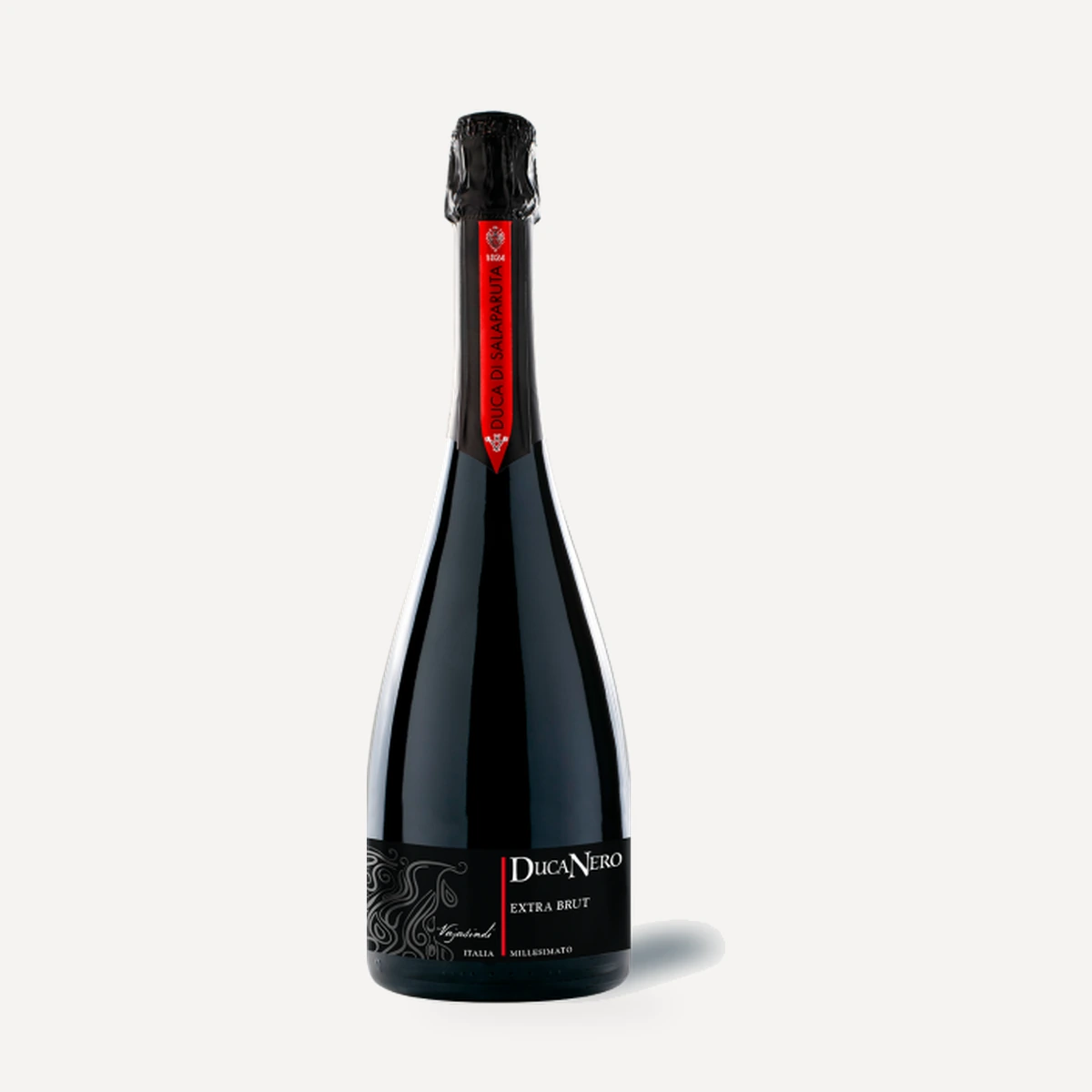
Pinot Nero. Duca Nero is a vintage Extra Brut quality sparkling wine made by the Charmat method.
Vinification
The grapes were picked by hand at the end of August 2022 into small 3 kg crates. Picking took place at an early stage of ripeness, when acidity was high and sugar content moderate. After destemming, the fruit entered the fermenting vat and alcoholic fermentation began. The skins were worked after several days to extract polyphenols and anthocyanins. Fermentation lasted approximately two weeks, followed by at least five further days of skin contact. After racking, malolactic fermentation occurred naturally in concrete tanks.
Ageing
After removal from the lees, the wine aged for at least one year, divided between concrete tanks and new and second-use oak barriques. Bottle maturation lasted at least two months before release.
Technical data
The 2022 has 12.5% alcohol, total acidity of 6 g/L and a pH of 3.5. The published bottle format is 75 cl.
Tasting profile
Very pale straw yellow with distinct green reflections. The nose combines floral, balsamic and mineral aromas with a light suggestion of bread crust. The palate is broad, fresh and fragrant. Fine, persistent bubbles and lively acidity refresh the finish.
Serving and pairing
Suitable as an aperitif and particularly effective with succulent dishes, where the acidity and persistent mousse refresh the palate.
Vintage notes
The 2022 season began with a rainy winter and dry spring, while the vine’s phenological stages ran slightly ahead of the recent average. A very hot start to summer gave way to more temperate conditions, allowing complete ripening while preserving the acidity and freshness sought for Duca Nero.