Storia
2020 — An unexpected beginning
The project began during the disruption of 2020, when its future principals encountered an abandoned farmhouse and vineyard among the Monferrato hills. The property did not yet bear the Tenuta Magrini name. Coming from seaside cities and with no previous account of wine production attached to the project, they decided to recover the place, preserve its approximately twenty-year-old vines and begin making wine.
2021 — A new approach to the land
Work in the vineyards began under an organic protocol. Chemical herbicides were eliminated in 2021, before the estate itself was formally founded. Synthetic pesticides were not introduced, and soil life became the foundation of the agronomic programme.
2022 — Foundation and first vintage
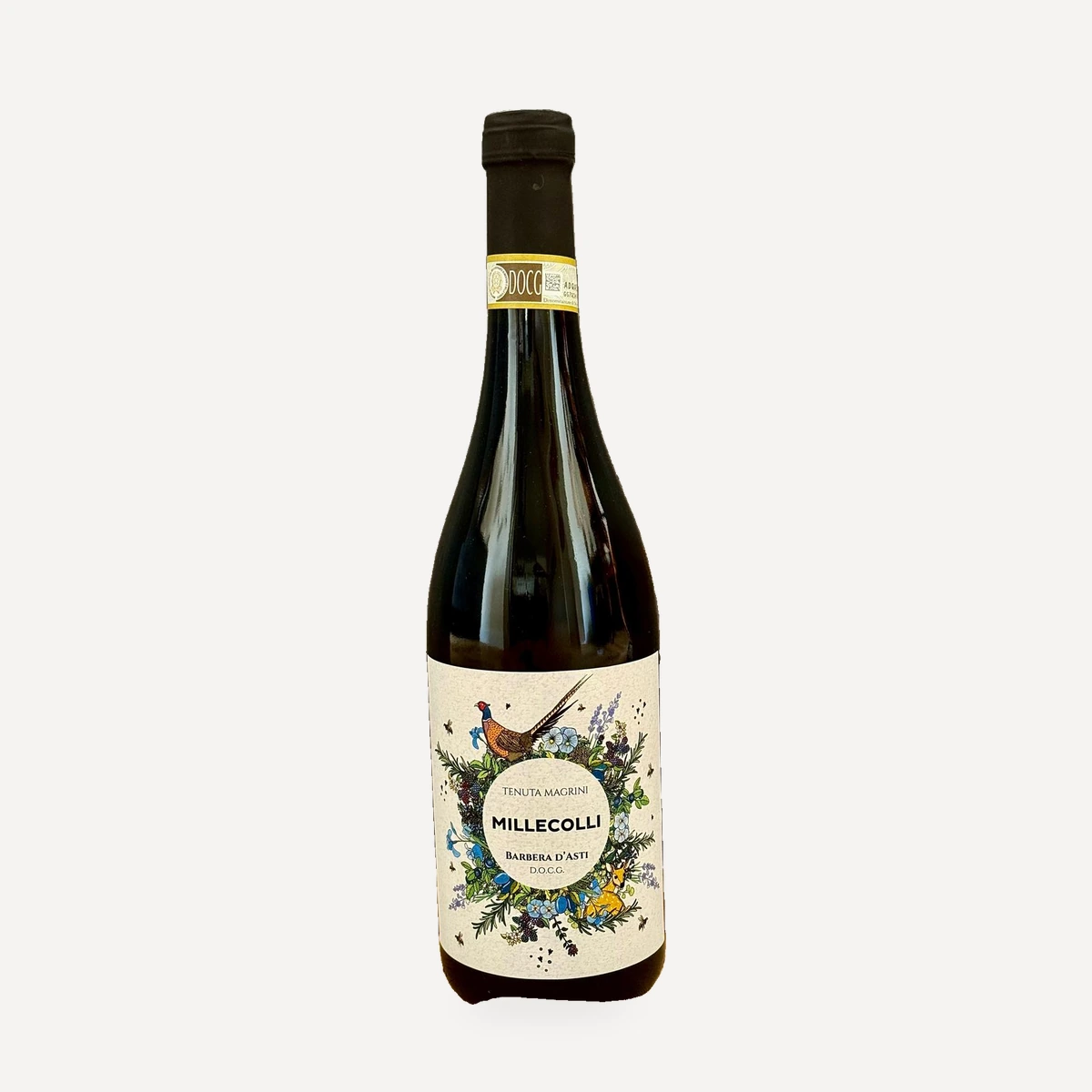
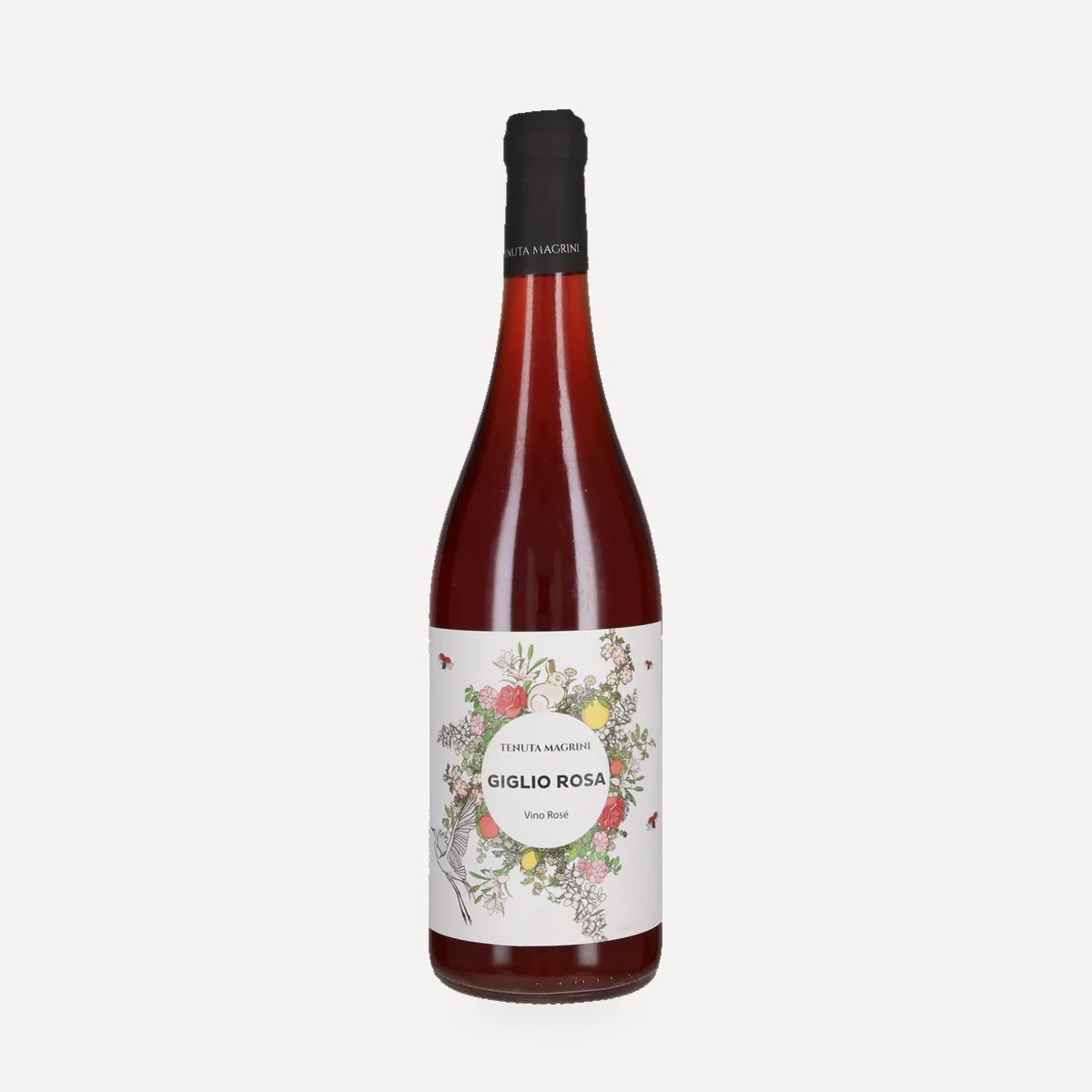
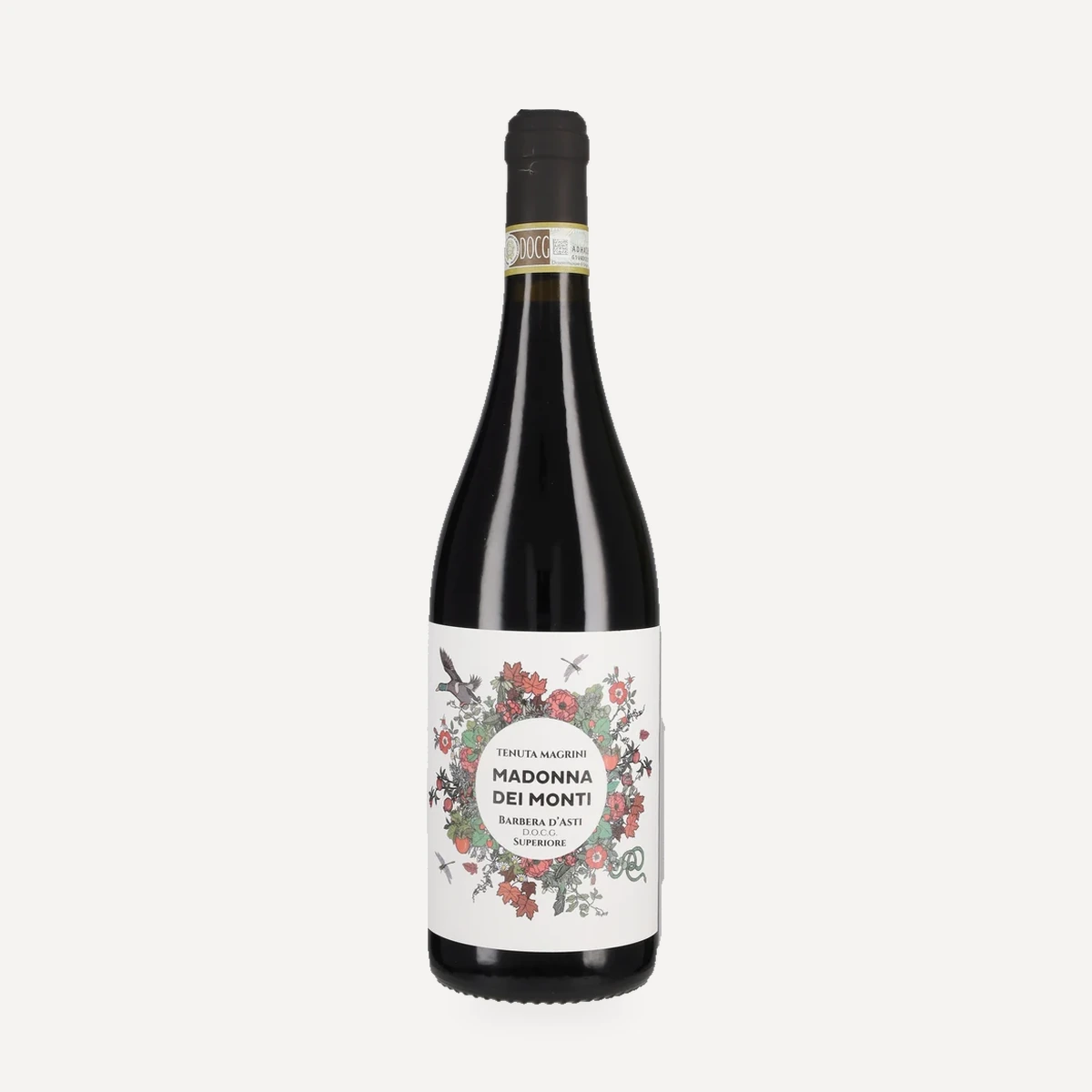
Tenuta Magrini was founded in 2022 at Grazzano Badoglio. The old farmhouse became the estate’s base, surrounded by a single block of vines on a south-facing hillside at 350 metres. The first vintage produced the estate’s three original Barbera interpretations: Giglio Rosa, Millecolli and Madonna dei Monti.
The cellar approach was established around manual harvesting, intact fruit, indigenous yeasts and limited intervention. Steel was selected for the fresher expressions, while used barriques were adopted for the longer-aged Barbera d’Asti Superiore.
2023 — Formal organic conversion
Formal conversion with ICEA, the Istituto per la Certificazione Etica e Ambientale, began in 2023. The farm plan was registered, vineyard operations began to be documented systematically and the property opened its vineyards and cellar records to independent inspection. Analyses of soil and grapes found no synthetic residues. The estate subsequently completed the process and its wines are now ICEA certified.
2024 — A second grape and a documented harvest
The 2024 harvest introduced Nebbiolo to the estate’s production through Névola, the first label not based on Barbera.
The season was marked by vigorous canopy growth in June and July, followed by two dry August weeks and daytime temperatures above 35°C. Younger vines showed some water stress, while the older, deeper-rooted vines proved more resilient. Rain on 2–3 September delivered 15 mm, after which night temperatures fell to about 18°C and the day-to-night variation reached approximately 12°C. Harvest ran from 9 to 14 September, beginning with fruit for the rosé and continuing with the other Barbera selections. Four people began picking at 06:00 on the first day. The oldest vines produced smaller, more concentrated clusters, and the dry August resulted in fruit without visible botrytis. Spontaneous fermentation of the rosé began after three days.
2026–2027 — Recognition and association membership
Tenuta Magrini became a VinNatur member and was listed on Raisin. Bibenda’s 2026 guide awarded 4 Grappoli to three individual wines. The estate also appeared in Slow Wine 2027 for the first time, among 168 new wineries admitted to that edition.
Terroir
Location and topography
Tenuta Magrini lies at Strada Oliva 5, approximately 1 km from the centre of Grazzano Badoglio in the Asti section of Monferrato. The farmhouse and just over 3 ha of vines occupy a south-facing hillside at 350 metres above sea level. The vineyard forms one contiguous block around the farmhouse, with woodland on its north-western side. The slope looks toward the hills of Casale Monferrato; vineyards, hazelnut groves and centuries-old oaks surround the property.
The southerly aspect lengthens exposure to sunlight. At this elevation, nights are generally 2–3°C cooler than on the valley floor, slowing ripening and helping preserve acidity into late September. September solar radiation on a well-exposed local slope can be 30–40% higher than on a north-facing slope under comparable weather. The estate’s position away from the plain also affords some protection against damaging late-spring frost.
Geology and soils
The vineyards stand on Langhian formations dating from approximately 15.97 to 13.82 million years ago. These sequences of marl and sandstone formed as marine sediments on the floor of the ancient Padano Sea. Seashells can still emerge when the ground is worked.
Estate soils are predominantly marl-clay and calcareous, with about 12–15% active limestone. The marl is a moderately friable mixture of clay and calcite that combines drainage with water retention and keeps the root zone cooler in summer. Clay acts as a slow water reservoir but can compact, requiring careful management. Active limestone occurs in a sub-alkaline environment; the vines therefore use rootstocks selected for tolerance to iron chlorosis.
Climate and microclimate
The wider Monferrato climate is temperate continental, moderated by the Alps to the north and influenced by warm, dry maritime currents passing through the Ligurian Apennines to the south. Average summer daytime temperatures are described as 20–28°C, although afternoon temperatures around 35°C can occur. Day-to-night drops of 10–15°C are typical and are reinforced at the estate by altitude and constant wind. Winters are cold, with January frost occasionally reaching −8°C; spring rainfall is useful but unpredictable, while autumn usually brings clearer, drier weather and gradually falling temperatures.
Annual rainfall averages approximately 600–700 mm, concentrated in spring and autumn. Moderately dry summers assist ripening and reduce fungal pressure. The woodland acts as an additional thermal and moisture buffer: it moderates cold spring currents, slows summer wind and evaporation and helps retain soil moisture during dry periods.
Vinificazione
Organic and regenerative programme
The vineyards have been herbicide-free since 2021. Formal ICEA conversion began in 2023, and the wines are now certified organic. The system excludes synthetic pesticides, chemical fertilisers, chemical weed control and GMOs. Permitted preventive materials—including copper, sulphur and bicarbonate preparations—are used only when required. ICEA inspection covers vineyard inputs, farm records, possible contamination from neighbouring plots, cellar materials and sulphite levels; annual inspection and possible unannounced controls form part of the certification system.
Regenerative work is intended to leave the soil more biologically active each year. Permanent or controlled cover crops occupy the inter-rows; mixtures include clover, vetch and field bean among the legumes, and ryegrass and fescue among the grasses. Legumes fix nitrogen, while grasses stabilise the slopes, reduce erosion and return organic matter when mulched. Compost, green manure and other organic matter replace synthetic fertilisers. Pruned canes are chipped and returned to the soil, and compost is applied in November.
Biodiversity
Woodland, trees, hedgerows and spontaneous vegetation are retained as functional parts of the vineyard ecosystem. They provide nesting and overwintering habitat for ladybirds, lacewings, parasitoid wasps, bats, swallows, blackbirds and great tits. These populations help control grape moths, nocturnal lepidoptera, larvae and caterpillars. Clover flowers support bees, while the inter-row vegetation gives beneficial insects alternative prey and shelter.
Hedgehogs, hares, badgers, buzzards and tawny owls are treated as indicators that the local food web remains intact. The wood also functions as a thermal buffer, moisture regulator and barrier against climatic extremes.
Precision monitoring and plant protection
Several vineyard monitoring stations feed the XFarm platform. They record air temperature and humidity, leaf wetness, solar radiation, and soil temperature and moisture at multiple depths; readings are transmitted hourly. Soil temperature is measured at 10 and 30 cm, helping determine the return of root activity and whether conditions are suitable for machinery without damaging soil structure.
Local weather forecasts and predictive models calculate downy mildew and powdery mildew infection risk from temperature, humidity and vine phenology. Alerts prompt inspection rather than automatic treatment. Leaf-wetness data guide the timing of minimum preventive copper and sulphur applications. Soil-moisture measurements are also used to choose when cover crops can be mulched without compacting deeper layers. The platform maintains the digital farm journal, but daily observation in the rows remains the basis for final decisions.
Annual vineyard cycle
Barbera is pruned by hand to Guyot in January and February, leaving a restrained number of buds. Shoot positioning and tying begin during spring growth, followed by leaf removal around the clusters to improve airflow. In July and August, upright shoots are trimmed and the canopy is monitored to balance light, air circulation and protection from excessive heat. The dense growth of 2024 required heavier-than-usual leaf removal.
Ripeness is followed through berry tasting, seed colour, sugar, total acidity and pH rather than a fixed calendar date. Barbera harvest commonly falls between late September and the first half of October, but the timing changes with the vintage. Fruit intended to retain greater freshness is picked earlier, while the selection intended for longer ageing remains on the vine for fuller ripeness.
Harvest is always manual. Bunches are selected in the vineyard and placed intact into perforated crates holding no more than 20 kg. Mould-affected, damaged or insufficiently ripe clusters are rejected. Picking begins in the cool early morning, preserving intact skins, limiting oxidation and protecting the indigenous yeast population needed for spontaneous fermentation.
Cellar principles and fruit reception
The cellar protocol is based on minimal intervention: no selected yeasts, no acidity correction, no pectolytic enzymes and no heavy or sterile filtration. Healthy, intact fruit is the essential starting point.
Hand-picked bunches arrive whole in 20 kg perforated crates. They are destemmed immediately with a gentle roller destemmer designed to separate stems without bursting the berries. A second manual selection removes any remaining substandard fruit before the must enters the vessel. No sulphur dioxide is added at this initial stage.
Fermentation and extraction
Alcoholic fermentation starts spontaneously with yeasts present on the grape skins, in the vineyard and in the cellar environment. It normally begins after several days and may take two to three weeks to complete. The indigenous population typically passes through a more active phase around the fifth or sixth day. Density and temperature are checked daily, and oxygen and temperature are managed when necessary to avoid volatile acidity, Brettanomyces or a stuck fermentation.
For the first 48–72 hours, temperature is controlled to prevent an excessively abrupt start. Thereafter the fermentation proceeds with as little interference as conditions permit. Temperatures are monitored and pump-overs keep skins in suspension. The cellar uses modest-sized vessels and natural autumn temperatures rather than large industrial refrigeration systems, vacuum concentration or flash pasteurisation.
Rosé lots receive only a few hours of skin contact before separation and continued fermentation in stainless steel. Red Barbera macerates for several days to obtain colour and structure; after pressing and separation from the skins, fermentation continues in steel. Fermentations in steel are temperature-controlled where required.
Ageing vessels
Stainless steel is used when the aim is to retain fruit, freshness and acidity. These wines rest for several months, with the red remaining in steel somewhat longer to integrate before bottling.
The longer-aged Barbera begins in steel and then spends 18 months in 225-litre second- and third-fill barriques. Used wood is chosen for slow oxygen exchange without the stronger aromatic or tannic imprint of new oak. Bottle ageing follows and is treated as an integral stage rather than a formality.
Sulphites, clarification and bottling
Sulphur dioxide is assessed by vintage rather than excluded dogmatically. Healthy fruit, spontaneous fermentation, hygiene and careful oxygen management allow very low totals. Millecolli and Giglio Rosa remain below 30 mg/l total sulphites; Madonna dei Monti is marginally higher and receives a minimal dose at bottling because of its extended barrique ageing.
Bottling takes place without sterile filtration. A light filtration may be used for stability without stripping the wine. Névola is neither fined nor filtered. Lightweight glass and recyclable, bio-based Nomacorc Green closures are used. These co-extruded sugarcane-derived closures provide consistent oxygen transmission and avoid cork-taint risk. Release follows the wine’s readiness rather than a fixed calendar.
Filosofia
Leave the world a little better
The estate’s declared objective is to leave the world slightly better than it found it. Quality begins with care of the land, so organic certification is treated as a starting point rather than the whole environmental programme. Regenerative soil management, preservation of the woodland, precision monitoring, lightweight packaging and reduced transport all follow from the same principle.
Do less, observe more
In the vineyard, technology is used to improve the timing of decisions and reduce unnecessary intervention, not to replace daily observation. In the cellar, the role of the producer is framed as protecting rather than reshaping what the vineyard has produced. Fermentation is allowed to begin with the estate’s indigenous microorganisms, and the vintage is not forced into a uniform profile.
The estate does not use biodynamic preparations and distinguishes its work as certified organic farming combined with a natural cellar approach. It also rejects a fixed zero-sulphur position: a minimal protective addition is preferred when necessary to avoid a compromised wine.
Place, vintage and patience
Individual vintages are expected to differ. The estate values wines that retain the imprint of their year, hill and microbial environment. Steel, used wood, maceration and release dates are therefore selected according to the intended expression rather than as a hierarchy of quality. Waiting—during fermentation, maturation and bottle ageing—is presented as an active part of production.
Vini
Giglio Rosa
Madonna dei Monti