Questo vino
Vineyard and terroir
The 37 ha vineyard lies at Torrececcona di Todi, 400 m above sea level. Its medium-textured soil tends toward clay. The vines are 15 years old, trained to spur-pruned cordon and planted at 5,000 vines per hectare. Yield is 100 q/ha.
Grapes
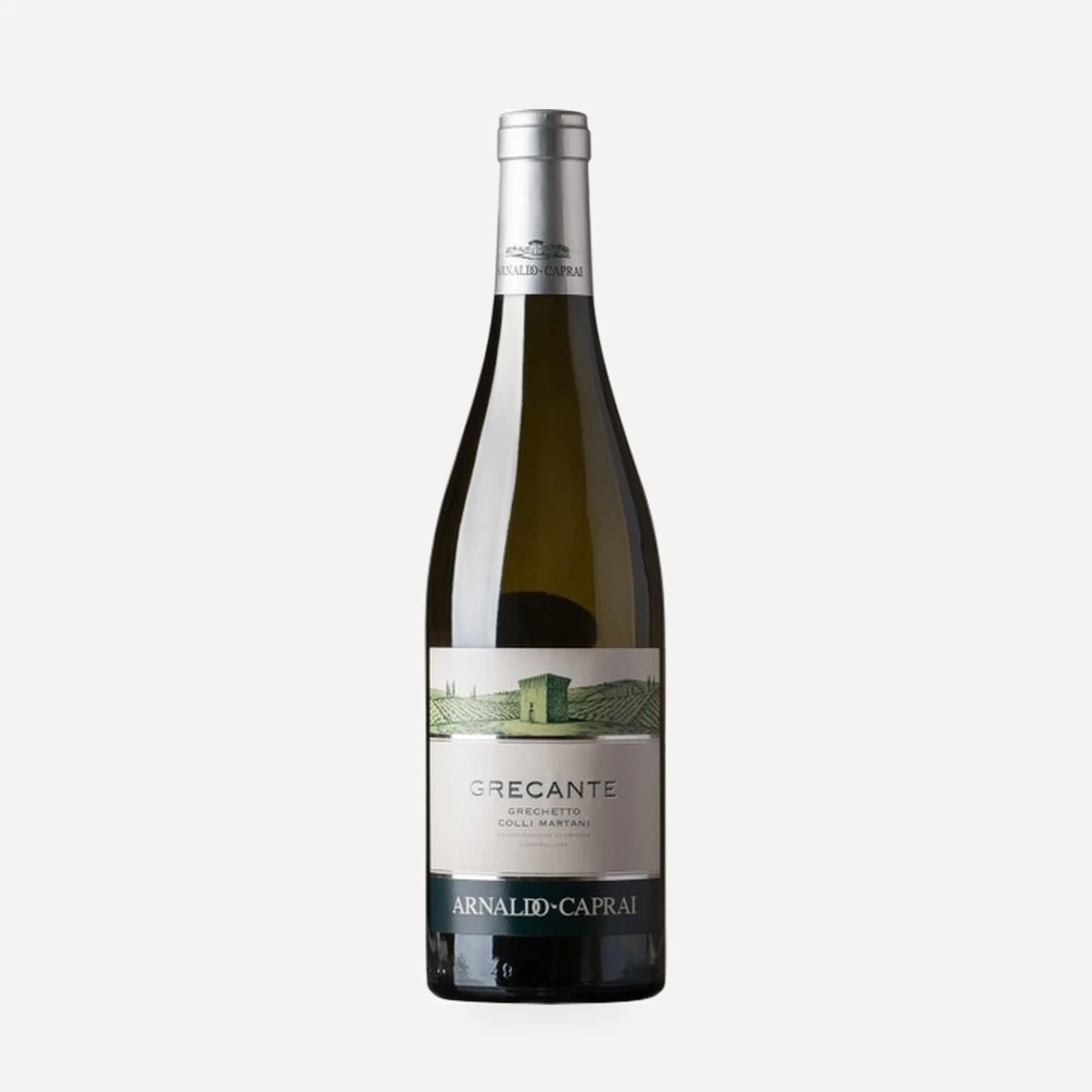
Grechetto.
Vinification
Harvest takes place in mid-September. The grapes are picked during the coolest early-morning hours and chilled on arrival at the winery to limit oxidation, preserve their aromatic potential and prevent unwanted fermentation. White vinification begins with gentle pressing in an oxygen-free environment to slow enzymatic oxidation. After 24 hours of static settling, the must is inoculated with selected yeasts and fermented at low temperature for 12 days in stainless-steel tanks. Malolactic fermentation is not carried out.
Ageing
The wine matures on its lees in stainless steel and subsequently ages in bottle.
Technical data
Colli Martani DOC Grechetto. Vintage: 2023. Alcohol: 13% vol. Production: 300,000 bottles. Format: 750 ml.
Tasting profile
Straw yellow, with aromas of chamomile and ripe peach accompanied by a vivid sensation of fresh citrus. The palate opens with freshness and intensity and closes with a pronounced savory finish.
Serving and pairing
Serve at 10 °C with substantial starters, fish or white meats.
Vintage notes
The 2023 growing season was difficult and uncertain. Spring frosts and heavy rain in May and June encouraged fungal disease, disrupted phenological development and reduced production. Stable weather from the second half of August through the end of harvest helped the grapes recover ripeness. Significant temperature variation preserved acidity in the white grapes and supported their aromatic development.