Storia
Family farming roots
Stefania Carrea’s family had worked the fertile red soils around Gavi for generations. Her father, Matteo, was a farmer, although he initially grew the other crops historically cultivated in the area rather than grapes.
A few years before his planned retirement, Matteo decided to plant vineyards. Land values were rising alongside international demand for Gavi, and he hoped to leave his children a more valuable agricultural inheritance. His longer-term idea was to attempt small family vinifications and see where the project might lead.
2008: Matteo’s death and the family project
Matteo died suddenly in 2008. At that point none of his three children worked in agriculture: Stefania was a psychologist, Diego an engineer, and Milena a doctor. The siblings nevertheless chose to continue their father’s project.
The first venture was called Molinetto Carea. By 2011, Stefania and her brother had bottled their first vintage. During this early phase, Diego handled the vineyards while Stefania worked in the cellar. In her first vintage, Stefania decided against adding sulfur dioxide after tasting the wine and concluding that its vitality should be left intact. She was also interested in indigenous yeasts and in observing how the wine developed with minimal intervention.
2013: creation of Terre di Maté
After two or three vintages, Stefania and Diego concluded that they wanted different results from both vineyard and cellar. Diego favored a more conventional style, while Stefania wanted to continue experimenting with indigenous fermentation, no added sulfur dioxide, and a less interventionist approach. The vineyards were divided and they pursued separate projects.
Stefania retained the vineyards in Belvedere di Tassarolo and established Terre di Maté in 2013. The name commemorates Matteo: “Maté” is the dialect form of his name. Her stated objective was to unite the family’s agricultural tradition and respect for nature with exacting work in the cellar.
The separation required her to create a working estate almost from the beginning. She bought a tractor, arranged rented cellar space, and rebuilt commercial relationships because most of the previous sales network remained with her brother. She also assumed all vineyard and cellar work herself while continuing her psychology practice and her work at a community center serving mainly people with Alzheimer’s disease and their families.
Obtaining her first tractor took six months. While waiting, despite having paid for it, she borrowed equipment from neighboring growers. She later encountered similar skepticism when seeking a replacement part for a broken atomizzatore, even though she had already identified the faulty component.
Development of the independent estate
The independent estate came to encompass 4.5 hectares in Belvedere, entirely planted to Cortese di Gavi. At the time of an estate profile discussing the fermenting 2016 wines, Stefania was personally carrying out the vineyard and cellar work for approximately 9,000 bottles annually. She was also developing a new pét-nat and had completed six vintages of practical experience and experimentation.
2017–2018: fairs and public events
Terre di Maté participated in the third Torino Beve Bene natural-wine event on 29 October 2017. In 2018, it announced appearances at RAW WINE London on 11–12 March, RAW WINE Berlin on 13–14 May, the fourth Torino Beve Bene on 21 October, and an edition of La Terra Trema at Leoncavallo.
Terroir
The 4.5-hectare vineyard holding lies in the hills of Belvedere, within Tassarolo in southern Piemonte, close to the Ligurian border. The broader historical territory is identified as Oltregiogo.
The vines grow at approximately 250 metres above sea level with a southerly exposure. The general soil profile is calcareous clay. Technical descriptions also characterize it as clay-rich and abundant in mineral salts, while the Belvedere area is associated with the red soil locally called “Terra Forte.”
Vinificazione
Cultivation follows organic methods rooted in manual work and traditional farming practices. Fertility is maintained with natural manure, and chemical herbicides are excluded. Vineyard protection is limited to non-systemic copper and sulfur products permitted in organic cultivation.
Manual operations include winter pruning, green pruning, suckering and leaf removal. Green pruning keeps clusters well exposed to sunlight and air, reducing humidity and susceptibility to downy mildew and powdery mildew. This canopy management is intended to lower the need for copper and sulfur treatments while helping sound fruit reach the cellar.
Production is deliberately controlled in the interest of grape quality. The average recorded yield is 80 quintals, or 8,000 kg, per hectare. Harvesting is manual, normally during September; the technical sheets further specify that picking takes place once the grapes have reached the desired maturity.
The cellar approach is deliberately minimal, with interventions restricted to those considered necessary to preserve the grapes’ natural character and their connection to the land. Cortese is vinified as a single variety.
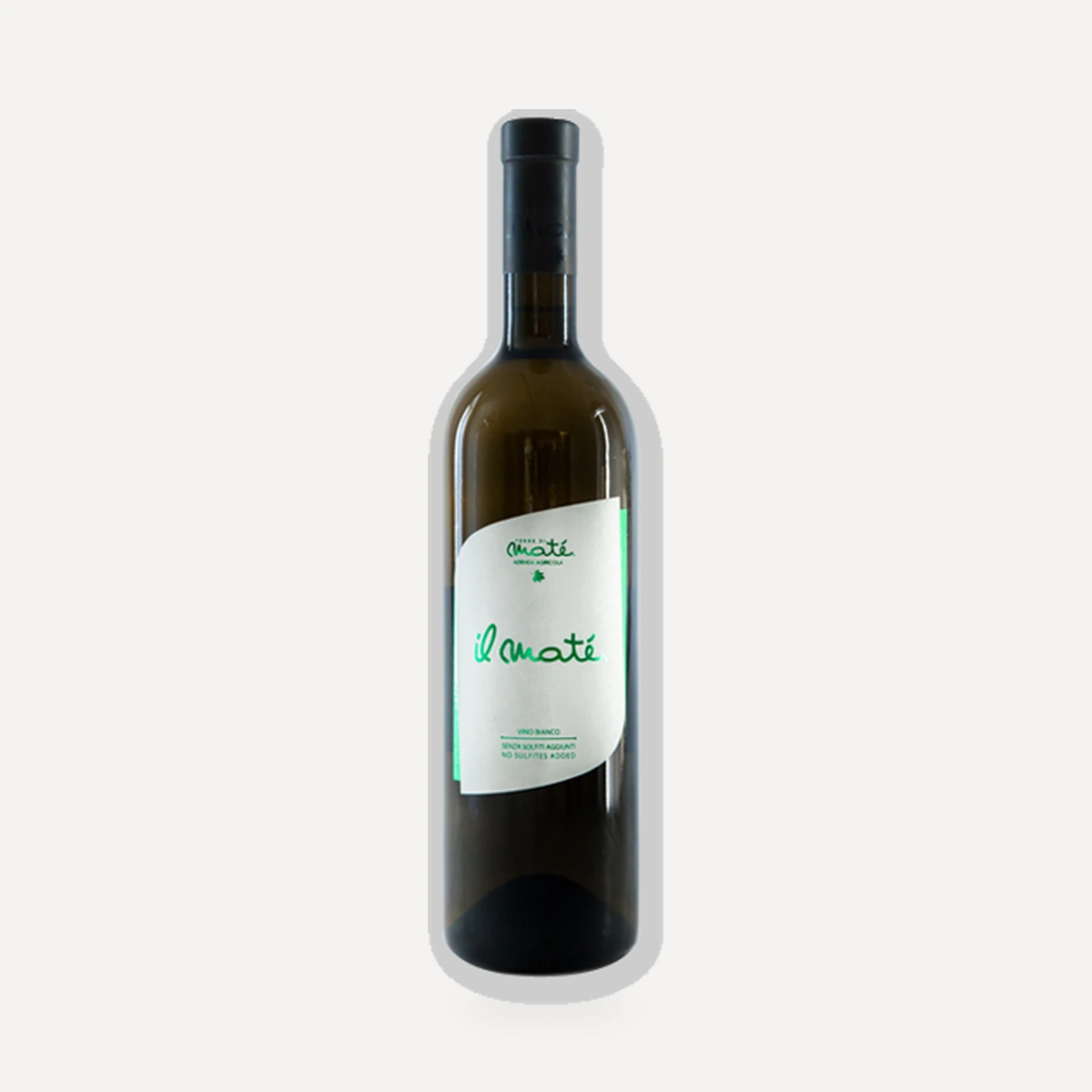
Fermentation takes place spontaneously in stainless-steel vats with indigenous yeasts and without selected yeast cultures. The 2018 technical sheets specify six months of maturation in stainless steel. The English estate profile additionally records one year of bottle maturation for Il Maté.
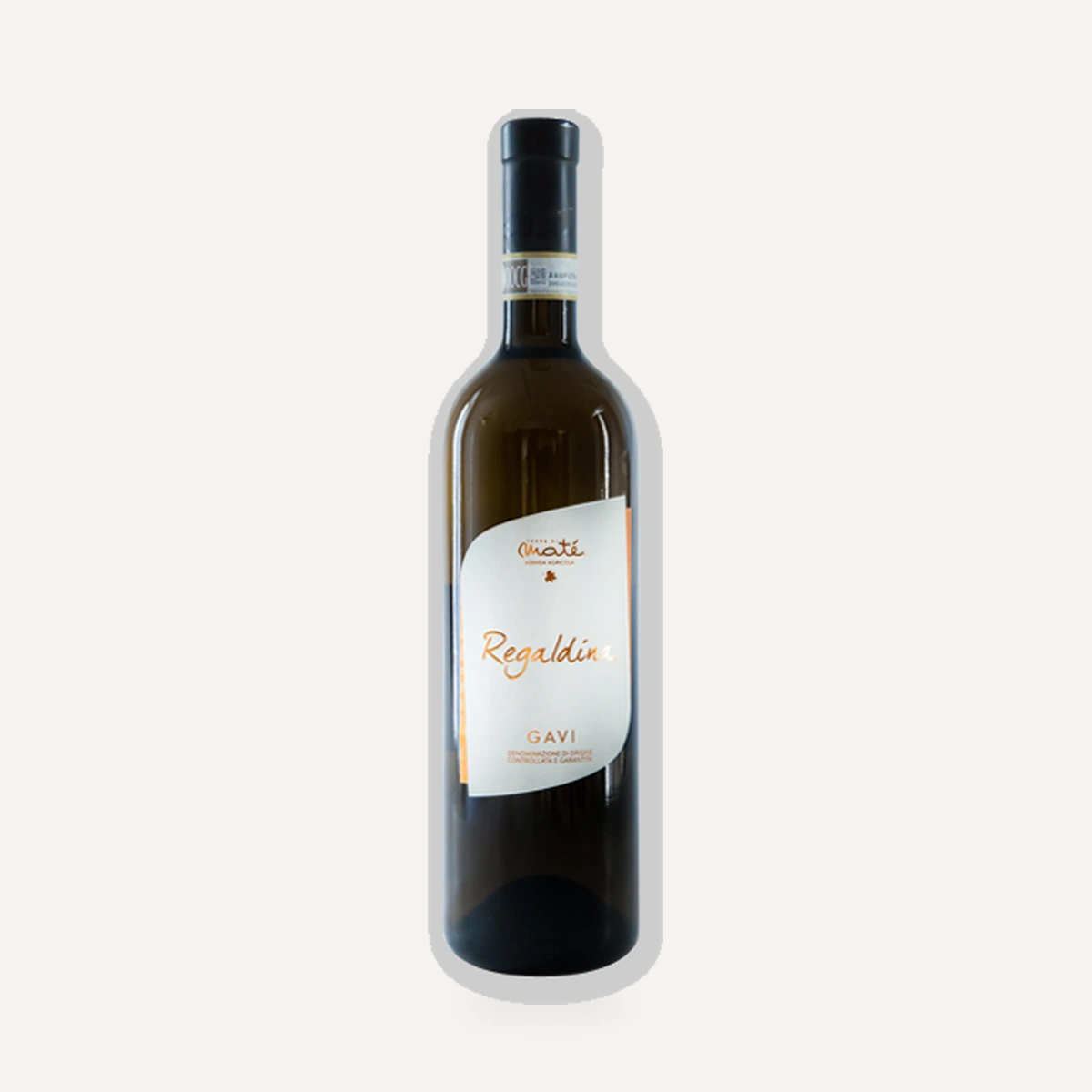
Sulfur additions are kept well below the maximum permitted under organic certification. Il Maté is made without sulfur dioxide additions at any stage; its only sulfites are those produced naturally during fermentation. The Regaldina 2017 technical sheet likewise records no added sulfites for that vintage.
Filosofia
Terre di Maté was created to join the Carrea family’s farming tradition with respect for nature and rigorous winemaking. Its guiding principles are tradition and craftsmanship from vine to glass.
The estate’s philosophy treats wine as the outcome of interaction between people and place. Vineyard work therefore begins with understanding the land’s requirements and following its natural cycles. The intended result is a wine with an individual identity that can express itself as spontaneously and naturally as possible.
In the cellar, this translates into indigenous fermentation and interventions reduced to the essentials. Stefania Carrea’s early decision to avoid added sulfur dioxide was instinctive: she considered the young wine vivid and did not want to suppress that character. Her approach developed through experimentation, successive vintages, self-criticism and active requests for constructive feedback rather than through prior involvement in the professional wine trade or an established natural-wine movement.
Vini
Il Maté