Storia
Medieval origins
The existence of the farmstead is documented as far back as the 12th century. During the Middle Ages, it belonged first to the Bavarian monastery of Schäftlarn and later to the monastery of Rottenbuch.
A 14th-century fresco in the historically significant San Vigilio chapel on Bolzano’s Monte Calvario depicts the medieval Weineck castle, a road, a gateway and a farmstead at the beginning of the road. The farmstead is believed to represent the present-day Thurnhof. Its name means “farm near the tower.”
Transfer to the Religionsfonds
During the reign of Emperor Joseph II, numerous monasteries were dissolved. In this period, Thurnhof passed into the ownership of the Religionsfonds.
The Mumelter and Berger family era
In the middle of the 19th century, Ignaz Mumelter, an ancestor of the present family and a native of Besenbinderhof in Zwölfmalgreien (Dodiciville), purchased Thurnhof. The estate traces six generations of family life and work at the property, from Franz Mumelter to Andreas Berger, spanning approximately 160 years.
At the beginning of the 20th century, the family operated a successful Buschenschank, or rural wine tavern, at the farm.
During the 1930s, Maria Mumelter, the heiress to the property, married Hans Berger, a young farmer from Gries on the opposite side of the Eisack River. This marriage connected the Mumelter succession with the Berger family name.
War damage and reconstruction
Thurnhof suffered severe bombing damage during the Second World War. The farmstead was rebuilt in the late 1940s.
Tirolensis Ars Vini
In 1994, Thurnhof joined five other South Tyrolean producers in establishing Tirolensis Ars Vini – Alto Adige Quality Wineries. The association united six largely owner-managed estates between Meran and Bozen around a shared, independently reviewed standard extending from vineyard to bottle.
The group introduced the jointly produced Cuvée Tirolensis Rot in 2000, followed by Cuvée Tirolensis Weiss in 2006. In 2014, the six members presented their first sparkling wine, Tirolensis Sekt Brut Rosé, made from early-harvested Lagrein contributed by the members and produced in cooperation with Sektkellerei Arunda in Meltina.
Six generations
The contemporary identity of Thurnhof is framed as the continuation of six generations devoted to producing wines with character. Andreas Berger is the current family representative and contact at the estate.
Terroir
Thurnhof works three vineyard sites in and around Bozen, each with a distinct position and soil profile.
Haslach
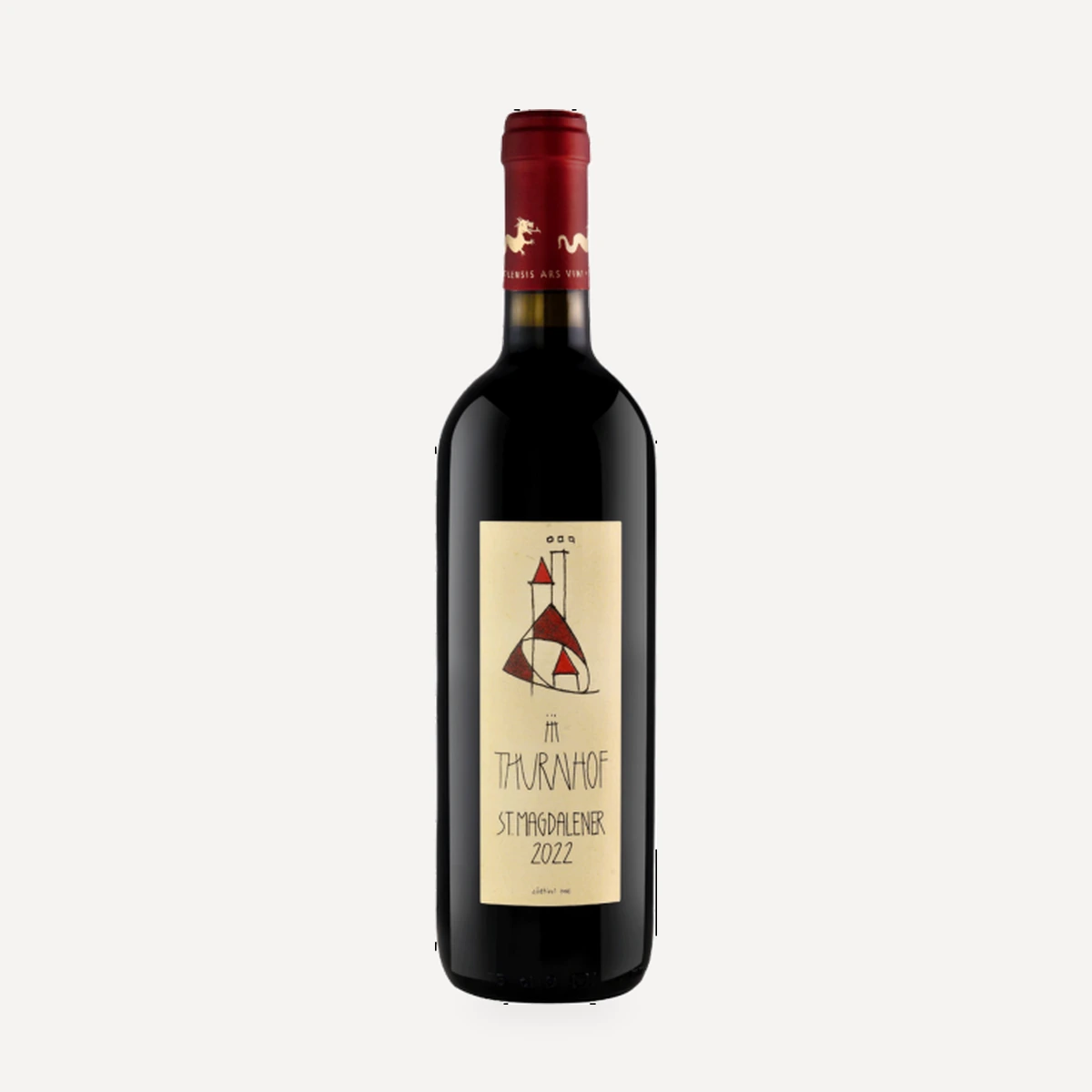
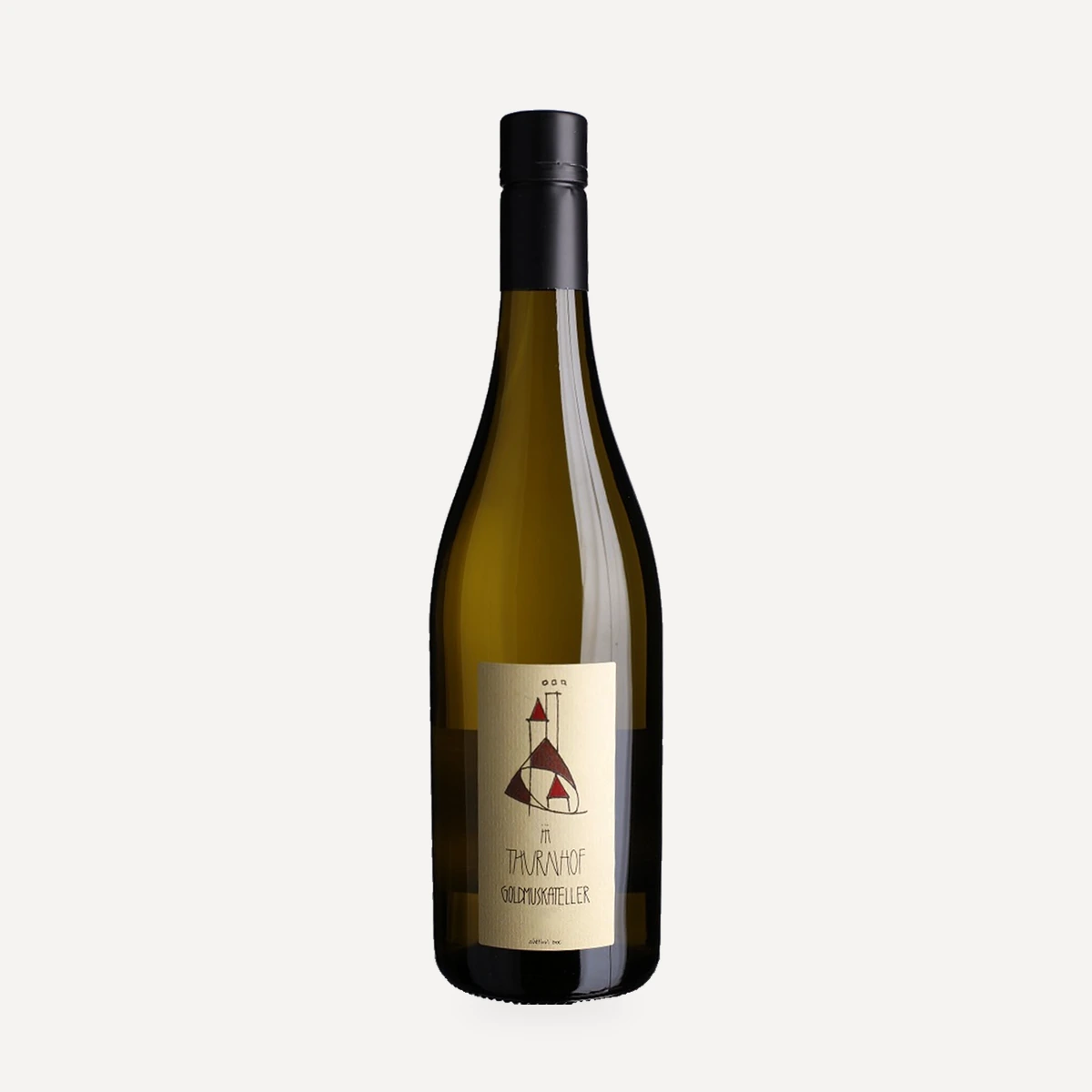
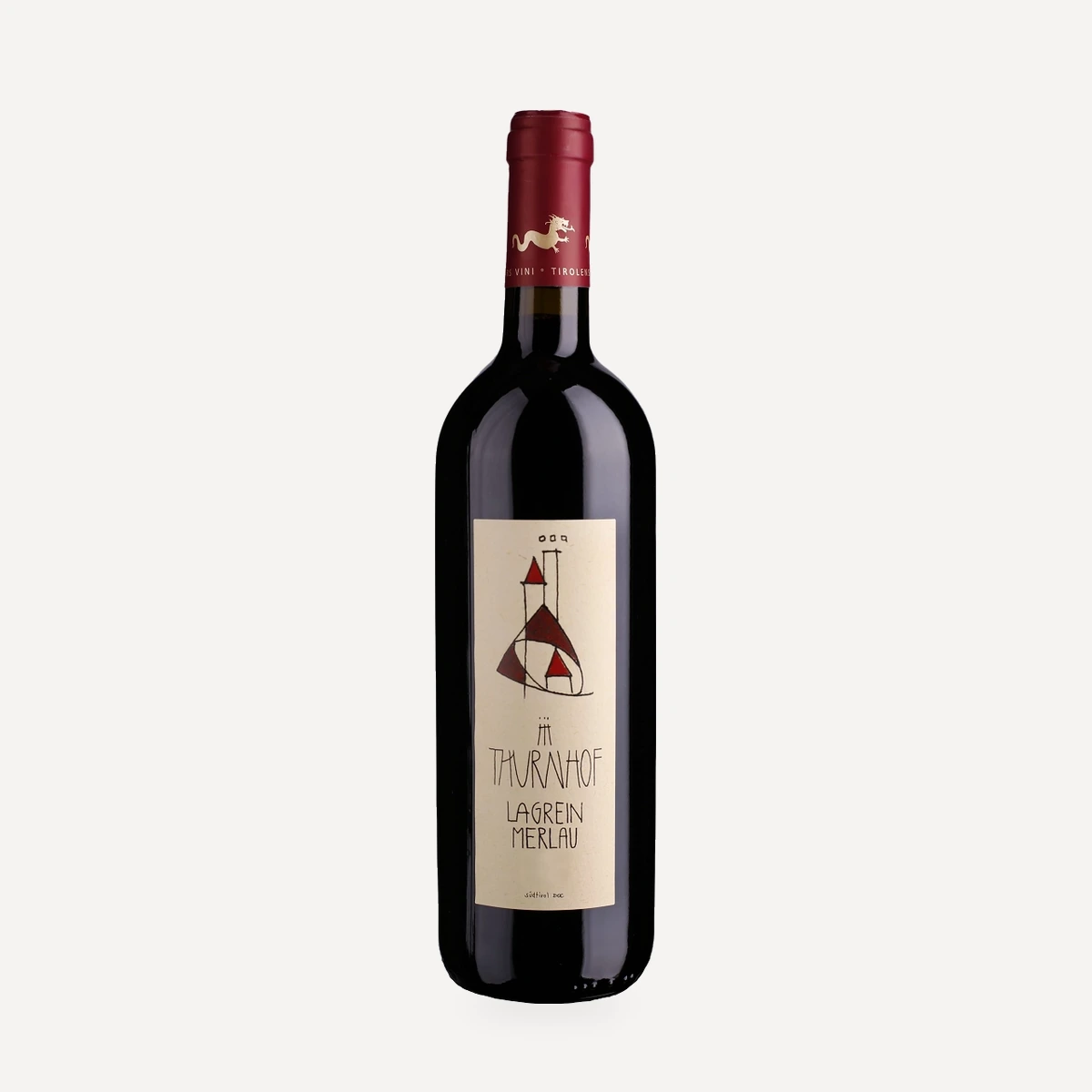
The Haslach vineyards occupy the south-facing slope of the Virgl above the farm. This is a very warm, sunny position with deep, decomposed porphyry debris over a thick layer of glacial moraine. Vine roots can penetrate into the underlying moraine. The combination is associated with delicacy, mineral character and long ageing capacity. Goldmuskateller, the varieties used for St. Magdalener, Lagrein, Cabernet Franc and Cabernet Sauvignon are grown here.
Grutzen
Grutzen lies south of Bozen. Its soils are dry, deep and rich in gravel. Repeated historical flooding by the nearby Eisack River filled this part of the valley with a mixture of rock material transported from the Dolomites, the Sarntal Alps and the Eisack Valley. Goldmuskateller and Lagrein grow in this site, whose fruit is associated with a softer and more immediately approachable expression.
High-elevation vineyard
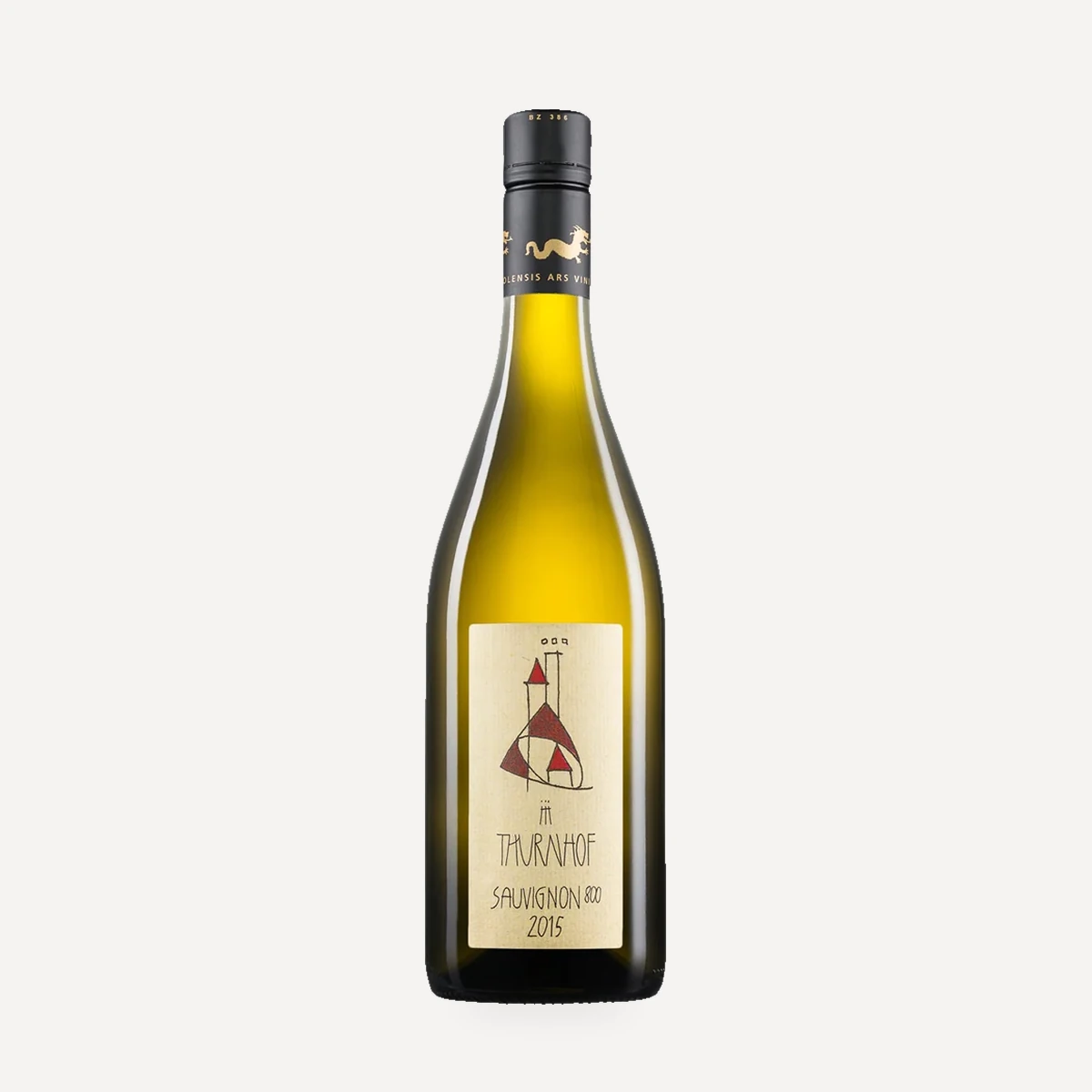
Most of the estate’s Sauvignon Blanc comes from its highest vineyard, situated on the Ritten. The vines stand on glacial moraine deposits and porphyry debris. The position is associated with pronounced acidity, a fine structure, mineral character and longevity.
Much of Thurnhof’s vineyard work takes place on steep slopes. The wines are intended to reflect both their varieties and their individual sites.
Vinificazione
Respect for nature, attention to detail and careful vineyard maintenance define Thurnhof’s declared approach to cultivation. Much of the work is conducted on steep sites. The vines are given sufficient time to develop, with vineyard care directed toward fruit that expresses both its variety and its place of origin.
Mature fruit from old Lagrein vines is reserved for the estate’s Riserva selection. Some grapes are deliberately harvested very late: the fruit destined for Passaurum is placed in small boxes and dried naturally for several months before pressing and fermentation.
No formal organic, biodynamic or other farming certification is identified.
Thurnhof’s cellar has been used for winemaking for centuries but is equipped with contemporary technology. It occupies three underground rooms within the farmstead, and the complete sequence from destemming through bottling takes place there.
The cellar philosophy begins with the premise that quality originates in the vineyard. Vinification and maturation are therefore intended to preserve the quality of the fruit and support the development and balance of aroma, body, tannin and the wine’s other constituents. Handling is deliberately gentle, and the wines are allowed the time required to evolve.
Stainless steel is used for fermentation and maturation across the white-wine range and for the initial fermentation of the red wines. St. Magdalener and the vintage Lagrein combine stainless steel with maturation in large oak casks. The estate’s Riserva reds ferment in stainless steel and subsequently mature in small and large oak vessels for 12–18 months. The Cabernet Sauvignon Riserva also receives bottle maturation before release.
For Passaurum, very late-harvested Goldmuskateller and Sauvignon grapes are placed in small boxes and dried naturally for several months. After drying, they are pressed and fermented, followed by 12–18 months in stainless steel.
Filosofia
Thurnhof defines its purpose as the production of “wines with character,” an aspiration connecting six generations of the family. Quality is understood to originate in the vineyard, with cellar work serving to carry the fruit’s intrinsic qualities into bottle.
Respect for nature, close attention to detail and patience guide the estate’s approach. Both vines and wines are given time to develop, while cellar procedures are kept gentle. The intended result is a faithful expression of variety and site, combining fruit, structure, elegance and mineral character.
The estate also presents tradition as an active practice rather than a historical ornament: centuries of viticulture on the Virgl are continued with contemporary cellar equipment inside a winemaking space used for generations.
Vini
Goldmuskateller
Lagrein
Sauvignon Blanc