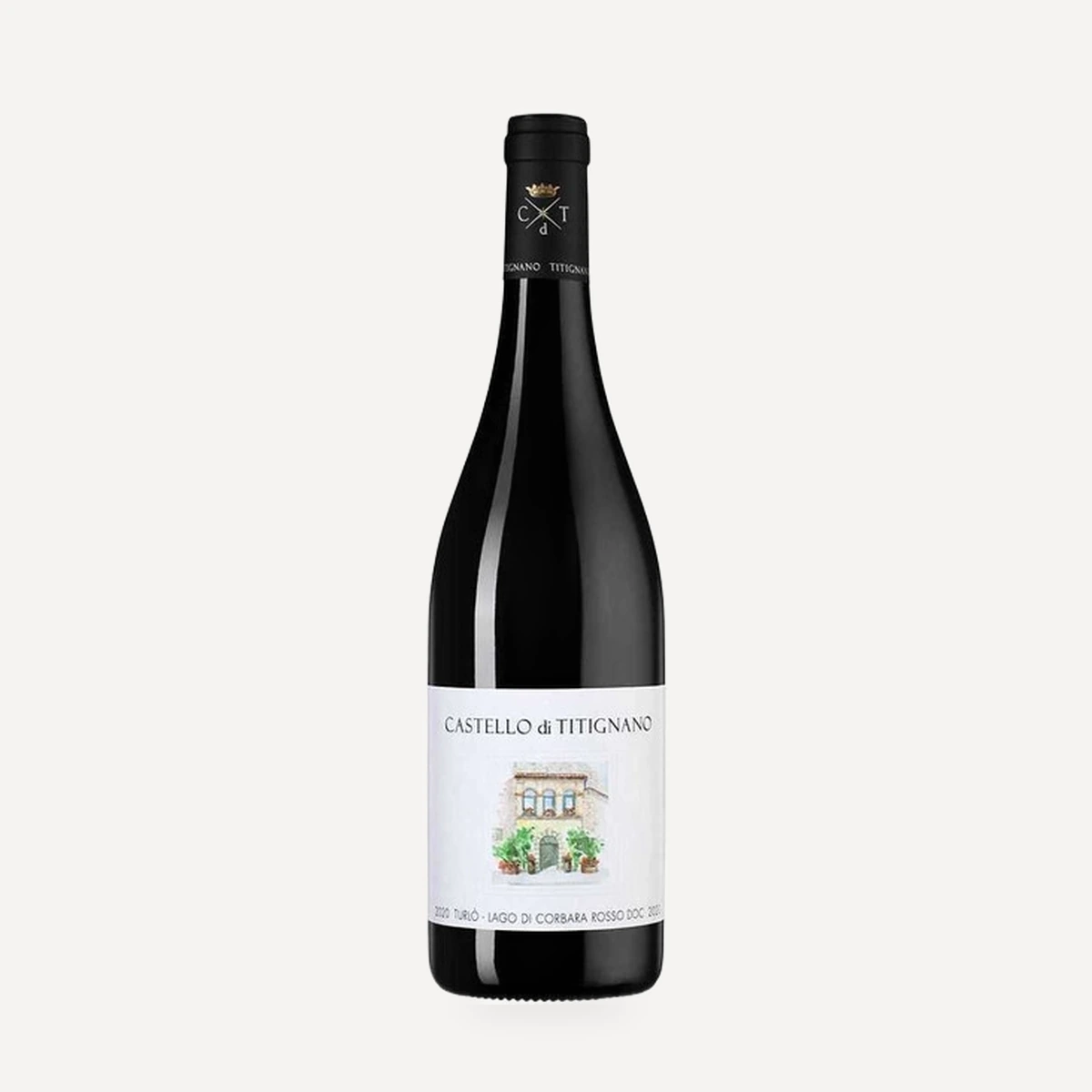
Storia
Medieval origins
The structures of Tenuta di Salviano and Castello di Titignano originated in the Middle Ages under the Montemarte family. Salviano subsequently became the historical decision-making centre of the agricultural property associated with Titignano.
The Corsini acquisition in 1830
In 1830, Principe Tommaso Corsini purchased both Tenuta di Salviano and the village of Titignano at public auction. The two properties, comprising more than 2,000 hectares, remained closely connected thereafter. Under the Corsini princes, the fertile but rugged land was developed into a prosperous agricultural enterprise producing wheat, tobacco, olive oil and wine.
An established wine reputation
By the beginning of the 20th century, Salviano’s white wine had already acquired a broad reputation for quality in Italy and abroad. Wine was therefore an established part of the estate’s activity well before its late-20th-century modernization.
The 1985 inheritance and modernization
In 1985, Donna Nerina Corsini inherited Tenuta di Salviano and the village of Titignano from her father. Together with her husband, Marchese Enrico Incisa della Rocchetta, she began modernizing the property. Enrico brought a direct connection with the Incisa della Rocchetta wine tradition: he had worked as a producer of Sassicaia and was the brother of Don Mario Incisa della Rocchetta.
New management from 2015
Management passed in 2015 to Nerina’s son, Marchese Giovanni Incisa della Rocchetta, and his wife, Marchesa Tara. They committed new resources to the property, built infrastructure—including facilities connected with hospitality—replanned the estate in a modern form and renewed its corporate culture.
Tenuta di Salviano now functions as the wine-production centre of the wider Salviano–Titignano property, while Castello di Titignano and its village accommodate the associated hospitality activities.
Terroir
Tenuta di Salviano is located at Salviano, near Civitella del Lago in the comune of Baschi, Umbria. It belongs to a historically linked Salviano–Titignano property of more than 2,000 hectares, characterized as both fertile and rugged. The surrounding terrain is hilly, with slopes descending toward Lago di Corbara.
The oldest documented Syrah vineyard blocks stand at approximately 350 metres above sea level and face southeast. Their soils are volcanic and tuffaceous, with a mineral character and a high proportion of stones. The blocks are described as 25 years old, with 4,000 vines per hectare.
Vinificazione
The documented Syrah blocks are trained on vertical trellises and pruned to spur cordons at a density of 4,000 vines per hectare. Crop load per vine is restricted to support complete grape maturation and the development of phenolic material. Harvest is performed manually into boxes during the first half of September.
The only documented cellar protocol concerns the estate’s Syrah. After destemming and crushing, the grapes ferment in stainless-steel tanks at a controlled temperature of 24–26°C. Pump-overs are frequent and brief during the first third of alcoholic fermentation and are then discontinued. Maceration continues for 7–10 days at approximately 28–30°C. Malolactic fermentation follows, after which the wine matures in French-oak barriques.
Filosofia
The current management’s program centres on renewing the estate through investment, new infrastructure and a re-established corporate culture while retaining its agricultural and family continuity. Marchese Giovanni Incisa della Rocchetta is portrayed as placing particular importance on respect for the land and for the work performed on it. The documented vineyard approach—restricted crop loads, pursuit of complete ripeness and manual harvesting—places grape maturity and the expression of the site ahead of volume.
Vini
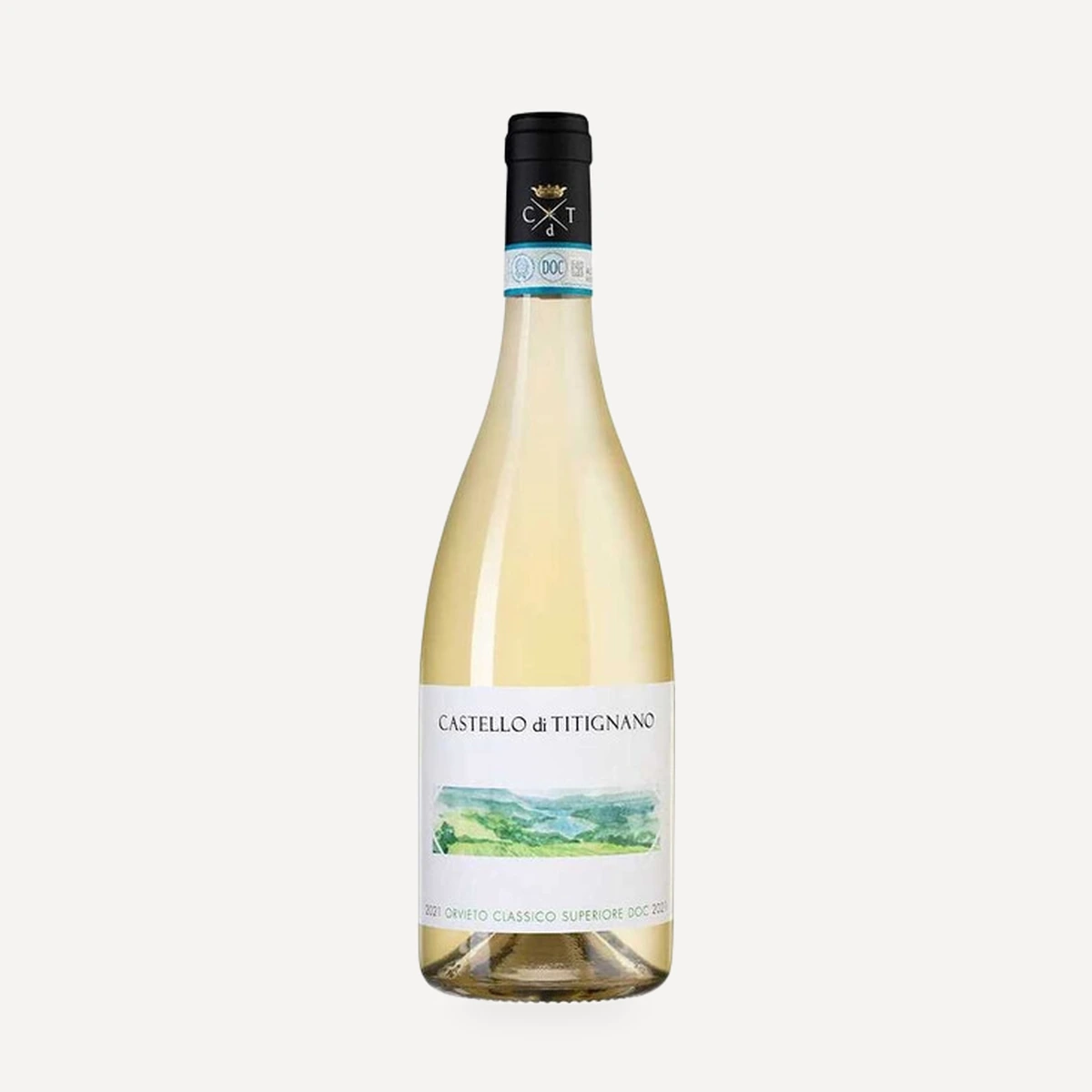
Castello di Titignano Orvieto Classico Superiore DOC
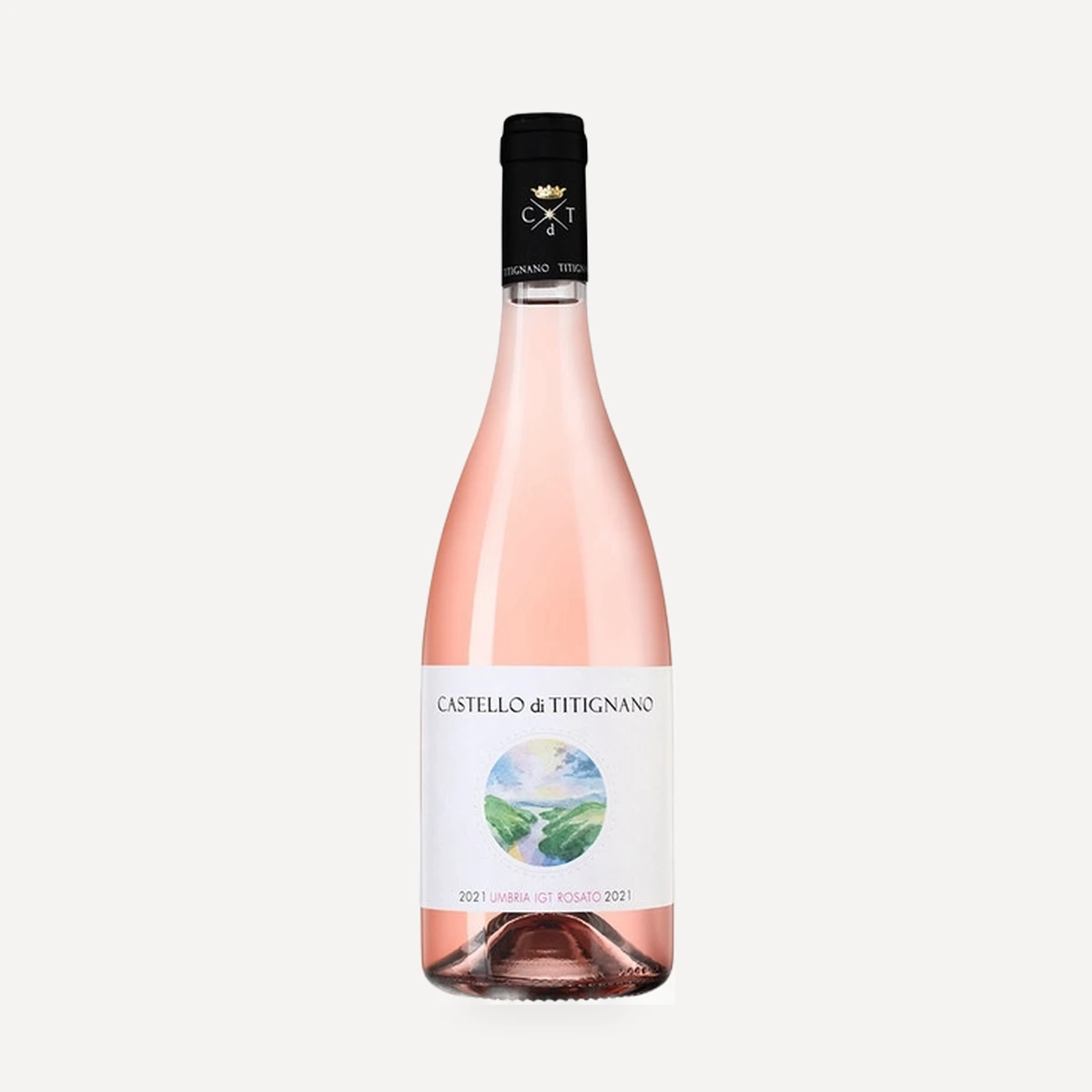
Rosato Umbria IGT